Heavy duty Textile Synchronous Belt
CN → US| HS Code | Tariff Rate | Origin | Destination | Doc |
|---|---|---|---|---|
| 4010354500 | 41.4% | CN | US | Official Doc |
| 5910001020 | 39.0% | CN | US | Official Doc |
| 4010364500 | 41.4% | CN | US | Official Doc |
Product Images
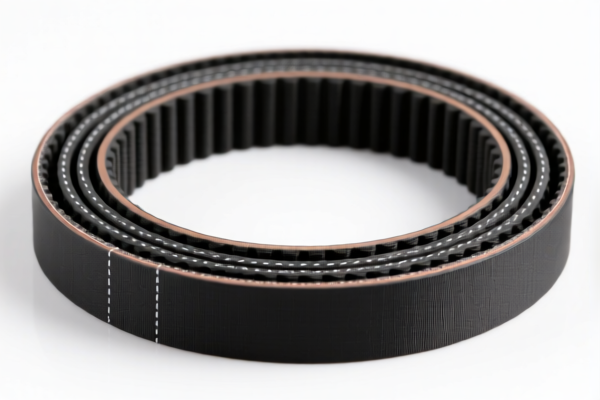
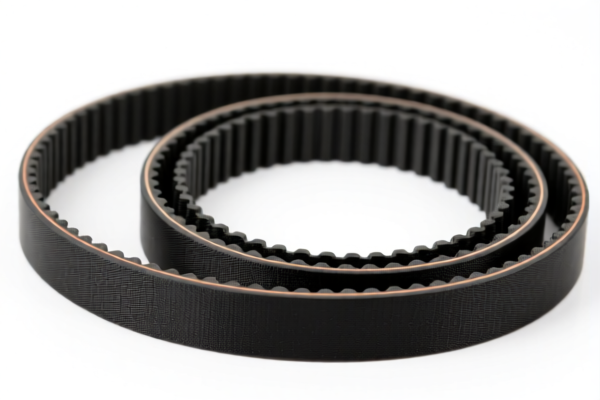
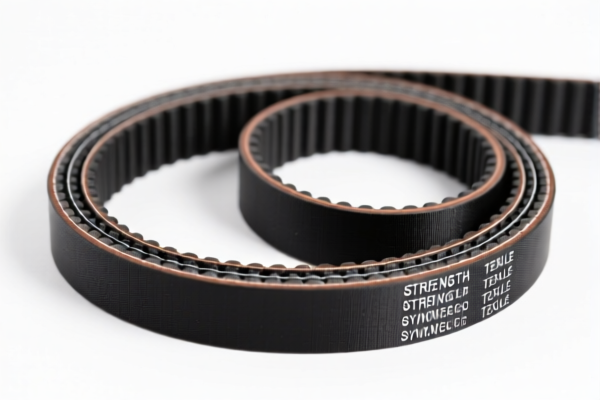
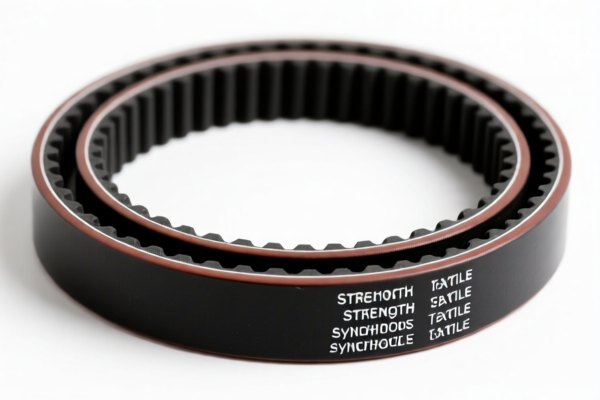
AI Analysis
🏭 Heavy Duty Textile Synchronous Belt (Industrial Power Transmission)
🌐 HS Code Reference & Customs Clearance Guide | 2026 Latest Tariff Analysis | Professional Clearance Strategy
📌 I. Product Definition & Classification: What Exactly is a "Textile Synchronous Belt"?
A Heavy Duty Textile Synchronous Belt is a critical mechanical power transmission component used in industrial machinery, textile manufacturing equipment, and automated systems. Its defining characteristics include:
- Synchronous Drive: Teeth on the inner surface ensure precise, non-slip motion transfer between pulleys.
- Textile Reinforcement: Cord strands made from artificial fibers (e.g., polyester, nylon) or natural fibers provide tensile strength.
- Rubber Body: Typically made from vulcanized rubber (neoprene, polyurethane, or chloroprene) to house the cords and provide flexibility/wear resistance.
- Endless Form: Usually manufactured as a continuous loop (no joints).
⚠️ Key Distinction Point:
- If the belt is primarily textile with minimal rubber coating, it might fall under Chapter 59.
- If the belt is primarily rubber reinforced with textile cords, it falls under Chapter 40.
- Customs Interpretation: Most "Synchronous Belts" with significant rubber content and vulcanized structure are classified as Rubber Articles (Chapter 40), specifically subheading 4010. The "Textile" mention refers to the internal reinforcement, not the primary material composition of the outer body.
📦 II. HS Code Classification Details (2026 Latest Tariff Authority)
Based on the provided data, the heavy-duty textile synchronous belt is primarily classified under Chapter 40 (Rubber Articles) due to the vulcanized rubber body, with one alternative possibility under Chapter 59 (Impregnated Textile Products) depending on the specific material ratio and manufacturing process.
| HS Code | Product Description | Application Scenario | Primary Material |
|---|---|---|---|
4010.35.45.00 |
Textile-reinforced synchronous belt, inferred vulcanized rubber body, matching endless form | Heavy-duty industrial drives, high-torque applications | ✅ Rubber (Textile Reinforced) |
4010.36.45.00 |
Textile-reinforced synchronous belt, inferred vulcanized rubber body | Standard heavy-duty machinery, textile equipment | ✅ Rubber (Textile Reinforced) |
5910.00.10.20 |
Textile-reinforced synchronous belt, explicitly defined by textile (artificial fiber) material | Specific cases where textile content > rubber content, or non-vulcanized textile base | ✅ Textile (Artificial Fiber) |
🔍 Critical Reminder:
- Most Common Classification:4010.35.45.00or4010.36.45.00are the standard classifications for synchronous belts because the rubber body provides the functional drive surface and elasticity.
- Less Common Classification:5910.00.10.20applies only if the product is primarily textile (e.g., a fabric belt with rubber coating only) or if customs authorities interpret the "textile reinforcement" as the dominant characteristic.
- Risk: Misclassifying a rubber-dominated belt as textile (5910) may lead to audits for undervaluation or misdeclaration.
💰 III. 2026 Latest Tariff Rate Breakdown (Including Surcharges & Policy Add-ons)
✅ Applicable Country: United States (US)
✅ Country of Origin: China (CN)
✅ Effective Date: November 10, 2025 (and subsequent imports)
🎯 1. 4010.35.45.00 —— Textile-Reinforced Synchronous Belt (Rubber Body)
| Item | Content |
|---|---|
| Base Tariff Rate | 6.4% (ad valorem) |
| Section 301 Surcharge | +25.0% (Additional Duty under USITC) |
| Section 122 Tariff | +10.0% (Additional Duty under IEEPA) |
| Total Tariff Rate | 41.4% |
| Tax Calculation | CIF Value × 41.4% |
| De Minimis Eligibility | ❌ Not Eligible (High tariff rates exceed de minimis thresholds) |
| Legal Authority Path | Base: 4010.35.45.00 → 301: Footnote 9903.88.01 → 122: IEEPA:9903.01.24 |
📌 Explanation:
- Base 6.4%: Standard MFN rate for rubber conveyor/belt articles.
- 301 Tariff (25%): Applies to all Chinese-origin rubber goods under this subheading due to Section 301 trade remedy measures.
- 122 Tariff (10%): Additional duty under the International Emergency Economic Powers Act (IEEPA) targeting specific Chinese imports.
- Total 41.4%: This is a very high effective tariff. Importers must factor this into landed cost calculations.
🎯 2. 5910.00.10.20 —— Textile-Reinforced Synchronous Belt (Textile Body)
| Item | Content |
|---|---|
| Base Tariff Rate | 4.0% (ad valorem) |
| Section 301 Surcharge | +25.0% (Additional Duty under USITC) |
| Section 122 Tariff | +10.0% (Additional Duty under IEEPA) |
| Total Tariff Rate | 39.0% |
| Tax Calculation | CIF Value × 39.0% |
| De Minimis Eligibility | ❌ Not Eligible |
| Legal Authority Path | Base: 5910.00.10.20 → 301: Footnote 9903.88.01 → 122: IEEPA:9901.25 |
📌 Note:
- Although the base rate is lower (4.0% vs. 6.4%), the 301 and 122 surcharges remain identical (25% + 10%).
- Savings: Only 2.4% lower total tariff compared to Chapter 40.
- Risk: If customs determines the belt is actually rubber-dominated, they may reclassify to Chapter 40, leading to retroactive duties + penalties.
🎯 3. 4010.36.45.00 —— Textile-Reinforced Synchronous Belt (Rubber Body, Variant)
| Item | Content |
|---|---|
| Base Tariff Rate | 6.4% (ad valorem) |
| Section 301 Surcharge | +25.0% (Additional Duty under USITC) |
| Section 122 Tariff | +10.0% (Additional Duty under IEEPA) |
| Total Tariff Rate | 41.4% |
| Tax Calculation | CIF Value × 41.4% |
| De Minimis Eligibility | ❌ Not Eligible |
| Legal Authority Path | Base: 4010.36.45.00 → 301: Footnote 9903.88.01 → 122: IEEPA:9903.01.24 |
📌 Note:
- Functionally identical to4010.35.45.00in terms of tariff impact.
- The difference between.35and.36often relates to specific belt width, tooth profile, or rubber compound specifications. Ensure your technical specs match the chosen code.
🛠️ IV. Customs Clearance Practical Advice (Real-World Pitfall Avoidance Guide)
✅ 1. Required Documentation Checklist (Mandatory)
| Document | Must Provide | Description |
|---|---|---|
| ✅ Product Specification Sheet | ✔️ | Must detail: Material composition (Rubber % vs. Textile %), Belt Width, Pitch, Length, Tooth Profile, Max Load |
| ✅ Technical Diagram/Structure | ✔️ | Cross-section showing textile cords embedded in rubber vulcanized body |
| ✅ Product Photos | ✔️ | Clear images of teeth, inner surface, and any branding/model numbers |
| ✅ Commercial Invoice | ✔️ | Must clearly state "Textile-Reinforced Rubber Synchronous Belt" – avoid vague terms like "Industrial Belt" |
| ✅ Certificate of Origin (CO) | ✔️ | Essential for proving Chinese origin; may be needed for 301/122 duty assessment |
| ✅ Packing List | ✔️ | Include weight, dimensions, and packing method |
✅ 2. Declaration Tips (Key Mantras)
🔥 "Declare Material Truth, Specify Structure, Avoid Ambiguity!"
| Scenario | Correct Declaration | Incorrect Practice |
|---|---|---|
| Heavy Duty Rubber Belt with Textile Cords | 4010.35.45.00 or 4010.36.45.00 Desc: "Textile-reinforced vulcanized rubber synchronous belt" |
Using generic term "Textile Belt" → Risk of misclassification |
| Belt Primarily Textile with Rubber Coating | 5910.00.10.20 Desc: "Artificial fiber textile belt with rubber impregnation" |
Using rubber-based codes → Risk of penalty for undervaluation |
| Endless Loop Belt | Explicitly state "Endless" | Omitting "Endless" → May be mistaken for cut-to-length textile rolls |
| Model/Part Number | Include in description | Omitting model # → Delayed clearance due to lack of identification |
✅ 3. Special Situations & Handling
| Situation | Handling Advice |
|---|---|
| OEM Custom Belts | Provide customer PO + technical drawings to prove specific design. Avoid generic descriptions. |
| Mixed Shipments (Belts + Pulleys) | Declare separately. Pulleys may have different HS codes (e.g., 8483). Do not lump together. |
| Sample Shipments | Even samples are subject to duties. Use proper commercial invoice, not "Gift" or "Sample" with $0 value. |
| High-Value Heavy Duty Belts | Consider applying for Advance Ruling from CBP to lock in the HS code and duty rate before shipment. |
🌍 V. Global Market Clearance Comparison (2026 Latest)
| Country/Region | Recommended HS Code | Tariff (China Origin) | Certification Requirements | Notes |
|---|---|---|---|---|
| 🇺🇸 USA | 4010.35.45.00 |
41.4% | N/A | High tariffs due to 301 + 122. |
| 🇨🇳 China | 4010.35.45.00 |
6.4% | CCC (if applicable) | Base rate applies. |
| 🇪🇺 EU | 4010.35.00 |
0% - 3.7% | CE (if machinery) | No 301/122 surcharges. |
| 🇬🇧 UK | 4010.35.00 |
0% - 3.7% | UKCA | Post-Brexit tariff rates apply. |
| 🇦🇺 Australia | 4010.35.00 |
5% | RCM | No 301/122 surcharges. |
📌 Conclusion:
- USA is the highest-cost market for Chinese-origin synchronous belts due to layered surcharges.
- EU/UK/Australia are significantly more favorable if supply chains can be diversified.
- Strategy: For US-bound goods, ensure accurate classification to avoid penalties. Consider third-country manufacturing (e.g., Vietnam, Mexico) if tariffs are prohibitive, subject to rules of origin compliance.
📌 VI. Common Errors & Pitfall Guide (Lessons Learned)
❌ Error 1: Classifying as "Textile Product" (5910) for a rubber-dominated belt
👉 Consequence: CBP may reclassify to Chapter 40, imposing 41.4% instead of 39.0%, plus penalties.
❌ Error 2: Omitting "Synchronous" in description
👉 Consequence: Customs may classify as generic conveyor belt (4010.11), leading to audit delays or incorrect duty assessment.
❌ Error 3: Not declaring Chinese origin clearly
👉 Consequence: Loss of eligibility for duty drawback or incorrect application of MFN rates vs. Country-Specific rates.
❌ Error 4: Under-declaring value to avoid tariffs
👉 Consequence: Fraud charges, seizure of goods, and significant fines.
✅ Correct Approach:
"Textile-Reinforced Vulcanized Rubber Synchronous Belt, Endless, Pitch XX, Width YY, Model ZZ, Made in China"
🎯 VII. Conclusion: Professional Declaration Saves Money!
🎯 Remember the Mantra:
🔹 "Rubber Body = Chapter 40. Textile Body = Chapter 59."
🔹 "301 + 122 = 35% Extra. Total ~41.4% for Rubber Belts."
🔹 "Declare Material Truth. Avoid Misclassification Penalties."
📌 Pro Tip:
If your synchronous belt is originating from Vietnam, Mexico, or Thailand, it may be eligible for exemptions from Section 301 and 122 tariffs, reducing the total duty to 6.4% (or lower under FTAs like USMCA).
Recommendation: Apply for CBP Advance Ruling for large-volume imports to ensure classification certainty.
📣 Immediate Action Required:
📞 Contact a licensed customs broker + Provide technical specs + Request HS Code Pre-Ruling
🚀 Ensure your Heavy Duty Textile Synchronous Belt clears customs smoothly, efficiently, and cost-effectively!
✨ Professional Customs Clearance Starts with Accurate Classification!
💼 Every Percentage Point of Duty Matters!
Customer Reviews
About HS Code Classification
The Harmonized System (HS) is an internationally standardized nomenclature developed by the World Customs Organization (WCO) to classify traded products. Over 200 countries use the HS system as the basis for customs tariffs, trade statistics, and import/export regulations.
Each HS code follows a hierarchical structure:
- Chapter (2 digits) — Broad category of goods (e.g., Chapter 84: Machinery and Mechanical Appliances)
- Heading (4 digits) — More specific grouping within the chapter
- Subheading (6 digits) — Internationally standardized breakdown, used by all WCO member countries
- National subdivisions (8-10 digits) — Country-specific extensions for further classification, such as US HTSUS 10-digit codes
Correct HS code classification is essential for smooth customs clearance, accurate duty payment, and compliance with trade regulations. Misclassification can lead to customs delays, overpayment of duties, or penalties.
When importing from CN to US, the applicable tariff rates may include:
- Most-Favored-Nation (MFN) rate — The standard duty rate applied to WTO members
- General rate — Applied to countries without trade agreements
- Trade remedy duties — Additional tariffs such as Section 301 (anti-dumping), Section 232 (national security), or countervailing duties
The information provided on this page is for reference purposes only. For official classification, please consult with your local customs authority or a licensed customs broker.