Height Increasing Cushion
CN → US| HS Code | Tariff Rate | Origin | Destination | Doc |
|---|---|---|---|---|
| 3926904590 | 38.5% | CN | US | Official Doc |
| 6212900090 | 24.1% | CN | US | Official Doc |
| 6406105000 | 43.7% | CN | US | Official Doc |
| 3926909989 | 22.8% | CN | US | Official Doc |
| 6406903060 | 15.3% | CN | US | Official Doc |
Product Images
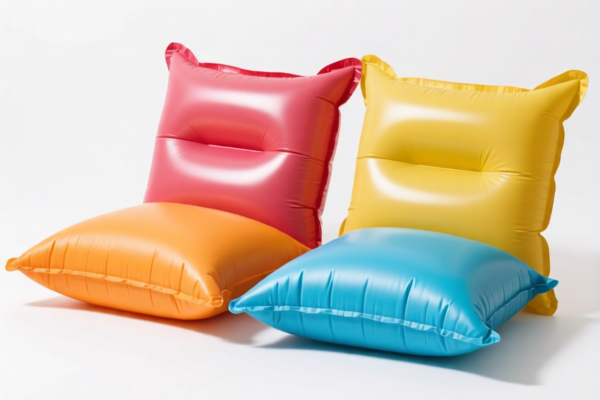
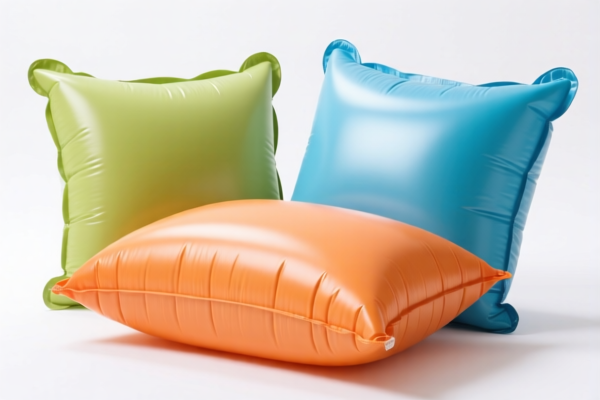
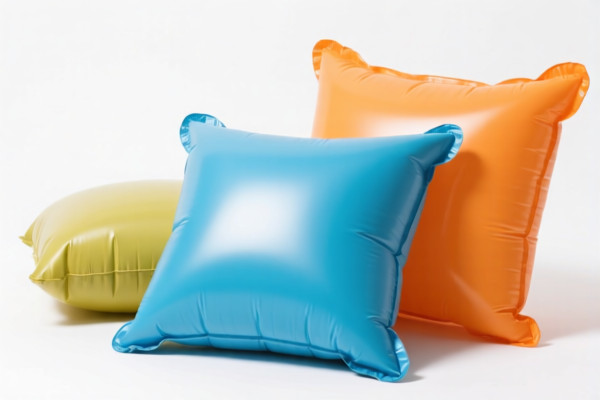
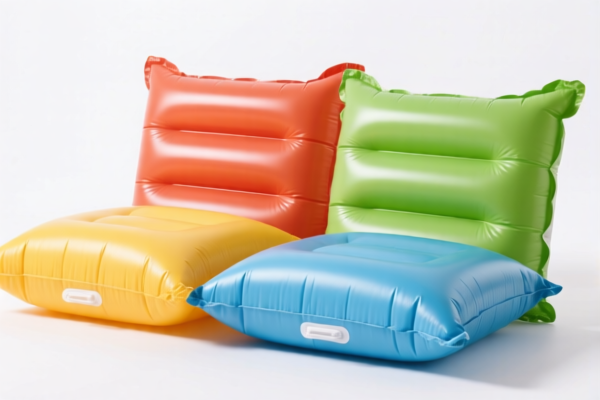
AI Analysis
🧴 Height Increasing Cushion (Elevators & Shaper Pads)
🌐 HS Code Reference & Customs Clearance Guide | 2026 Latest Tariff Analysis | Professional Clearance Strategy
📌 Part 1: Product Definition & Classification: Do You Really Understand "Height Increasing Cushions"?
Height increasing cushions are internal inserts used in footwear or clothing to add height, improve posture, or provide support. In international trade, they are generally classified based on their material (plastic, rubber, textile) and function (footwear parts vs. general apparel accessories).
Key Classification Logic:
- Footwear Parts: If designed specifically for shoes (e.g., heel lifts, insoles), they fall under Chapter 64.
- General Apparel/Plastic Articles: If generic or made of plastic without specific footwear structure, they fall under Chapter 39 or Chapter 62.
- Generic "Catch-All": If the specific use is ambiguous, customs may assign a "residual" HS code, often attracting higher penalties.
⚠️ Critical Distinction:
- If the item is a heel pad/shoe insert → Look to 6406.90
- If the item is a generic plastic pad/support → Look to 3926.90
- If the item is a textile/cloth accessory → Look to 6212.90
📦 Part 2: HS Code Classification Details (2026 Latest Tariff Authority Comparison)
Based on the provided data, here are the four possible HS Codes for "Height Increasing Cushions" and their corresponding tax implications.
| HS Code | Product Description | Application Scenario | Total Tax Rate |
|---|---|---|---|
3926.90.99.89 |
Plastic or other material articles, not specifically provided for | Generic plastic height pads, non-footwear specific plastic supports | 22.8% |
6212.90.00.30 |
Similar articles, used as undergarments or clothing accessories | Textile-based height boosters, general clothing support pads | 24.1% |
6406.90.30.60 |
Footwear parts (heel pads/inserts), classified as similar articles | Specific shoe insoles/heel lifts | 15.3% |
3926.90.45.90 |
Other residual category, gaskets, washers, and similar items | Generic plastic pads often misclassified as "gaskets" or "washers" due to shape | 38.5% |
6212.90.00.90 |
Other residual category, padded or supporting similar articles | Textile-based padding with unclear specific use | 24.1% |
🔍 Key Reminder:
- Footwear Specific: If the cushion is clearly for shoes (e.g., "Heel Lift," "Insole"),6406.90.30.60is the most accurate and lowest tax option (15.3%).
- Plastic Generic: If made of plastic but not for shoes, it falls under3926.90.99.89(22.8%) or the high-risk3926.90.45.90(38.5%).
- Textile Generic: If made of fabric, it falls under6212.90.00.30or.90(24.1%).
💰 Part 3: 2026 Latest Tariff Rate Details (Including Surcharges & Policy Add-ons)
✅ Applicable Country: United States (US)
✅ Origin: China (CN)
✅ Effective Date: 2025/2026 (Current Trade War Era)
🎯 1. 6406.90.30.60 —— Footwear Parts (Heel Pads/Inserts) [RECOMMENDED]
| Item | Content |
|---|---|
| Base Tariff | 5.3% |
| Section 301 Surcharge | 0.0% |
| Section 122 Tariff | 10% |
| Total Effective Tax Rate | 15.3% |
| Tax Calculation | CIF Value × 15.3% |
| De Minimis Exemption | ❌ Not Eligible (Subject to strict inspection) |
| Legal Basis Path | USITC:6406.90.30.60 → Section 122:10% |
📌 Explanation:
- This is the most favorable classification for height-increasing cushions if they are clearly identifiable as footwear parts.
- Section 301 Surcharge is 0%, which is a significant advantage compared to other categories.
- The 10% Section 122 tariff is applied as a baseline trade measure.
- Strategy: Ensure your product description explicitly states "Footwear Part" or "Heel Insert" to qualify for this lower rate.
🎯 2. 3926.90.99.89 —— Plastic Articles (General/Plastic Pads)
| Item | Content |
|---|---|
| Base Tariff | 5.3% |
| Section 301 Surcharge | 7.5% |
| Section 122 Tariff | 10% |
| Total Effective Tax Rate | 22.8% |
| Tax Calculation | CIF Value × 22.8% |
| De Minimis Exemption | ❌ Not Eligible |
| Legal Basis Path | USITC:3926.90.99.89 → Section 301:7.5% → Section 122:10% |
📌 Explanation:
- Applies if the cushion is made of plastic but not specifically for footwear (e.g., a generic plastic block used for elevation in various contexts).
- Higher than footwear parts due to the 7.5% Section 301 surcharge.
🎯 3. 6212.90.00.30 / 6212.90.00.90 —— Textile/Apparel Accessories
| Item | Content |
|---|---|
| Base Tariff | 6.6% |
| Section 301 Surcharge | 7.5% |
| Section 122 Tariff | 10% |
| Total Effective Tax Rate | 24.1% |
| Tax Calculation | CIF Value × 24.1% |
| De Minimis Exemption | ❌ Not Eligible |
| Legal Basis Path | USITC:6212.90.xx.xx → Section 301:7.5% → Section 122:10% |
📌 Explanation:
- Applies if the cushion is made of textile materials (e.g., foam with fabric cover) and used as a general clothing accessory.
- Identical tax burden for both subcodes in the provided data.
🎯 4. 3926.90.45.90 —— Residual Category (Gaskets/Washers) [HIGH RISK]
| Item | Content |
|---|---|
| Base Tariff | 3.5% |
| Section 301 Surcharge | 25.0% |
| Section 122 Tariff | 10% |
| Total Effective Tax Rate | 38.5% |
| Tax Calculation | CIF Value × 38.5% |
| De Minimis Exemption | ❌ Not Eligible |
| Legal Basis Path | USITC:3926.90.45.90 → Section 301:25% → Section 122:10% |
⚠️ WARNING:
- This is a misclassification trap. If customs determines your "height increasing cushion" is actually a generic plastic "gasket" or "washer" due to poor labeling, they will apply this code.
- The 25% Section 301 surcharge is the maximum rate, making this code extremely expensive.
- Avoid this code at all costs by providing clear product specifications.
🛠️ Part 4: Customs Clearance Practical Advice (Pitfall Avoidance Guide)
✅ 1. Preparation Checklist (Mandatory)
| Document | Required | Explanation |
|---|---|---|
| ✅ Product Specifications | ✔️ | Clearly state material (Plastic/Fabric), dimensions, and intended use (Footwear vs. General). |
| ✅ Product Photos | ✔️ | Show the cushion in context (e.g., inside a shoe) to prove it is a footwear part. |
| ✅ Commercial Invoice | ✔️ | Description should be precise: "Plastic Heel Lifts for Footwear" or "Textile Shoe Insoles". Avoid vague terms like "Height Pad." |
| ✅ Packing List | ✔️ | Ensure quantity and weight match invoice. |
| ✅ Origin Certificate | ✔️ | Required for determining Section 301 applicability. |
✅ 2. Declaration Tips (Key Mnemonic)
🔥 "Shoe Parts Win, Plastic Generic Risks, Mislabeling Costs Big!"
| Scenario | Correct Declaration | Incorrect Declaration | Consequence |
|---|---|---|---|
| Heel Lifts/Insoles | 6406.90.30.60 (Footwear Part) |
"Plastic Pad" or "Height Cushion" | May be reclassified to 3926 (22.8%) or 3926.45 (38.5%) |
| Generic Plastic Block | 3926.90.99.89 (Plastic Article) |
"Shoe Insert" (if not actually for shoes) | Penalty for misdeclaration |
| Textile Pad | 6212.90.00.30 (Apparel Accessory) |
"Plastic Part" | Discrepancy in material, potential audit |
✅ 3. Special Handling
| Situation | Handling Advice |
|---|---|
| Mixed Materials | If the cushion has plastic core + fabric cover, classify based on essential character. Usually, if it's for shoes, 6406 is still preferred. |
| Customs Inquiry | If asked, provide a diagram showing how the cushion fits into a shoe. |
| New Product Type | Apply for an Advance Ruling if the product is unique (e.g., electronic height adjuster). |
🌍 Part 5: Global Market Clearance Comparison (2026 Latest)
| Country/Region | Recommended HS Code | Tariff (China Origin) | Certification | Notes |
|---|---|---|---|---|
| 🇺🇸 USA | 6406.90.30.60 |
15.3% (Total) | None specific | Lowest US Tariff for footwear parts. |
| 🇺🇸 USA (Misclassified) | 3926.90.45.90 |
38.5% (Total) | None | Avoid! High Section 301 surcharge. |
| 🇨🇳 China | 6406.90.30.60 |
Low (MFN) | N/A | Export clearance is straightforward. |
| 🇪🇺 EU | 6406.90 |
~3-5% | CE (if applicable) | Generally lower tariffs than US. |
📌 Conclusion:
- The USA is the most critical market due to Section 301 and Section 122 tariffs.
- Proving the product is a "Footwear Part" is crucial to saving ~13-23% in tariffs compared to generic plastic/textile classifications.
📌 Part 6: Common Mistakes & Pitfalls (Blood Lessons)
❌ Mistake 1: Describing the product as "Height Increasing Block"
👉 Consequence: Customs may view it as a generic industrial block → Classify as 3926.90.99.89 (22.8%) or worse, 3926.90.45.90 (38.5%).
❌ Mistake 2: Not specifying Material
👉 Consequence: If material is unclear, customs may default to the highest duty plastic category.
❌ Mistake 3: Using vague terms like "Support Cushion"
👉 Consequence: Ambiguity leads to manual examination, delays, and potential reclassification to a higher tax bracket.
✅ Correct Practice:
"Plastic Heel Lifts for Shoes, 2cm Height, Pack of 100, HS Code 6406.90.30.60"
🎯 Part 7: Conclusion: Precise Classification Saves Money!
🎯 Remember the Mnemonic:
🔹 "Shoe Parts = 15.3%, Plastic Generic = 22.8%, Misclassified = 38.5%!"
🔹 "Define as Footwear Part, Save 23% Tax, Clear Fast, No Pain!"
📌 Pro Tip:
If your product is truly a shoe insert, ensure your marketing materials, invoices, and photos all reinforce this identity. Customs officers often rely on product images and names. If it looks like a shoe part, declare it as such!
📣 Immediate Action:
📞 Consult your customs broker with the exact HS Code
6406.90.30.60for footwear parts.
🚀 Accurate classification is the key to maximizing profit in the US market!
✨ Professional Clearance Starts with Accurate HS Codes!
💼 Every Percent Saved is Pure Profit!
Customer Reviews
About HS Code Classification
The Harmonized System (HS) is an internationally standardized nomenclature developed by the World Customs Organization (WCO) to classify traded products. Over 200 countries use the HS system as the basis for customs tariffs, trade statistics, and import/export regulations.
Each HS code follows a hierarchical structure:
- Chapter (2 digits) — Broad category of goods (e.g., Chapter 84: Machinery and Mechanical Appliances)
- Heading (4 digits) — More specific grouping within the chapter
- Subheading (6 digits) — Internationally standardized breakdown, used by all WCO member countries
- National subdivisions (8-10 digits) — Country-specific extensions for further classification, such as US HTSUS 10-digit codes
Correct HS code classification is essential for smooth customs clearance, accurate duty payment, and compliance with trade regulations. Misclassification can lead to customs delays, overpayment of duties, or penalties.
When importing from CN to US, the applicable tariff rates may include:
- Most-Favored-Nation (MFN) rate — The standard duty rate applied to WTO members
- General rate — Applied to countries without trade agreements
- Trade remedy duties — Additional tariffs such as Section 301 (anti-dumping), Section 232 (national security), or countervailing duties
The information provided on this page is for reference purposes only. For official classification, please consult with your local customs authority or a licensed customs broker.