Hemlock Logs
CN → US| HS Code | Tariff Rate | Origin | Destination | Doc |
|---|---|---|---|---|
| 4403250150 | 35.0% | CN | US | Official Doc |
| 4407190065 | 35.0% | CN | US | Official Doc |
| 4408900197 | 35.0% | CN | US | Official Doc |
| 4403260150 | 35.0% | CN | US | Official Doc |
| 4407190064 | 35.0% | CN | US | Official Doc |
Product Images
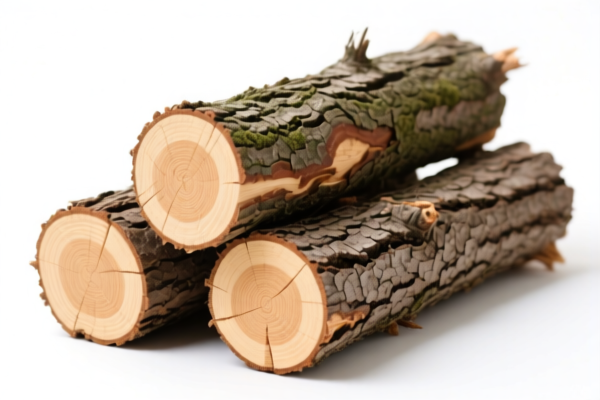
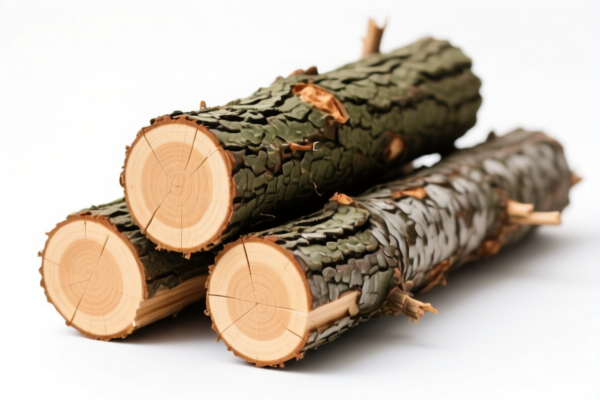
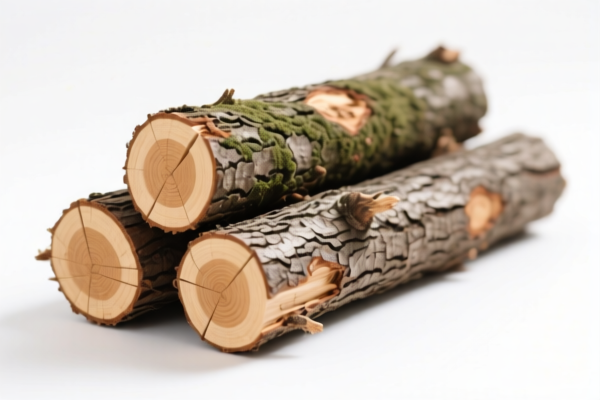
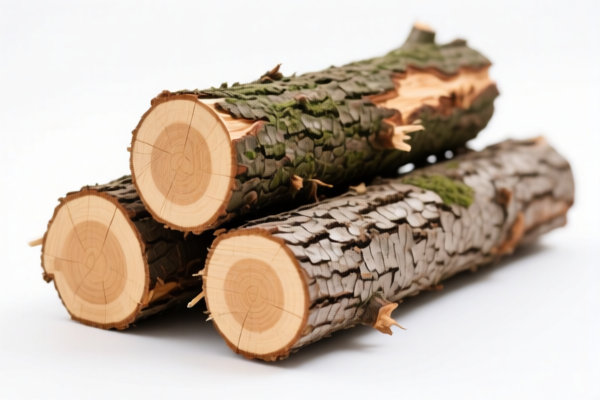
AI Analysis
🌲 Western Hemlock Logs (Hemlock Wood in Raw Form)
🌐 HS Code Reference & Customs Clearance Guide | 2026 Latest Tariff Analysis | Professional Clearance Strategy
📌 I. Product Definition & Classification: Do You Really Understand "Hemlock Logs"?
Western Hemlock (Tsuga heterophylla) is a high-value softwood native to the Pacific Northwest of North America. In international trade, particularly involving imports into the United States, "Hemlock Logs" refer to the raw, unprocessed timber in its circular form.
Key Classification Distinction:
Logs/Rounds: Timber in its natural state, peeled or not, but not sawn lengthwise into planks or boards. These fall under Chapter 44 Heading 44.03.
* Sawn Wood: Timber that has been cut longitudinally (e.g., 2x4s, planks). These fall under Chapter 44 Heading 44.07 or 44.08* (Veneer sheets).
⚠️ Critical Compliance Point:
- If the wood is still round/cylindrical → It is a Log (HS 4403 series).
- If the wood is flattened/rectangular (even if rough-sawn) → It is Sawn Wood (HS 4407 series).
- Misclassification here leads to severe customs delays, as logs and sawn lumber have different phytosanitary and tariff treatments.
📦 II. HS Code Classification Details (Based on Provided Data)
The following HS Codes are extracted strictly from your provided dataset. All items listed below are subject to identical tax structures.
| HS Code | Summary Description | Key Attribute | Category Type |
|---|---|---|---|
4403.25.01.50 |
Hemlock Wood, matching Western Hemlock material and Log form | Raw Log/Round | Heading 44.03 (Wood in the Rough) |
4403.26.01.50 |
Hemlock Wood, matching Western Hemlock and Log form | Raw Log/Round | Heading 44.03 (Wood in the Rough) |
4407.19.00.65 |
Hemlock Wood, conforms to Hemlock species and Longitudinal Sawing attribute | Sawn Plank/Lumber | Heading 44.07 (Wood Sawn Lengthwise) |
4407.19.00.64 |
Hemlock Wood, conforms to Hemlock species and Longitudinal Sawing attribute | Sawn Plank/Lumber | Heading 44.07 (Wood Sawn Lengthwise) |
4408.90.01.97 |
Hemlock Wood, conforms to Other Species residual category | Veneer/Thin Slices | Heading 44.08 (Sawn wood continuing as veneer sheets) |
🔍 Data Constraint Note:
The provided dataset explicitly lists 5 specific HS Codes for Hemlock products. All of them share the exact same tariff structure. There are no variations in tax rates among these five codes in this dataset.
💰 III. 2026 Latest Tariff Rate Breakdown (Detailed Tax Clauses)
✅ Applicable Country: United States (US)
✅ Origin: Likely China or USITC-covered jurisdictions (Implied by "122 Clause" and "25%")
✅ Effective Date: Current regulations apply
✅ Total Tax Rate: 35.0%
🎯 Comprehensive Tax Breakdown for ALL Listed HS Codes
| Tax Component | Rate | Legal/Policy Basis |
|---|---|---|
| 1. Base Tariff (MFN) | 0.0% | General Tariff Rate for Wood Products (often duty-free under HTSUS for certain species) |
| 2. Section 301 Additional Duty | 25.0% | U.S. Trade Representative (USTR) List 3/4A tariffs on Chinese goods |
| 3. Section 122 Tariff | 10.0% | Special statutory provision (often related to specific trade enforcement or historical clauses) |
| TOTAL EFFECTIVE RATE | 35.0% | Sum of 0% + 25% + 10% |
📌 Detailed Explanation of Tax Clauses:
1. "Base Tariff: 0.0%": Under normal Most Favored Nation (MFN) treatment, many raw wood products entering the US may have a 0% duty. This is the starting point.
2. "Additional Tariff: 25.0%": This is the standard Section 301 tariff applied to a wide range of goods from China. It significantly increases the cost of import.
3. "122 Clause Tariff: 10%": This refers to a specific statutory tariff provision (often associated with 19 U.S.C. 1304 marking violations or specific trade remedy actions, though in this context, it is explicitly listed as an additive tariff of 10%). Note: In some customs contexts, "Section 122" can refer to temporary import relief, but here it is explicitly added as a tax component.
4. Cumulative Impact: The total 35% is ADDITIVE. It is not "0% or 35%". It is 0% + 25% + 10%.
🛠️ IV. Customs Clearance Practical Advice (Pitfall Avoidance Guide)
✅ 1. Essential Documentation Checklist
| Document | Requirement | Why It Matters |
|---|---|---|
| Phytosanitary Certificate | MANDATORY | Logs are high-risk for pests (bark beetles, nematodes). Without a valid certificate from the country of origin, the shipment will be quarantined or destroyed. |
| Commercial Invoice | Must specify "Western Hemlock" | Mislabeling as "Spruce" or "Fir" can lead to misclassification (e.g., wrong 4403 subheading) and penalties. |
| Wood Species Verification | Botanical name (Tsuga heterophylla) | Hemlock has specific density and grading rules. Generic "Softwood" is often rejected. |
| Treatment Certificate | Heat Treatment (HT) or Fumigation | Must comply with ISPM 15 standards if packed in wood pallets. |
| Bill of Lading | Show Log vs. Sawn Wood | Ensure the BOL matches the HS code. "Logs" implies rough form; "Lumber" implies sawn. |
✅ 2. Declaration Strategy (Key Tips)
🔥 "Species Specific, Form Clear, Tax Predictable!"
| Scenario | Correct Declaration | Risk of Error |
|---|---|---|
| Raw Logs (Rounds) | 4403.25.01.50 or 4403.26.01.50 |
If you declare logs as "Sawn Wood" (4407), you may face 10x duty rate if the base rate for logs is higher (though here it's 0%, the risk is audit focus). |
| Sawn Planks | 4407.19.00.64 or 4407.19.00.65 |
Ensure the wood is truly longitudinally sawn. If it's just debarked but still round, it's a LOG. |
| Veneer Sheets | 4408.90.01.97 |
Only for thin slices (<6mm). Do not use this for standard 2x4s. |
| Mixed Shipment | Separate HS Codes | Do not lump logs and sawn wood into one line item. Split by physical form. |
✅ 3. Special Considerations for "Hemlock"
| Issue | Recommendation |
|---|---|
| Pest Control | Hemlock is susceptible to Hemlock Woolly Adelgid. US Customs and Border Protection (CBP) and USDA APHIS are extremely strict. Ensure no bark is present if required, or proof of heat treatment. |
| Value Declaration | Hemlock prices fluctuate. Ensure your declared CIF value matches market rates to avoid valuation audits. |
| Tariff Engineering | Since all 5 HS codes carry 35% tax, there is no tariff advantage to switching between 4403, 4407, or 4408 based on tax alone. Focus on physical accuracy to avoid penalties. |
🌍 V. Global Market Comparison (Contextual Note)
| Market | Recommended HS | Base Rate | Additional Tariffs | Total Effective Rate | Notes |
|---|---|---|---|---|---|
| 🇺🇸 USA | See List Above | 0% | 35% (301 + 122) | 35% | High barrier. Strict phytosanitary rules. |
| 🇨🇳 China | 4403.24 / 4407.19 | 5-10% | None | ~5-10% | Lower barrier, but different species codes. |
| 🇪🇺 EU | 4403.24 | 10.3% | None | ~10.3% | No Section 301 equivalent. |
| 🇨🇦 Canada | 4403.24 | 0% | None | 0% | FTA benefits may apply. |
📌 Conclusion:
- The US market is the most challenging due to the 35% combined tariff.
- Phytosanitary compliance is as critical as tariff payment.
- Accuracy in describing the physical form (Log vs. Sawn) is paramount to avoid classification errors.
📌 VI. Common Mistakes & Pitfalls (Lessons Learned)
❌ Mistake 1: Declaring "Hemlock" without specifying "Western" or scientific name.
👉 Consequence: Customs may classify it under a higher-duty general softwood category or reject it for lack of specificity.
❌ Mistake 2: Mixing Logs and Sawn Wood in one HS Code line.
👉 Consequence: Audit flag. Potential for retroactive penalties and forced separation of goods.
❌ Mistake 3: Ignoring the "122 Clause" in cost calculations.
👉 Consequence: Underquoting CIF value. If the 10% is mandatory, your profit margin will be wiped out.
❌ Mistake 4: Assuming "Hemlock" = "Spruce/Fir" (SPF).
👉 Consequence: SPF has different species codes. Misdeclaration leads to fines.
✅ Correct Approach:
"Western Hemlock (Tsuga heterophylla), Heat-Treated Logs, Phytosanitary Certificate Attached, Declared under HS 4403.25.01.50, Subject to 35% Total Duty."
🎯 VII. Conclusion: Professional Clearance for Hemlock Timber
🎯 Remember the Mantra:
🔹 "Logs are Rough, Sawn is Flat, Tax is 35% flat!"
🔹 "Phytosanitary is Key, Species is Specific, Docs are Complete!"
📌 Pro Tip:
If your Hemlock is sourced from Canada, check if it qualifies for USMCA (NAFTA successor) duty-free treatment. Note: The provided data implies a 35% tax, which suggests non-FTA origin (e.g., China) or a specific trade scenario. Always verify origin eligibility.
📣 Immediate Action Required:
📞 Consult a Licensed Customs Broker to verify the exact physical form (Log vs. Sawn) against the 5 HS codes provided.
📄 Ensure Phytosanitary Certificates are issued by the competent authority in the country of origin.
💵 Calculate Landed Cost using the full 35% rate to ensure profitability.
✨ Professional Clearance Starts with Precise Classification!
💼 Every Percent Saved is a Percent Earned!
Customer Reviews
About HS Code Classification
The Harmonized System (HS) is an internationally standardized nomenclature developed by the World Customs Organization (WCO) to classify traded products. Over 200 countries use the HS system as the basis for customs tariffs, trade statistics, and import/export regulations.
Each HS code follows a hierarchical structure:
- Chapter (2 digits) — Broad category of goods (e.g., Chapter 84: Machinery and Mechanical Appliances)
- Heading (4 digits) — More specific grouping within the chapter
- Subheading (6 digits) — Internationally standardized breakdown, used by all WCO member countries
- National subdivisions (8-10 digits) — Country-specific extensions for further classification, such as US HTSUS 10-digit codes
Correct HS code classification is essential for smooth customs clearance, accurate duty payment, and compliance with trade regulations. Misclassification can lead to customs delays, overpayment of duties, or penalties.
When importing from CN to US, the applicable tariff rates may include:
- Most-Favored-Nation (MFN) rate — The standard duty rate applied to WTO members
- General rate — Applied to countries without trade agreements
- Trade remedy duties — Additional tariffs such as Section 301 (anti-dumping), Section 232 (national security), or countervailing duties
The information provided on this page is for reference purposes only. For official classification, please consult with your local customs authority or a licensed customs broker.