Hemp Fiber Composite Board
CN → US| HS Code | Tariff Rate | Origin | Destination | Doc |
|---|---|---|---|---|
| 3921901910 | 40.3% | CN | US | Official Doc |
| 3921902900 | 39.4% | CN | US | Official Doc |
| 5302100000 | 35.0% | CN | US | Official Doc |
| 5302900000 | 35.0% | CN | US | Official Doc |
| 1404901000 | 0.0% | CN | US | Official Doc |
Product Images
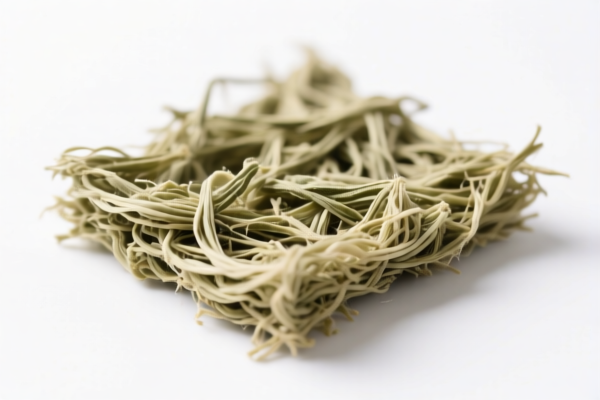
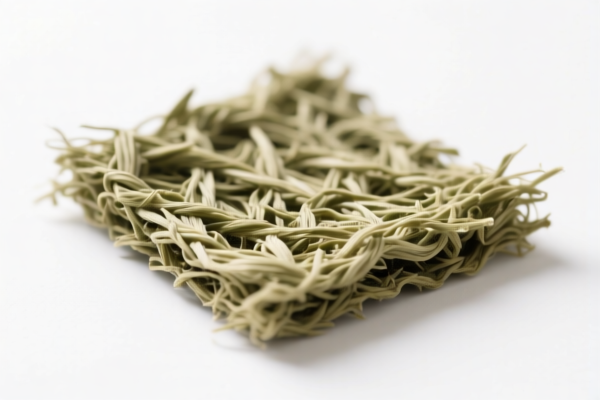
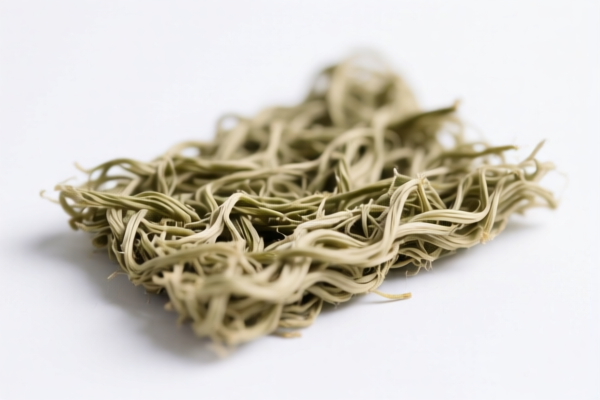
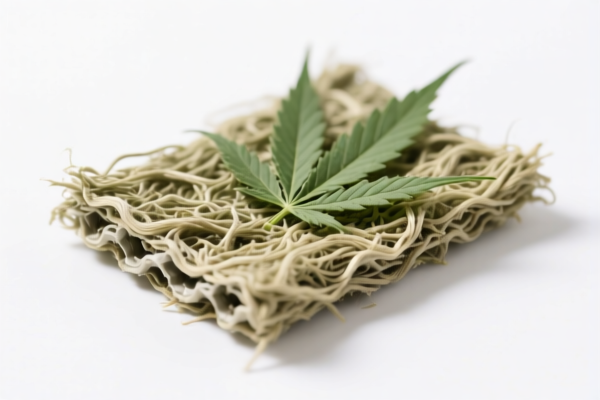
AI Analysis
🌿 Hemp Fiber Composite Board (麻纤维复合板)
🌐 HS Code Reference & Customs Clearance Guide | 2026 Latest Tariff Analysis | Professional-Level Strategy for US Imports
📌 I. Product Definition & Classification: What Exactly is "Hemp Fiber Composite Board"?
Hemp Fiber Composite Board is an engineered building material made primarily from hemp fibers (plant-based) combined with other textiles or binding agents. In international trade, the classification depends heavily on the physical form (board/panel), the material composition (hemp vs. other textiles), and whether it exceeds specific weight thresholds for plant fibers.
⚠️ Key Distinction Point:
- If it is a composite board where hemp/plant fiber weight exceeds that of any single fiber type → Falls under 1404.90.10.00 or 3921.90.19.10.
- If it is a board/panel/sheet made of hemp mixed with textiles but doesn't meet the "exceeds single fiber" rule strictly, or is classified purely as a textile composite panel → Falls under 3921.90.29.00.
- If it is raw or semi-processed hemp fiber (not yet formed into a rigid board) → Falls under 5302.10.00.00 or 5302.90.00.00.
📦 II. HS Code Classification Details (2026 Latest Tariff Authoritative Match)
| HS Code | Product Description | Applicable Scenario | Material/Form Characteristic |
|---|---|---|---|
3921.90.19.10 |
Hemp Fiber Composite Board, material is hemp (plant fiber), form is board, meets characteristics of combination with textile materials and plant fiber weight exceeding single fiber. | Engineered hemp boards, eco-friendly construction panels | ✅ Plant fiber > Single fiber weight |
3921.90.29.00 |
Hemp Fiber Composite Board, material is hemp, form is board, meets requirements for combination with textile materials and board/sheet/film/foil form. | Standard hemp-textile composite panels | ✅ Board form, textile combination |
5302.10.00.00 |
Hemp Fiber, material is hemp, form is fiber, in unspun raw or semi-processed state. | Raw hemp bales, loose fibers, non-board | ❌ Not a board |
5302.90.00.00 |
Hemp Fiber, material is hemp, form is raw or processed but unspun category. | Processed hemp strands, non-woven fiber mats | ❌ Not a rigid board |
1404.90.10.00 |
Hemp Fiber, belongs to plant fiber, meets material attributes of plant hair/plant products. | Raw hemp plant fibers, botanical residues | ❌ Raw botanical material |
🔍 Critical Reminder:
- "Composite Board" (复合板) implies a structural panel, not loose fiber. Therefore, codes 5302 and 1404 are generally for raw materials or pre-processing stages.
- If you are importing finished rigid boards, you must choose between 3921.90.19.10 and 3921.90.29.00 based on the precise manufacturing specification (weight ratio of plant fibers).
- Misclassifying a finished board as raw fiber (5302/1404) to seek lower base rates can lead to severe penalties, as the form (board) dictates the chapter.
💰 III. 2026 Latest Tariff Rate Detailed Breakdown (Including Surtaxes & Policy Add-ons)
✅ Applicable Country: United States (US)
✅ Country of Origin: China (CN)
✅ Effective Date: From November 10, 2025 (including subsequent imports)
🎯 1. 3921.90.19.10 — Hemp Fiber Composite Board (Plant Fiber > Single Fiber)
| Item | Content |
|---|---|
| Base Tariff | 5.3% |
| Surtax (Section 301) | +25.0% |
| IEEPA Surtax (122 Clause) | +10.0% |
| Total Tariff Rate | 40.3% |
| Tax Calculation | CIF Value × 40.3% |
| De Minimis Exemption? | ❌ NO (deny_de_minimis) |
| Legal Basis Path | Base: 5.3% → 301: 25% → IEEPA: 10% |
📌 Explanation:
- This code carries a high base tariff (5.3%) plus mandatory surcharges.
- The total burden is 40.3%, making it expensive for high-value composite panels.
- Must include detailed material composition proof to justify the "plant fiber exceeds single fiber" claim.
🎯 2. 3921.90.29.00 — Hemp Fiber Composite Board (Standard Textile Combination)
| Item | Content |
|---|---|
| Base Tariff | 4.4% |
| Surtax (Section 301) | +25.0% |
| IEEPA Surtax (122 Clause) | +10.0% |
| Total Tariff Rate | 39.4% |
| Tax Calculation | CIF Value × 39.4% |
| De Minimis Exemption? | ❌ NO (deny_de_minimis) |
| Legal Basis Path | Base: 4.4% → 301: 25% → IEEPA: 10% |
📌 Note:
- Slightly cheaper than3921.90.19.10due to a lower base rate (4.4% vs 5.3%).
- Still subject to the full 35% surtax package.
- Suitable for hemp boards where the specific weight threshold of the previous code is not met.
🎯 3. 5302.10.00.00 & 5302.90.00.00 — Hemp Fiber (Raw/Semi-Processed)
| Item | Content |
|---|---|
| Base Tariff | 0.0% |
| Surtax (Section 301) | +25.0% |
| IEEPA Surtax (122 Clause) | +10.0% |
| Total Tariff Rate | 35.0% |
| Tax Calculation | CIF Value × 35.0% |
| De Minimis Exemption? | ❌ NO (deny_de_minimis) |
| Legal Basis Path | Base: 0.0% → 301: 25% → IEEPA: 10% |
📌 Warning:
- These codes are for fibers, not boards.
- If you ship boards under this code, Customs will reclassify them, impose penalties, and likely charge the higher board rate plus duties on the incorrect declaration.
- Only use if importing loose hemp fibers for local processing.
🎯 4. 1404.90.10.00 — Plant Fiber (Hemp)
| Item | Content |
|---|---|
| Base Tariff | 0.5¢/kg + 0.0% ad valorem* |
| Surtax (Section 301) | +25.0% |
| IEEPA Surtax (122 Clause) | +10.0% |
| Total Tariff Structure | 0.5¢/kg + 35.0% |
| Tax Calculation | (Weight in kg × $0.005) + (CIF Value × 35%) |
| De Minimis Exemption? | ❌ NO (deny_de_minimis) |
| Legal Basis Path | Base: 0.5¢/kg → 301: 25% → IEEPA: 10% |
📌 Explanation:
- This is a hybrid tariff (specific + ad valorem).
- Applies to raw plant products/hemp fibers.
- Not applicable for finished composite boards. Using this for boards is a high-risk compliance error.
🛠️ IV. Customs Clearance Practical Advice (Real-World Pitfall Avoidance)
✅ 1. Documentation Checklist (Non-Negotiable)
| Document | Required | Explanation |
|---|---|---|
| ✅ Product Specification Sheet | ✔️ | Must detail: Material composition %, form factor (board/sheet), thickness, dimensions. |
| ✅ Material Safety Data Sheet (MSDS) | ✔️ | To prove no hazardous chemical binders are used that would shift classification. |
| ✅ Product Photos (Clear & Detailed) | ✔️ | Show the board structure, edges, and surface texture. Proves it is a "board," not loose fiber. |
| ✅ Commercial Invoice | ✔️ | Must explicitly state "Hemp Fiber Composite Board" and HS Code. |
| ✅ Certificate of Origin (CO) | ✔️ | Required to confirm Chinese origin for surtax calculation. |
| ✅ Customs Binding Ruling (If available) | ✔️ | Prior approval from CBP significantly reduces audit risk. |
✅ 2. Declaration Strategy (Key Mantra)
🔥 "Form Determines Code, Origin Determines Surcharge, Truth Avoids Penalties!"
| Scenario | Correct Declaration | Incorrect Action |
|---|---|---|
| Finished Hemp Board | 3921.90.19.10 or 3921.90.29.00 |
Misdeclare as 5302 (Fiber) → High Risk of Penalty |
| Loose Hemp Fibers | 5302.10.00.00 |
Misdeclare as Board → Wrong Tariff, Potential Denial |
| Hemp + Resin Composite | 3921.90.xx.xx |
Misdeclare as Natural Product 1404 → Classification Error |
| Small Samples (<800 USD) | ❌ No De Minimis | Assume Section 321 exemption → Seizure Risk |
✅ 3. Special Cases Handling
| Case | Handling Advice |
|---|---|
| Mixed Materials (Hemp + Plastic) | If hemp is the essential character, it may still fall under hemp categories. Provide proof of essential character. |
| Treated vs. Untreated | If chemical treatment changes the nature significantly, consult a customs broker. Untreated is safer for hemp classification. |
| Importing from Non-China Sources | If the hemp is grown in Vietnam/Thailand but processed in China, it is still Chinese Origin. Surtaxes apply. |
🌍 V. Global Market Customs Comparison (2026 Latest)
| Country/Region | Recommended HS Code | Tariff (China Origin) | Certification Requirements | Notes |
|---|---|---|---|---|
| 🇺🇸 USA | 3921.90.19.10 / 3921.90.29.00 |
39.4% - 40.3% | None specific (CBP Audit) | Highest cost due to Surtaxes |
| 🇨🇳 China | 3921.90.19.10 |
~5-6% | GB Standards | No Surtaxes |
| 🇪🇺 EU | 4411.94 or 1404.90 |
0-4% | CE Marking (if applicable) | Lower tariffs, stricter REACH |
| 🇬🇧 UK | 4411.94 |
0-4% | UKCA Marking | Post-Brexit rules apply |
| 🇦🇺 Australia | 4411.94 |
5% | AS/NZS Standards | Moderate tariffs |
📌 Conclusion:
- The US market is the most expensive for hemp composite boards due to the 35% total surtax burden.
- China-origin hemp boards face a ~40% tariff, significantly impacting profit margins.
- Consider transshipment from Vietnam/Mexico (if substantial transformation occurs) to avoid 301/IEEPA taxes, but ensure true origin compliance.
📌 VI. Common Errors & Pitfall Guide (Lessons Learned)
❌ Error 1: Declaring Finished Boards as Raw Fibers (5302) to save 5% base duty.
👉 Consequence: CBP reclassifies, issues liquidated damages, and audits past entries. Fine + Back Duties.
❌ Error 2: Assuming De Minimis (Section 321) applies to shipments under $800.
👉 Consequence: Hemp products from China are explicitly excluded from de minimis treatment. Package will be seized or returned.
❌ Error 3: Vague Description ("Hemp Board") on Invoice.
👉 Consequence: Customs cannot determine the exact HS subheading. Delay in Clearance + Storage Fees.
❌ Error 4: Ignoring IEEPA 122 Clause.
👉 Consequence: Failing to declare Chinese origin correctly results in missing the 10% surtax calculation, leading to underpayment penalties.
✅ Correct Approach:
"Hemp Fiber Composite Board, 12mm thick, composed of 60% hemp fiber and 40% textile binder, raw and untreated, Model X, HS 3921.90.19.10"
🎯 VII. Conclusion: Precise Declaration, Cost Efficiency, Compliance
🎯 Remember the Mantra:
🔹 "Board is not Fiber, Origin is Key, Surtax is Mandatory, De Minimis is Dead!"
🔹 "HS Code decides the base, Surcharge decides the profit, Declaration decides the speed!"
📌 Pro Tip:
- If your profit margin is thin, calculate the 39.4-40.3% total landed cost immediately.
- Consider Advance Rulings from CBP if your hemp composition is unique.
- Explore duty drawback programs if you re-export goods.
📣 Immediate Action:
📞 Engage a licensed customs broker + Provide detailed product specs + Verify HS Code Pre-Ruling
🚀 Ensure your Hemp Boards clear US customs smoothly, avoid seizures, and protect your margins!
✨ Professional Customs Clearance Starts with Accurate Classification!
💼 Your Every Dollar of Cost Deserves Precise Calculation!
Customer Reviews
About HS Code Classification
The Harmonized System (HS) is an internationally standardized nomenclature developed by the World Customs Organization (WCO) to classify traded products. Over 200 countries use the HS system as the basis for customs tariffs, trade statistics, and import/export regulations.
Each HS code follows a hierarchical structure:
- Chapter (2 digits) — Broad category of goods (e.g., Chapter 84: Machinery and Mechanical Appliances)
- Heading (4 digits) — More specific grouping within the chapter
- Subheading (6 digits) — Internationally standardized breakdown, used by all WCO member countries
- National subdivisions (8-10 digits) — Country-specific extensions for further classification, such as US HTSUS 10-digit codes
Correct HS code classification is essential for smooth customs clearance, accurate duty payment, and compliance with trade regulations. Misclassification can lead to customs delays, overpayment of duties, or penalties.
When importing from CN to US, the applicable tariff rates may include:
- Most-Favored-Nation (MFN) rate — The standard duty rate applied to WTO members
- General rate — Applied to countries without trade agreements
- Trade remedy duties — Additional tariffs such as Section 301 (anti-dumping), Section 232 (national security), or countervailing duties
The information provided on this page is for reference purposes only. For official classification, please consult with your local customs authority or a licensed customs broker.