Hemp Rope, Cable and Cord
CN → US| HS Code | Tariff Rate | Origin | Destination | Doc |
|---|---|---|---|---|
| 5607909000 | 41.3% | CN | US | Official Doc |
| 5607901000 | 35.0% | CN | US | Official Doc |
| 5308909000 | 17.5% | CN | US | Official Doc |
| 4601999000 | 38.3% | CN | US | Official Doc |
Product Images
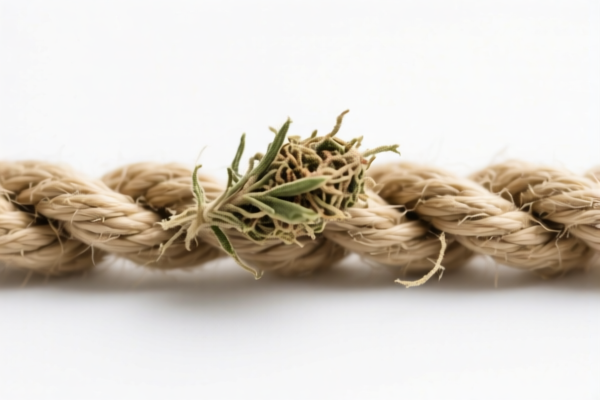
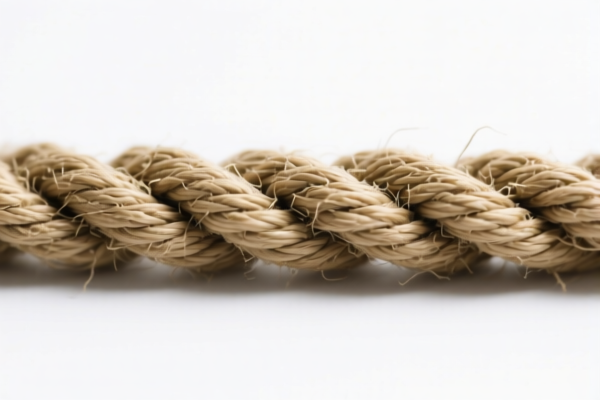

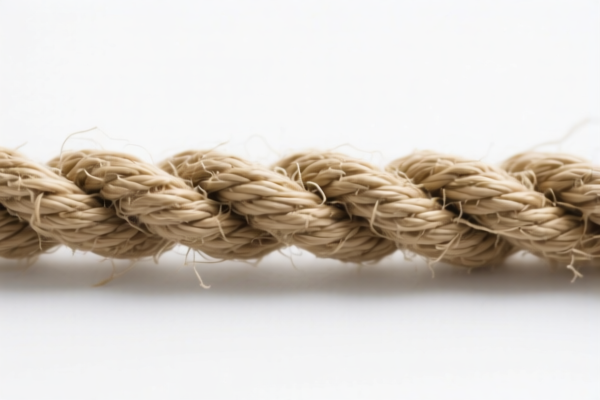
AI Analysis
🌿 Hemp Rope, Cable, and Cord: The Ultimate HS Code Classification & Clearance Guide (2026)
🌐 HS Code Reference & Customs Clearance Strategy | 2026 Latest Tariff Analysis | Professional Customs Strategy
📌 I. Product Definition & Classification: What Exactly is "Hemp Rope"?
In international trade, "Hemp Rope," "Cable," and "Cord" are often used interchangeably by laymen, but customs authorities distinguish them based on material composition, manufacturing process, and end-use.
For the purpose of this guide, we analyze the specific data points provided for imports into the United States from China, focusing on the nuances of natural fiber ropes.
⚠️ Key Distinction Points: - Material Matters: Is it "True Hemp" (Cannabis sativa), Coconut Fiber (Coir), or generic Plant Fiber? This dictates the HS Code. - Structure: Is it braided, twisted, or plaited? - End Use: Is it for industrial lifting (cable), general tying (rope), or decorative (cord)?
📦 II. HS Code Classification Details (2026 Latest Tariff Authority Comparison)
Based on the provided dataset, here are the 5 distinct HS Codes relevant to Hemp Rope products, along with their specific tax implications.
| HS Code | Product Description | Material/Shape Inference | Total Tax Rate | Key Tax Components |
|---|---|---|---|---|
5607.90.90.00 |
Ropes, Cables & Cordage (Other) | General Hemp/Natural Fiber Rope | 41.3% | Base: 6.3% + Sec 301: 25% + IEEPA: 10% |
5607.90.10.00 |
Ropes, Cables & Cordage (Coir) | Specifically Identified as Coconut Fiber | 35.0% | Base: 0.0% + Sec 301: 25% + IEEPA: 10% |
5308.90.90.00 |
Plant Fiber Textile Yarns (Other) | Treated as Yarn/Twine rather than Rope | 17.5% | Base: 0.0% + Sec 301: 7.5% + IEEPA: 10% |
4601.99.90.00 |
Plaited/Braided Materials (Other) | Braided or Twisted Natural Fiber Material | 38.3% | Base: 3.3% + Sec 301: 25% + IEEPA: 10% |
🔍 Critical Insight: -
5607.90.90.00is the default fallback for most hemp ropes that don't fit specific narrow categories. It carries the highest base tax. -5607.90.10.00offers significant savings if the rope is explicitly made of Coconut (Coir) fibers, reducing the base rate to 0%. -5308.90.90.00is a strategic classification for thin ropes or twines that can be legally argued as "textile yarns" rather than "cordage," lowering the total tax to 17.5%. -4601.99.90.00applies if the item is a mattress base, mat, or large braided sheet rather than a simple twisted rope.
💰 III. 2026 Latest Tariff Rate Breakdown (Including Surtaxes & Policy Add-ons)
✅ Applicable Country: United States (US) ✅ Origin: China (CN) ✅ Effective Time: Post-November 10, 2025 (Including subsequent imports)
🎯 1. HS Code 5607.90.90.00 – The Standard Hemp Rope
| Item | Content |
|---|---|
| Base Duty Rate | 6.3% (Ad Valorem) |
| USITC Surtax (Section 301) | +25.0% |
| IEEPA Surtax | +10.0% (Targeting Chinese/ HK products) |
| Total Effective Tax Rate | 41.3% |
| Tax Calculation | CIF Value × 41.3% |
| De Minimis Exemption? | ❌ NO (Not eligible for de minimis relief) |
| Legal Basis Path | IEEPA:9903.01.25 → IEEPA:9903.01.24 → USITC:5607.90.90.00 |
📌 Explanation: - This is the most common classification for general hemp ropes. - The 6.3% base rate is standard for "other ropes" in Chapter 56. - The 25% Section 301 tax and 10% IEEPA tax are mandatory surcharges for Chinese-origin goods. - Total Burden: 41.3%. This is a high-cost item for importers.
🎯 2. HS Code 5607.90.10.00 – Coconut Fiber (Coir) Rope
| Item | Content |
|---|---|
| Base Duty Rate | 0.0% |
| USITC Surtax (Section 301) | +25.0% |
| IEEPA Surtax | +10.0% |
| Total Effective Tax Rate | 35.0% |
| Tax Calculation | CIF Value × 35.0% |
| De Minimis Exemption? | ❌ NO |
| Legal Basis Path | IEEPA:9903.01.25 → IEEPA:9903.01.24 → USITC:5607.90.10.00 |
📌 Strategic Advantage: - If your "hemp" rope is actually Coconut Fiber (Coir), you save 6.3% on the base duty. - Total Savings: 6.3% per unit value. - Verification Required: Must provide material proof (lab test) confirming Lime Coir content, not true hemp.
🎯 3. HS Code 5308.90.90.00 – Plant Fiber Textile Yarn
| Item | Content |
|---|---|
| Base Duty Rate | 0.0% |
| USITC Surtax (Section 301) | +7.5% |
| IEEPA Surtax | +10.0% |
| Total Effective Tax Rate | 17.5% |
| Tax Calculation | CIF Value × 17.5% |
| De Minimis Exemption? | ❌ NO |
| Legal Basis Path | IEEPA:9903.01.25 → IEEPA:9903.01.24 → USITC:5308.90.90.00 |
📌 High-Risk/High-Reward Strategy: - This classification is only valid if the product can be legally defined as "Textile Yarn" (twisted strands for weaving) rather than "Cordage" (ropes for lifting/tying). - Risk: High risk of customs audit if the product is clearly a thick rope. - Reward: 17.5% vs 41.3% – A 23.8% savings is significant. - Condition: Must be fine-gauge, pliable, and intended for textile applications.
🎯 4. HS Code 4601.99.90.00 – Braided/Plaited Materials
| Item | Content |
|---|---|
| Base Duty Rate | 3.3% |
| USITC Surtax (Section 301) | +25.0% |
| IEEPA Surtax | +10.0% |
| Total Effective Tax Rate | 38.3% |
| Tax Calculation | CIF Value × 38.3% |
| De Minimis Exemption? | ❌ NO |
| Legal Basis Path | IEEPA:9903.01.25 → IEEPA:9903.01.24 → USITC:4601.99.90.00 |
📌 Application: - Use this for large mats, wall coverings, or woven panels made of hemp. - Not suitable for standard twisted ropes. - Saves 3.0% compared to the standard rope code (
5607.90.90.00).
🛠️ IV. Customs Clearance Practical Advice (Real-World Pitfall Guide)
✅ 1. Required Documentation Checklist (Non-Negotiable)
| Document | Mandatory? | Purpose |
|---|---|---|
| ✅ Product Specification Sheet | ✔️ | Detail material composition (e.g., "100% Coconut Coir" vs. "Hemp Blended"). |
| ✅ Material Test Report | ✔️ | Third-party lab test confirming fiber type (Critical for 5607.90.10.00 vs 5607.90.90.00). |
| ✅ Product Photos (Clear Labels) | ✔️ | Show texture, diameter, and end-use (e.g., tied in a knot vs. woven into a mat). |
| ✅ Commercial Invoice | ✔️ | Must state "Hemp Rope" or "Coir Rope," NOT generic "Natural Fiber Product." |
| ✅ Packing List | ✔️ | Confirm net/gross weight for duty calculation. |
| ✅ Origin Certificate | ✔️ | Proves Chinese origin (triggers surtaxes). |
✅ 2. Declaration Tips (Key Mnemonic)
🔥 “Material First, Form Second, Name Specific, Tax Minimized!”
| Scenario | Correct Declaration | Incorrect Declaration |
|---|---|---|
| True Hemp Rope | 5607.90.90.00 – "Hemp Rope, Twisted, Natural Fiber" |
Misdeclare as Coir → Fraud Risk |
| Coconut Coir Rope | 5607.90.10.00 – "Coconut Fiber Rope" |
Call it "Hemp" → Higher Tax + Audit |
| Fine Hemp Twine | 5308.90.90.00 – "Plant Fiber Yarn" |
Call it "Rope" → Higher Tax |
| Hemp Mat | 4601.99.90.00 – "Braided Hemp Mat" |
Call it "Rope" → Wrong Code |
📌 Critical Warning: - Never use vague terms like "Natural Fiber Rope" without specifying the plant type. - If claiming
5607.90.10.00(Coir), you MUST provide a material analysis report. Customs frequently audits these claims. - If claiming5308.90.90.00(Yarn), ensure the rope is thin and pliable enough to be considered textile yarn. Thick lifting ropes will be reclassified.
✅ 3. Special Cases & Mitigation
| Scenario | Handling Advice |
|---|---|
| OEM Custom Ropes | Provide design specs. If unique shape, argue for 5607.90.90.00 (general). |
| Mixed Material Ropes | If >50% Coir, may qualify for 5607.90.10.00. If mixed with synthetic, stays in 5607.90.90.00. |
| Small Samples (< $800) | ❌ NOT ELIGIBLE for de minimis due to IEEPA/301 surtaxes. |
| Rope for Industrial Lifting | Must declare as "Safety Critical" with load ratings. May face additional safety inspections. |
🌍 V. Global Market Comparison (2026 Latest)
| Country/Region | Recommended HS Code | Total Tax Rate (China Origin) | Certification Requirements | Notes |
|---|---|---|---|---|
| 🇺🇸 USA | 5607.90.90.00 |
41.3% | None specific (but material proof required) | High surtaxes apply. |
| 🇺🇸 USA (Coir) | 5607.90.10.00 |
35.0% | None | 6.3% savings if material proven. |
| 🇪🇺 EU | 5607.90.90 |
6.0% | CE (if for machinery) | No Section 301/IEEPA surtaxes. |
| 🇨🇳 China | 5607.90.90 |
8.0% | N/A | Domestic trade. |
| 🇬🇧 UK | 5607.90.90 |
6.0% | UKCA (if applicable) | Post-Brexit tariffs. |
📌 Conclusion: - The US market is the most expensive due to 35-41% total tax burden. - EU and UK markets are more favorable with ~6% duty and no punitive surtaxes. - Cost Optimization: Consider shifting supply chain to Vietnam, India, or Indonesia (major natural fiber producers) to avoid China-origin surtaxes when exporting to the US.
📌 VI. Common Errors & Pitfalls (Lessons Learned)
❌ Error 1: Declaring Coconut Coir as "Hemp" to match customer expectations 👉 Consequence: If audited and found to be Coir, you may face penalties for under-declaring base duty (if Coir has different duty rules) or overpaying if you were entitled to lower rates. Conversely, declaring Coir as Hemp leads to 41.3% vs 35.0% overpayment.
❌ Error 2: Declaring Thick Rope as "Textile Yarn" (5308.90.90.00)
👉 Consequence: Customs will reclassify to 5607.90.90.00, backdating taxes to 41.3%, plus interest and penalties.
❌ Error 3: Ignoring Material Composition
👉 Consequence: "Natural Fiber" is too vague. Customs will assign the highest possible duty rate (often 5607.90.90.00) due to lack of proof for lower-rate categories.
❌ Error 4: Assuming De Minimis applies 👉 Consequence: Hemp Rope from China does NOT qualify for the $800 de minimis exemption due to IEEPA/301 surtaxes. All shipments are subject to duty.
✅ Best Practice:
"Coconut Fiber Rope, Braided, 10mm Diameter, Industrial Grade, HS Code 5607.90.10.00, Origin: China"
🎯 VII. Conclusion: Precision Classification, Cost Savings, and Compliance
🎯 Remember the Mantra:
🔹 "Coir is Cheaper than Hemp, Yarn is Cheaper than Rope, Proof is King!" 🔹 "HS Code decides tax fate, 23% difference between Yarn and Rope, Don't get caught in the audit trap!"
📌 Pro Tip:
- If you are importing large volumes of hemp/coir rope into the US, request a Pre-Submission Ruling (PPR) from CBP.
- Consider supply chain diversification to India or Vietnam to avoid US-China surtaxes.
- Always keep lab reports handy for fiber composition claims.
📣 Immediate Action:
📞 Contact a Licensed Customs Broker + Provide Material Samples + Apply for CBP Pre-Ruling 🚀 Minimize Tax Liability, Ensure Smooth Customs Clearance, Maximize Profit Margins!
✨ Professional Clearance Starts with Accurate Classification! 💼 Every Percentage Point Saved is Pure Profit!
Customer Reviews
About HS Code Classification
The Harmonized System (HS) is an internationally standardized nomenclature developed by the World Customs Organization (WCO) to classify traded products. Over 200 countries use the HS system as the basis for customs tariffs, trade statistics, and import/export regulations.
Each HS code follows a hierarchical structure:
- Chapter (2 digits) — Broad category of goods (e.g., Chapter 84: Machinery and Mechanical Appliances)
- Heading (4 digits) — More specific grouping within the chapter
- Subheading (6 digits) — Internationally standardized breakdown, used by all WCO member countries
- National subdivisions (8-10 digits) — Country-specific extensions for further classification, such as US HTSUS 10-digit codes
Correct HS code classification is essential for smooth customs clearance, accurate duty payment, and compliance with trade regulations. Misclassification can lead to customs delays, overpayment of duties, or penalties.
When importing from CN to US, the applicable tariff rates may include:
- Most-Favored-Nation (MFN) rate — The standard duty rate applied to WTO members
- General rate — Applied to countries without trade agreements
- Trade remedy duties — Additional tariffs such as Section 301 (anti-dumping), Section 232 (national security), or countervailing duties
The information provided on this page is for reference purposes only. For official classification, please consult with your local customs authority or a licensed customs broker.