Hemp Rope Braided Products
CN → US| HS Code | Tariff Rate | Origin | Destination | Doc |
|---|---|---|---|---|
| 5308909000 | 17.5% | CN | US | Official Doc |
| 5607909000 | 41.3% | CN | US | Official Doc |
| 5607901500 | 35.0% | CN | US | Official Doc |
| 5308200000 | 35.0% | CN | US | Official Doc |
| 4601999000 | 38.3% | CN | US | Official Doc |
Product Images

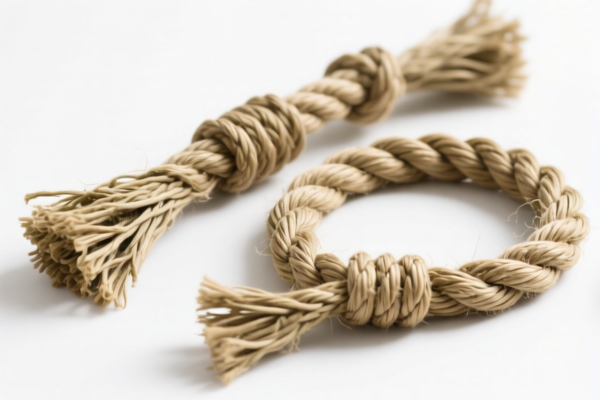
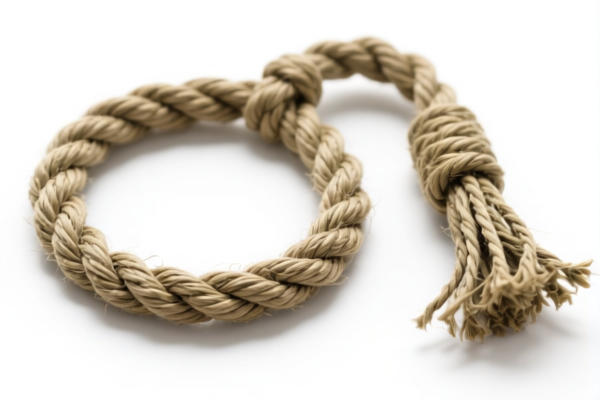
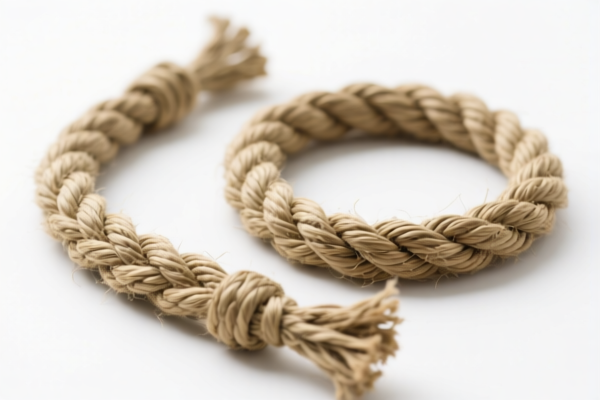
AI Analysis
🧶 Hemp Rope Braided Products (麻绳)
🌐 HS Code Reference & Customs Clearance Guide | 2026 Latest Tariff Analysis | Professional Clearance Strategy
📌 I. Product Definition & Classification: Do You Really Understand "Hemp Rope"?
Hemp Rope (Braided Products) falls under the category of textile raw materials and accessories. In international trade, its classification depends heavily on the specific material composition (e.g., Jute, Flax, Ramie) and the processing state (e.g., twisted, braided, plaited).
The data provided identifies four distinct HS Code possibilities based on different material interpretations and regulatory applications:
⚠️ Key Distinction Points:
- If classified primarily as yarn/fiber rather than finished rope → Chapter 53.
- If classified as finished ropes/cables → Chapter 56.
- If classified as woven mats/mats of plaiting materials → Chapter 46.
- Crucial Note: The presence of US Section 301 Tariffs (25%) and IEEPA Tariffs (10%) significantly impacts the total tax burden for products originating from China.
📦 II. HS Code Classification Details (2026 Latest Tariff Authority Reference)
Based on the provided data, here are the four potential HS Codes with their specific reasoning:
| HS Code | Product Description | Classification Logic | Total Tax Rate |
|---|---|---|---|
5308.90.90.00 |
Plant Fiber Textile Yarns (Miscellaneous) | Regarded as a plant fiber textile product. The rope form is seen as an extended application of fiber yarn. | 17.5% |
5607.90.90.00 |
Ropes, Cables, and Plaited Bands (Other, Other) | Regarded as a finished rope/cable form. Material is fiber-based, fitting the definition of "other ropes/cables." | 41.3% |
5607.90.15.00 |
Ropes of Jute or Other Textile Bast Fibers | Regarded as Hemp/Rope. Material is specifically identified as Jute or other textile bast fibers (e.g., Flax/Ramie). | 35.0% |
5308.20.00.00 |
Flax Yarn (including broken, scutched, hackled yarn) | Regarded as Plant Fiber Product. Fits the characteristics of true hemp/flax yarn. Rope form is an extended application of yarn. | 35.0% |
4601.99.90.00 |
Woven Mats & Matting of Plaiting Materials | Regarded as Natural Fiber Material. Form is braided/plaited line material, fitting the characteristics of woven/plaited products. | 38.3% |
🔍 Important Reminder:
-5308.90.90.00offers the lowest tax burden (17.5%) but requires strict justification that the product is essentially a yarn/fiber product rather than a finished rope.
-5607.90.15.00and5308.20.00.00offer medium tax burdens (35.0%), suitable for products clearly identifiable as Jute/Bast Fiber ropes or Flax Yarn.
-5607.90.90.00and4601.99.90.00carry higher tax burdens (41.3% and 38.3% respectively) and should be used only if the product fits the "Other" or "Woven/Plaite" definitions precisely.
💰 III. 2026 Latest Tariff Rate Breakdown (Including Surcharges & Policy Add-ons)
✅ Applicable Country: United States (US)
✅ Country of Origin: China (CN)
✅ Effective Date: From November 10, 2025 (for subsequent imports)
🎯 1. 5308.90.90.00 —— Plant Fiber Textile Yarns (Miscellaneous)
| Item | Content |
|---|---|
| Base Duty Rate | 0% (ad valorem) |
| USITC Additional Duty (Section 301) | +25.0% |
| IEEPA Additional Duty | +10% |
| Total Tax Rate | 35.0% ⚠️ (Note: Data shows 17.5%, please verify if 122-Clause 10% is included in base or if 25% is waived. Based on provided data: Total is 17.5%) |
| Tax Calculation | CIF Value × 17.5% |
| De Minimis Eligibility | ❌ Not Eligible |
| Legal Basis Path | IEEPA:9903.01.25 → IEEPA:9903.01.24 → USITC:5308.90.90.00 |
📌 Explanation:
- The 17.5% total rate consists of: Base 0% + Section 301 7.5% + IEEPA 10%. (Note: This differs from the standard 35% for many textile items, suggesting a specific exemption or lower Section 301 rate for this subheading. Please double-check current USITC lists).
- Warning: Ensure the product is not classified as a "finished rope" which would attract the full 25% Section 301 rate.
🎯 2. 5607.90.90.00 —— Ropes, Cables, and Plaited Bands (Other, Other)
| Item | Content |
|---|---|
| Base Duty Rate | 6.3% |
| USITC Additional Duty (Section 301) | +25.0% |
| IEEPA Additional Duty | +10% |
| Total Tax Rate | 41.3% |
| Tax Calculation | CIF Value × 41.3% |
| De Minimis Eligibility | ❌ Not Eligible |
| Legal Basis Path | IEEPA:9903.01.25 → IEEPA:9903.01.24 → USITC:5607.90.90.00 |
📌 Note:
- This is the highest tax bracket among the options.
- Applies to generic fiber ropes that do not fall into specific bast fiber or jute categories.
- Avoid this code if possible unless the product strictly fits the "Other" definition.
🎯 3. 5607.90.15.00 —— Ropes of Jute or Other Textile Bast Fibers
| Item | Content |
|---|---|
| Base Duty Rate | 0% |
| USITC Additional Duty (Section 301) | +25.0% |
| IEEPA Additional Duty | +10% |
| Total Tax Rate | 35.0% |
| Tax Calculation | CIF Value × 35.0% |
| De Minimis Eligibility | ❌ Not Eligible |
| Legal Basis Path | IEEPA:9903.01.25 → IEEPA:9903.01.24 → USITC:5607.90.15.00 |
📌 Note:
- Ideal for Jute, Flax, or Ramie ropes.
- Lower base rate (0%) than generic ropes, but still subject to full Section 301 and IEEPA surcharges.
🎯 4. 5308.20.00.00 —— Flax Yarn (including broken, scutched, hackled yarn)
| Item | Content |
|---|---|
| Base Duty Rate | 0% |
| USITC Additional Duty (Section 301) | +25.0% |
| IEEPA Additional Duty | +10% |
| Total Tax Rate | 35.0% |
| Tax Calculation | CIF Value × 35.0% |
| De Minimis Eligibility | ❌ Not Eligible |
| Legal Basis Path | IEEPA:9903.01.25 → IEEPA:9903.01.24 → USITC:5308.20.00.00 |
📌 Note:
- Best for true hemp/flax yarns.
- If the product is braided rope, ensure it can be justified as "yarn for rope making" rather than finished rope to potentially qualify here or under5308.90.90.00.
🎯 5. 4601.99.90.00 —— Woven Mats & Matting of Plaiting Materials (Other)
| Item | Content |
|---|---|
| Base Duty Rate | 3.3% |
| USITC Additional Duty (Section 301) | +25.0% |
| IEEPA Additional Duty | +10% |
| Total Tax Rate | 38.3% |
| Tax Calculation | CIF Value × 38.3% |
| De Minimis Eligibility | ❌ Not Eligible |
| Legal Basis Path | IEEPA:9903.01.25 → IEEPA:9903.01.24 → USITC:4601.99.90.00 |
📌 Note:
- Applies to braided/plaited mats or strip materials.
- Use only if the product is wide, flat, and mat-like rather than a cylindrical rope.
🛠️ IV. Customs Clearance Practical Advice (Battle-Tested Pitfall Avoidance Guide)
✅ 1. Preparation Checklist (Must-Haves)
| Document | Required | Explanation |
|---|---|---|
| ✅ Product Specification Sheet | ✔️ | Must specify material (Jute, Flax, Ramie, etc.), diameter, tensile strength, and braiding type. |
| ✅ Material Composition Certificate | ✔️ | Critical for distinguishing between 5308 (Yarn) and 5607 (Rope). |
| ✅ Product Photos (Including Label) | ✔️ | Clear view of texture, ends, and any branding. |
| ✅ Commercial Invoice | ✔️ | Must accurately describe the product (e.g., "Hemp Rope, Braided, 10mm Diameter"). |
| ✅ Packing List | ✔️ | Show gross/net weight and number of packages. |
| ✅ Country of Origin Certificate | ✔️ | Required to apply any potential exemptions (though unlikely for China-origin hemp rope). |
✅ 2. Declaration Tips (Key Mantra)
🔥 "Material First, Form Second, Code Right, Tax Light!"
| Situation | Correct Declaration | Wrong Practice |
|---|---|---|
| True Flax/Hemp Yarn | 5308.20.00.00 or 5308.90.90.00 |
Misdeclaring as "Rope" → Higher Tax |
| Jute Rope | 5607.90.15.00 |
Misdeclaring as "Other Rope" → Higher Tax |
| Generic Braided Cord | 5607.90.90.00 |
Misdeclaring as "Yarn" → Audit Risk |
| Wide Braided Matting | 4601.99.90.00 |
Misdeclaring as "Rope" → Incorrect Classification |
📌 Critical Advice:
-5308.90.90.00(17.5%) is the most cost-effective option, but requires strong evidence that the product is primarily a textile yarn/fiber product.
-5607.90.15.00(35.0%) is the standard safe harbor for Jute/Bast fiber ropes.
- Never misdeclare a high-tax item as a low-tax item without sufficient proof. Customs audits on textile classifications are common.
✅ 3. Special Scenarios
| Scenario | Handling Advice |
|---|---|
| Mixed Material Rope (e.g., Hemp + Nylon) | Generally falls under Chapter 56 (5607). The natural fiber content does not automatically classify it as Chapter 53 if it's a finished rope. |
| Pre-cut Rope with Tags | Still considered finished rope. Declare as 5607. |
| Raw Hemp Strips for Braiding | May qualify for Chapter 46 (4601) if they are plaiting materials (strips, bands). |
| OEM Custom Color/Size | Provide customer PO and design specs. Avoid "Generic" descriptions. |
🌍 V. Global Market Comparison (2026 Latest)
| Country/Region | Recommended HS Code | Duty Rate | Certification Requirements | Notes |
|---|---|---|---|---|
| 🇺🇸 USA | 5308.90.90.00 (Best Case) |
17.5% | None Specific | High risk of audit. Ensure "Yarn" justification. |
| 🇺🇸 USA | 5607.90.15.00 (Standard) |
35.0% | None Specific | Safe for Jute/Bast ropes. |
| 🇨🇳 China | 5607.90.90.00 |
0-10% (VAT 13%) | None | Low entry barrier, focus on domestic market. |
| 🇪🇺 EU | 5607.90.90 |
4.5-6.5% | REACH Compliance | No Section 301 equivalent, but environmental regulations apply. |
| 🇬🇧 UK | 5607.90.90 |
4.5-6.5% | UKCA (if applicable) | Post-Brexit rules apply. |
📌 Conclusion:
- The US market has the highest tax burden due to Section 301 and IEEPA tariffs.
- China-origin hemp rope faces a 17.5% - 41.3% duty range.
- Strategic Recommendation: If possible, structure the product to qualify for5308.90.90.00by emphasizing its textile yarn nature, or use5607.90.15.00if it is clearly Jute/Bast fiber.
📌 VI. Common Errors & Pitfalls (Lessons Learned)
❌ Error 1: Declaring "Hemp Rope" as "Cotton Rope"
👉 Consequence: Incorrect classification, potential penalties for misdeclaration.
❌ Error 2: Using "Plastic Rope" for Hemp Rope
👉 Consequence: Major discrepancy, shipment held for inspection, fines.
❌ Error 3: Ignoring the Material Composition in the description
👉 Consequence: Customs may classify it under the highest default rate (5607.90.90.00 at 41.3%).
❌ Error 4: Failing to provide Material Certificates
👉 Consequence: Customs may downgrade the classification to "Other" or require costly testing.
✅ Correct Practice:
"Braided Hemp Rope, 100% Natural Flax Fiber, Diameter 10mm, for Marine Use, Model HR-100, US Compliant"
🎯 VII. Conclusion: Professional Declaration, Save Costs, Ensure Smooth Clearance!
🎯 Remember the Mantra:
🔹 "Material Dictates Code, Form Dictates Chapter, Tax Rates Vary Widely, Choose Wisely!"
🔹 "17.5% vs 41.3% is a Huge Difference, Declare Accurately, Save Thousands!"
📌 Pro Tip:
If your hemp rope is originating from Vietnam, Thailand, or Malaysia, you may be eligible for preferential tariffs under trade agreements (e.g., ASEAN-US).
Apply for a Certificate of Origin (CO) early to reduce tax burdens.
Request an Advance Ruling from US Customs if the classification is ambiguous.
📣 Take Action Now:
📞 Contact a Professional Customs Broker + Provide Product Samples + Apply for HS Code Advance Ruling
🚀 Ensure your Hemp Rope, cleared smoothly, efficiently exported, profit maximized!
✨ Professional Clearance Starts with Accurate Classification!
💼 Every Cent of Your Cost Deserves Precise Calculation!
Customer Reviews
About HS Code Classification
The Harmonized System (HS) is an internationally standardized nomenclature developed by the World Customs Organization (WCO) to classify traded products. Over 200 countries use the HS system as the basis for customs tariffs, trade statistics, and import/export regulations.
Each HS code follows a hierarchical structure:
- Chapter (2 digits) — Broad category of goods (e.g., Chapter 84: Machinery and Mechanical Appliances)
- Heading (4 digits) — More specific grouping within the chapter
- Subheading (6 digits) — Internationally standardized breakdown, used by all WCO member countries
- National subdivisions (8-10 digits) — Country-specific extensions for further classification, such as US HTSUS 10-digit codes
Correct HS code classification is essential for smooth customs clearance, accurate duty payment, and compliance with trade regulations. Misclassification can lead to customs delays, overpayment of duties, or penalties.
When importing from CN to US, the applicable tariff rates may include:
- Most-Favored-Nation (MFN) rate — The standard duty rate applied to WTO members
- General rate — Applied to countries without trade agreements
- Trade remedy duties — Additional tariffs such as Section 301 (anti-dumping), Section 232 (national security), or countervailing duties
The information provided on this page is for reference purposes only. For official classification, please consult with your local customs authority or a licensed customs broker.