Hemp Rope Woven Products
CN → US| HS Code | Tariff Rate | Origin | Destination | Doc |
|---|---|---|---|---|
| 4601999000 | 38.3% | CN | US | Official Doc |
| 4602192940 | 40.3% | CN | US | Official Doc |
| 6310102010 | 17.5% | CN | US | Official Doc |
| 6310902000 | 17.5% | CN | US | Official Doc |
| 5308200000 | 35.0% | CN | US | Official Doc |
| 5311004010 | 35.0% | CN | US | Official Doc |
Product Images
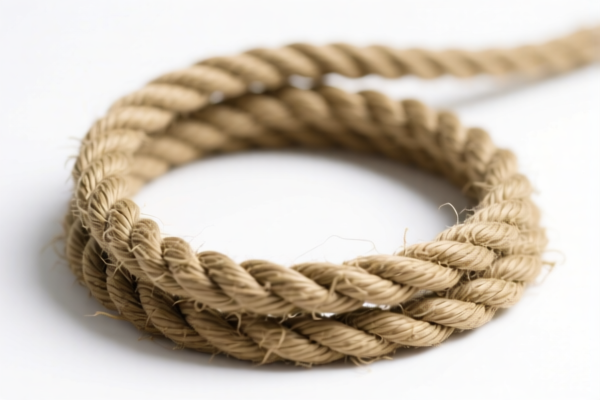

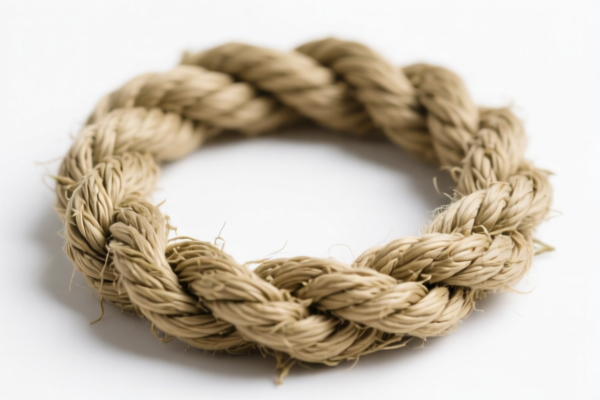
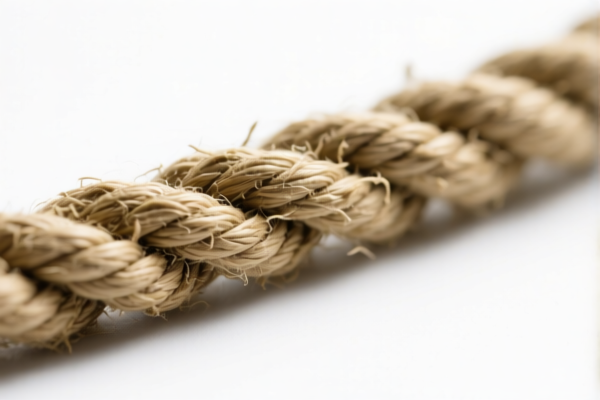
AI Analysis
🌿 Hemp Rope Woven Products & Vegetable Fiber Articles
🌐 HS Code Reference & Customs Clearance Guide | 2026 Latest Tariff Analysis | Professional Compliance Strategy
📌 I. Product Definition & Classification: What Exactly Are "Hemp Rope Woven Products"?
"Hemp Rope Woven Products" is a broad term in international trade that typically refers to finished or semi-finished goods made from natural vegetable fibers (specifically true hemp/kapok/jute/etc.) using weaving, braiding, or plaiting techniques.
In customs classification, these are not simply "ropes" (which fall under Chapter 56). Instead, they are often classified based on their final form: 1. Yarns/Threads: If twisted but not yet woven into fabric. 2. Woven Fabrics: Flat textiles made from vegetable fibers. 3. Plaited/Basketry Articles: Items made by plaiting materials (heading 46), such as mats, bags, or decorative items. 4. Scrap/Rags: If the material is waste or worn-out textile goods.
⚠️ Critical Distinction:
- If the product is a loose yarn of true hemp → Classify under Chapter 53.
- If the product is a woven fabric (flat sheet) → Classify under Chapter 53 (if distinct) or Chapter 52/54 (if blended).
- If the product is a plaited item (bag, mat, basket) made from vegetable materials (including hemp rope strips) → Classify under Chapter 46.
- If the product is scrap/worn-out textile material → Classify under Chapter 63.
📦 II. HS Code Classification Details (2026 Latest Tariff Authority Comparison)
Based on the provided data, here are the four specific classifications for hemp-related vegetable textile products:
| HS Code | Product Description | Application Scenario | Key Features |
|--------|--------------------------|--------------------------|
| 5308.20.00.00 | Yarn of other vegetable textile fibers; paper yarn: True hemp yarn | Raw hemp yarn, hemp threads for knitting/weaving | Pure vegetable fiber yarn (True Hemp/Kapok) |
| 5311.00.40.10 | Woven fabrics of other vegetable textile fibers... Subject to man-made fiber restraints: Other | Woven hemp fabric mixed with cotton/man-made fibers | Vegetable fiber fabric + synthetic/cotton blend |
| 4601.99.90.00 | Plaits and similar products... Other | Plaited hemp mats, screens, woven rope strips | Plaited/interlaced vegetable materials (not fully woven fabric) |
| 4602.19.29.40 | Basketwork... Luggage, handbags and flatgoods... Other | Hemp rope handbags, luggage, flat goods, baskets | Finished articles made directly from plaiting materials |
| 6310.10.20.10 | Used or new rags... of textile materials: Of cotton | Scrap hemp/cotton twine, worn-out rope | Sorted scrap material (Note: Description says "Of cotton", but code may apply to mixed vegetable scrap if specified) |
| 6310.90.20.00 | Used or new rags... Other | General textile waste, hemp scrap, old ropes | Unsorted or other textile waste |
🔍 Key Reminder:
- "Hemp Rope" itself is often a plaiting material (Chapter 46) or yarn (Chapter 53), not a "woven fabric" (Chapter 58/52).
- If you are exporting finished bags/mats made from hemp rope, use 4602 or 4601.
- If you are exporting hemp yarn for others to weave, use 5308.20.00.00.
💰 III. 2026 Latest Tariff Rate Breakdown (Including Surtaxes & Policy Add-ons)
✅ Applicable Country: United States (US)
✅ Origin: China (CN)
✅ Effective Time: Current US Trade Policy (Section 301 / IEEPA)
🎯 1. 5308.20.00.00 —— True Hemp Yarn (Vegetable Fiber Yarn)
| Item | Content |
|---|---|
| Base Tariff | 0.0% (ad valorem) |
| Section 301 Surtax | +25.0% |
| Total Tax Rate | 25.0% |
| Tax Calculation | CIF Value × 25% |
| De Minimis Exemption | ❌ Not Eligible (Section 301 goods are generally excluded from de minimis relief) |
| Legal Basis Path | USITC:5308.20.00.00 → SECTION301:Footnote9903.20.00 |
📌 Explanation:
- True hemp yarn is subject to the standard 25% Section 301 surtax.
- There is no additional IEEPA 10% listed for this specific code in the provided data, totaling 25%.
- This is a high-cost item for importers; ensure margins account for this.
🎯 2. 5311.00.40.10 —— Woven Fabrics (Vegetable Fiber + Man-Made/Cotton)
| Item | Content |
|---|---|
| Base Tariff | 0.0% |
| Section 301 Surtax | +25.0% |
| Total Tax Rate | 25.0% |
| Tax Calculation | CIF Value × 25% |
| De Minimis Exemption | ❌ Not Eligible |
| Legal Basis Path | USITC:5311.00.40.10 → SECTION301:Footnote9903.00.40 |
📌 Note:
- Woven fabrics of vegetable fibers (even if blended) face the same 25% surtax.
- Be careful with the description: "Subject to man-made fiber restraints" may trigger additional quota or monitoring requirements in some contexts, though the tax is fixed at 25%.
🎯 3. 4601.99.90.00 —— Plaited Materials (Mats, Screens, Strips)
| Item | Content |
|---|---|
| Base Tariff | 3.3% |
| Section 301 Surtax | +25.0% |
| Total Tax Rate | 28.3% |
| Tax Calculation | CIF Value × 28.3% |
| De Minimis Exemption | ❌ Not Eligible |
| Legal Basis Path | USITC:4601.99.90.00 → SECTION301:Footnote9903.46.01 |
📌 Explanation:
- Plaited articles (like hemp mats or woven strips) have a higher base rate (3.3%) plus 25% surtax.
- Total 28.3% is the highest among non-scrap items in this list.
- Ensure the product is truly "plaited" and not "woven fabric" to avoid misclassification.
🎯 4. 4602.19.29.40 —— Basketwork/Luggage (Hemp Bags, Handbags)
| Item | Content |
|---|---|
| Base Tariff | 0.0% |
| Section 301 Surtax | 0.0% |
| Total Tax Rate | 0.0% |
| Tax Calculation | No Tax |
| De Minimis Exemption | ❌ Not Eligible (Usually excluded, but tax is 0% anyway) |
| Legal Basis Path | USITC:4602.19.29.40 → EXEMPT |
📌 Important:
- This is the most tax-efficient code!
- Finished articles like hemp rope handbags, luggage, or flatgoods (if classified under Heading 4602 as basketwork) currently have 0% total tax.
- Strategy: If your "hemp rope woven product" can be classified as a bag, basket, or flatgood (not just a mat or yarn), aim for 4602.19.29.40 to save 25-28%.
🎯 5. 6310.10.20.10 & 6310.90.20.00 —— Textile Rags/Scrap
| Item | Content |
|---|---|
| Base Tariff | 0.0% |
| Section 301 Surtax | +7.5% |
| Total Tax Rate | 7.5% |
| Tax Calculation | CIF Value × 7.5% |
| De Minimis Exemption | ❌ Not Eligible |
| Legal Basis Path | USITC:6310.10.20.10 → SECTION301:Footnote9903.63.10 |
📌 Note:
- If you are exporting waste, scrap, or worn-out hemp ropes/rags, the tax is only 7.5%.
- Do NOT use these codes for new products. Misdeclaration as "scrap" for new goods is fraud.
🛠️ IV. Customs Clearance Practical Advice (Avoid Pitfalls)
✅ 1. Preparation Checklist (Essential Documents)
| Document | Required? | Description |
|---|---|---|
| ✅ Product Specification | ✔️ | Clearly state: "Hemp Rope Handbag" vs. "Hemp Yarn". Material composition is key. |
| ✅ Photos | ✔️ | Show the finished product. Is it a bag? A mat? A roll of yarn? |
| ✅ Bill of Lading | ✔️ | Ensure description matches HS Code (e.g., "Woven Hemp Bags" not just "Textiles"). |
| ✅ Certificate of Origin | ✔️ | Required for verifying China origin for Section 301 applicability. |
| ✅ Commercial Invoice | ✔️ | Itemized list. Do not use generic terms like "Hemp Products". |
✅ 2. Declaration Strategy (Key Tips)
🔥 "Know Your Form: Yarn vs. Fabric vs. Article"
| Product Type | Correct HS Code | Tax Rate | Risk if Misclassified |
|---|---|---|---|
| Hemp Yarn/Rope (Loose) | 5308.20.00.00 |
25% | Misclassify as bag → Fraud |
| Woven Hemp Fabric (Roll) | 5311.00.40.10 |
25% | Misclassify as scrap → 7.5% (Penalty for underpayment) |
| Hemp Mat/Screen (Plaited) | 4601.99.90.00 |
28.3% | Overpay by 3.3% if classified as fabric |
| Hemp Bag/Luggage | 4602.19.29.40 |
0% | Best Option for Finished Goods |
| Used/Old Hemp Rope | 6310.90.20.00 |
7.5% | Must prove "used/worn" status |
✅ 3. Special Considerations
| Scenario | Recommendation |
|---|---|
| New Hemp Handbags | Declare as 4602.19.29.40 (0% tax). Ensure material is "plaited vegetable materials" (hemp rope). |
| Hemp Fabric for Garment Making | Declare as 5311.00.40.10 (25% tax). Provide fabric weight (GSM) and weave type. |
| Hemp Yarn for Knitting | Declare as 5308.20.00.00 (25% tax). Specify "True Hemp". |
| Exporting Waste/Scrap | Declare as 6310.90.20.00 (7.5% tax). Provide evidence of usage/wear. |
🌍 V. Global Market Comparison (2026 Overview)
| Country/Region | Recommended HS Code | Tariff (China Origin) | Notes |
|---|---|---|---|
| 🇺🇸 USA | 4602.19.29.40 |
0% | Best for finished bags/mats. |
| 🇺🇸 USA | 5308.20.00.00 |
25% | High tax for yarn. |
| 🇪🇺 EU | 4602.19.29.40 |
~0-3% | Check EU CH code for specifics. No Section 301. |
| 🇨🇳 China | 4602.19.29.40 |
~10% | Import tax into China. |
📌 Conclusion:
- For finished hemp products (bags, mats), the US offers 0% duty if correctly classified under Heading 4602.
- For raw materials (yarn, fabric), expect 25% surtax.
- Always declare the final form of the product, not just the material.
📌 VI. Common Errors & Pitfalls (Lessons Learned)
❌ Error 1: Declaring "Hemp Rope Bags" as "Textile Fabrics" (5311)
👉 Consequence: Pay 25% tax instead of 0%. Loss of profit.
❌ Error 2: Declaring "New Hemp Yarn" as "Scrap/Rags" (6310)
👉 Consequence: Customs Audit & Penalties. Fraud risk. High fines.
❌ Error 3: Using generic term "Hemp Products" on Invoice
👉 Consequence: Customs delay. Request for additional documentation. Possible reclassification.
❌ Error 4: Confusing "Plaited" (4601) with "Woven" (5311)
👉 Consequence: Misclassification. Plaited items have different base rates (3.3% vs 0%).
✅ Correct Approach:
"Hemp Rope Handbag, Woven, Natural Color, Handle Attached" → 4602.19.29.40
"True Hemp Yarn, 20 Strand, Unbleached" → 5308.20.00.00
🎯 VII. Conclusion: Smart Classification Saves Money!
🎯 Remember the Golden Rule:
🔹 "Finished Bags? 0%! (4602)"
🔹 "Raw Yarn/Fabric? 25%! (5308/5311)"
🔹 "Scrap? 7.5%! (6310)"
📌 Pro Tip:
If you are exporting hemp rope woven bags, ensure your product description emphasizes "Plaited Vegetable Materials" and "Finished Article" to qualify for 4602.19.29.40 with 0% tax. Avoid using terms like "fabric" or "yarn" for finished bags.
✨ Professional Clearance, Start with Accurate Classification!
💼 Every percent of tax matters in global trade!
Customer Reviews
About HS Code Classification
The Harmonized System (HS) is an internationally standardized nomenclature developed by the World Customs Organization (WCO) to classify traded products. Over 200 countries use the HS system as the basis for customs tariffs, trade statistics, and import/export regulations.
Each HS code follows a hierarchical structure:
- Chapter (2 digits) — Broad category of goods (e.g., Chapter 84: Machinery and Mechanical Appliances)
- Heading (4 digits) — More specific grouping within the chapter
- Subheading (6 digits) — Internationally standardized breakdown, used by all WCO member countries
- National subdivisions (8-10 digits) — Country-specific extensions for further classification, such as US HTSUS 10-digit codes
Correct HS code classification is essential for smooth customs clearance, accurate duty payment, and compliance with trade regulations. Misclassification can lead to customs delays, overpayment of duties, or penalties.
When importing from CN to US, the applicable tariff rates may include:
- Most-Favored-Nation (MFN) rate — The standard duty rate applied to WTO members
- General rate — Applied to countries without trade agreements
- Trade remedy duties — Additional tariffs such as Section 301 (anti-dumping), Section 232 (national security), or countervailing duties
The information provided on this page is for reference purposes only. For official classification, please consult with your local customs authority or a licensed customs broker.