Hemp Textile Composite Board
CN → US| HS Code | Tariff Rate | Origin | Destination | Doc |
|---|---|---|---|---|
| 5302100000 | 35.0% | CN | US | Official Doc |
| 5302900000 | 35.0% | CN | US | Official Doc |
| 1404901000 | 0.0% | CN | US | Official Doc |
| 1404909090 | 35.0% | CN | US | Official Doc |
| 5308200000 | 35.0% | CN | US | Official Doc |
Product Images



AI Analysis
🌿 Hemp Textile Composite Board: HS Code Classification & Customs Clearance Guide (2026)
🌐 HS Code Reference & Customs Strategy | 2026 Latest Tariff Analysis | Professional Entry Compliance
📌 I. Product Definition & Classification: Do You Truly Understand "Hemp Textile Composite Board"?
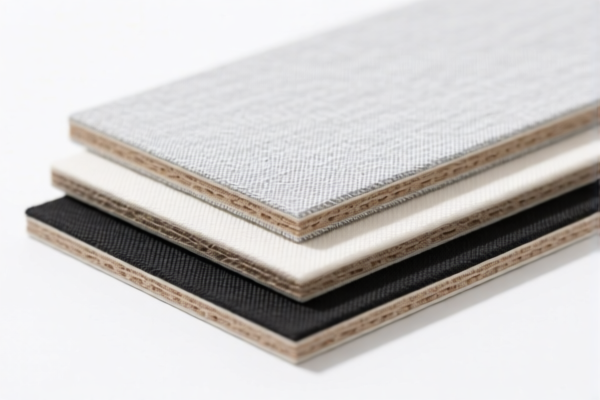
A Hemp Textile Composite Board is a engineered material combining natural hemp fibers (often bast fibers) with binders or other textiles to create a rigid or semi-rigid panel. In international trade, its classification depends heavily on the state of the fiber (raw/semi-processed vs. woven/fabric) and its final form (board/panel vs. raw fiber).
⚠️ Key Distinction Point:
- If the hemp is in a raw, unspun, or scutching state (fibers not yet woven into fabric) → Likely falls under Chapter 53 (Vegetable Textile Fibers).
- If the hemp is processed into a general plant product or used as a raw material for non-textile boards → May fall under Chapter 14 (Other Vegetable Products).
- Note: Data provided focuses on Chapter 53 (Textile Fibers) and Chapter 14 (Miscellaneous Plant Products).
📦 II. HS Code Classification Details (Based on Provided Data)
The following HS Codes are matched based on the material (Hemp/Cannabis sativa L.) and form (Fiber/Board/Raw State).
| HS Code | Product Description & Matching Logic | Tax Rate (US Import from China) |
|---|---|---|
5302.10.00.00 |
Hemp Fibers, Raw or Retted, But Not Combed or Otherwise Prepared for Spinning. ✅ Match Logic: Matches material (Hemp) and form (Fiber belongs to unspun raw/semi-processed state). Complies with the definition of hemp in raw or soaked state. |
35.0% |
5302.90.00.00 |
Other Hemp (Cannabis sativa L.) Textile Fibers and Waste Thereof. ✅ Match Logic: Material (Hemp fiber) matches classification for Hemp and its processed fibers. Form belongs to raw or processed but unspun category. |
35.0% |
1404.90.10.00 |
Other Vegetable Products (Plant Fibers/Products). ✅ Match Logic: Hemp fiber belongs to plant fibers, matching the material attribute of "Plant Hair/Plant Products". No material conflict. |
0.5¢/kg + 35.0% |
1404.90.90.90 |
Other Vegetable Products (Miscellaneous). ✅ Match Logic: Product belongs to plant fibers (Vegetable Product), consistent with "Other Vegetable Products" material attribute. No material conflict. |
35.0% |
5308.20.00.00 |
Other Woven Fabrics of Vegetable Textile Fibers (Hemp). ✅ Match Logic: Matches material and form. Hemp is a vegetable fiber, matching the "Vegetable Fiber" material definition. (Note: This code implies woven fabric; if your "Board" is made of woven hemp mats, this may apply, but typically boards are composite panels. Data indicates match based on "Plant Fiber" definition.) |
35.0% |
🔍 Critical Observation:
All listed HS Codes carry a 35% Total Tax Rate (Base + Additional), with1404.90.10.00having an additional specific duty of 0.5¢/kg.
💰 III. 2026 Latest Tariff Rate Breakdown (Including Additional Duties)
✅ Applicable Country: United States (US)
✅ Origin: China (CN)
✅ Effective Date: November 10, 2025 (and subsequent imports)
🎯 1. 5302.10.00.00 & 5302.90.00.00 — Hemp Fibers (Raw/Unspun)
| Item | Details |
|---|---|
| Base Tariff | 0.0% (Ad Valorem) |
| Section 301 Additional Tariff | +25.0% (USITC Footnote) |
| 122 Clause Tariff | +10.0% (Specific to China-origin hemp/vegetable fibers) |
| Total Tariff | 35.0% |
| Calculation | CIF Value × 35% |
| De Minimis Exemption | ❌ Not Applicable (High-value industrial materials) |
| Legal Basis | USITC:5302.10.00.00 → 301:25% + 122:10% |
📌 Explanation:
- The 25% is the standard Section 301 tariff on many Chinese imports.
- The 10% is a specific "122 Clause" tariff often applied to certain agricultural/vegetable fiber imports from China.
- Total 35% is a significant cost factor. Do not overlook this in pricing models.
🎯 2. 1404.90.10.00 — Other Plant Products (Specific Rate)
| Item | Details |
|---|---|
| Base Tariff | 0.5¢/kg (Specific Duty) |
| Section 301 Additional Tariff | +25.0% (Ad Valorem on CIF) |
| 122 Clause Tariff | +10.0% (Ad Valorem on CIF) |
| Total Tariff | 0.5¢/kg + 35.0% |
| Calculation | (Weight in kg × $0.005) + (CIF Value × 35%) |
| De Minimis Exemption | ❌ Not Applicable |
📌 Note: This code adds a small per-kg cost on top of the high ad valorem rate. It is often used for bulk plant materials that don't fit specific textile descriptions.
🎯 3. 1404.90.90.90 — Other Vegetable Products (General)
| Item | Details |
|---|---|
| Base Tariff | 0.0% |
| Section 301 Additional Tariff | +25.0% |
| 122 Clause Tariff | +10.0% |
| Total Tariff | 35.0% |
| Legal Basis | USITC:1404.90.90.90 → 301:25% + 122:10% |
📌 Note: This is a "catch-all" for plant products not specified elsewhere. If the "Composite Board" is viewed primarily as a "processed plant product" rather than a "textile fiber," this code may be used. However, Chapter 53 is more specific to hemp fibers.
🎯 4. 5308.20.00.00 — Other Woven Fabrics of Vegetable Fibers
| Item | Details |
|---|---|
| Base Tariff | 0.0% |
| Section 301 Additional Tariff | +25.0% |
| 122 Clause Tariff | +10.0% |
| Total Tariff | 35.0% |
| Legal Basis | USITC:5308.20.00.00 → 301:25% + 122:10% |
📌 Caution: This code is for woven fabrics. If your "Composite Board" is a rigid panel made from bonded hemp fibers (not woven fabric), this code might be challenged by Customs as incorrect. However, the provided data matches it based on "Plant Fiber" definition. Use with caution and provide technical data sheets proving if it is woven or non-woven/board-like.
🛠️ IV. Customs Clearance Practical Advice (Pitfall Avoidance Guide)
✅ 1. Documentation Checklist (Mandatory)
| Document | Required? | Explanation |
|---|---|---|
| ✅ Technical Data Sheet | ✔️ | Must detail: Fiber type (Hemp/Cannabis sativa L.), processing method (retted, scutched, woven, bonded), and form (raw fiber vs. board). |
| ✅ Commercial Invoice | ✔️ | Clearly state: "Hemp Textile Composite Board" or "Raw Hemp Fibers". Avoid vague terms like "Natural Material". |
| ✅ Packing List | ✔️ | Include weight (for 1404.90.10.00 specific duty calculation). |
| ✅ Proof of Origin | ✔️ | CO (Certificate of Origin) if claiming any potential exemptions (though unlikely for China-origin hemp under current 301/122 rules). |
| ✅ Product Photos | ✔️ | Show the physical state: Is it loose fiber? Rolls of fabric? Rigid boards? |
| ✅ FDA/USDA Notice | ⚠️ | Hemp is a cannabis variety. Ensure compliance with USDA regulations if imported as plant material. FDA may also review if used in food/cosmetic-related composites. |
✅ 2. Declaration Tips (Critical)
🔥 "Clarify Form, Specify Material, Avoid Ambiguity!"
| Scenario | Correct Declaration | Wrong Practice |
|---|---|---|
| Raw Hemp Fibers (not woven) | HS: 5302.10.00.00 Desc: "Hemp Fibers, Raw, Unspun" |
Describe as "Textile Board" → May trigger Chapter 53 inspection. |
| Hemp Woven Fabric Rolls | HS: 5308.20.00.00 Desc: "Woven Hemp Fabric" |
Describe as "Fibers" → Classification error. |
| Composite Board (Bonded Hemp) | HS: 1404.90.90.90 or 5302.90.00.00 Desc: "Hemp Fiber Composite Panel" |
Vague "Wood Substitute" → Risk of reclassification to wood products (different tariffs). |
| Bulk Plant Fiber for Board Making | HS: 1404.90.10.00 Desc: "Other Plant Fibers, for Composite Board" |
No technical sheet → Customs may hold for inspection. |
✅ 3. Special Considerations for Hemp
| Issue | Handling Advice |
|---|---|
| Cannabis Classification | Hemp (Cannabis sativa L. with <0.3% THC) is legal for import. Provide THC Test Reports to prove it is industrial hemp, not marijuana. |
| Chapter 44 (Wood) vs. Chapter 53/14 | Do not misclassify hemp boards as "Wood Panels" (Chapter 44). Hemp is a fiber, not wood. Misclassification leads to severe penalties. |
Specific Duty (1404.90.10.00) |
Ensure the Weight on the invoice is accurate. The 0.5¢/kg adds up for heavy shipments. |
🌍 V. Global Market Comparison (2026)
| Country/Region | Recommended HS Code | Tariff (China Origin) | Key Certification |
|---|---|---|---|
| 🇺🇸 USA | 5302.10.00.00 or 1404.90.90.90 |
35.0% (+0.5¢/kg for 1404.10) | USDA/Hemp Compliance, THC Test |
| 🇨🇳 China | 5302.10.00.00 |
0% (Import) | N/A |
| 🇪🇺 EU | 5302.10.00.00 |
0% (Most Favored Nation) | Ecolabel, REACH |
| 🇬🇧 UK | 5302.10.00.00 |
0% | UKCA |
📌 Conclusion:
- USA imposes a 35% tariff on hemp fibers/boards from China due to Section 301 and 122 Clause.
- EU/UK generally have 0% tariffs for raw hemp fibers.
- Cost Advantage: If you can source hemp from non-China origins (e.g., Canada, EU, Russia), you may avoid the 35% US tariff.
📌 VI. Common Errors & Pitfalls (Lessons Learned)
❌ Error 1: Classifying Hemp Composite Board as "Wood Panels" (HS 4411/4412)
👉 Consequence: Customs rejects it; hemp is not wood. Reclassification to Chapter 53/14 with 35% tariff + penalties.
❌ Error 2: Ignoring THC Levels
👉 Consequence: Shipment held by CBP/USDA for drug inspection. Delayed clearance, potential destruction if THC >0.3%.
❌ Error 3: Vague Description "Natural Board"
👉 Consequence: Customs assigns highest duty rate or requests additional documentation, causing delays.
❌ Error 4: Missing Weight Declaration for 1404.90.10.00
👉 Consequence: Assessment of Specific Duty (0.5¢/kg) cannot be calculated, leading to provisional assessment or hold.
✅ Correct Practice:
"Hemp Textile Composite Board, Made from Industrial Hemp Fibers (Cannabis sativa L.), THC <0.3%, Non-Woven, 12mm Thickness, for Furniture Use."
🎯 VII. Conclusion: Professional Declaration, Cost Control, Compliance!
🎯 Remember These Key Points:
🔹 "Hemp is Fiber, Not Wood – Declare Chapter 53 or 14!"
🔹 "35% Tariff is Real – Plan Your Pricing and Supply Chain!"
🔹 "THC Proof is Mandatory – Avoid Customs Hold at All Costs!"
📌 Pro Tip:
If your hemp composite board is a finished furniture component, ensure the description reflects its use. However, the material (hemp fiber) dictates the HS Code in Chapters 53/14, not the end-use.
Consider Pre-Ruling (Advance Ruling) from CBP to confirm the correct HS Code for your specific composite structure.
📣 Immediate Action:
📞 Contact Customs Broker + Provide THC Test Report + Specify Fiber State (Raw/Woven/Composite)
🚀 Ensure smooth clearance, avoid penalties, and protect your profit margins!
✨ Professional Customs Clearance Starts with Precise Classification!
💼 Every Dollar Saved in Tariffs is Pure Profit!
Customer Reviews
About HS Code Classification
The Harmonized System (HS) is an internationally standardized nomenclature developed by the World Customs Organization (WCO) to classify traded products. Over 200 countries use the HS system as the basis for customs tariffs, trade statistics, and import/export regulations.
Each HS code follows a hierarchical structure:
- Chapter (2 digits) — Broad category of goods (e.g., Chapter 84: Machinery and Mechanical Appliances)
- Heading (4 digits) — More specific grouping within the chapter
- Subheading (6 digits) — Internationally standardized breakdown, used by all WCO member countries
- National subdivisions (8-10 digits) — Country-specific extensions for further classification, such as US HTSUS 10-digit codes
Correct HS code classification is essential for smooth customs clearance, accurate duty payment, and compliance with trade regulations. Misclassification can lead to customs delays, overpayment of duties, or penalties.
When importing from CN to US, the applicable tariff rates may include:
- Most-Favored-Nation (MFN) rate — The standard duty rate applied to WTO members
- General rate — Applied to countries without trade agreements
- Trade remedy duties — Additional tariffs such as Section 301 (anti-dumping), Section 232 (national security), or countervailing duties
The information provided on this page is for reference purposes only. For official classification, please consult with your local customs authority or a licensed customs broker.