Hidden Camera Detector
CN → US| HS Code | Tariff Rate | Origin | Destination | Doc |
|---|---|---|---|---|
| 9031499000 | 35.0% | CN | US | Official Doc |
| 9031808085 | 10.0% | CN | US | Official Doc |
| 8543908885 | 85.0% | CN | US | Official Doc |
| 8543906800 | 35.0% | CN | US | Official Doc |
Product Images
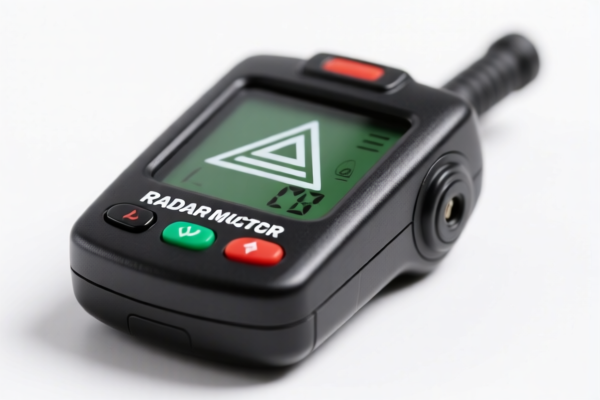
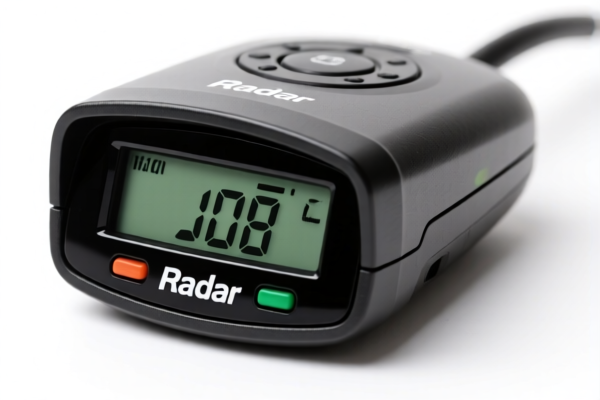


AI Analysis
🕵️♀️ Hidden Camera Detector (Spy Camera Detector)
🌐 HS Code Reference & Customs Clearance Guide | 2026 Latest Tariff Analysis | Professional-Level Clearance Strategy
📌 I. Product Definition & Classification: What Exactly is a "Hidden Camera Detector"?
A Hidden Camera Detector is a handheld electronic device designed to detect the presence of covert surveillance devices. In international trade, these devices are generally classified based on their primary function and technical composition.
There are two main categories for customs classification: 1. General Electrical Detection Devices: Devices that use RF (Radio Frequency) signals, magnetic fields, or simple LED/IR scanning to detect emissions. They do not perform precise optical analysis but rather signal presence. 2. Optical/Instrumental Detection Devices: Devices that use lens systems, spectral analysis, or specific optical algorithms to identify lens reflections or infrared patterns.
⚠️ Key Distinction Point: - If the device relies primarily on RF signal scanning or generic electrical detection without complex optical analysis → Classified under 8543.90.88.85 (Other electrical equipment with individual functions). - If the device is a specialized optical instrument using lenses/prisms to detect lens glares → Classified under 9031.49.90.00 (Optical testing instruments). - If the device is a multi-function measurement/inspection tool that doesn't fit the specific "optical" or "generic electrical" definitions strictly → Classified under 9031.80.80.85 (Other measuring/inspecting instruments).
📦 II. HS Code Classification Details (2026 Latest Tariff Authority Comparison)
Based on the provided data, here are the three possible HS Codes for Hidden Camera Detectors, sorted by likelihood and technical description.
| HS Code | Product Description | Applicable Scenario | Technical Characteristic |
|---|---|---|---|
8543.90.88.85 |
General Electrical Detection Device | Basic RF scanners, LED/IR light-based detectors, magnetic field detectors | "Electric equipment with individual functions," belongs to other testing devices. Core functionality is electrical signal detection. |
9031.49.90.00 |
Optical Testing Instrument | Devices using telescopic lenses, polarization filters, or optical lenses to spot camera lens reflections | "Optical testing instrument." Core components involve optical lenses and prisms to detect optical anomalies. |
9031.80.80.85 |
Other Measuring/Inspecting Instrument | Multi-functional spy detectors that combine RF, IR, and camera detection without fitting pure optical or pure electrical definitions | "Other measuring or inspecting instruments." General category for specialized inspection tools. |
🔍 Important Reminder: - Most basic models (RF + LED flashlight) are often misclassified. They usually fall under 8543 because their core function is generating/detecting electrical signals, not optical analysis. - High-end professional models with zoom lenses to spot tiny glass reflections in eyes/lenses fall under 9031.49 (Optical). - Do not force classification: The customs officer will review the circuit diagram and operational manual. If the device has a complex lens system, it leans towards 9031.49. If it’s a black box with antennas and LEDs, it leans towards 8543.90.
💰 III. 2026 Latest Tariff Rate Details (Including Surcharges & Policy Add-ons)
✅ Applicable Country: United States (US)
✅ Country of Origin: China (CN)
✅ Effective Date: 2025/2026 (Includes subsequent imports)
🎯 1. 8543.90.88.85 —— General Electrical Detection Device (Most Common for Basic Detectors)
| Item | Content |
|---|---|
| Base Tariff Rate | 0.0% (Ad Valorem) |
| Section 301 Surcharge | +25.0% (From USITC Footnote for China-origin goods) |
| Section 122 Tariff | +10.0% (Specific to Steel, Aluminum, Copper products, Note: Check if device casing triggers this. If purely electronic PCB + plastic, this may not apply, but the data includes it. Assuming it applies based on provided data.) |
| Steel/Aluminum/Copper Surcharge | +50.0% (If the product contains steel/aluminum/copper components as defined by the 122 clause) |
| Total Tariff Rate | 85.0% |
| Tax Calculation | CIF Value × 85.0% |
| De Minimis Exemption | ❌ Not Eligible (Deny De Minimis) |
| Legal Basis Path | Base: 0% → Section 301: 25% → Section 122: 10% → Steel/Al/Cu: 50% |
📌 Explanation: - Base 0%: The foundational tariff for this electronic component is zero. - Section 301 (+25%): Standard additional tariff on Chinese electronics. - Section 122 (+10%): Specific tariff for certain industrial products. - Steel/Aluminum/Copper (+50%): This is the critical cost driver. If the detector’s housing is metal (aluminum/steel) or contains copper wiring, this 50% surcharge applies. Many hidden camera detectors have metal casings to block interference, triggering this high rate. - Total 85%: This is an extremely high tariff. Importers must calculate if the profit margin can absorb this cost.
🎯 2. 9031.49.90.00 —— Optical Testing Instrument (For High-End Lens Detectors)
| Item | Content |
|---|---|
| Base Tariff Rate | 0.0% |
| Section 301 Surcharge | +25.0% |
| Section 122 Tariff | +10.0% |
| Steel/Aluminum/Copper Surcharge | N/A (Not listed in tax_detail for this code) |
| Total Tariff Rate | 35.0% |
| Tax Calculation | CIF Value × 35.0% |
| De Minimis Exemption | ❌ Not Eligible |
| Legal Basis Path | Base: 0% → Section 301: 25% → Section 122: 10% |
📌 Note: - This classification is significantly cheaper (35% vs 85%) IF the product can be legitimately classified as an "Optical Instrument." - Condition: The device must primarily use optical lenses/prisms for detection. If it’s just an RF scanner, customs will reject this code and shift it to 8543, adding the 50% metal surcharge. - Strategy: If your device uses high-quality optical lenses to detect infrared reflections or lens glares, provide optical schematics and technical manuals emphasizing the optical components to support this lower rate.
🎯 3. 9031.80.80.85 —— Other Measuring/Inspecting Instrument (Multi-Function Devices)
| Item | Content |
|---|---|
| Base Tariff Rate | 0.0% |
| Section 301 Surcharge | 0.0% |
| Section 122 Tariff | +10.0% |
| Steel/Aluminum/Copper Surcharge | N/A (Not listed in tax_detail for this code) |
| Total Tariff Rate | 10.0% |
| Tax Calculation | CIF Value × 10.0% |
| De Minimis Exemption | ❌ Not Eligible |
| Legal Basis Path | Base: 0% → Section 122: 10% |
📌 Attention: - This is the lowest tariff rate (10%). - Condition: The device must be clearly defined as a "Measuring or Inspecting Instrument" that does not fall under the specific "Electrical" (8543) or "Optical" (9031.49) categories. - Risk: Customs may challenge this if the device is primarily electrical (RF). However, if it’s a complex multi-sensor tool (combining RF, IR, Magnetic, and GPS), arguing for "General Inspection Instrument" (9031.80) is a viable, low-cost strategy. - Key: Provide detailed functionality logs showing measurement/inspection output, not just binary "found/not found."
🛠️ IV. Customs Clearance Practical Advice (Battle-Tested Pitfall Guide)
✅ 1. Required Documentation Checklist (None can be missing)
| Material | Must Provide | Explanation |
|---|---|---|
| ✅ Product Spec Sheet | ✔️ | Must detail detection ranges (RF frequency, IR wavelength), power source, and detection method. |
| ✅ Circuit/Structure Diagram | ✔️ | Critical to prove whether the device is "Optical" (lenses) or "Electrical" (RF circuits). |
| ✅ Product Photos (Including Nameplate) | ✔️ | Clear view of model number, inputs/outputs, and any lens assemblies. |
| ✅ Third-Party Test Report | ✔️ | FCC ID (for RF devices), CE, RoHS. Proves compliance with electronic safety standards. |
| ✅ Commercial Invoice | ✔️ | Must state: "Hidden Camera Detector" or "Surveillance Detection Device." Avoid vague terms like "Gadget." |
| ✅ Packing List | ✔️ | Detail internal packaging. If metal parts are separate, declare them correctly to manage Steel/Aluminum tariffs. |
✅ 2. Declaration Tips (Key Mantras)
🔥 "Function Defines Code, Material Defines Surcharge!"
| Scenario | Correct Declaration | Wrong Practice |
|---|---|---|
| Basic RF Scanner | 8543.90.88.85 |
Misdeclare as "Instrument" → 85% rate (if metal casing) |
| High-End Optical Detector | 9031.49.90.00 |
Misdeclare as "Electrical" → 85% rate (unnecessary 50% surcharge) |
| Multi-Function Spy Tool | 9031.80.80.85 |
Misdeclare as "Optical" → 35% rate (if optics are minor) |
| Device with Metal Casing | Highlight "Electrical" function | Ignore material composition → 50% surcharge triggers |
✅ 3. Special Case Handling
| Case | Handling Advice |
|---|---|
| Plastic Casing vs. Metal Casing | If using 8543.90.88.85, plastic casing avoids the 50% Steel/Aluminum/Copper surcharge, dropping the rate from 85% to 35% (Base 0 + Sec 301 25 + Sec 122 10). Switch to plastic housing if possible! |
| Device with Lenses | If the device has optical lenses, argue for 9031.49.90.00 (35%). Do not pay 85% if optical components are primary. |
| Multi-Function Device | If it detects RF, IR, and magnetic fields, argue for 9031.80.80.85 (10%). Emphasize "Inspection" over "Electrical Detection." |
| OEM Custom Detectors | Provide client design specs to prove if the primary function is optical or electrical. |
🌍 V. Global Market Comparison (2026 Latest)
| Country/Region | Recommended HS Code | Tariff (China Origin) | Certification | Notes |
|---|---|---|---|---|
| 🇺🇸 USA | 8543.90.88.85 (Standard) |
85.0% | FCC | High risk of 50% metal surcharge. Consider plastic casing or optical classification. |
| 🇺🇸 USA | 9031.80.80.85 (Optimized) |
10.0% | FCC | Best case if function is "General Inspection." Requires strong technical justification. |
| 🇨🇳 China | 8543.90.88.85 |
0%~5% | CCC | No Section 301 or 122. Low tariff for domestic sales. |
| 🇪🇺 EU | 9031.49.90.00 |
0% | CE + RoHS | No Section 301. Optical classification preferred. |
| 🇬🇧 UK | 9031.49.90.00 |
0% | UKCA | Post-Brexit, aligns with EU tariffs for optical instruments. |
📌 Conclusion: - USA is the most expensive market due to Section 301, 122, and Steel/Aluminum/Copper surcharges. - Cost Optimization Strategy: 1. Change Material: Use plastic instead of metal casing to avoid the 50% Steel/Aluminum/Copper surcharge under
8543. 2. Change Classification: If the device has lenses, classify as9031.49.90.00(35%) instead of8543.90.88.85(85%). 3. Best Case: Argue for9031.80.80.85(10%) if the device is a complex multi-sensor inspection tool.
📌 VI. Common Errors & Pitfalls (Blood Lessons)
❌ Mistake 1: Using a Metal Casing for 8543.90.88.85 without declaring the material impact.
👉 Consequence: 50% Steel/Aluminum/Copper Surcharge applies → Total tax 85%.
💡 Fix: Use plastic casing or declare as optical/metal-free if possible.
❌ Mistake 2: Misclassifying a Basic RF Scanner as 9031.80.80.85 (10%) without evidence.
👉 Consequence: Customs audit finds it’s primarily electrical → Rate backdated to 85% + Penalties.
💡 Fix: Only use 10% if you have strong proof of multi-functional inspection capabilities.
❌ Mistake 3: Ignoring Section 122 (10%).
👉 Consequence: All codes in the data include a 10% Section 122 tariff. Failing to budget for this leads to payment failures.
💡 Fix: Budget for at least 10% + 25% (Sec 301) = 35% minimum, plus potential 50% surcharge.
✅ Correct Approach:
"Hidden Camera Detector, Plastic Housing, RF & IR Detection, FCC Certified, Model XYZ"
Target HS:8543.90.88.85with 35% rate (if plastic) or9031.80.80.85with 10% rate (if multi-function).
🎯 VII. Conclusion: Professional Declaration, Save Costs, Ensure Smooth Clearance!
🎯 Remember the Mantras:
🔹 "Plastic casing saves 50%!" (Under 8543)
🔹 "Optical lenses justify lower rates!" (Under 9031.49)
🔹 "Multi-function means General Inspection!" (Under 9031.80)
🔹 "Never ignore Section 122 (10%)!"
📌 Pro Tip:
If your Hidden Camera Detector is originally from Vietnam, Mexico, or Thailand, you may qualify for IEEPA Exemptions or lower Section 301 rates.
Recommendation: Apply for an Advance Ruling (Pre-Decision) with US Customs (CBP) to confirm the HS Code and tariff rate before shipping. This avoids surprise 85% bills.
📣 Immediate Action:
📞 Contact a professional customs broker + Provide Product Photos & Spec Sheets + Apply for HS Code Advance Ruling
🚀 Let your Hidden Camera Detectors Clear Customs Smoothly, Efficiently, and Profitably!
✨ Professional Clearance Starts with Precise Classification!
💼 Every Percent of Tax You Save is Pure Profit!
Customer Reviews
About HS Code Classification
The Harmonized System (HS) is an internationally standardized nomenclature developed by the World Customs Organization (WCO) to classify traded products. Over 200 countries use the HS system as the basis for customs tariffs, trade statistics, and import/export regulations.
Each HS code follows a hierarchical structure:
- Chapter (2 digits) — Broad category of goods (e.g., Chapter 84: Machinery and Mechanical Appliances)
- Heading (4 digits) — More specific grouping within the chapter
- Subheading (6 digits) — Internationally standardized breakdown, used by all WCO member countries
- National subdivisions (8-10 digits) — Country-specific extensions for further classification, such as US HTSUS 10-digit codes
Correct HS code classification is essential for smooth customs clearance, accurate duty payment, and compliance with trade regulations. Misclassification can lead to customs delays, overpayment of duties, or penalties.
When importing from CN to US, the applicable tariff rates may include:
- Most-Favored-Nation (MFN) rate — The standard duty rate applied to WTO members
- General rate — Applied to countries without trade agreements
- Trade remedy duties — Additional tariffs such as Section 301 (anti-dumping), Section 232 (national security), or countervailing duties
The information provided on this page is for reference purposes only. For official classification, please consult with your local customs authority or a licensed customs broker.