High Chair Footrest
CN → US| HS Code | Tariff Rate | Origin | Destination | Doc |
|---|---|---|---|---|
| 3926301000 | 24.0% | CN | US | Official Doc |
| 9401993580 | 35.0% | CN | US | Official Doc |
| 7616995170 | 37.5% | CN | US | Official Doc |
| 3926305000 | 22.8% | CN | US | Official Doc |
Product Images
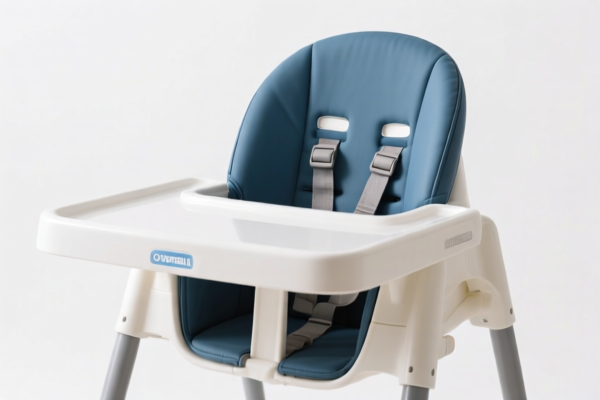
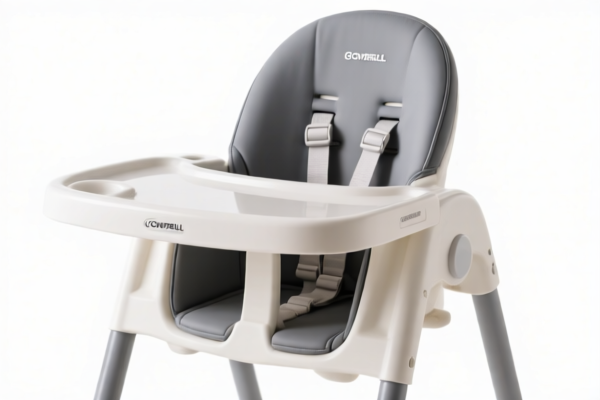
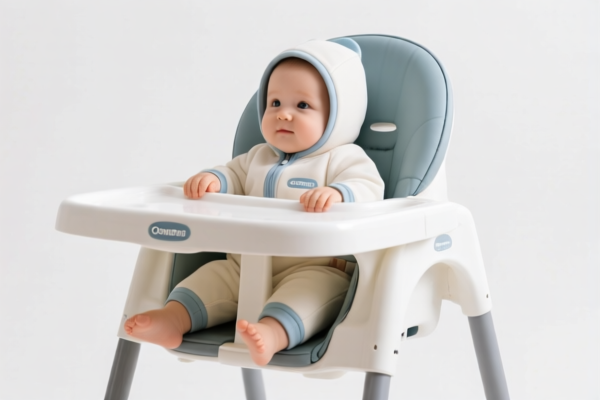
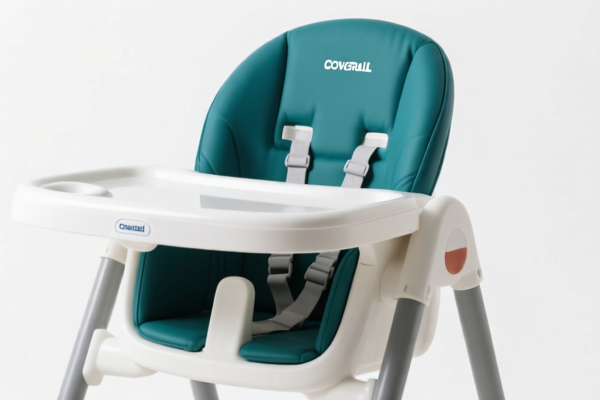
AI Analysis
🪑 High Chair Footrest – HS Code & Tariff Guide 2026 | Expert Customs Classification & Compliance Strategy
🌐 HS Code Reference & Customs Clearance Handbook | 2026 Updated Tariff Rules | Pro-Level Import Strategy
📌 One. Product Definition & Classification: What Exactly Is a "High Chair Footrest"?
A High Chair Footrest is a supportive accessory designed to stabilize and enhance comfort for infants or toddlers seated in high chairs. It typically functions as a foot support platform, often integrated into the chair’s base or sold as a separate component.
⚠️ Critical Classification Insight:
- If it's part of the high chair structure → may be classified with the main unit
- If sold separately as a removable or replaceable part → treated as a furniture accessory or seat component
- The material (plastic, metal, rubber) is the key determinant for accurate HS code selection
📦 Two. HS Code Classification Breakdown (2026 Official Tariff Matrix)
| HS Code | Product Description | Applicable Use Case | Material Assumption | Match Confidence |
|---|---|---|---|---|
3926.30.10.00 |
Furniture, vehicle, or appliance fittings; plastic parts | Plastic footrest used as support for high chair | ✅ Plastic (no conflicting evidence) | 🔥 High |
9401.99.35.80 |
Other seats and seat parts, rubber or plastic | Seat component (footrest), rubber/plastic material | ✅ Rubber or plastic (common in infant products) | 🔥 High |
7616.99.51.70 |
Other aluminum articles, including forgings | Aluminum footrest (e.g., lightweight, durable, metal frame) | ✅ Aluminum (if forged/durable metal) | 🔥 High |
3926.30.50.00 |
Furniture fittings (connectors, supports, etc.) | Supporting/structural footrest (plastic or composite) | ✅ Plastic (no material contradiction) | 🔥 High |
🔍 Key Classification Logic:
- All codes are valid under different material assumptions
- The actual material must be confirmed to avoid misclassification
- No single code applies universally — choice depends on material, function, and design
💰 Three. 2026 Tariff Breakdown (US Market – China Origin, Effective Nov 10, 2025)
✅ Target Country: United States (US)
✅ Origin: China (CN)
✅ Effective Date: November 10, 2025 (inclusive)
🎯 1. 3926.30.10.00 — Plastic Furniture Fittings (e.g., footrests)
| Item | Detail |
|---|---|
| Base Duty Rate | 6.5% (ad valorem) |
| Section 301 Tariff (USITC) | +7.5% |
| Section 122 Tariff (IEEPA) | +10% |
| Total Effective Duty | 24.0% |
| Tax Calculation | CIF Value × 24.0% |
| De Minimis Threshold | ❌ Not applicable (denied under US law) |
| Legal Basis Path | IEEPA:9903.01.25 → IEEPA:9903.01.24 → USITC:3926.30.10.00 → FOOTNOTE:9903.88.01 |
📌 Explanation:
- This code applies to plastic furniture fittings used in household furniture systems
- The footrest is treated as a structural support for the high chair
- No material conflict if confirmed as plastic
- Total tax: 24% — moderate but still significant
🎯 2. 9401.99.35.80 — Other Seats & Seat Parts (Rubber or Plastic)
| Item | Detail |
|---|---|
| Base Duty Rate | 0.0% |
| Section 301 Tariff (USITC) | +25.0% |
| Section 122 Tariff (IEEPA) | +10% |
| Total Effective Duty | 35.0% |
| Tax Calculation | CIF Value × 35.0% |
| De Minimis Threshold | ❌ Not eligible |
| Legal Basis Path | IEEPA:9903.01.25 → IEEPA:9903.01.24 → USITC:9401.99.35.80 → FOOTNOTE:9903.88.01 |
📌 Explanation:
- This code is specifically for seat components, including footrests
- Applies only if the footrest is clearly part of the seating system
- Zero base duty, but high附加 taxes due to trade policy
- 35% total — highest among all options
- Critical for rubber/plastic footrests used in baby chairs
🎯 3. 7616.99.51.70 — Other Aluminum Articles (Including Forgings)
| Item | Detail |
|---|---|
| Base Duty Rate | 2.5% |
| Section 301 Tariff (USITC) | +25.0% |
| Section 122 Tariff (IEEPA) | +10% |
| Total Effective Duty | 37.5% |
| Tax Calculation | CIF Value × 37.5% |
| De Minimis Threshold | ❌ Not eligible |
| Legal Basis Path | IEEPA:9903.01.25 → IEEPA:9903.01.24 → USITC:7616.99.51.70 → FOOTNOTE:9903.88.01 |
📌 Explanation:
- Applies only if the footrest is made of aluminum, especially forged or precision-machined
- Common in premium or modular high chairs with metal frames
- Highest total duty (37.5%) due to high base + 25% + 10%
- Only valid if material is confirmed as aluminum
🎯 4. 3926.30.50.00 — Furniture Connectors & Support Fittings (Plastic)
| Item | Detail |
|---|---|
| Base Duty Rate | 5.3% |
| Section 301 Tariff (USITC) | +7.5% |
| Section 122 Tariff (IEEPA) | +10% |
| Total Effective Duty | 22.8% |
| Tax Calculation | CIF Value × 22.8% |
| De Minimis Threshold | ❌ Not eligible |
| Legal Basis Path | IEEPA:9903.01.25 → IEEPA:9903.01.24 → USITC:3926.30.50.00 → FOOTNOTE:9903.88.01 |
📌 Explanation:
- Applies to plastic connectors and support parts in furniture systems
- Lower base rate than3926.30.10.00, but same附加 taxes
- Best for low-cost, molded plastic footrests
- 22.8% total — lowest among all options
- Ideal if material is confirmed as plastic
🛠️ Four. Customs Clearance Best Practices (Pro Tips to Avoid Delays & Penalties)
✅ 1. Essential Documentation (MUST Provide)
| Document | Required? | Purpose |
|---|---|---|
| ✅ Product Specification Sheet | ✔️ | Confirms material, dimensions, function |
| ✅ Material Certificate (Plastic/Metal/Rubber) | ✔️ | Proves material type for accurate HS code |
| ✅ High-Resolution Product Photos | ✔️ | Shows construction, attachment method, material |
| ✅ Commercial Invoice | ✔️ | Must state: “High Chair Footrest – Plastic/Metal” |
| ✅ Packing List | ✔️ | Clarifies if sold as standalone part |
| ✅ Certificate of Origin (CO) | ✔️ | Required for tariff eligibility |
| ✅ Test Reports (e.g., ASTM F979, CPSIA) | ✔️ | Safety compliance for children’s products |
✅ 2.申报技巧(Key Rules to Remember)
🔥 "Material First, Function Second — Declare Right, Pay Less!"
| Scenario | Correct HS Code | Risk of Error |
|---|---|---|
| Plastic footrest (molded) | 3926.30.50.00 or 3926.30.10.00 |
❌ Don’t use 9401 if not seat component |
| Rubber/plastic footrest | 9401.99.35.80 |
✅ Only if clearly part of seat system |
| Aluminum footrest (forged) | 7616.99.51.70 |
✅ Only if confirmed as aluminum |
| Sold separately (not attached) | All codes valid — choose based on material | ❌ Never use 9401 for non-seat parts |
✅ 3. Special Case Handling
| Situation | Recommended Action |
|---|---|
| Footrest is part of a high chair set | Declare with main chair (not separately) |
| Footrest is replaceable or modular | Can be declared separately — must prove material |
| Footrest has safety label (e.g., ASTM F979) | Include in invoice — supports compliance |
| Footrest made of mixed materials | Declare based on dominant material (e.g., plastic > metal) |
| Importing to EU/AU/JP | No 301/IEEPA tariffs — base rates apply only |
🌍 Five. Global Market Comparison (2026 Tariff Snapshot)
| Country | Recommended HS Code | Base Duty | 附加 Taxes | Notes |
|---|---|---|---|---|
| 🇺🇸 USA (China origin) | 3926.30.50.00 (plastic) |
5.3% | +35% (301+IEEPA) | Total: 22.8%–37.5% |
| 🇨🇳 China | 3926.30.50.00 |
5% | None | No extra tariffs |
| 🇪🇺 EU | 9401.99.35.80 |
0% | None | CE & REACH required |
| 🇦🇺 Australia | 9401.99.35.80 |
5% | None | RCM compliance |
| 🇯🇵 Japan | 9401.99.35.80 |
0% | None | PSE certification |
📌 Key Insight:
- Only the US imposes 301 + IEEPA tariffs on Chinese-origin goods
- EU, AU, JP: No extra tariffs — much lower effective cost
📌 Six. Common Mistakes & How to Avoid Them (Real-World Risks)
❌ Mistake 1: Declaring a plastic footrest as 9401.99.35.80
👉 Result: 35% duty instead of 22.8% → overpayment
✅ Fix: Use 3926.30.50.00 if plastic and structural
❌ Mistake 2: Using 7616.99.51.70 for a plastic footrest
👉 Result: Misclassification → penalties, delays, or seizure
✅ Fix: Only use if material is confirmed aluminum
❌ Mistake 3: Not providing material proof
👉 Result: Customs may default to highest tariff code
✅ Fix: Always attach material certificate or lab test report
❌ Mistake 4: Splitting footrest + chair into separate shipments
👉 Result: Each part taxed separately → total duty > 70%
✅ Fix: Declare as a set if sold together
🎯 Seven. Final Verdict: Choose Wisely, Pay Less, Ship Faster
🔹 Best for Plastic Footrests:
3926.30.50.00→ 22.8% total
🔹 Best for Rubber/Plastic Seat Parts:9401.99.35.80→ 35.0% (if applicable)
🔹 Best for Aluminum Footrests:7616.99.51.70→ 37.5% (only if metal)
🔹 Avoid: Using9401for non-seat parts; using7616for plastic✅ Pro Tip:
- Always confirm material before declaring
- Request a pre-ruling (Advance Ruling) from U.S. Customs for high-value shipments
- Use a certified customs broker with experience in children’s furniture
📣 Take Action Now: Avoid Costly Mistakes!
📞 Contact a professional customs broker + provide:
- Product photos
- Material certificate
- Commercial invoice
- Request HS Code pre-approval🚀 Your high chair footrest deserves a smooth journey — not a tariff trap!
✨ Precision Classification = Lower Duty = Faster Clearance = Higher Profit!
💼 Every dollar saved on tariffs starts with the right HS code.
Customer Reviews
About HS Code Classification
The Harmonized System (HS) is an internationally standardized nomenclature developed by the World Customs Organization (WCO) to classify traded products. Over 200 countries use the HS system as the basis for customs tariffs, trade statistics, and import/export regulations.
Each HS code follows a hierarchical structure:
- Chapter (2 digits) — Broad category of goods (e.g., Chapter 84: Machinery and Mechanical Appliances)
- Heading (4 digits) — More specific grouping within the chapter
- Subheading (6 digits) — Internationally standardized breakdown, used by all WCO member countries
- National subdivisions (8-10 digits) — Country-specific extensions for further classification, such as US HTSUS 10-digit codes
Correct HS code classification is essential for smooth customs clearance, accurate duty payment, and compliance with trade regulations. Misclassification can lead to customs delays, overpayment of duties, or penalties.
When importing from CN to US, the applicable tariff rates may include:
- Most-Favored-Nation (MFN) rate — The standard duty rate applied to WTO members
- General rate — Applied to countries without trade agreements
- Trade remedy duties — Additional tariffs such as Section 301 (anti-dumping), Section 232 (national security), or countervailing duties
The information provided on this page is for reference purposes only. For official classification, please consult with your local customs authority or a licensed customs broker.