High Concentration Lignosulfonate Dispersant
CN → US| HS Code | Tariff Rate | Origin | Destination | Doc |
|---|---|---|---|---|
| 3506915000 | 37.1% | CN | US | Official Doc |
| 3506990000 | 37.1% | CN | US | Official Doc |
| 3824405000 | 40.0% | CN | US | Official Doc |
| 3824401000 | 41.5% | CN | US | Official Doc |
| 3824405000 | 40.0% | CN | US | Official Doc |
Product Images
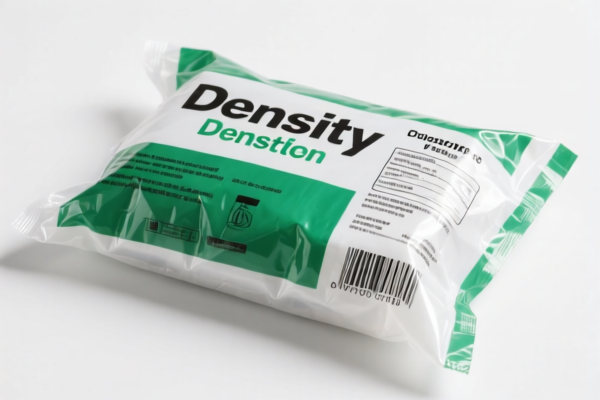
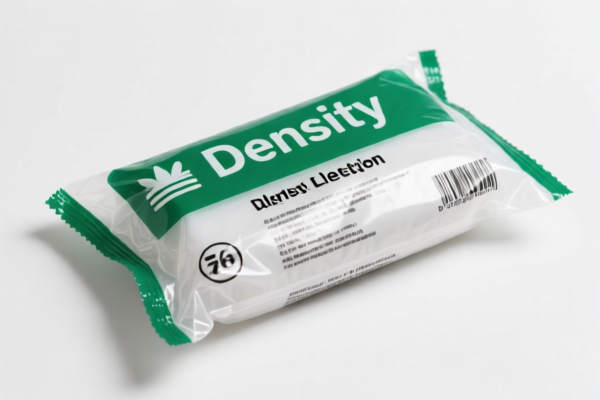
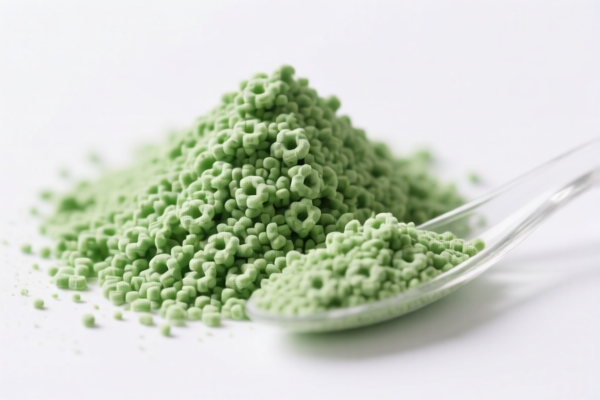
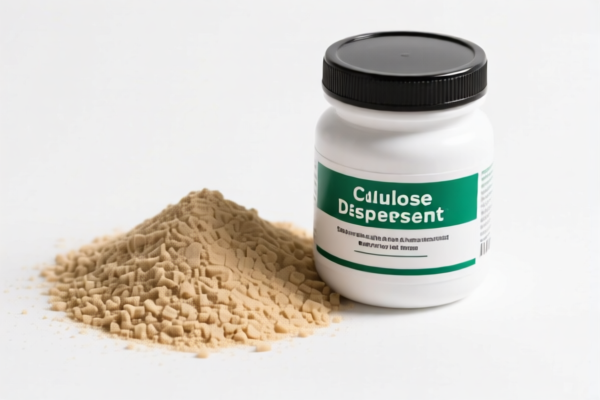
AI Analysis
🧪 High Concentration Lignosulfonate Dispersant (High-Concentration Lignin Sulfonate)
🌐 HS Code Reference & Customs Clearance Guide | 2026 Latest Tariff Analysis | Professional Compliance Strategy
📌 I. Product Definition & Classification: What Exactly is This?
High Concentration Lignosulfonate Dispersant is a specialized chemical additive derived from lignin, a complex organic polymer found in plant cell walls. It is produced by sulfonation during the paper industry's kraft process.
In international trade, it is categorized based on its chemical composition and functional application: 1. Chemical Intermediate/Additive: It acts as a wetting agent, dispersant, or anti-caking agent in various industries (concrete, animal feed, ink, etc.). 2. Prepared Chemical Product: It is not a pure raw material but a "prepared" or "formulated" product with specific functional properties (high concentration, specific dispersancy).
⚠️ Key Classification Distinction:
- If used primarily as a concrete retarder/plasticizer → It may fall under Construction Material Additives (3824).
- If used as a general chemical dispersant/binder modifier → It may fall under Glues/Adhesives (3506) or Other Chemical Products (3824/3906).
- Note: The provided data specifically highlights 3506 and 3824 codes based on "sulfonic acid groups" and "dispersant" functions.
📦 II. HS Code Classification Details (2026 Authoritative Comparison)
Based on the provided data, here are the four potential HS Codes and their corresponding tax implications. All codes target US Imports from China.
| HS Code | Product Description & Matching Logic | Key Attributes | Tax Logic Summary |
|---|---|---|---|
| 3506.91.50.00 | Prepared Glues/Adhesives Based on sulfonic acid groups, inferred as an organic synthetic chemical. Fits the logic of binders/modifiers based on polymers/rubber. |
Polymer/Rubber-based modifier | Base 2.1% + 25% (Section 301) + 10% (122 Clause) = 37.1% |
| 3506.99.00.00 | Other Prepared Glues/Adhesives “Sulfonate compounded dispersant” is a prepared chemical functional product. Fits the "other" category for chemically modified materials. |
General prepared chemical | Base 2.1% + 25% (Section 301) + 10% (122 Clause) = 37.1% |
| 3824.40.50.00 | Concrete/Additive Preparation Sulfonic acid is a chemical component; compounded dispersant is a chemical additive form. Matches usage in cement/mortar/concrete chemical preparations. |
Construction/Concrete additive | Base 5.0% + 25% (Section 301) + 10% (122 Clause) = 40.0% |
| 3824.40.10.00 | Aromatic Substance Additives Chemical industrial product. Lignosulfonates contain aromatic rings. Fits the attribute of chemical additives containing aromatic substances. |
Aromatic chemical additive | Base 6.5% + 25% (Section 301) + 10% (122 Clause) = 41.5% |
🔍 Critical Insight:
- 3506 Series (Glues/Adhesives): Lower base rate (2.1%). Best if the primary function is cited as a polymer modifier or adhesive component.
- 3824 Series (Chemical Preparations): Higher base rate (5.0%–6.5%). Best if the primary function is cited as a construction additive or general chemical dispersant.
- Note: 122 Clause Tax (10%) applies to all Chinese-origin goods in this list.
💰 III. 2026 Latest Tariff Rate Breakdown (Including Surtaxes & Policy Surcharges)
✅ Applicable Country: United States (US)
✅ Origin: China (CN)
✅ Effective Time: Current 2026 Trade Policy (Includes Section 301 & IEEPA 122 Clause)
🎯 1. 3506.91.50.00 & 3506.99.00.00 —— Prepared Glues / Modifiers (Lowest Tax Option)
| Item | Content |
|---|---|
| Base Duty Rate | 2.1% (ad valorem) |
| Section 301 Surcharge | +25% (From USITC Footnote: Trade Remedy on Chinese Goods) |
| IEEPA Clause 122 Surcharge | +10% (Targeting Chinese Chemical/Industrial Products, effective Nov 2025) |
| Total Effective Rate | 37.1% |
| Tax Calculation | CIF Value × 37.1% |
| De Minimis Exemption? | ❌ No (Deny de minimis) |
| Legal Basis Path | HTSUS:3506.91.50.00 → USITC:Footnote_301_25pct → IEEPA:Clause_122_10pct |
📌 Explanation:
- The 2.1% base rate is significantly lower than the 3824 series.
- The 25% Section 301 and 10% IEEPA 122 clauses are mandatory for Chinese origin.
- Strategy: If the product can be justified as a "polymer modifier" or "binder additive" (rather than just a concrete additive), this code saves 2.9%–4.4% in base duties compared to 3824 codes.
🎯 2. 3824.40.50.00 —— Concrete Additives / Chemical Preparations
| Item | Content |
|---|---|
| Base Duty Rate | 5.0% |
| Section 301 Surcharge | +25% |
| IEEPA Clause 122 Surcharge | +10% |
| Total Effective Rate | 40.0% |
| Tax Calculation | CIF Value × 40.0% |
| De Minimis Exemption? | ❌ No |
📌 Explanation:
- This code is often used if the primary declared function is concrete water reduction or cement dispersion.
- Higher base rate due to the specific classification of "preparations for the cement/concrete industry."
🎯 3. 3824.40.10.00 —— Aromatic Chemical Additives (Highest Tax Option)
| Item | Content |
|---|---|
| Base Duty Rate | 6.5% |
| Section 301 Surcharge | +25% |
| > IEEPA Clause 122 Surcharge | +10% |
| Total Effective Rate | 41.5% |
| Tax Calculation | CIF Value × 41.5% |
| De Minimis Exemption? | ❌ No |
📌 Explanation:
- Lignosulfonates are by-products of lignin (aromatic polymer).
- If customs officers emphasize the "aromatic" nature of the chemical structure over its functional application, they may assign this code.
- Avoid this code unless necessary, as it has the highest total tax burden.
🛠️ IV. Customs Clearance Practical Advice (实战避坑指南)
✅ 1. Preparation Checklist (Must-Haves)
| Document | Required? | Purpose |
|---|---|---|
| ✅ Technical Data Sheet (TDS) | ✔️ | Proves chemical composition (Lignin content, Sulfonate groups, Moisture). |
| ✅ Safety Data Sheet (SDS) | ✔️ | Classifies hazard level; helps customs identify UN number and chemical family. |
| ✅ Certificate of Analysis (COA) | ✔️ | Confirms "High Concentration" and purity; distinguishes from raw lignin. |
| ✅ Usage Declaration Letter | ✔️ | CRITICAL: Must explicitly state the primary function (e.g., "Used as a polymer modifier in adhesives" vs. "Used in concrete"). |
| ✅ Commercial Invoice | ✔️ | Must match the declared HS Code description (e.g., do not just write "Dispersant"; write "High-Concentration Lignosulfonate Polymer Modifier"). |
| ✅ HS Code Pre-Ruling Application | ✔️ | Recommended to lock in 3506.91.50.00 before shipment. |
✅ 2. Declaration Strategy (Key Mnemonics)
🔥 "Function Defines Code, Structure Confirms Origin!"
| Scenario | Correct Declaration | Wrong Declaration | Consequence |
|---|---|---|---|
| Primary Use: Adhesive/Polymer Modifier | 3506.91.50.00 (37.1%) |
3824.40.50.00 (40.0%) |
Overpay 2.9% base duty |
| Primary Use: Concrete Additive | 3824.40.50.00 (40.0%) |
3506.99.00.00 (37.1%) |
Risk of misclassification penalty if concrete use is proven |
| Primary Use: Aromatic Chemical Intermediate | 3824.40.10.00 (41.5%) |
3506.91.50.00 (37.1%) |
Overpay 4.4% base duty (Least Recommended) |
| Vague Description: "Chemical Powder" | Any Code | "Chemical Powder" | Seizure/Detention for lack of specificity |
✅ 3. Special Considerations
| Situation | Handling Advice |
|---|---|
| Lignosulfonate vs. Synthetic Dispersant | Lignosulfonate is natural-derived but chemically modified. Emphasize "Sulfonated Lignin" in description. |
| Concentration Level | "High Concentration" may trigger different sub-codes. Ensure the COA matches the "prepared" status. |
| 122 Clause Application | All 4 codes in the data are subject to 10% IEEPA 122 surcharge. No exemption for this clause under current data. |
| Section 301 Exclusions | Check if lignosulfonates are on the Exclusion List. (Note: Data shows 25% applies, so likely not excluded or exclusion expired). |
🌍 V. Global Market Comparison (2026)
| Country/Region | Recommended HS Code | Total Tax Rate (China Origin) | Key Certification | Notes |
|---|---|---|---|---|
| 🇺🇸 USA | 3506.91.50.00 |
37.1% | SDS, TDS | Highest risk due to 301+122 taxes. |
| 🇨🇳 China | 3824.40.10.00 |
~5-6% | GB Standards | Low tax, but domestic competition is high. |
| 🇪🇺 EU | 3824.40.10.00 |
~6.5% | REACH Registration | REACH compliance is mandatory and costly. |
| 🇮🇳 India | 3824.40.10.00 |
~7.5% | BIS Cert | Anti-dumping duties may apply to Chinese chemicals. |
📌 Conclusion:
- USA is the most expensive market due to Layered Taxes (Base + 301 + 122).
- EU requires REACH registration, which is a major barrier for small exporters.
- Optimal Strategy for US: Fight for 3506.91.50.00 to minimize base duty.
📌 VI. Common Errors & Pitfalls (Lessons Learned)
❌ Error 1: Declaring as "Natural Lignin"
👉 Consequence: Misclassification if it is sulfonated and prepared. Lignin (4411) has different taxes.
✅ Fix: Always declare as "Sulfonated" or "Lignosulfonate".
❌ Error 2: Ignoring the "122 Clause"
👉 Consequence: Under-declaration of tax. The 10% IEEPA surcharge is often overlooked.
✅ Fix: Always add 10% to your cost calculation for Chinese-origin chemicals.
❌ Error 3: Vague Product Name: "Dispersant"
👉 Consequence: Customs may assign 3824.40.10.00 (41.5%) by default due to lack of functional proof.
✅ Fix: Provide a Letter of Use specifying if it modifies polymers (3506) or concrete (3824).
🎯 VII. Conclusion: Professional Declaration, Cost Control!
🎯 Key Takeaway:
🔹 "3506 is Cheaper, 3824 is Riskier, 122 Clause is Mandatory!"
🔹 "Lignosulfonate is Sulfonated, not Pure Lignin."
🔹 "37.1% vs 41.5%: Save 4.4% by Proving Polymer Use."
📌 Pro Tip:
If your product is used in concrete, be prepared for a 40.0% rate.
If it is used in adhesives/polymers, fight for 37.1%.
Always apply for a Pre-Ruling from CBP (Customs and Border Protection) before shipping to lock in the 3506 code.
📣 Immediate Action:
📞 Contact your freight forwarder + Provide SDS + Declare "Polymer Modifier" if possible.
🚀 Ensure your invoice includes "Sulfonated Lignin Dispersant for Polymer/Concrete Use".
✨ Professional Clearance Starts with Accurate Classification!
💼 Every Percent Saved is Pure Profit!
Customer Reviews
About HS Code Classification
The Harmonized System (HS) is an internationally standardized nomenclature developed by the World Customs Organization (WCO) to classify traded products. Over 200 countries use the HS system as the basis for customs tariffs, trade statistics, and import/export regulations.
Each HS code follows a hierarchical structure:
- Chapter (2 digits) — Broad category of goods (e.g., Chapter 84: Machinery and Mechanical Appliances)
- Heading (4 digits) — More specific grouping within the chapter
- Subheading (6 digits) — Internationally standardized breakdown, used by all WCO member countries
- National subdivisions (8-10 digits) — Country-specific extensions for further classification, such as US HTSUS 10-digit codes
Correct HS code classification is essential for smooth customs clearance, accurate duty payment, and compliance with trade regulations. Misclassification can lead to customs delays, overpayment of duties, or penalties.
When importing from CN to US, the applicable tariff rates may include:
- Most-Favored-Nation (MFN) rate — The standard duty rate applied to WTO members
- General rate — Applied to countries without trade agreements
- Trade remedy duties — Additional tariffs such as Section 301 (anti-dumping), Section 232 (national security), or countervailing duties
The information provided on this page is for reference purposes only. For official classification, please consult with your local customs authority or a licensed customs broker.