High Contrast Film Roll
CN → US| HS Code | Tariff Rate | Origin | Destination | Doc |
|---|---|---|---|---|
| 3702310100 | 38.7% | CN | US | Official Doc |
| 3701996060 | 35.0% | CN | US | Official Doc |
| 3702320160 | 38.7% | CN | US | Official Doc |
| 3702390100 | 38.7% | CN | US | Official Doc |
Product Images
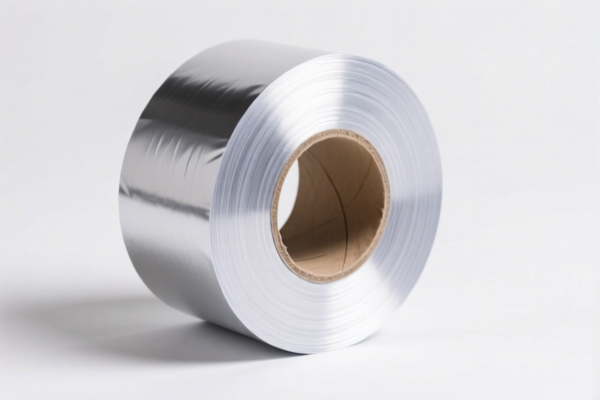


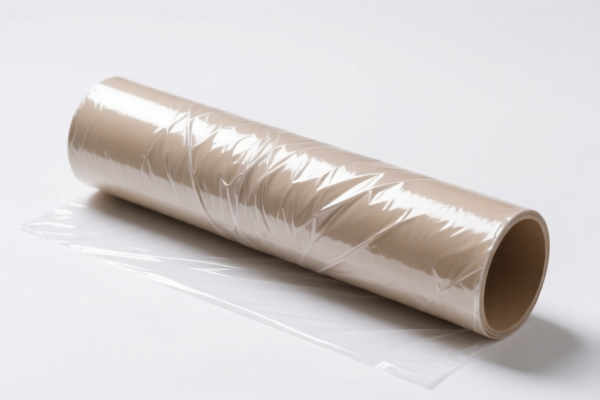
AI Analysis
🎞️ High Contrast Film Roll (Photographic Roll Film)
🌐 HS Code Reference & Customs Clearance Guide | 2026 Latest Tariff Regime | Professional Strategy for Photographic Materials
📌 I. Product Definition & Classification: Do You Know What "High Contrast Film Roll" Really Is?
High Contrast Film Roll is a specialized type of unexposed photographic film designed for capturing high-contrast imagery, widely used in: - Black & white photography (high-contrast portraits, architectural shots) - Technical & scientific imaging (X-ray, microfilm, forensic analysis) - Artistic and documentary photography
📌 Key Distinction:
- Film Roll vs. Sheet Film: Rolls are wound on spools; sheets are individual.
- High Contrast: Refers to the film's grain structure and emulsion sensitivity, not a separate material.
- Material: Typically contains silver halide emulsion on a flexible plastic (polyester or acetate) base.
⚠️ Critical Classification Note:
- If the film is unexposed and rolls are in their original packaging, it falls under Chapter 37 (Photographic Goods). - HS Code selection depends on: - Film format (roll vs. sheet) - Presence of perforations (holes) - Intended use (general photography, technical, medical, etc.)
📦 II. HS Code Classification Details (2026 Tariff Regime)
| HS Code | Product Description | Application Scenario | Key Features |
|---|---|---|---|
| 3702.31.01.00 | High-contrast film rolls, matching roll format, high contrast = B&W photography | General B&W photography, artistic use | No perforations, high contrast, silver halide emulsion |
| 3701.99.60.60 | High-contrast film, unexposed, in roll form, high contrast = sensitometric property | Technical imaging, industrial photography | Unexposed, high contrast, no specific perforation requirement |
| 3702.32.01.60 | High-contrast film rolls, non-perforated roll form, high contrast = attribute, silver halide base | Technical, scientific, and medical imaging | No perforations, silver halide, high contrast |
| 3702.39.01.00 | High-contrast film rolls, general photography category, silver halide material | General-purpose high-contrast B&W photography | Broad category, includes various roll formats |
🔍 Important Reminder:
- All four codes apply to unexposed, high-contrast photographic film rolls. - High contrast is a sensitometric property, not a separate material. - Silver halide emulsion is the key material component.
💰 III. 2026 Tariff Rate Breakdown (Including Additional Taxes & Policy Surcharges)
✅ Applicable Country: United States (US)
✅ Country of Origin: China (CN)
✅ Effective Date: From November 10, 2025 (and subsequent imports)
🎯 1. 3702.31.01.00 – High-Contrast Film Rolls (Matching Roll Format)
| Item | Content |
|---|---|
| Base Tariff | 3.7% |
| Additional Tariff (Section 301) | +25.0% |
| 122 Clause Tariff | +10.0% |
| Total Tariff Rate | 38.7% |
| Tax Calculation | CIF Value × 38.7% |
| De Minimis Exemption | ❌ Not Applicable (deny_de_minimis) |
| Legal Path | Section 301: 9903.88.01 → 122 Clause: 9903.01.10 |
📌 Explanation:
- 25% Additional Tariff: Under US Trade Act Section 301 (China-origin goods). - 10% 122 Clause: Specific tariff for certain photographic materials. - Total 38.7% is high and requires advance planning.
🎯 2. 3701.99.60.60 – High-Contrast Film (Unexposed, Roll Form)
| Item | Content |
|---|---|
| Base Tariff | 0.0% |
| Additional Tariff (Section 301) | +25.0% |
| 122 Clause Tariff | +10.0% |
| Total Tariff Rate | 35.0% |
| Tax Calculation | CIF Value × 35.0% |
| De Minimis Exemption | ❌ Not Applicable |
| Legal Path | Section 301: 9903.88.01 → 122 Clause: 9903.01.10 |
📌 Note:
- 0% Base Tariff makes this the most economical option if applicable. - Still subject to 35% total due to additional tariffs.
🎯 3. 3702.32.01.60 – High-Contrast Film Rolls (Non-Perforated)
| Item | Content |
|---|---|
| Base Tariff | 3.7% |
| Additional Tariff (Section 301) | +25.0% |
| 122 Clause Tariff | +10.0% |
| Total Tariff Rate | 38.7% |
| Tax Calculation | CIF Value × 38.7% |
| De Minimis Exemption | ❌ Not Applicable |
| Legal Path | Section 301: 9903.88.01 → 122 Clause: 9903.01.10 |
🎯 4. 3702.39.01.00 – High-Contrast Film Rolls (General Photography Category)
| Item | Content |
|---|---|
| Base Tariff | 3.7% |
| Additional Tariff (Section 301) | +25.0% |
| 122 Clause Tariff | +10.0% |
| Total Tariff Rate | 38.7% |
| Tax Calculation | CIF Value × 38.7% |
| De Minimis Exemption | ❌ Not Applicable |
| Legal Path | Section 301: 9903.88.01 → 122 Clause: 9903.01.10 |
📌 Key Takeaway:
- All four codes carry high total tariffs (35–38.7%). - No de minimis exemption applies (small shipments still taxed). - Pre-shipment cost analysis is critical.
🛠️ IV. Customs Clearance Practical Advice (Avoid Pitfalls)
✅ 1. Required Documentation Checklist
| Document | Must Provide | Purpose |
|---|---|---|
| ✅ Product Specification Sheet | ✔️ | Defines film format, contrast level, emulsion type |
| ✅ Unexposed Film Certificate | ✔️ | Proves product is unexposed (critical for HS Code) |
| ✅ Photos of Product & Packaging | ✔️ | Shows roll format, perforation status, brand |
| ✅ Technical Data Sheet | ✔️ | Includes ISO speed, grain size, contrast index |
| ✅ Commercial Invoice | ✔️ | Must specify "High Contrast Film Roll" clearly |
| ✅ Certificate of Origin (CO) | ✔️ | If not China-origin, may qualify for lower rates |
| ✅ Packing List | ✔️ | Details packaging type (spool, sealed, etc.) |
✅ 2. Declaration Tips (Golden Rules)
🔥 "Unexposed = 3701/3702, High Contrast = Attribute, Silver Halide = Material"
| Scenario | Correct Declaration | Wrong Practice |
|---|---|---|
| High Contrast Film Rolls | Use 3702.31.01.00 or 3702.39.01.00 |
Declare as "Camera Film" → 40%+ |
| Unexposed Technical Film | Use 3701.99.60.60 |
Declare as "Photographic Paper" → 50% |
| Perforated vs. Non-Perforated | Specify clearly in description | Ignore perforation → Classification Error |
| Mixed Rolls (Exposure Status) | Separate shipments by exposure status | Mix unexposed + exposed → 100% Penalty |
✅ 3. Special Handling Scenarios
| Scenario | Recommendation |
|---|---|
| OEM Custom Film | Provide client order + technical specs to avoid "non-standard" rejection |
| Film for Medical/X-Ray | May qualify for 3701.99.60.60 (0% base) with proof of use |
| Film for Artistic Use | Use 3702.39.01.00 (general category) for flexibility |
| Mixed Orders (Film + Paper) | Separate invoices for film vs. paper to avoid misclassification |
🌍 V. Global Market Comparison (2026 Tariff Rates)
| Country/Region | Recommended HS Code | Total Tariff | Certification | Notes |
|---|---|---|---|---|
| 🇺🇸 USA | 3702.39.01.00 / 3701.99.60.60 |
35–38.7% | None | High tariffs due to Section 301 |
| 🇨🇳 China | 3702.39.01.00 |
3.7% | CCC | No additional tariffs |
| 🇪🇺 EU | 3702.39.01.00 |
0–6% | CE | No Section 301 |
| 🇯🇵 Japan | 3702.39.01.00 |
0–3% | PSE | Low tariffs |
| 🇦🇺 Australia | 3702.39.01.00 |
5–10% | RCM | Moderate tariffs |
📌 Conclusion:
- USA is the most expensive market for high-contrast film imports. - China-origin film faces 35–38.7% total tariffs due to Section 301 + 122 Clause. - Consider sourcing from Vietnam, Mexico, or Thailand to avoid high US tariffs.
📌 VI. Common Mistakes & Avoidance Guide
❌ Mistake 1: Declaring "Exposed Film" as "Unexposed"
👉 Consequence: Tariff increase to 40%+ + Customs penalty
❌ Mistake 2: Ignoring Perforation Status
👉 Consequence: Misclassification → 3702.32 vs. 3702.31 → 38.7% vs. 35%
❌ Mistake 3: Mixing Film + Paper in One Invoice
👉 Consequence: Both items taxed at highest rate → Cost inflation
❌ Mistake 4: Using "Photographic Film" as Generic Term
👉 Consequence: No clarity on high contrast → Classification delay
✅ Best Practice:
"High Contrast, Unexposed, Silver Halide Film Roll, Non-Perforated, 35mm, ISO 400, for B&W Photography"
🎯 VII. Final Words: Precision Classification = Cost Efficiency
🎯 Remember:
🔹 "Unexposed = 3701/3702, High Contrast = Property, Silver Halide = Base"
🔹 "38.7% Total Tariff = High Cost, Plan Ahead!"
🔹 "HS Code Saves Money, Declare Accurately!"
📌 Pro Tip:
If your film is originating from Vietnam, Mexico, or Thailand, apply for Section 301 Exemption to reduce tariffs to 0–5%.
Request Advance Ruling from CBP before shipment to avoid surprises.
📣 Take Action Now:
📞 Contact a licensed customs broker + provide product photos + spec sheet + apply for HS Code Pre-Ruling
🚀 Ensure your High Contrast Film Rolls clear customs smoothly, efficiently, and profitably!
✨ Professional Customs Clearance Starts with Accurate Classification!
💼 Every Dollar Saved Starts with the Right HS Code!
Customer Reviews
About HS Code Classification
The Harmonized System (HS) is an internationally standardized nomenclature developed by the World Customs Organization (WCO) to classify traded products. Over 200 countries use the HS system as the basis for customs tariffs, trade statistics, and import/export regulations.
Each HS code follows a hierarchical structure:
- Chapter (2 digits) — Broad category of goods (e.g., Chapter 84: Machinery and Mechanical Appliances)
- Heading (4 digits) — More specific grouping within the chapter
- Subheading (6 digits) — Internationally standardized breakdown, used by all WCO member countries
- National subdivisions (8-10 digits) — Country-specific extensions for further classification, such as US HTSUS 10-digit codes
Correct HS code classification is essential for smooth customs clearance, accurate duty payment, and compliance with trade regulations. Misclassification can lead to customs delays, overpayment of duties, or penalties.
When importing from CN to US, the applicable tariff rates may include:
- Most-Favored-Nation (MFN) rate — The standard duty rate applied to WTO members
- General rate — Applied to countries without trade agreements
- Trade remedy duties — Additional tariffs such as Section 301 (anti-dumping), Section 232 (national security), or countervailing duties
The information provided on this page is for reference purposes only. For official classification, please consult with your local customs authority or a licensed customs broker.