High Density Polyethylene Blow Molding Plastic
CN → US| HS Code | Tariff Rate | Origin | Destination | Doc |
|---|---|---|---|---|
| 3901201000 | 41.5% | CN | US | Official Doc |
| 3901205000 | 41.5% | CN | US | Official Doc |
| 3903190000 | 41.5% | CN | US | Official Doc |
| 3903110000 | 41.5% | CN | US | Official Doc |
| 3917220000 | 38.1% | CN | US | Official Doc |
Product Images


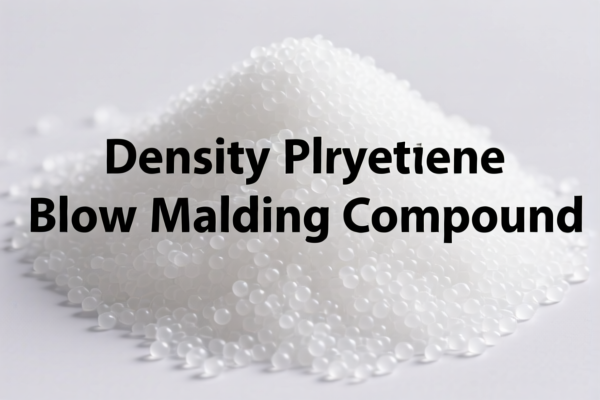
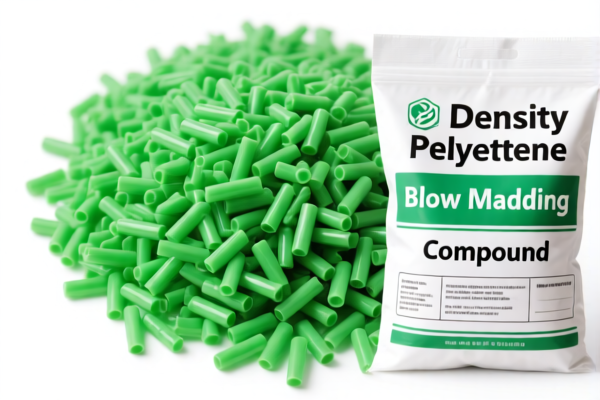
AI Analysis
🏭 High Density Polyethylene (HDPE) Blow Molding Plastic Resins
🌐 HS Code Reference & Customs Clearance Guide | 2026 Latest Tariff Analysis | Professional Compliance Strategy
📌 I. Product Definition & Classification: Do You Understand "HDPE Resin"?
High-Density Polyethylene (HDPE) is a thermoplastic polymer made from the monomer ethylene. It is renowned for its high strength-to-density ratio, making it ideal for blow-molding applications such as bottles, tanks, and containers. In international trade, HDPE resins are classified based on their physical properties (specific gravity) and application specifications (e.g., blow-molding grade).
Key Distinction Points: * General HDPE Resin: Standard high-density polyethylene used for various plastic products. * High Specific Gravity HDPE: A subset of HDPE with a specific gravity of 0.94 or higher, often requiring stricter tariff scrutiny. * Blow-Molding Grade: Specifically formulated HDPE for blow molding processes. While the application is blow molding, the HS Code is determined by the chemical composition and physical form (primary shape), not the end-use process, unless specified otherwise in sub-headings.
⚠️ Critical Compliance Note:
- Imports from China are subject to significant additional tariffs under Section 301 and Section 232/IEEPA frameworks.
- The "Blow Molding" description in your query indicates the formulation, but the HS Code is determined by the resin type and density.
- Section 122 Tariffs: Recent trade policies have introduced additional 10% tariffs for certain polymer categories under Section 122 (or associated IEEPA provisions), significantly increasing the total landed cost.
📦 II. HS Code Classification Details (2026 Latest Tariff Concordance)
Based on the provided data, the classification depends on whether the HDPE is a general grade or has a specific gravity ≥ 0.94.
| HS Code | Product Description | Specific Gravity | Application Note | Key Tariff Driver |
|---|---|---|---|---|
3901.20.10.00 |
HDPE Resin (General) | < 0.94 (implied) | General purpose, blow molding, injection molding | Base + 301 + 122 |
3901.20.50.00 |
HDPE Resin (High Density) | ≥ 0.94 | High-density applications, structural blow molding | Base + 301 + 122 |
🔍 Why These Codes?
- Chapter 39: Plastics and articles thereof.
- Heading 3901: Polymers of ethylene in primary forms.
- Subheading 3901.20: High-density polyethylene (HDPE).
-.10vs.50: The distinction is primarily physical (density). If your resin has a density of 0.94 or higher, you must use3901.20.50.00. Using.10for high-density resin can lead to misdeclaration penalties.
💰 III. 2026 Latest Tariff Rate Breakdown (Including Additional Taxes)
✅ Applicable Country: United States (US)
✅ Country of Origin: China (CN)
✅ Effective Date: Current (Post-2025 Policy Adjustments)
✅ Total Tax Rate: 41.5% (for both codes listed below)
🎯 1. 3901.20.10.00 —— HDPE Resin (Standard)
| Item | Content |
|---|---|
| Base Tariff | 6.5% |
| Section 301 Add-on | +25.0% |
| Section 122 / IEEPA Add-on | +10.0% |
| Total Effective Rate | 41.5% |
| Calculation Basis | CIF Value × 41.5% |
| De Minimis Exemption | ❌ Not Eligible (Section 301/122 goods are excluded from $800 de minimis relief) |
| Legal Path | HTSUS:3901.20.10.00 → USITC Footnote: 301/122 → IEEPA: Section 122 |
📌 Explanation:
- The 6.5% is the standard Most Favored Nation (MFN) duty for HDPE.
- The 25% is the standard Section 301 tariff on Chinese chemical products.
- The 10% is the additional Section 122 tariff (often applied to strategic materials or under specific IEEPA authorities).
- Total 41.5% is a very high barrier. This applies equally to blow-molding grades if they are HDPE.
🎯 2. 3901.20.50.00 —— HDPE Resin (Specific Gravity ≥ 0.94)
| Item | Content |
|---|---|
| Base Tariff | 6.5% |
| Section 301 Add-on | +25.0% |
| Section 122 / IEEPA Add-on | +10.0% |
| Total Effective Rate | 41.5% |
| Calculation Basis | CIF Value × 41.5% |
| De Minimis Exemption | ❌ Not Eligible |
| Legal Path | HTSUS:3901.20.50.00 → USITC Footnote: 301/122 → IEEPA: Section 122 |
📌 Note:
- Even though this is a "specialized" sub-category, the tariff structure remains identical to the general HDPE code in this dataset.
- Do not assume lower duties for "blow molding grade." The duty is based on the polymer type (HDPE) and origin (China), not the processing method.
🛠️ IV. Customs Clearance Practical Advice (Avoiding Pitfalls)
✅ 1. Documentation Checklist (Mandatory)
| Document | Required | Notes |
|---|---|---|
| ✅ Product Specification Sheet | ✔️ | Must explicitly state: "High Density Polyethylene (HDPE)," "Specific Gravity," and "Blow Molding Grade." |
| ✅ MSDS (Material Safety Data Sheet) | ✔️ | Required for chemical products. |
| ✅ Commercial Invoice | ✔️ | Must clearly state "China Origin" to ensure correct tariff application. Mislabeling origin is fraud. |
| ✅ Certificate of Origin (CO) | ✔️ | Essential for proving origin. If non-China, may qualify for lower duties. |
| ✅ Bill of Lading | ✔️ | Standard shipping document. |
✅ 2. Declaration Tips (Key Mnemonics)
🔥 "Density Determines Code, Origin Determines Tax!"
| Scenario | Correct Declaration | Incorrect Practice |
|---|---|---|
| HDPE, Density < 0.94 | 3901.20.10.00 |
Using .50 → Potential penalty for misclassification. |
| HDPE, Density ≥ 0.94 | 3901.20.50.00 |
Using .10 → Risk of underpayment and fines. |
| Blow Molding Grade (China) | 3901.20.xx.xx + 41.5% Tax |
Claiming "Plastic Pellets" with lower tax → Severe Penalties. |
| Non-China Origin (e.g., Vietnam) | Same HS Code | Check for Section 301/122 exclusions. Some non-China sources may be exempt from the 25% or 10% add-ons. |
✅ 3. Special Circumstances
| Situation | Recommendation |
|---|---|
| OEM/Contract Manufacturing | Ensure the origin of the resin is declared, not just the place of packaging. Resin made in China, packaged in Vietnam, is still Chinese origin for customs purposes. |
| Blow Molding Scrap/Recycled HDPE | Different HS Code! Recycled HDPE may fall under 3915.10. However, if it's "virgin resin" for blow molding, use 3901. Do not mix virgin and recycled in the same shipment without clear separation. |
| Section 122 Exemptions | Check if your specific product SKU has an exclusion from the 10% Section 122 tariff. Exclusions are product-specific and time-limited. |
🌍 V. Global Market Comparison (2026 Latest)
| Country/Region | Recommended HS Code | Base Duty | Additional Taxes (China Origin) | Total Estimated Duty | Notes |
|---|---|---|---|---|---|
| 🇺🇸 USA | 3901.20.10.00 / .50 |
6.5% | +25% (301) + 10% (122) | 41.5% | High barrier. De minimis waived. |
| 🇨🇳 China | 3901.20.10.00 / .50 |
6.5% | None | 6.5% | No additional tariffs. |
| 🇪🇺 EU | 3901.20.00 |
5.3% | None (WTO rates) | 5.3% | No Section 301/122 equivalents. |
| 🇬🇧 UK | 3901.20.00 |
5.3% | None | 5.3% | Post-Brexit rates similar to EU. |
| 🇻🇳 Vietnam | 3901.20.10 |
0-5% | Check FTA | 0-5% | Potential for lower duties if originating in ASEAN. |
📌 Conclusion:
- USA is the most expensive market for Chinese HDPE due to overlapping tariffs (301 + 122).
- Diversification Strategy: Consider sourcing HDPE resin from Southeast Asia (Vietnam, Malaysia) or Middle East (Saudi Arabia) to mitigate the 35% add-on tax.
- Verify Origin: Ensure your supplier provides a legitimate Certificate of Origin. Transshipment from China to a third country without substantial transformation does not change the origin.
📌 VI. Common Errors & Pitfalls (Blood & Tears Lessons)
❌ Error 1: Declaring "Blow Molding Plastic" as a generic "Plastic Pellets" without specifying HDPE.
👉 Consequence: Customs may reclassify to a different heading or demand additional documentation, causing delays.
❌ Error 2: Ignoring the Specific Gravity distinction.
👉 Consequence: If your HDPE is ≥ 0.94 density but declared under .10, you risk an audit and potential underpayment penalties.
❌ Error 3: Assuming "Blow Molding Grade" qualifies for a lower duty rate.
👉 Consequence: No such exemption exists in the provided data. The tax is uniform at 41.5% for China-origin HDPE.
❌ Error 4: Failing to exclude Section 122/301 from De Minimis claims.
👉 Consequence: Packages under $800 sent via courier (e.g., FedEx, DHL) will be held at border and assessed full duties + storage fees.
✅ Correct Approach:
"High Density Polyethylene (HDPE) Resin, Virgin, Blow Molding Grade, Specific Gravity [X.XX], Origin: China, HS Code: [3901.20.10.00 or 3901.20.50.00]"
🎯 VII. Conclusion: Professional Declaration for Cost Control
🎯 Remember the Mantra:
🔹 "HDPE is HDPE, Density Matters, Origin is King."
🔹 "41.5% is the Truth for China, Check Exclusions, Avoid the Ruth."
🔹 "Don't Blame the Blow Mold, Blame the Wrong Code!"
📌 Pro Tip:
If you are importing large volumes, consider applying for an Exclusion from Section 301 or Section 122 tariffs if your specific product form is listed in the USTR exclusions. Additionally, evaluate Bonded Warehouses in the US to defer duty payments until the goods are sold.
📣 Immediate Action:
📞 Contact your freight forwarder to verify if your specific HDPE grade qualifies for any Section 122 exclusions.
🚀 Optimize your supply chain by sourcing from non-China origins if possible to reduce the 35% add-on tax burden.
✨ Professional Customs Compliance Starts with Accurate Classification!
💼 Every percentage point of duty affects your bottom line!
Customer Reviews
About HS Code Classification
The Harmonized System (HS) is an internationally standardized nomenclature developed by the World Customs Organization (WCO) to classify traded products. Over 200 countries use the HS system as the basis for customs tariffs, trade statistics, and import/export regulations.
Each HS code follows a hierarchical structure:
- Chapter (2 digits) — Broad category of goods (e.g., Chapter 84: Machinery and Mechanical Appliances)
- Heading (4 digits) — More specific grouping within the chapter
- Subheading (6 digits) — Internationally standardized breakdown, used by all WCO member countries
- National subdivisions (8-10 digits) — Country-specific extensions for further classification, such as US HTSUS 10-digit codes
Correct HS code classification is essential for smooth customs clearance, accurate duty payment, and compliance with trade regulations. Misclassification can lead to customs delays, overpayment of duties, or penalties.
When importing from CN to US, the applicable tariff rates may include:
- Most-Favored-Nation (MFN) rate — The standard duty rate applied to WTO members
- General rate — Applied to countries without trade agreements
- Trade remedy duties — Additional tariffs such as Section 301 (anti-dumping), Section 232 (national security), or countervailing duties
The information provided on this page is for reference purposes only. For official classification, please consult with your local customs authority or a licensed customs broker.