High Density Polyethylene Container
CN → US| HS Code | Tariff Rate | Origin | Destination | Doc |
|---|---|---|---|---|
| 3923900014 | 38.0% | CN | US | Official Doc |
| 3923900016 | 38.0% | CN | US | Official Doc |
| 3917210000 | 38.1% | CN | US | Official Doc |
| 3917290090 | 38.1% | CN | US | Official Doc |
| 3901201000 | 41.5% | CN | US | Official Doc |
Product Images

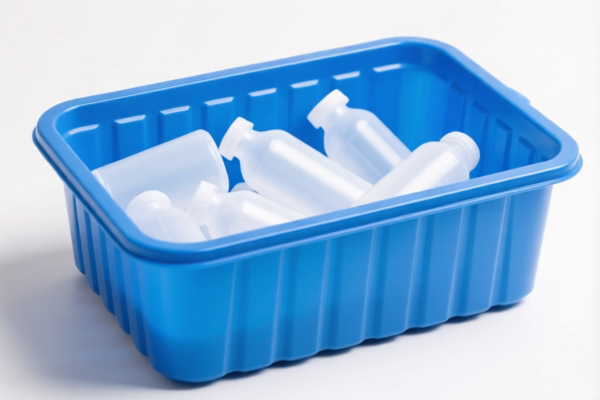
AI Analysis
🛢️ High Density Polyethylene (HDPE) Containers & Components
🌐 HS Code Reference & Customs Clearance Guide | 2026 Tariff Landscape | Professional Strategy for HDPE Products
📌 One: Product Definition & Classification: What Exactly Is "HDPE"?
High Density Polyethylene (HDPE) is a thermoplastic polymer made from petroleum. It is renowned for its high strength-to-density ratio, chemical resistance, and durability. In international trade, HDPE products are categorized based on their physical form: Resins (Raw Materials), Tubes/Pipes, and Containers/Buckets.
Key Distinction: * Resin (3901): The raw plastic pellets or beads used for manufacturing. * Tubes/Pipes (3917): Hollow cylindrical products for conveying fluids/gases, whether rigid or flexible. * Containers/Buckets (3923): Vessels for storage, transport, or processing of goods (e.g., drums, buckets, jerricans).
⚠️ Critical Classification Point:
- If it is a raw material (pellets/beads) → 3901.20.10.00
- If it is a hollow tube/pipe (even if flexible) → 3917.21.00.00 or 3917.29.00.90
- If it is a container/vessel (bucket, drum, jar) → 3923.90.00.14 or 3923.90.00.16
📦 Two: HS Code Classification Details (2026 Latest Tariff Alignment)
| HS Code | Product Description | Application Scenario | Form Factor |
|---|---|---|---|
3901.20.10.00 |
Polyethylene, Primary Forms, High Density | Raw HDPE resin pellets for injection molding or extrusion | 🧱 Resin/Pellets |
3917.21.00.00 |
Tubes, Pipes, Hoses, HDPE | Rigid HDPE pipes for water/gas supply | 🚰 Rigid Tube/Pipe |
3917.29.00.90 |
Other Tubes, Pipes, Hoses, HDPE | Flexible HDPE tubing or specialized profiles | 🌀 Flexible Tube/Pipe |
3923.90.00.14 |
HDPE Drums, Plastic Material | Storage drums, large industrial buckets, barrels | 🛢️ Large Container/Drum |
3923.90.00.16 |
HDPE Buckets, High Density Polyethylene | Smaller buckets, jerricans, household/industrial containers | 🪣 Bucket/Small Container |
🔍 Key Reminder:
- Shape Dictates Code: A "tube" is classified under 3917 regardless of whether it holds liquid, while a "bucket" is 3923. Do not confuse rigid piping with storage tanks. - Material Specification: All items in the provided dataset are specified as High Density Polyethylene. Ensure your commercial invoice explicitly states "HDPE" to avoid misclassification under general plastics (3926).
💰 Three: 2026 Latest Tariff Rate Breakdown (Including Surcharges & Policy Add-ons)
✅ Applicable Country: United States (US)
✅ Origin: China (CN)
✅ Effective Date: 2025/2026 (Current Trade Environment)
🎯 1. 3901.20.10.00 – High Density Polyethylene Resin (Raw Material)
| Item | Content |
|---|---|
| Base Tariff | 6.5% |
| Section 301 Surcharge | +25.0% |
| Section 122 Surcharge | +10.0% |
| Total Tariff Rate | 41.5% |
| Tax Calculation | CIF Value × 41.5% |
| De Minimis Eligibility | ❌ Not Eligible (High value/raw material threshold applies) |
| Legal Basis Path | Base: 6.5% → 301: 25% → 122: 10% → Total: 41.5% |
📌 Explanation:
- Raw materials like HDPE resin are heavily taxed due to US protection of domestic petrochemical industries. - The 10% Section 122 and 25% Section 301 are additive. - Total 41.5% is a significant cost driver for manufacturers importing raw plastic.
🎯 2. 3917.21.00.00 & 3917.29.00.90 – HDPE Tubes & Pipes
| Item | Content |
|---|---|
| Base Tariff | 3.1% |
| Section 301 Surcharge | +25.0% |
| Section 122 Surcharge | +10.0% |
| Total Tariff Rate | 38.1% |
| Tax Calculation | CIF Value × 38.1% |
| De Minimis Eligibility | ❌ Not Eligible |
| Legal Basis Path | Base: 3.1% → 301: 25% → 122: 10% → Total: 38.1% |
📌 Note:
- Both rigid (3917.21) and flexible (3917.29) HDPE pipes carry the same total rate. - Infrastructure projects using HDPE piping must budget for nearly 40% tariff on import costs.
🎯 3. 3923.90.00.14 & 3923.90.00.16 – HDPE Containers (Drums/Buckets)
| Item | Content |
|---|---|
| Base Tariff | 3.0% |
| Section 301 Surcharge | +25.0% |
| Section 122 Surcharge | +10.0% |
| Total Tariff Rate | 38.0% |
| Tax Calculation | CIF Value × 38.0% |
| De Minimis Eligibility | ❌ Not Eligible |
| Legal Basis Path | Base: 3.0% → 301: 25% → 122: 10% → Total: 38.0% |
📌 Important:
- Whether it is a large drum (...14) or a smaller bucket (...16), the tariff structure is identical in this dataset. - These containers are often used in chemical, food, and industrial logistics. Ensure the material is clearly stated as HDPE to justify the 3923 classification.
🛠️ Four: Customs Clearance Practical Advice (Avoid Pitfalls)
✅ 1. Documentation Checklist (Mandatory)
| Document | Required | Description |
|---|---|---|
| ✅ Commercial Invoice | ✔️ | Must specify "High Density Polyethylene (HDPE)" and product form (Resin/Pipe/Container). |
| ✅ Packing List | ✔️ | Detail net/gross weight. Containers must be stacked/secured for transport. |
| ✅ Product Specification Sheet | ✔️ | For resins: Melt Flow Index (MFI), Density. For pipes: Diameter, Pressure Rating. For containers: Capacity, Wall Thickness. |
| ✅ Certificate of Origin (CO) | ✔️ | Essential for proving Chinese origin (and thus applying the 301/122 tariffs correctly). |
| ✅ Declaration of Material | ✔️ | Explicitly state "100% HDPE" to avoid classification under mixed plastics. |
✅ 2. Declaration Tips (Key Mnemonics)
🔥 “Form Defines Code, Material Defines Tax!”
| Scenario | Correct Classification | Wrong Practice |
|---|---|---|
| Raw Plastic Pellets | 3901.20.10.00 (41.5%) |
Misdeclared as "Plastic Parts" → Risk of penalty |
| Rigid Water Pipes | 3917.21.00.00 (38.1%) |
Misdeclared as "Containers" → Delay & Re-inspection |
| HDPE Drum (55 gal) | 3923.90.00.14 (38.0%) |
Misdeclared as "Metal Drum" → Wrong HS Code |
| HDPE Bucket (5 gal) | 3923.90.00.16 (38.0%) |
Misdeclared as "General Plastic Box" → 3926.90 risk |
📌 Clearance Tip:
- Do not omit the material type. If you just say "Plastic Bucket," customs may assign a general code with different rules. - Do not underestimate the 38-41% total tax burden. Factor this into your landed cost immediately.
✅ 3. Special Circumstances
| Situation | Handling Advice |
|---|---|
| OEM/White Label Containers | Ensure the supplier provides a declaration that the plastic is virgin HDPE, not recycled, if specified in your contract. |
| Containers for Hazardous Goods | May require UN Certification documentation. Customs will inspect for labeling compliance (UN symbol, class, etc.). |
| Mixed Containers (Pipe + Bucket) | Split the shipment or declare separately. Mixing 3917 and 3923 in one HS Code entry is not allowed. |
| Transshipment | If goods pass through Vietnam/Malaysia, ensure No Substantial Transformation occurs. Otherwise, you may claim different origin, but beware of 301 evasion audits. |
🌍 Five: Global Market Comparison (2026 Overview)
| Country/Region | Recommended HS Code | Tariff (China Origin) | Certification | Note |
|---|---|---|---|---|
| 🇺🇸 USA | 3923.90.00.14 / ...16 / ...00 |
38.0% - 41.5% | None specific | High Tariff: 301 + 122 apply |
| 🇨🇳 China | Same | 3-6% | CCC (if applicable) | Low base tariff, no US surcharges |
| 🇪🇺 EU | 3917 / 3923 |
0% - 6% | REACH Compliance | No Section 301 equivalent |
| 🇯🇵 Japan | 3917 / 3923 |
0% - 5% | JIS Standards | FTA opportunities |
📌 Conclusion:
- The US market is the most expensive for HDPE imports from China due to the cumulative 38-41% tariff. - EU and Japan offer significantly lower tariff barriers, making them attractive alternative markets or consolidation points (subject to strict origin rules).
📌 Six: Common Errors & Pitfall Avoidance (Lessons Learned)
❌ Error 1: Declaring HDPE Pipes as "Plastic Fittings"
👉 Consequence: Wrong HS Code, potential duty evasion finding, fines.
❌ Error 2: Ignoring the "122 Clause"
👉 Consequence: Underpayment of 10%. Customs will demand back taxes + interest.
❌ Error 3: Confusing "HDPE" with "LDPE" (Low Density)
👉 Consequence: 3901.20 is for HDPE. 3901.10 or others for LDPE. Different tax bases.
❌ Error 4: Failing to Declare Material in Invoice
👉 Consequence: Customs may detain shipment for material verification, causing demurrage charges.
✅ Correct Approach:
"High Density Polyethylene (HDPE) Resin, Pellets, Virgin, UN3171 (if hazardous), CIF Los Angeles"
"HDPE Rigid Pipe, 4-inch Diameter, Pressure Rated, for Water Conveyance"
🎯 Seven: Conclusion: Precision Classification for Cost Efficiency
🎯 Remember the Formula:
🔹 Resin = 41.5% | Pipes = 38.1% | Containers = 38.0%
🔹 Total Tax = Base + 25% (301) + 10% (122)
🔹 Do Not Guess: Form Matters!
📌 Pro Tip:
- For large volume imports, consider Advance Rulings from CBP to confirm classification and tariff applicability.
- If using HDPE containers for food contact, ensure compliance with FDA 21 CFR standards, though this doesn't change the HS Code, it is critical for clearance speed.
📣 Take Action Now:
📞 Consult a Customs Broker with your specific product specs.
📦 Mark Your Invoices Clearly with "HDPE" and correct Product Form.
🚀 Plan Your Landed Cost including the ~38-41% tariff buffer.
✨ Smart Customs, Smarter Profits!
💼 Every percentage point of tariff affects your bottom line.
Customer Reviews
About HS Code Classification
The Harmonized System (HS) is an internationally standardized nomenclature developed by the World Customs Organization (WCO) to classify traded products. Over 200 countries use the HS system as the basis for customs tariffs, trade statistics, and import/export regulations.
Each HS code follows a hierarchical structure:
- Chapter (2 digits) — Broad category of goods (e.g., Chapter 84: Machinery and Mechanical Appliances)
- Heading (4 digits) — More specific grouping within the chapter
- Subheading (6 digits) — Internationally standardized breakdown, used by all WCO member countries
- National subdivisions (8-10 digits) — Country-specific extensions for further classification, such as US HTSUS 10-digit codes
Correct HS code classification is essential for smooth customs clearance, accurate duty payment, and compliance with trade regulations. Misclassification can lead to customs delays, overpayment of duties, or penalties.
When importing from CN to US, the applicable tariff rates may include:
- Most-Favored-Nation (MFN) rate — The standard duty rate applied to WTO members
- General rate — Applied to countries without trade agreements
- Trade remedy duties — Additional tariffs such as Section 301 (anti-dumping), Section 232 (national security), or countervailing duties
The information provided on this page is for reference purposes only. For official classification, please consult with your local customs authority or a licensed customs broker.