High Density Polyethylene Extrusion Material
CN → US| HS Code | Tariff Rate | Origin | Destination | Doc |
|---|---|---|---|---|
| 3901205000 | 41.5% | CN | US | Official Doc |
| 3901201000 | 41.5% | CN | US | Official Doc |
| 3916100000 | 40.8% | CN | US | Official Doc |
| 3902900050 | 41.5% | CN | US | Official Doc |
| 3902100000 | 41.5% | CN | US | Official Doc |
| 3916905000 | 40.8% | CN | US | Official Doc |
Product Images
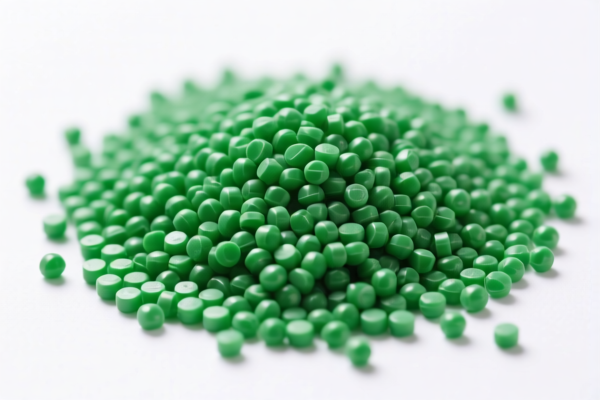

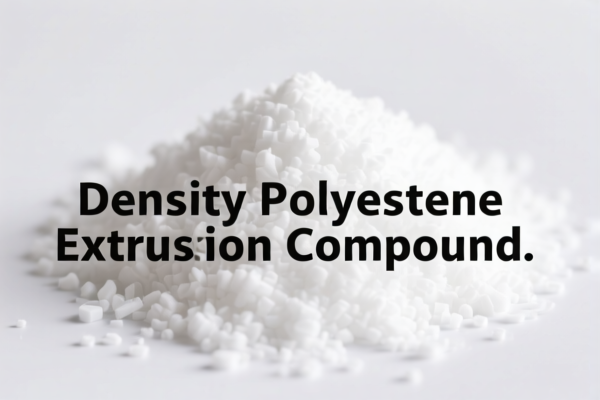
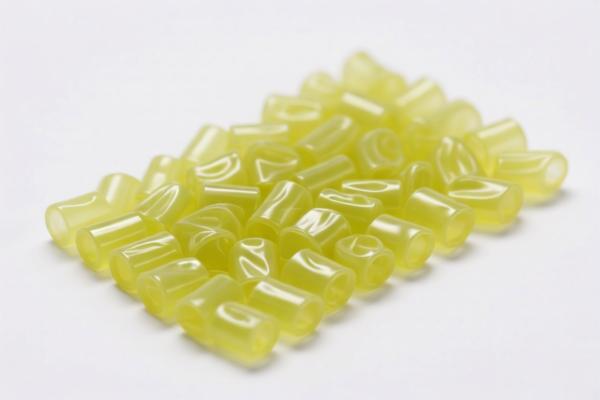
AI Analysis
🏭 High Density Polyethylene (HDPE) Extrusion Material
[HDPE Resin / Pellets for Extrusion Processing]
🌐 HS Code Reference & Customs Clearance Guide | 2026 Latest Tariff Analysis | Professional Entry Strategy
📌 I. Product Definition & Classification: What is "HDPE Extrusion Material"?
High Density Polyethylene (HDPE) is a thermoplastic polymer made from the monomer ethylene. It is known for its high strength-to-density ratio and is widely used in packaging, plastic pipes, geomembranes, and corrosion-resistant packaging.
In international trade, the classification depends heavily on the chemical composition (homopolymer vs. copolymer) and the physical form (primary shape/pellets vs. processed articles).
⚠️ Key Distinction Point:
- If the material is a homopolymer (pure ethylene polymer) in primary shapes (granules/powder) → It falls under Chapter 3901.
- If the material is considered a copolymer or generic "olefin polymer" → It may fall under Chapter 3902.
- If the material is already formed into rods, sticks, or shapes (semi-finished products) → It may fall under Chapter 3916.
📦 II. HS Code Classification Details (2026 Latest Tariff Authority Comparison)
| HS Code | Product Description | Applicable Scenario | Chemical Basis |
|---|---|---|---|
3901.20.50.00 |
HDPE Extrusion Material, Density ≥ 0.94, Primary Shape | Standard HDPE resin with high density, suitable for extrusion | Polyethylene (Homopolymer) |
3901.20.10.00 |
HDPE Extrusion Material, Primary Shape (Granules) | Generic HDPE granules/powder for industrial use | Ethylene Polymer (Homopolymer) |
3916.10.00.00 |
HDPE Extrusion Material, Profiles/Rods/Sticks | Semi-finished products already formed into rods, tubes, or profiles | Polyethylene Products |
3902.90.00.50 |
HDPE Extrusion Material, Olefin Polymer (Other) | Classified as "Other Olefin Polymers" if not strictly homogeneous | Propylene/Other Olefin Copolymer |
3902.10.00.00 |
HDPE Extrusion Material, Olefin Polymer (Specific) | Reference classification for olefin polymers in primary shape | Other Olefin Polymer |
3916.90.50.00 |
HDPE Extrusion Material, Plastic Rods/Sticks/Profiles | Non-homogeneous plastic profiles (e.g., mixed polymers or non-extruded forms) | Other Plastic Articles |
🔍 Key Reminder:
-3901.20.xx.xx: Best for pure HDPE resins (granules/powder) with density ≥ 0.94. This is the most common classification for raw material imports. -3916.xx.xx: Only applies if the material is already shaped into rods, sticks, or profiles (semi-finished), not raw granules. -3902.xx.xx: Riskier classification; applies only if the product is legally defined as an "olefin polymer" other than ethylene homopolymers. Use with caution and strong technical proof.
💰 III. 2026 Latest Tariff Rate Breakdown (Including Additional Taxes & Policy Add-ons)
✅ Applicable Country: USA (US)
✅ Country of Origin: China (CN)
✅ Effective Date: From November 10, 2025 (and subsequent imports)
🎯 1. 3901.20.50.00 & 3901.20.10.00 — HDPE Resin (Primary Shape)
| Item | Content |
|---|---|
| Base Duty Rate | 6.5% (Ad Valorem) |
| Section 301 Additional Duty | +25.0% (From USITC Footnote 9903.03.01) |
| Section 122 Duty | +10.0% (Targeting China-origin plastic resins) |
| Total Duty Rate | 41.5% |
| Tax Calculation | CIF Value × 41.5% |
| De Minimis Exemption? | ❌ No (deny_de_minimis) |
| Legal Basis Path | USITC:3901.20.50.00 → SECTION_301:9903.03.01 → SECTION_122:9903.12.01 |
📌 Explanation:
- "Base Duty 6.5%" is the standard MFN rate for polyethylene primary shapes. - "Section 301 Additional Duty 25%" applies to all Chinese-origin plastics under Chapter 39. - "Section 122 Duty 10%" is a specific recent addition targeting plastic resin imports from China. - Total 41.5% is a high tariff, significantly impacting cost margins.
🎯 2. 3916.10.00.00 — HDPE Profiles (Rods/Sticks)
| Item | Content |
|---|---|
| Base Duty Rate | 5.8% (Ad Valorem) |
| Section 301 Additional Duty | +25.0% |
| Section 122 Duty | +10.0% |
| Total Duty Rate | 40.8% |
| Tax Calculation | CIF Value × 40.8% |
| De Minimis Exemption? | ❌ No (deny_de_minimis) |
| Legal Basis Path | USITC:3916.10.00.00 → SECTION_301:9903.03.01 → SECTION_122:9903.12.01 |
📌 Note:
- Although the base duty is slightly lower (5.8% vs 6.5%), the total rate remains high (40.8%). - Classification must be precise: Only if the goods are rods, sticks, or profiles (not granules).
🎯 3. 3902.90.00.50 & 3902.10.00.00 — Olefin Polymers (Alternative Classification)
| Item | Content |
|---|---|
| Base Duty Rate | 6.5% (Ad Valorem) |
| Section 301 Additional Duty | +25.0% |
| Section 122 Duty | +10.0% |
| Total Duty Rate | 41.5% |
| Tax Calculation | CIF Value × 41.5% |
| De Minimis Exemption? | ❌ No (deny_de_minimis) |
| Legal Basis Path | USITC:3902.90.00.50 → SECTION_301:9903.03.01 → SECTION_122:9903.12.01 |
📌 Caution:
- This classification is only valid if the product is not a polyethylene homopolymer but an "other olefin polymer." - Misclassification here can lead to severe penalties if audited. Ensure technical data sheets confirm copolymer status.
🎯 4. 3916.90.50.00 — Other Plastic Profiles
| Item | Content |
|---|---|
| Base Duty Rate | 5.8% (Ad Valorem) |
| Section 301 Additional Duty | +25.0% |
| Section 122 Duty | +10.0% |
| Total Duty Rate | 40.8% |
| Tax Calculation | CIF Value × 40.8% |
| De Minimis Exemption? | ❌ No (deny_de_minimis) |
| Legal Basis Path | USITC:3916.90.50.00 → SECTION_301:9903.03.01 → SECTION_122:9903.12.01 |
📌 Note:
- Similar to3916.10.00.00, this applies to non-homogeneous plastic profiles. - Base duty is slightly lower, but total rate remains high.
🛠️ IV. Customs Clearance Practical Advice (Battle-Tested Pitfall Avoidance Guide)
✅ 1. Document Checklist (No Exceptions)
| Document | Required? | Notes |
|---|---|---|
| ✅ Product Specification Sheet | ✔️ | Must include: Density, Melt Flow Index (MFI), Type (Homopolymer/Copolymer), Form (Granules/Rods). |
| ✅ Certificate of Origin (CO) | ✔️ | Essential for determining Section 301/122 applicability. |
| ✅ Commercial Invoice | ✔️ | Clearly state: "HDPE Extrusion Material, Primary Shape, Grade XXX". Avoid vague terms like "Plastic Raw Material." |
| ✅ Packing List | ✔️ | Detail net/gross weight, number of bags/pallets. |
| ✅ Technical Data Sheet (TDS) | ✔️ | Proves chemical composition (Ethylene Homopolymer vs. Copolymer). |
| ✅ Third-Party Test Report | ✔️ | Recommended to verify density and polymer type. |
✅ 2. Declaration Tips (Key Mantra)
🔥 "Granules go to 3901, Rods go to 3916, Olefin to 3902. Accuracy Saves Money!"
| Scenario | Correct HS Code | Wrong Action | Consequence |
|---|---|---|---|
| HDPE Granules/Powder | 3901.20.50.00 or 3901.20.10.00 |
Report as 3916.10.00.00 |
Customs rejection, delay, penalty |
| HDPE Rods/Profiles | 3916.10.00.00 |
Report as 3901.20.50.00 |
Misdeclaration, potential fine |
| HDPE Copolymer | 3902.90.00.50 |
Report as 3901.20.50.00 |
Discrepancy in chemical composition |
| Mixed Plastic Profile | 3916.90.50.00 |
Report as 3916.10.00.00 |
Incorrect polymer type declaration |
✅ 3. Special Circumstances Handling
| Scenario | Handling Advice |
|---|---|
| OEM Custom Resin | Provide customer specs + TDS to prove homopolymer status. |
| Mixed Grades | If blended, declare as "HDPE Blend" under 3901.20.50.00 if HDPE is dominant. |
| Import from Non-CN Origin | If from Vietnam/Malaysia, check for IEEPA exemptions (lower or 0% duty). |
| Small Sample Imports | No De Minimis Exemption! Even small shipments are subject to 41.5%. |
🌍 V. Global Market Customs Comparison (2026 Latest)
| Country/Region | Recommended HS Code | Duty Rate (China Origin) | Certification Requirements | Notes |
|---|---|---|---|---|
| 🇺🇸 USA | 3901.20.50.00 |
41.5% (Granules) | None specific for plastic | High tariffs due to Sec 301 & 122 |
| 🇨🇳 China | 3901.20.50.00 |
5.0% (Import Duty) | None | Low import duty |
| 🇪🇺 EU | 3901.20.10.00 |
6.5% | REACH Registration | No additional tariffs |
| 🇦🇺 Australia | 3901.20.10.00 |
5.0% | None | Low duty |
| 🇯🇵 Japan | 3901.20.10.00 |
5.0% | Japan Standards | No additional tariffs |
📌 Conclusion:
- USA is the most expensive market for HDPE imports from China due to multiple layered tariffs. - EU, Australia, and Japan have significantly lower duties (5-6.5%) but require REACH/Japan compliance. - Strategic Sourcing: Consider sourcing from non-China origins (e.g., Middle East, Southeast Asia) to mitigate US tariffs.
📌 VI. Common Errors & Pitfall Avoidance (Lessons Learned)
❌ Error 1: Declaring Granules as Profiles (3916) to avoid higher base duty
👉 Consequence: Customs audit reveals granules → Penalty + Back Duties.
❌ Error 2: Ignoring Section 122
👉 Consequence: Undeclared 10% surcharge → Seizure or heavy fines.
❌ Error 3: Vague Description ("Plastic Pellets")
👉 Consequence: Customs may assign default higher duty or reject entry.
❌ Error 4: Assuming De Minimis Exemption Applies
👉 Consequence: Small shipments still face 41.5% tax → Cost shock.
✅ Correct Practice:
"HDPE Homopolymer Resin, Granules, Density 0.95 g/cm³, MFI 1.5 g/10min, For Extrusion, Grade XYZ, CO: China"
🎯 VII. Conclusion: Professional Declaration, Save Costs, Ensure Clearance!
🎯 Remember the Mantra:
🔹 "Granules = 3901, Rods = 3916, Olefin = 3902.
🔹 USA Tariff = 41.5% (No Exemption).
🔹 Description Must Match Physical Form Exactly.
📌 Pro Tip:
If your HDPE is sourced from Vietnam, Malaysia, or the Middle East, you may qualify for lower or zero Section 301/122 duties.
Apply for a Pre-Ruling (CBP Ruling) before shipment to confirm HS Code and duty rate.
📣 Immediate Action:
📞 Engage a Professional Customs Broker
📤 Provide Technical Data Sheet (TDS) + Product Photos
🚀 Secure your supply chain, optimize costs, and ensure smooth clearance!
✨ Professional Customs Clearance Starts with Accurate Classification!
💼 Every dollar saved is a dollar earned!
Customer Reviews
About HS Code Classification
The Harmonized System (HS) is an internationally standardized nomenclature developed by the World Customs Organization (WCO) to classify traded products. Over 200 countries use the HS system as the basis for customs tariffs, trade statistics, and import/export regulations.
Each HS code follows a hierarchical structure:
- Chapter (2 digits) — Broad category of goods (e.g., Chapter 84: Machinery and Mechanical Appliances)
- Heading (4 digits) — More specific grouping within the chapter
- Subheading (6 digits) — Internationally standardized breakdown, used by all WCO member countries
- National subdivisions (8-10 digits) — Country-specific extensions for further classification, such as US HTSUS 10-digit codes
Correct HS code classification is essential for smooth customs clearance, accurate duty payment, and compliance with trade regulations. Misclassification can lead to customs delays, overpayment of duties, or penalties.
When importing from CN to US, the applicable tariff rates may include:
- Most-Favored-Nation (MFN) rate — The standard duty rate applied to WTO members
- General rate — Applied to countries without trade agreements
- Trade remedy duties — Additional tariffs such as Section 301 (anti-dumping), Section 232 (national security), or countervailing duties
The information provided on this page is for reference purposes only. For official classification, please consult with your local customs authority or a licensed customs broker.