High Density Polyethylene Film
CN → US| HS Code | Tariff Rate | Origin | Destination | Doc |
|---|---|---|---|---|
| 3919905060 | 40.8% | CN | US | Official Doc |
| 3919102055 | 40.8% | CN | US | Official Doc |
| 3926909989 | 22.8% | CN | US | Official Doc |
| 3901201000 | 41.5% | CN | US | Official Doc |
| 3901205000 | 41.5% | CN | US | Official Doc |
Product Images
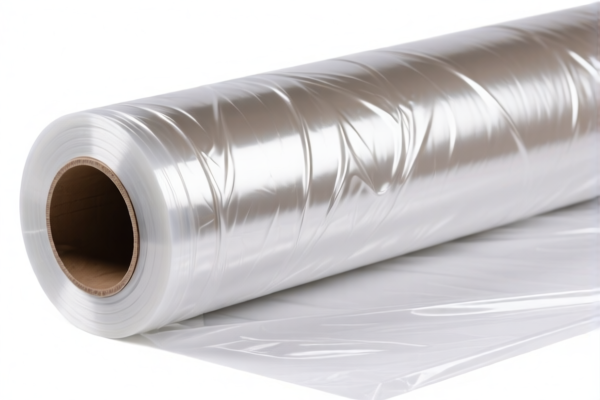

AI Analysis
🌊 High Density Polyethylene Film (HDPE Film)
🌐 HS Code Reference & Customs Clearance Guide | 2026 Latest Tariff Analysis | Professional Entry Strategy
📌 Part 1: Product Definition & Classification – Do You Know Your "Film"?
HDPE Film is a versatile, durable, and moisture-resistant plastic sheet widely used in packaging, agriculture, construction, and industrial applications. In international trade, its classification depends heavily on its form (self-adhesive vs. plain) and specific chemical structure.
Key Distinction:
- Self-Adhesive/Flat Plastic Sheets (Ch 39.19): Usually treated as ready-to-use films or sheets, often with specific functional characteristics.
- General Plastic Articles (Ch 39.26): If it doesn't fit the strict definitions of Chapter 39.01–39.14, it may fall here.
- Raw Resin (Ch 39.01): If imported as polymer pellets/granules, not film.
⚠️ Critical Note:
- Film vs. Resin: Ensure the product is physically in "film" or "sheet" form, not raw resin.
- Self-Adhesive vs. Non-Adhesive: This triggers different HS codes under Chapter 39.19.
📦 Part 2: HS Code Classification Matrix (2026 Data)
| HS Code | Product Description | Form/Feature | Total Tax Rate | Key Tax Components |
|---|---|---|---|---|
3919.90.50.60 |
HDPE Moisture-Barrier Film | Plastic self-adhesive/flat shape | 40.8% | Base: 5.8% + Section 301: 25% + 122 Clause: 10% |
3919.10.20.55 |
HDPE Moisture-Barrier Film | Plastic flat shape (non-adhesive implied) | 40.8% | Base: 5.8% + Section 301: 25% + 122 Clause: 10% |
3926.90.99.89 |
HDPE Moisture-Barrier Film | General plastic article | 22.8% | Base: 5.3% + Section 301: 7.5% + 122 Clause: 10% |
3901.20.50.00 |
HDPE Resin (Density ≥ 0.94) | Polyethylene resin, primary form | 41.5% | Base: 6.5% + Section 301: 25% + 122 Clause: 10% |
3901.20.10.00 |
HDPE Resin | Ethylene polymer, primary form | 41.5% | Base: 6.5% + Section 301: 25% + 122 Clause: 10% |
🔍 Why These Codes?
- 3919 Series: Applies to plastic films/sheets, whether or not self-adhesive. The distinction between3919.90and3919.10often hinges on specific physical attributes (e.g., adhesive backing or specific width/thickness rules). Both carry the same high tariff due to Section 301 and 122 clause.
- 3926 Series: A "catch-all" for plastic articles not elsewhere specified. Lower Section 301 rate (7.5% vs. 25%) makes this the most tax-efficient option if the product fits the definition.
- 3901 Series: Applies ONLY if the product is imported as resin (pellets, granules), not as a finished film. Misclassification here can lead to significant delays.
💰 Part 3: Tariff Breakdown & Policy Details (2026)
✅ Applicable Country: United States (US)
✅ Origin: China (CN)
✅ Effective Date: Post-2025 adjustments (122 Clause & Section 301 remain active)
🎯 1. 3919.90.50.60 & 3919.10.20.55 – HDPE Film (Flat/Self-Adhesive)
| Item | Detail |
|---|---|
| Base Duty Rate | 5.8% |
| Section 301 Tariff | +25.0% (USITC Footnote 9903.88.01) |
| 122 Clause Tariff | +10.0% (IEEPA-related surcharge on specific plastic products) |
| Total Effective Rate | 40.8% |
| Calculation | CIF Value × 40.8% |
| De Minimis Eligibility | ❌ No (Denied for Section 301/122 items) |
| Legal Basis | IEEPA:9903.01.24 → USITC:3919.10/90 → FOOTNOTE:9903.88.01 |
📌 Explanation:
- The 25% Section 301 tariff is the standard punitive duty on Chinese plastic films.
- The 10% 122 Clause is an additional surcharge targeting specific plastic goods under recent executive actions.
- Combined Effect: These films are heavily taxed. Importers must plan for high landed costs.
🎯 2. 3926.90.99.89 – HDPE Film (General Plastic Article)
| Item | Detail |
|---|---|
| Base Duty Rate | 5.3% |
| Section 301 Tariff | +7.5% (Reduced rate for this subheading) |
| 122 Clause Tariff | +10.0% |
| Total Effective Rate | 22.8% |
| Calculation | CIF Value × 22.8% |
| De Minimis Eligibility | ❌ No |
| Legal Basis | IEEPA:9903.01.24 → USITC:3926.90 → FOOTNOTE:9903.88.01 |
📌 Strategic Insight:
- If your HDPE film can be classified under 3926 (e.g., as a general-purpose plastic sheet not meeting the specific "film" criteria of 3919), you save 18% in total duties.
- Caution: This requires strong technical justification that the product does not fit the stricter definitions of Chapter 39.19.
🎯 3. 3901.20.50.00 & 3901.20.10.00 – HDPE Resin (If Misclassified as Film)
| Item | Detail |
|---|---|
| Base Duty Rate | 6.5% |
| Section 301 Tariff | +25.0% |
| 122 Clause Tariff | +10.0% |
| Total Effective Rate | 41.5% |
| Note | Only applicable if imported as raw resin, not film. |
⚠️ Warning: Do not declare film as resin to avoid higher taxes. If the product is physically a film, declaring it as resin is customs fraud. However, if you are importing resin to convert into film domestically, use these codes.
🛠️ Part 4: Customs Clearance Practical Advice
✅ 1. Documentation Checklist (Mandatory)
| Document | Required? | Notes |
|---|---|---|
| Product Specification Sheet | ✔️ | Must specify: Material (HDPE), Density (≥0.94 g/cm³), Thickness, Width, Usage. |
| Physical Sample | ✔️ | May be requested by CBP to confirm "film" vs. "resin" vs. "sheet". |
| Commercial Invoice | ✔️ | Clearly state: "High Density Polyethylene Film" or "HDPE Resin" as applicable. Avoid vague terms like "Plastic Material". |
| Packing List | ✔️ | Detail weight, dimensions, and quantity. |
| Country of Origin Certificate | ✔️ | For Section 301/122 applicability. |
| IEEPA/301 Declaration | ✔️ | Acknowledge compliance with USTR exclusions (if applicable, though rare for HDPE film). |
✅ 2. Classification Strategy & Pitfalls
| Scenario | Correct HS Code | Risk of Wrong Code |
|---|---|---|
| Importing pre-cut HDPE moisture barrier rolls | 3919.90.50.60 or 3919.10.20.55 |
High risk. Ensure it fits "self-adhesive" or "flat shape" criteria. |
| Importing generic HDPE plastic sheets | 3926.90.99.89 |
Potential Savings! Justify why it doesn't fit 3919. |
| Importing HDPE pellets for manufacturing | 3901.20.10.00 |
Must be raw polymer, not film. |
| Misdeclaring Film as Resin | N/A | Illegal. Leads to seizure, fines, and loss of importer trust. |
🔥 Golden Rule:
"Form Dictates Code: Film → 3919/3926; Resin → 3901. Don't Mix!"
✅ 3. Special Considerations
- 122 Clause Applicability: The 10% surcharge applies to specific plastic products from China. Verify if your specific HDPE film variant is listed in the current USTR notice.
- Section 301 Exclusions: Check if your specific HDPE film product has an exclusion number. If yes, the 25% duty may be waived, significantly lowering costs.
- Material Composition: Ensure the film is >90% HDPE. Additives (e.g., UV stabilizers) should not change the fundamental character of the product.
🌍 Part 5: Global Market Comparison (2026)
| Market | Recommended HS Code | Estimated Total Duty | Notes |
|---|---|---|---|
| 🇺🇸 USA | 3919.90.50.60 |
40.8% | High tariffs due to 301 & 122 clauses. |
| 🇺🇸 USA | 3926.90.99.89 |
22.8% | Lower rate if classification allows. |
| 🇨🇳 China | 3920.10.00.00 |
~5-6% | Import duties into China are much lower. |
| 🇪🇺 EU | 3920.10.00.00 |
6.5% | No retaliatory tariffs like US Section 301. |
| 🇬🇧 UK | 3920.10.00.00 |
6.5% | Post-Brexit tariff structure similar to EU. |
📌 Conclusion:
The US market is the most challenging for HDPE film imports due to叠加 tariffs. Importers must optimize classification and explore supply chain alternatives (e.g., sourcing from non-China countries) to mitigate costs.
📌 Part 6: Common Mistakes & Avoidance
❌ Mistake 1: Declaring "Plastic Sheet" without specifying HDPE.
👉 Result: Customs may classify under higher-tariff general plastics or delay for additional info.
Fix: Always specify "High Density Polyethylene (HDPE)" and density if known.
❌ Mistake 2: Confusing "Film" with "Resin".
👉 Result: If film is declared as resin, it may be rejected for not matching the physical description.
Fix: Match declaration to physical form. Film = 3919/3926. Resin = 3901.
❌ Mistake 3: Ignoring the 122 Clause.
👉 Result: Underpayment of duties and penalties.
Fix: Verify 122 clause applicability for all plastic film imports from China.
✅ Correct Declaration Example:
"High Density Polyethylene (HDPE) Moisture Barrier Film, Rolls, 0.5mm Thickness, 1000mm Width, for Industrial Packaging, Origin: China"
🎯 Part 7: Final Recommendations
🎯 Remember:
🔹 "Film vs. Resin: Choose One!"
🔹 "3926 Saves Money, But Justify It!"
🔹 "US Tariffs Are High: Plan for 40%+ or Find an Exclusion!"
📌 Pro Tip:
If your HDPE film is not originally from China (e.g., sourced from Vietnam, Thailand, or the US), you may avoid the 25% Section 301 and 10% 122 clause tariffs, reducing the total duty to just the base rate (5.3%-6.5%).
Consider substantial transformation or supply chain diversification to improve competitiveness.
📣 Immediate Action:
📞 Consult a Customs Broker to confirm HS Code classification.
📄 Request Product Exclusions from USTR if applicable.
🚀 Optimize Your Supply Chain to mitigate high US tariffs.
✨ Precision in Classification Saves Thousands!
💼 Every Percent Matters in International Trade.
Customer Reviews
About HS Code Classification
The Harmonized System (HS) is an internationally standardized nomenclature developed by the World Customs Organization (WCO) to classify traded products. Over 200 countries use the HS system as the basis for customs tariffs, trade statistics, and import/export regulations.
Each HS code follows a hierarchical structure:
- Chapter (2 digits) — Broad category of goods (e.g., Chapter 84: Machinery and Mechanical Appliances)
- Heading (4 digits) — More specific grouping within the chapter
- Subheading (6 digits) — Internationally standardized breakdown, used by all WCO member countries
- National subdivisions (8-10 digits) — Country-specific extensions for further classification, such as US HTSUS 10-digit codes
Correct HS code classification is essential for smooth customs clearance, accurate duty payment, and compliance with trade regulations. Misclassification can lead to customs delays, overpayment of duties, or penalties.
When importing from CN to US, the applicable tariff rates may include:
- Most-Favored-Nation (MFN) rate — The standard duty rate applied to WTO members
- General rate — Applied to countries without trade agreements
- Trade remedy duties — Additional tariffs such as Section 301 (anti-dumping), Section 232 (national security), or countervailing duties
The information provided on this page is for reference purposes only. For official classification, please consult with your local customs authority or a licensed customs broker.