High Elasticity Plastic Elastic Band
CN → US| HS Code | Tariff Rate | Origin | Destination | Doc |
|---|---|---|---|---|
| 3926909905 | 22.8% | CN | US | Official Doc |
| 3926901000 | 20.9% | CN | US | Official Doc |
| 3926909989 | 22.8% | CN | US | Official Doc |
| 4016993510 | 35.0% | CN | US | Official Doc |
| 4016993550 | 35.0% | CN | US | Official Doc |
Product Images
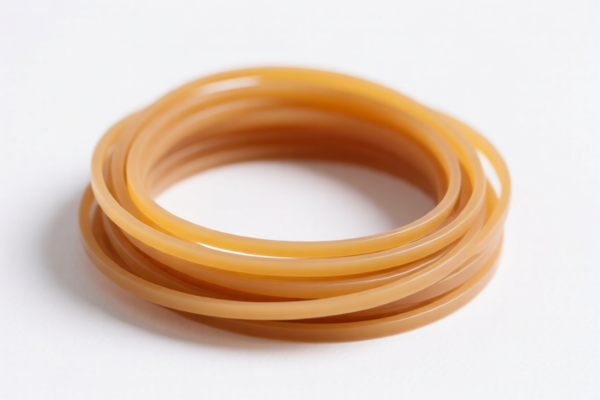
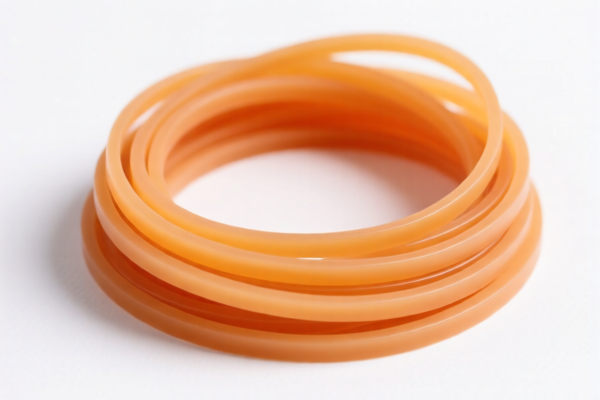
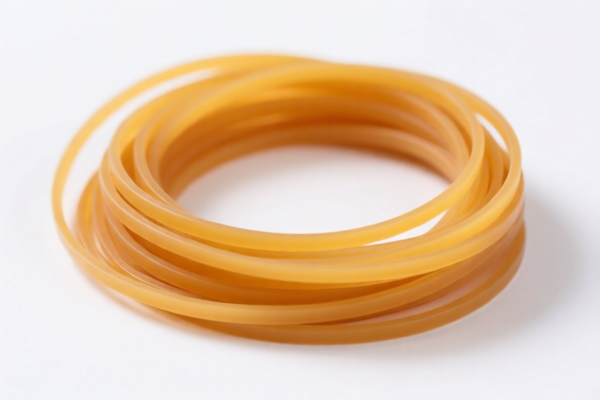
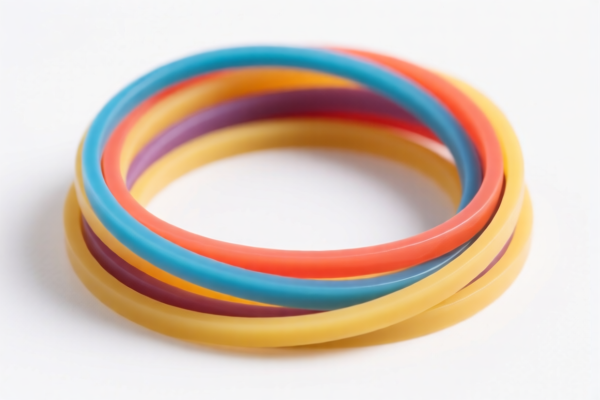
AI Analysis
🎀 High Elasticity Plastic Elastic Band (Plastic Hair Bands / Stationery Rubber Bands)
🌐 HS Code Reference & Customs Clearance Guide | 2026 Latest Tariff Analysis | Professional Clearance Strategy 📌 I. Product Definition & Classification: Are You Sure About "Plastic"?
High elasticity plastic elastic bands are versatile items used primarily in stationery (bundling papers/documents) and personal care (hair ties). The critical factor for classification is the material composition and form.
In international trade, these items fall into two main categories based on their primary material:
- Plastic Elastic Bands: Made primarily from thermoplastics (e.g., PVC, PE, PP). These are flexible, often colorful, and used for stationery or hair.
- Rubber Elastic Bands: Made from natural or synthetic rubber (vulcanized). These have high tensile strength and are used for industrial or heavy-duty bundling.
⚠️ Key Distinction Point: - If the product is strictly plastic (thermoplastic) and used for stationery or general elastic purposes → It likely falls under Chapter 39 (Plastics) or Chapter 40 (Rubber) depending on specific composition and use. - If it is rubber-based (natural/synthetic vulcanized rubber) → It falls under Chapter 40 (Rubber and Articles Thereof). - If it is hard rubber (ebonite) or a rigid rubber article → It falls under HS 4017.00.
📦 II. HS Code Classification Details (2026 Latest Tariff Authority Comparison)
Based on the provided data, here are the precise HS Codes for different variations of elastic bands:
| HS Code | Product Description | Application Scenario | Material Type |
|---|---|---|---|
3926.90.99.05 |
Plastic items for stationery, specifically plastic elastic bands | Stationery supplies, office use, hair ties (plastic) | Plastic |
3926.90.10.00 |
Other plastic articles, no specific conflict | General plastic elastic bands not fitting other subheadings | Plastic |
4016.99.35.10 |
Rubber elastic bands, rubber articles | Industrial bundling, high-strength elastic use | Rubber (Vulcanized) |
4016.99.35.50 |
Natural rubber articles, elastic bands | Natural rubber based elastic bands | Natural Rubber |
4017.00.00.00 |
Hard rubber and articles thereof | Rigid rubber products, not flexible bands | Hard Rubber (Ebonite) |
🔍 Important Reminder: - Plastic Elastic Bands: Must be classified under Chapter 39. The most accurate code for "stationery plastic elastic bands" is
3926.90.99.05. - Rubber Elastic Bands: Must be classified under Chapter 40. For standard rubber elastic bands,4016.99.35.10is the primary code. - Do NOT mix materials: If the product contains both plastic and rubber, the classification depends on the essential character (usually the material providing the elasticity). If it's predominantly rubber, go with Chapter 40. If predominantly plastic, go with Chapter 39.
💰 III. 2026 Latest Tariff Rate Details (Including Surtaxes & Policy Add-ons)
✅ Applicable Country: United States (US) ✅ Country of Origin: China (CN) ✅ Effective Time: November 10, 2025 onwards (including subsequent imports)
🎯 1. 3926.90.99.05 —— Plastic Items for Stationery (Plastic Elastic Bands)
| Item | Content |
|---|---|
| Base Tariff | 5.3% (ad valorem) |
| Section 301 Surtax | +7.5% |
| Section 122 Tariff | +10% |
| Total Tariff Rate | 22.8% |
| Tax Calculation | CIF Value × 22.8% |
| De Minimis Eligibility | ❌ Not Eligible (deny_de_minimis) |
| Legal Basis Path | Section 122 → Section 301 → USITC:3926.90.99.05 |
📌 Explanation: - This code applies to plastic elastic bands used for stationery. - The 22.8% total rate includes the base tariff plus significant surtaxes. - High Cost Alert: This is a high tariff item. Importers must factor this into their cost structure.
🎯 2. 3926.90.10.00 —— Other Plastic Articles (General Plastic Elastic Bands)
| Item | Content |
|---|---|
| Base Tariff | 3.4% (ad valorem) |
| Section 301 Surtax | +7.5% |
| Section 122 Tariff | +10% |
| Total Tariff Rate | 20.9% |
| Tax Calculation | CIF Value × 20.9% |
| De Minimis Eligibility | ❌ Not Eligible (deny_de_minimis) |
| Legal Basis Path | Section 122 → Section 301 → USITC:3926.90.10.00 |
📌 Note: - This code is for plastic articles that do not fit other specific subheadings. - Slightly lower base tariff than
3926.90.99.05, but still subject to the same surtaxes. - Total rate: 20.9%.
🎯 3. 4016.99.35.10 —— Rubber Elastic Bands (Vulcanized Rubber)
| Item | Content |
|---|---|
| Base Tariff | 0.0% (ad valorem) |
| Section 301 Surtax | +25.0% |
| Section 122 Tariff | +10% |
| Total Tariff Rate | 35.0% |
| Tax Calculation | CIF Value × 35.0% |
| De Minimis Eligibility | ❌ Not Eligible (deny_de_minimis) |
| Legal Basis Path | Section 122 → Section 301 → USITC:4016.99.35.10 |
📌 Critical Warning: - This code applies to rubber elastic bands. - Although the base tariff is 0%, the Section 301 surtax is 25% (higher than for plastics). - Total rate: 35.0%. This is a very high tariff compared to plastic alternatives.
🎯 4. 4016.99.35.50 —— Natural Rubber Articles (Natural Rubber Elastic Bands)
| Item | Content |
|---|---|
| Base Tariff | 0.0% (ad valorem) |
| Section 301 Surtax | +25.0% |
| Section 122 Tariff | +10% |
| Total Tariff Rate | 35.0% |
| Tax Calculation | CIF Value × 35.0% |
| De Minimis Eligibility | ❌ Not Eligible (deny_de_minimis) |
| Legal Basis Path | Section 122 → Section 301 → USITC:4016.99.35.50 |
📌 Note: - Same tariff structure as
4016.99.35.10. - Total rate: 35.0%. - Natural rubber articles are subject to the same high surtaxes as synthetic rubber.
🎯 5. 4017.00.00.00 —— Hard Rubber and Articles Thereof
| Item | Content |
|---|---|
| Base Tariff | 2.7% (ad valorem) |
| Section 301 Surtax | +25.0% |
| Section 122 Tariff | +10% |
| Total Tariff Rate | 37.7% |
| Tax Calculation | CIF Value × 37.7% |
| De Minimis Eligibility | ❌ Not Eligible (deny_de_minimis) |
| Legal Basis Path | Section 122 → Section 301 → USITC:4017.00.00.00 |
📌 Note: - This code is for hard rubber (ebonite) articles, which are not flexible elastic bands. - Only relevant if the product is rigid rubber. - Total rate: 37.7% (Highest rate in the list).
🛠️ IV. Customs Clearance Practical Advice (Battlefield Pit-Avoidance Guide)
✅ 1. Document Checklist (Cannot Be Missed)
| Document | Mandatory? | Description |
|---|---|---|
| ✅ Product Specification Sheet | ✔️ | Must clearly state Material (Plastic vs. Rubber), Form (Flexible vs. Rigid), and Use (Stationery, Hair, Industrial). |
| ✅ Material Composition Certificate | ✔️ | Third-party lab test report confirming % of plastic/rubber. Critical for classification. |
| ✅ Product Photos | ✔️ | Clear images of the product, packaging, and label showing material info. |
| ✅ Commercial Invoice | ✔️ | Must specify "Plastic Elastic Band" or "Rubber Elastic Band" clearly. Do not use vague terms like "Rubber Band" if it's plastic. |
| ✅ Packing List | ✔️ | Detail the quantity, weight, and dimensions. |
| ✅ Origin Certificate | ✔️ | If applicable for other markets, but for US, origin is declared. |
✅ 2. Declaration Tips (Key Mantra)
🔥 "Material First, Use Second, Name Precise, Tax Clear!"
| Scenario | Correct Declaration | Wrong Practice |
|---|---|---|
| Plastic Elastic Band | 3926.90.99.05 |
Misdeclare as rubber → 35% vs 22.8% |
| Rubber Elastic Band | 4016.99.35.10 |
Misdeclare as plastic → 22.8% vs 35% |
| Mixed Material (Plastic/Rubber) | Analyze essential character | Vague description "Elastic Band" → Audit risk |
| Hard Rubber Article | 4017.00.00.00 |
Misdeclare as flexible band → 37.7% |
✅ 3. Special Case Handling
| Scenario | Handling Advice |
|---|---|
| OEM Plastic Bands | Provide customer order + design specs to prove "stationery" use. |
| Rubber Bands with Plastic Coating | Classify based on essential character. If rubber core provides elasticity → 4016.99.35.10. |
| Hair Ties (Plastic) | Clearly state "Plastic Hair Band" or "Stationery Plastic Elastic Band" in description. |
| Industrial Rubber Bands | Clearly state "Industrial Rubber Elastic Band" to avoid confusion with stationery items. |
🌍 V. Global Market Clearance Comparison (2026 Latest)
| Country/Region | Recommended HS Code | Tariff Rate (China Origin) | Certification Required | Notes |
|---|---|---|---|---|
| 🇺🇸 USA | 3926.90.99.05 (Plastic) |
22.8% | FCC, RoHS (if applicable) | High surtaxes apply. |
| 🇺🇸 USA | 4016.99.35.10 (Rubber) |
35.0% | RoHS | Even higher tariff. |
| 🇨🇳 China | 3926.90.99.05 |
5% | CCC (if applicable) | No surtaxes. |
| 🇪🇺 EU | 3926.90.99 |
0% - 4.5% | REACH, RoHS | No Section 301 surtax. |
| 🇬🇧 UK | 3926.90.99 |
0% - 4.5% | UKCA, REACH | Post-Brexit rules apply. |
📌 Conclusion: - USA imposes significant surtaxes on both plastic and rubber elastic bands from China. - Plastic bands (22.8%) are cheaper to import into the US than rubber bands (35.0%). - EU and UK have much lower tariffs, making them more attractive for rubber products.
📌 VI. Common Errors & Pitfall Guide (Lessons from Experience)
❌ Error 1: Declaring a rubber elastic band as plastic to save tax. 👉 Consequence: Customs audit, penalty, and back-tariff of 12.2% difference.
❌ Error 2: Declaring a plastic elastic band as rubber. 👉 Consequence: Unnecessary high tariff payment (22.8% vs 35.0% is less, but still wrong documentation).
❌ Error 3: Using vague terms like "Elastic Band" without specifying material. 👉 Consequence: Customs will classify based on highest duty or request additional information, causing delays.
❌ Error 4: Not providing a material composition certificate. 👉 Consequence: Customs may reclassify the product, leading to incorrect tariff application.
✅ Correct Practice:
"Plastic Elastic Band, 100% PVC, for Stationery Use, Model XYZ, Color: Blue" OR "Rubber Elastic Band, 100% Natural Rubber, for Industrial Use, Model ABC"
🎯 VII. Conclusion: Professional Declaration, Save Time, Reduce Cost!
🎯 Remember the Mantra:
🔹 "Material First, Use Second, Plastic 22.8%, Rubber 35%, Hard Rubber 37.7%!" 🔹 "HS Code Determines Destiny, Tax Difference is Huge, Wrong Declaration Costs Thousands!"
📌 Pro Tip: If your elastic bands are originating from Vietnam, Mexico, Thailand, or Malaysia, you may apply for IEEPA Exemptions or Section 301 Exclusions, reducing tariffs to 0%~5%. We recommend applying for an Advance Ruling (Pre-classification) to avoid clearance risks.
📣 Take Action Now:
📞 Contact a Professional Customs Broker + Provide Product Images + Apply for HS Code Pre-classification 🚀 Let your elastic bands clear customs smoothly, export efficiently, and double your profits!
✨ Professional Clearance Starts with Accurate Classification! 💼 Every cent of your cost deserves precise calculation!
Customer Reviews
About HS Code Classification
The Harmonized System (HS) is an internationally standardized nomenclature developed by the World Customs Organization (WCO) to classify traded products. Over 200 countries use the HS system as the basis for customs tariffs, trade statistics, and import/export regulations.
Each HS code follows a hierarchical structure:
- Chapter (2 digits) — Broad category of goods (e.g., Chapter 84: Machinery and Mechanical Appliances)
- Heading (4 digits) — More specific grouping within the chapter
- Subheading (6 digits) — Internationally standardized breakdown, used by all WCO member countries
- National subdivisions (8-10 digits) — Country-specific extensions for further classification, such as US HTSUS 10-digit codes
Correct HS code classification is essential for smooth customs clearance, accurate duty payment, and compliance with trade regulations. Misclassification can lead to customs delays, overpayment of duties, or penalties.
When importing from CN to US, the applicable tariff rates may include:
- Most-Favored-Nation (MFN) rate — The standard duty rate applied to WTO members
- General rate — Applied to countries without trade agreements
- Trade remedy duties — Additional tariffs such as Section 301 (anti-dumping), Section 232 (national security), or countervailing duties
The information provided on this page is for reference purposes only. For official classification, please consult with your local customs authority or a licensed customs broker.