High Elasticity Plastic Elastic Bands
CN → US| HS Code | Tariff Rate | Origin | Destination | Doc |
|---|---|---|---|---|
| 3926909905 | 22.8% | CN | US | Official Doc |
| 3926909989 | 22.8% | CN | US | Official Doc |
| 5604100000 | 41.3% | CN | US | Official Doc |
| 5903102010 | 35.0% | CN | US | Official Doc |
| 5903102090 | 35.0% | CN | US | Official Doc |
Product Images
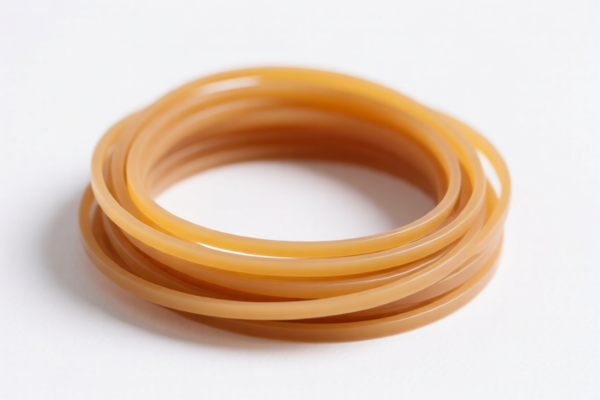
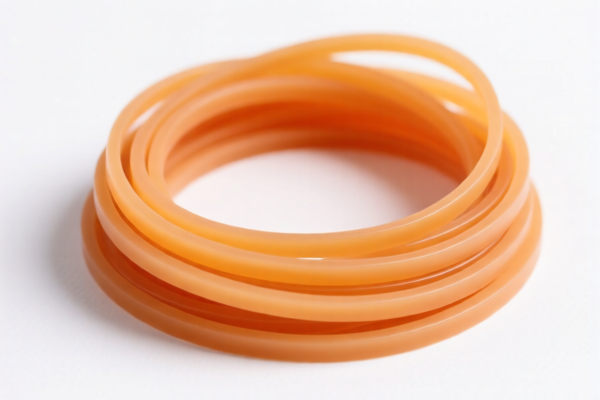
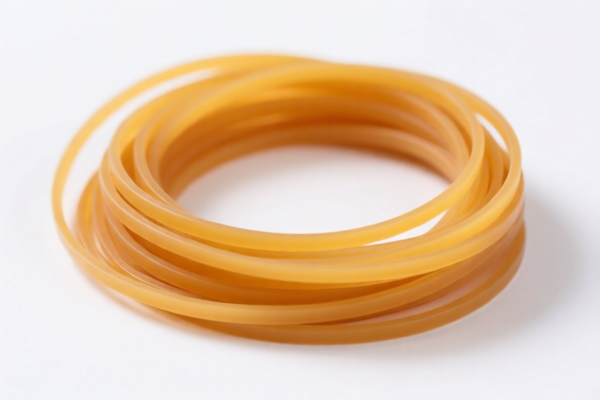
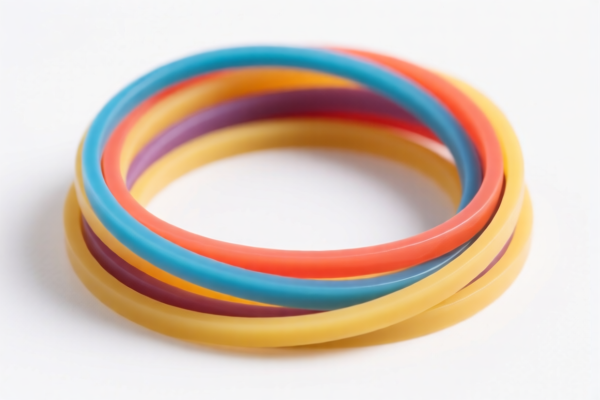
AI Analysis
🧶 High Elasticity Plastic Elastic Bands
🌐 HS Code Reference & Customs Clearance Guide | 2026 Latest Tariff Analysis | Professional Clearance Strategy
📌 I. Product Definition & Classification: Do You Really Understand "Plastic Elastic Bands"?
"High Elasticity Plastic Elastic Bands" are flexible strips made primarily of polymer materials (such as TPE, PVC, or other synthetic resins), designed for tensioning, binding, or sealing applications. In international trade, the classification is strictly determined by the material composition and manufacturing method.
Key Distinction:
- Pure Plastic Bands: Made entirely or primarily of plastic/resin without textile weaving structures → Classified under Chapter 39 (Plastics).
- Textile-Covered/Impregnated Bands: Where fabric is coated, covered, or impregnated with rubber or plastic → Classified under Chapter 56 or 59 (Textiles/Impregnated Fabrics).
⚠️ Critical Identification Point:
- If the band is molded, extruded, or formed from pure plastic → HS Code 3926.90
- If the band has a textile base (woven/knitted) covered with rubber or PVC/plastic → HS Code 5604.10 or 5903.10
📦 II. HS Code Classification Details (2026 Latest Tariff Authority Comparison)
| HS Code | Product Description | Application Scenario | Material/Structure Feature |
|---|---|---|---|
3926.90.99.05 |
Corrosion-resistant plastic elastic band, plastic material, elastic band form, matches all-plastic elastic bands | Pure plastic straps, chemical-resistant binding bands, industrial plastic ties | ✅ All Plastic |
3926.90.99.89 |
Corrosion-resistant plastic elastic band, contains plastic material, classified as other unlisted plastic products | Generic plastic elastic straps not specifically listed elsewhere | ✅ Plastic-based |
5604.10.00.00 |
Elastic band, typically composed of textile material covered with rubber or elastic fiber, conforms to textile coverage features | Rubber-coated elastic bands, textile-core elastic straps | ✅ Textile + Rubber/Elastic Cover |
5903.10.20.10 |
Elastic band, textile fabric, contains PVC or rubber components, conforms to impregnated/coated textile fabric features | PVC-impregnated elastic fabric strips, coated textile elastic bands | ✅ Textile + PVC/Rubber Impregnation |
5903.10.20.90 |
Elastic band, textile fabric, conforms to impregnated or coated textile fabric category under other headings | Other PVC/rubber-coated elastic textile bands | ✅ Textile + Coated |
🔍 Key Reminder:
- "Plastic" in the name can be misleading. If the core is fabric and the surface is plastic/rubber, it is NOT Chapter 39.
- Chapter 39 is for solid plastic articles.
- Chapters 56/59 are for textile products with rubber/plastic treatment.
💰 III. 2026 Latest Tariff Rate Details (Including Surtaxes & Policy Add-ons)
✅ Applicable Country: United States (US)
✅ Origin: China (CN)
✅ Effective Date: From November 10, 2025 (including subsequent imports)
🎯 1. 3926.90.99.05 & 3926.90.99.89 —— Pure Plastic Elastic Bands
| Item | Content |
|---|---|
| Basic Tariff | 5.3% (ad valorem) |
| Section 301 Surtax | +7.5% |
| Section 122 Tariff | +10% |
| Total Tax Rate | 22.8% |
| Tax Calculation | CIF Value × 22.8% |
| De Minimis Exemption | ❌ Not Eligible (High value threshold affected by surtaxes) |
| Legal Basis Path | USITC:3926.90.99.05 → Section 301: 7.5% → Section 122: 10% |
📌 Explanation:
- Basic Tariff 5.3%: Standard MFN rate for plastic articles.
- Section 301 Surtax 7.5%: Additional tariff on specific Chinese plastic goods.
- Section 122 Tariff 10%: National security-related tariff on certain plastic imports.
- Total 22.8%: High effective rate for pure plastic elastic bands from China.
🎯 2. 5604.10.00.00 —— Textile-Covered Elastic Bands (Rubber/Elastic)
| Item | Content |
|---|---|
| Basic Tariff | 6.3% |
| Section 301 Surtax | +25.0% |
| Section 122 Tariff | +10% |
| Total Tax Rate | 41.3% |
| Tax Calculation | CIF Value × 41.3% |
| De Minimis Exemption | ❌ Not Eligible |
| Legal Basis Path | USITC:5604.10.00.00 → Section 301: 25% → Section 122: 10% |
📌 Explanation:
- Basic Tariff 6.3%: For prepared textile fibers/fabrics.
- Section 301 Surtax 25%: Critical! Higher surtax applies to textile-related elastic products.
- Section 122 Tariff 10%: Applies to elastic bands regardless of material.
- Total 41.3%: Extremely High. Must confirm if the product truly fits "textile covered with rubber."
🎯 3. 5903.10.20.10 & 5903.10.20.90 —— PVC/Rubber-Impregnated Textile Elastic Bands
| Item | Content |
|---|---|
| Basic Tariff | 0.0% |
| Section 301 Surtax | +25.0% |
| Section 122 Tariff | +10% |
| Total Tax Rate | 35.0% |
| Tax Calculation | CIF Value × 35.0% |
| De Minimis Exemption | ❌ Not Eligible |
| Legal Basis Path | USITC:5903.10.20.10 → Section 301: 25% → Section 122: 10% |
📌 Explanation:
- Basic Tariff 0.0%: Impregnated/coated textile fabrics may have low basic rates.
- Section 301 Surtax 25%: Still applies to textile products from China.
- Section 122 Tariff 10%: Applies.
- Total 35.0%: Significantly lower than Chapter 56 (41.3%) but higher than Chapter 39 (22.8%).
- Strategy: If the product can be classified as3926.90.99(pure plastic), it is cheaper. If it is textile-based, try to argue for5903.10over5604.10to save 6.3%.
🛠️ IV. Customs Clearance Practical Advice (Real-World Pitfall Avoidance Guide)
✅ 1. Documentation Checklist (Mandatory)
| Document | Required | Explanation |
|---|---|---|
| ✅ Product Specification Sheet | ✔️ | Must specify: Material composition (% plastic vs. % textile), thickness, width, elasticity ratio |
| ✅ Material Safety Data Sheet (MSDS) | ✔️ | For chemical composition, especially if PVC/rubber is used |
| ✅ Product Photos (Clear) | ✔️ | Show cross-section to prove "pure plastic" vs. "textile core" |
| ✅ Commercial Invoice | ✔️ | Describe as "Plastic Elastic Band" or "Textile Elastic Band" accurately |
| ✅ Packing List | ✔️ | Confirm no mixing of different HS codes in one shipment |
| ✅ Origin Certificate | ✔️ | For potential duty drawbacks or exemption claims (if applicable) |
✅ 2. Declaration Tips (Key Mantra)
🔥 "Material Defines Code, Plastic is 39, Textile is 56/59, Misclassification Costs More!"
| Situation | Correct Declaration | Wrong Practice |
|---|---|---|
| Pure Plastic Band | 3926.90.99.05 or 89 |
Declare as 5903.10 → Higher tax (35% vs 22.8%) |
| Textile Core + PVC Coating | 5903.10.20.10 |
Declare as 3926.90 → Risk of penalty for false origin |
| Textile Core + Rubber Cover | 5604.10.00.00 |
Declare as 5903.10 → Wrong subheading (different treatment) |
| Mixed Materials (Ambiguous) | Provide cross-section photo + spec | Vague description "Elastic Band" → Customs holds cargo |
✅ 3. Special Case Handling
| Situation | Handling Advice |
|---|---|
| OEM Custom Bands | Provide customer design + material composition proof. Avoid generic "plastic band" if it has textile. |
| Corrosion-Resistant Claims | If using special plastics (e.g., PTFE), ensure 3926.90.99.05 is specified for "corrosion-resistant" feature. |
| High Elasticity (TPE/TPU) | TPE/TPU are plastics. Use 3926.90. Do NOT classify as textile unless woven. |
| Packaging Includes Tools | Declare bands separately. Tools have different HS codes. Do not bundle. |
🌍 V. Global Major Market Customs Comparison (2026 Latest)
| Country/Region | Recommended HS Code | Tariff (China Origin) | Certification Requirements | Notes |
|---|---|---|---|---|
| 🇺🇸 USA | 3926.90.99.05 |
22.8% (Plastic) 41.3% (Textile) |
None specific for plastic bands | High Section 301 + 122 tariffs. |
| 🇪🇺 EU | 3926.90.99 |
~6-10% (No Section 301) | REACH, RoHS | Much lower duty than US. |
| 🇨🇳 China | 3926.90.99 |
5.3% (Basic) | CCC (if applicable) | Low import duty. |
| 🇯🇵 Japan | 3926.90.99 |
~3-6% | PSE (if electrical) | Competitive for plastic bands. |
📌 Conclusion:
- USA is the most expensive market due to Section 301 and Section 122 surtaxes.
- Plastic bands (22.8%) are cheaper than textile-based elastic bands (35-41.3%) in the US.
- Strategy: If possible, design bands as pure plastic to leverage the lower 22.8% rate instead of 35-41.3%.
📌 VI. Common Errors & Pitfall Guide (Blood Lessons)
❌ Error 1: Declaring a textile-core PVC band as 3926.90 (Plastic)
👉 Consequence: Customs inspects, finds textile layer → Penalty + Back Taxes + Possible Fraud Charge.
❌ Error 2: Using "Elastic Band" as the only description
👉 Consequence: Customs cannot determine material → Detention + Request for Sample + Delay.
❌ Error 3: Confusing 5604.10 (Rubber covered) with 5903.10 (PVC coated)
👉 Consequence: Both are high tax, but 5604.10 is 41.3% vs 5903.10 35.0%. Wrong code = Extra 6.3% loss.
❌ Error 4: Ignoring Section 122 (10%)
👉 Consequence: Under-declaring tax by 10% → Seizure + Fines.
✅ Correct Practice:
"High Elasticity Plastic Elastic Band, Made of TPE, 100% Synthetic Polymer, Width 10mm, Thickness 1mm, No Textile Component, Model XYZ, Batch No. ABC"
🎯 VII. Conclusion: Professional Declaration Saves Money!
🎯 Remember the Mantra:
🔹 "Plastic = 22.8%, Textile+PVC = 35.0%, Textile+Rubber = 41.3%"
🔹 "Check the Core: If it’s Fabric, it’s Expensive. If it’s Plastic, it’s Cheaper."
🔹 "HS Code Decides Tax, Tax Decides Profit, Misclassification Decides Ruin!"
📌 Pro Tip:
- If your product is 100% plastic, insist on 3926.90.99.05 to save 12-18% vs textile alternatives.
- If your product has any textile, ensure the coating is PVC (5903.10) rather than Rubber (5604.10) to save 6.3%.
- Pre-clearance Ruling: Highly recommended for new product lines to lock in HS Code and avoid surprise audits.
📣 Immediate Action:
📞 Contact Professional Customs Broker + Provide Cross-Section Photo + Apply for Pre-Ruling
🚀 Let Your Elastic Bands Clear Smoothly, Maximize Profit, and Stay Compliant!
✨ Professional Clearance Starts with Accurate Classification!
💼 Every Cent of Tax You Save is Pure Profit!
Customer Reviews
About HS Code Classification
The Harmonized System (HS) is an internationally standardized nomenclature developed by the World Customs Organization (WCO) to classify traded products. Over 200 countries use the HS system as the basis for customs tariffs, trade statistics, and import/export regulations.
Each HS code follows a hierarchical structure:
- Chapter (2 digits) — Broad category of goods (e.g., Chapter 84: Machinery and Mechanical Appliances)
- Heading (4 digits) — More specific grouping within the chapter
- Subheading (6 digits) — Internationally standardized breakdown, used by all WCO member countries
- National subdivisions (8-10 digits) — Country-specific extensions for further classification, such as US HTSUS 10-digit codes
Correct HS code classification is essential for smooth customs clearance, accurate duty payment, and compliance with trade regulations. Misclassification can lead to customs delays, overpayment of duties, or penalties.
When importing from CN to US, the applicable tariff rates may include:
- Most-Favored-Nation (MFN) rate — The standard duty rate applied to WTO members
- General rate — Applied to countries without trade agreements
- Trade remedy duties — Additional tariffs such as Section 301 (anti-dumping), Section 232 (national security), or countervailing duties
The information provided on this page is for reference purposes only. For official classification, please consult with your local customs authority or a licensed customs broker.