High Elasticity Synthetic Rubber
CN → US| HS Code | Tariff Rate | Origin | Destination | Doc |
|---|---|---|---|---|
| 3911907000 | 35.0% | CN | US | Official Doc |
| 3911901000 | 35.0% | CN | US | Official Doc |
| 4002990000 | 35.0% | CN | US | Official Doc |
| 4005200000 | 35.0% | CN | US | Official Doc |
| 4005100000 | 35.0% | CN | US | Official Doc |
Product Images
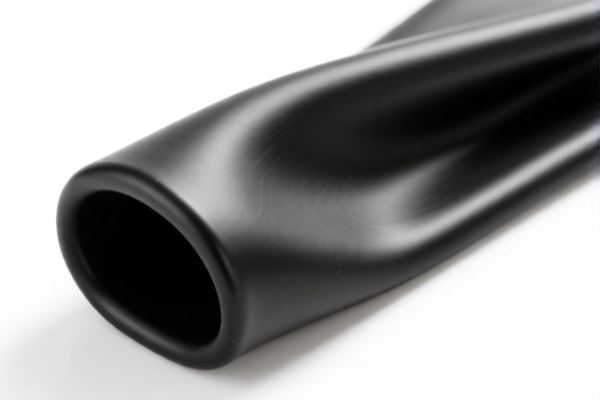
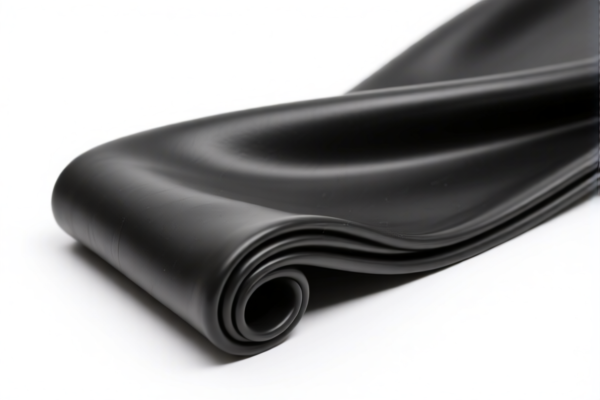
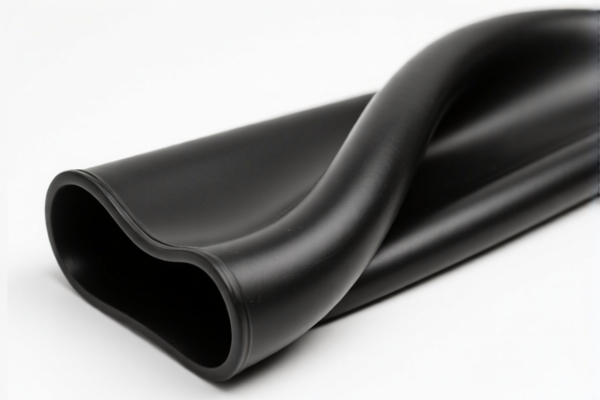
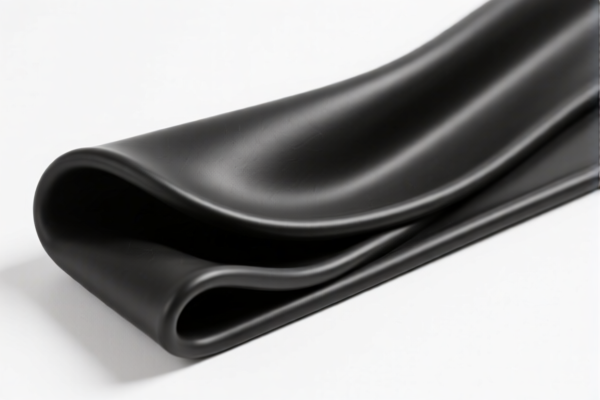
AI Analysis
🧪 High Elasticity Synthetic Rubber (合成橡胶)
🌐 HS Code Classification & Clearance Guide | 2026 Tariff Structure | Professional Compliance Strategy
📌 One Product, Multiple Pathways: Why Classification Matters
"High Elasticity Synthetic Rubber" is a broad commodity term. In international trade, the specific HS Code depends on the chemical composition, physical state (unvulcanized vs. vulcanized), and processing status (raw material vs. compound).
Based on the provided data, here are the 5 potential classifications for High Elasticity Synthetic Rubber, each with distinct legal reasoning and tax implications.
⚠️ Critical Warning:
All listed HS Codes below carry a Total Tariff Rate of 35% (Base 0% + 25% Section 301 + 10% IEEPA Section 122).
Misclassification can lead to significant audits, delays, or incorrect tax liabilities.
📦 一、HS Code Classification Matrix (2026 Latest Data)
| HS Code | Category Description | Match Logic & Application Scenario |
|---|---|---|
3911.90.70.00 |
Other products of polymers of phenolic resins or of other polymers, in primary forms | Match Reason: Material is "Synthetic Rubber," falling under the broad category of "Chlorinated Synthetic Rubber" (氯化合成橡胶). Scenario: Used when the rubber is a specialized polymer derivative, specifically fitting "Other" categories under Chapter 39 (Plastics/Rubber polymers). No conflicting components present. |
3911.90.10.00 |
Polysulfides and other Elastomers, in primary forms | Match Reason: Material is "Synthetic Rubber," fitting the scope of "Polysulfides" and related "Elastomers" in primary form. Scenario: Ideal for raw synthetic rubber compounds, particularly those with polysulfide characteristics or general elastomeric properties before vulcanization. |
4002.99.00.00 |
Other synthetic rubber, in primary forms or in plates, sheets or strip | Match Reason: Exact material match: "Synthetic Rubber." Falls under the "Other" sub-category. Scenario: The most direct classification for generic high-elasticity synthetic rubber not specified as SBR, Nitrile, or Butadiene. Assumes primary form (raw material). |
4005.20.00.00 |
Unvulcanized rubber, compounded, with plural cross-links | Match Reason: Material is "Synthetic Rubber," fitting the attribute of "Unvulcanized Compounded Rubber" (未硫化混炼橡胶). Scenario: Used if the rubber has been mixed/compounded with other agents but remains unvulcanized. Inferred as a raw material for further processing. |
4005.10.00.00 |
Unvulcanized rubber, compounded, with single cross-links | Match Reason: Material match + inferred state. Based on "High-Temperature Resistance" attribute, it is inferred as a specific performance rubber raw material. Scenario: For compounded synthetic rubber with single cross-links (e.g., certain types of SBR or EPDM compounds) used in high-temp applications. No material or state conflict. |
💰 二、2026 Tariff Structure Breakdown (USA Import from China)
✅ Jurisdiction: United States (US)
✅ Origin: China (CN)
✅ Effective Date: 2025/11/10 onwards
All five HS Codes share the exact same tax structure based on the provided data.
🎯 Unified Tariff Calculation for All 5 Codes
| Tax Component | Rate | Legal Basis / Description |
|---|---|---|
| 1. Base Duty | 0.0% | Standard Most Favored Nation (MFN) rate for these rubber/polymer categories. |
| 2. Section 301 Duty | +25.0% | Additional tariffs imposed under the US Trade Act of 1974, Section 301, targeting Chinese goods. |
| 3. IEEPA Section 122 Duty | +10.0% | Additional tariffs under the International Emergency Economic Powers Act (IEEPA), specifically targeting China-related imports (often linked to geopolitical trade measures). |
| TOTAL EFFECTIVE RATE | 35.0% | 0% + 25% + 10% |
📌 Financial Impact Example:
For a shipment valued at $100,000 USD:
- Tax Payable: $35,000 USD
- Note: This is a high-cost classification. No de minimis exemption applies.
🛠️ 三、Customs Clearance Strategy & Recommendations
✅ 1. Documentation Checklist (Mandatory)
To ensure smooth clearance and justify the selected HS Code, you must provide:
| Document | Requirement | Purpose |
|---|---|---|
| ✅ Material Safety Data Sheet (MSDS) | Must specify "Synthetic Rubber" type | Proves chemical composition matches HS 4002 or 4005. |
| ✅ Composition Certificate | Detailed breakdown of polymer type (e.g., SBR, NBR, EPDM) | Crucial for distinguishing between 4002.99 (General) and specific elastomers. |
| ✅ State of Matter Declaration | Specify: Raw/Granules/Sheets vs. Compounded/Unvulcanized | Determines if it goes to 3911/4002 (Primary) or 4005 (Compounded). |
| ✅ Technical Specification Sheet | Highlight "High Elasticity" & "Heat Resistance" | Supports classification under 4005.10 or 4005.20 if compounded. |
| ✅ Commercial Invoice | Clear description: "High Elasticity Synthetic Rubber, Unvulcanized" | Avoids ambiguity with finished rubber products (Chapter 40 final goods). |
| ✅ Packing List | Weight and dimensions | For duty calculation basis (CIF value). |
✅ 2. Key Classification Distinctions (The "Why")
🔥 Rule of Thumb:
"Primary Form vs. Compounded" is the biggest pitfall.
| Scenario | Recommended HS Code | Why? |
|---|---|---|
| Raw Synthetic Rubber (Bales, Granules, Liquid) | 4002.99.00.00 or 3911.90.x0.00 |
It is in "primary form." Not yet mixed with stabilizers/curing agents in a compounded state. |
| Compounded, Unvulcanized (Mixed but not cured) | 4005.20.00.00 (Multiple cross-links) |
It is a "compound" ready for manufacturing. Fits "Unvulcanized rubber, compounded." |
| Specialized Polymer Derivative | 3911.90.10.00 or 3911.90.70.00 |
If the rubber is classified legally under Chapter 39 (Plastics/Polymers) due to specific chemical structure (e.g., polysulfides). |
✅ 3. Customs Clearance Tips
-
Avoid Generic Descriptions:
- ❌ Wrong: "Rubber Material"
- ✅ Right: "High Elasticity Synthetic Rubber, Unvulcanized, SBR/NBR Compound, in Primary Form"
-
Prove "Primary Form" for 3911/4002:
If claiming4002.99.00.00or3911.90.x0.00, ensure the goods are not finished goods or semi-finished molded parts. They must be raw material state. -
Justify "Compounded" for 4005:
If claiming4005.x0.00, provide evidence that the rubber has been mixed/compounded with other substances (carbon black, oils, etc.) but remains unvulcanized. -
Heat Resistance Attribute:
The mention of "High Temperature Resistance" in the data suggests it may be a specialized compound. If so,4005.10.00.00or4005.20.00.00is more accurate than generic4002.99.
🌍 四、Global Market Comparison (For Context)
| Market | Typical HS Code | Est. Duty (China Origin) | Notes |
|---|---|---|---|
| 🇺🇸 USA | 4002.99.00.00 |
35% (0% Base + 25% Sec 301 + 10% IEEPA) | Highest cost. Strict scrutiny on rubber/polymer imports. |
| 🇨🇳 China (Import) | 4002.99.00.00 |
~5-10% | Lower duties. No Section 301 impact. |
| 🇪🇺 EU | 4002.99.00 |
0-6.5% | Generally low duty, but high VAT. No anti-dumping usually for raw rubber. |
| 🇻🇳 Vietnam (Re-export) | Varies | Varies | Often used for transshipment, but must prove substantial transformation. |
📌 Conclusion for US Importers:
The 35% total tariff is unavoidable for Chinese-origin high-elasticity synthetic rubber.
Cost Optimization Strategy:
- Ensure correct classification to avoid over-taxing or under-taxing (which leads to penalties).
- Consider supply chain diversification if the 35% tariff erodes margins.
- Apply for an Advance Ruling from US Customs (CBP) if the product form is ambiguous (e.g., is it primary or compounded?).
🎯 五、Final Advice: Precision is Profit
✅ Do:
- Use specific chemical names (e.g., Styrene-Butadiene Rubber) in the description.
- Provide lab test reports confirming "Unvulcanized" status for 4005 codes.
- Calculate landed cost including the 35% duty upfront.
❌ Don't:
- Assume all "Synthetic Rubber" is 4002.99.00.00. If it's compounded, 4005 is better.
- Ignore the IEEPA 10% surcharge. It is a real, current cost.
- Ship without MSDS. CBP may detain shipment for lack of chemical data.
📣 Action Item:
📞 Contact your freight forwarder with the Technical Data Sheet
📝 Request a Pre-classification from CBP if the compound state is unclear
💡 Budget for 35% duty in your pricing model immediately
✨ Smart Classification, Smarter Profits!
💼 Don't let hidden tariffs eat your margin!
Customer Reviews
About HS Code Classification
The Harmonized System (HS) is an internationally standardized nomenclature developed by the World Customs Organization (WCO) to classify traded products. Over 200 countries use the HS system as the basis for customs tariffs, trade statistics, and import/export regulations.
Each HS code follows a hierarchical structure:
- Chapter (2 digits) — Broad category of goods (e.g., Chapter 84: Machinery and Mechanical Appliances)
- Heading (4 digits) — More specific grouping within the chapter
- Subheading (6 digits) — Internationally standardized breakdown, used by all WCO member countries
- National subdivisions (8-10 digits) — Country-specific extensions for further classification, such as US HTSUS 10-digit codes
Correct HS code classification is essential for smooth customs clearance, accurate duty payment, and compliance with trade regulations. Misclassification can lead to customs delays, overpayment of duties, or penalties.
When importing from CN to US, the applicable tariff rates may include:
- Most-Favored-Nation (MFN) rate — The standard duty rate applied to WTO members
- General rate — Applied to countries without trade agreements
- Trade remedy duties — Additional tariffs such as Section 301 (anti-dumping), Section 232 (national security), or countervailing duties
The information provided on this page is for reference purposes only. For official classification, please consult with your local customs authority or a licensed customs broker.