High End Leather Briefcase
CN → US| HS Code | Tariff Rate | Origin | Destination | Doc |
|---|---|---|---|---|
| 4202110030 | 43.0% | CN | US | Official Doc |
| 4202110090 | 43.0% | CN | US | Official Doc |
| 4202110030 | 43.0% | CN | US | Official Doc |
Product Images
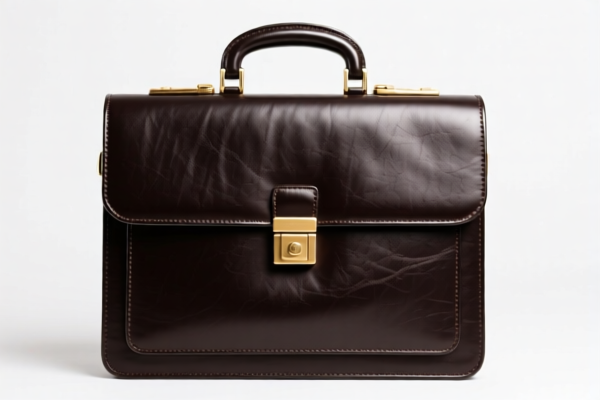
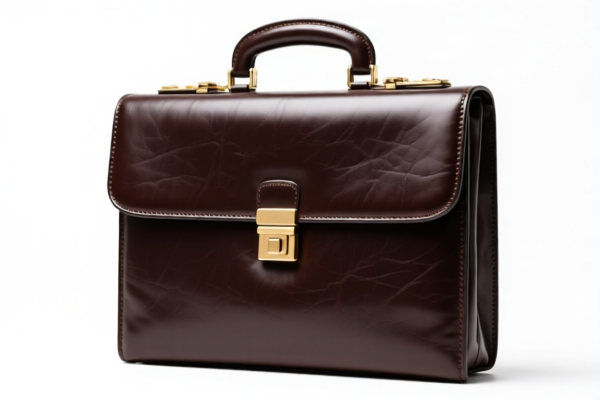
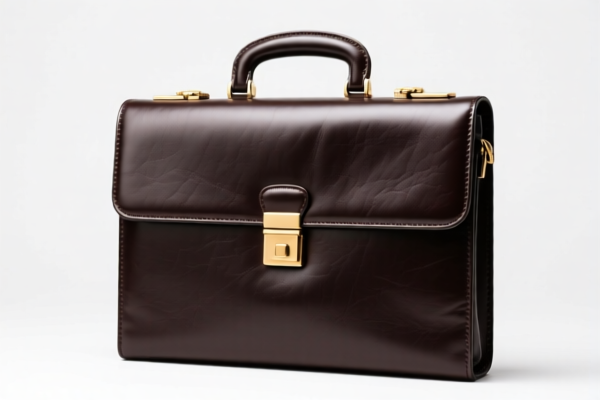
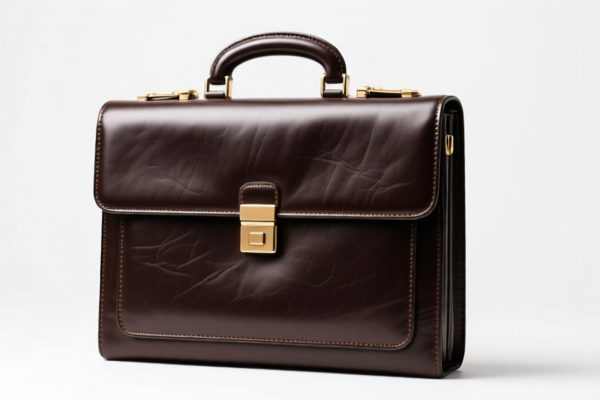
AI Analysis
💼 High End Leather Briefcase (Executive Document Bag)
🌐 HS Code Reference & Customs Clearance Guide | 2026 Latest Tariff Analysis | Professional Clearance Strategy
📌 I. Product Definition & Classification: What Defines a "Leather Briefcase"?
A "High End Leather Briefcase" is a premier accessory for executive professionals, designed to carry documents, laptops, and business essentials. In international trade, classification hinges strictly on Material and Form.
Leather (Genuine or Synthetic/Artificial): The outer surface must be primarily leather, whether natural cowhide, calfskin, or high-grade artificial leather (synthetic leather). Satchel Form (Briefcase): The item must be of the specific shape and function described as a "satchel" or "briefcase," typically featuring handles and a closure mechanism, distinct from backpacks or suitcases.
⚠️ Key Distinction Point:
- If the outer surface is Leather (including artificial/synthetic leather commonly classified under this heading in many jurisdictions or specific tariff notes) and the item is a Briefcase → It falls under Heading 4202. - Items made of textile materials or plastic sheeting would fall under different subheadings (e.g., 4202.12 or 4202.92), but "Leather Briefcases" are firmly anchored in 4202.11.
📦 II. HS Code Classification Details (2026 Authoritative Match)
Based on the provided data, the High End Leather Briefcase matches two specific codes within the same tariff group. Both reflect the same material (Leather/Artificial Leather) and form (Briefcase).
| HS Code | Product Description | Match Reasoning | Tax Rate |
|---|---|---|---|
| 4202.11.00.30 | Satchels (including shoulder-bags), with outer surface of leather or composition leather; Briefcases, document cases, school satchels, and spectacle cases, handbags, shopping bags, wallets, purses, key-pouches, toilet bags, tool bags, sports bags, bottletotes, jewelry boxes, powder boxes, cutlery cases, basket-shaped containers, travel sets for personal toilet use and/or for shaving or cosmetics, and containers for arms or ammunition, of leather or of composition leather. | Match Success. The product name explicitly contains the material (Leather) and the use (Briefcase). It fully meets the material and form requirements of this tariff number. | 43.0% |
| 4202.11.00.90 | Satchels (including shoulder-bags), with outer surface of leather or composition leather; Briefcases, document cases... (General Subheading for Leather Outer Surface) | Match Success. The product name explicitly contains the material (Leather) and the use (Briefcase). It completely conforms to the definition of briefcases with an outer surface of leather material. | 43.0% |
| 4202.11.00.30 (Alternative View) | Same as above, but interpreting "Artificial Leather" as "Synthetic Leather" | Match Success. The term "Artificial Leather" in the product description corresponds to "Synthetic Leather" in the classification materials. The "Briefcase" corresponds to the "Briefcase" use. It fully complies with material and form requirements. | 43.0% |
🔍 Critical Insight:
- Whether labeled as "Genuine Leather" or "Artificial/Synthetic Leather," as long as the outer surface is leather (natural or synthetic) and the form is a briefcase, it falls under HS 4202.11. - The specific sub-code (.30vs.90) often denotes finer distinctions in retail packaging or specific national tariff schedules, but both carry the identical total tax rate of 43.0% in this context.
💰 III. 2026 Latest Tariff Rate Breakdown (Including Surcharges & Policy Add-ons)
✅ Applicable Country: United States (US)
✅ Origin: China (CN)
✅ Effective Date: Current regulations apply (Cumulative surcharges active)
🎯 Total Tax Rate: 43.0%
This total is not a single tariff but a cumulative stack of multiple levies. Here is the detailed breakdown:
| Tax Component | Rate | Description |
|---|---|---|
| Base Tariff (MFN) | 8.0% | The standard Most Favored Nation duty rate for leather satchels/briefcases (Heading 4202.11). |
| Section 301 Surcharge | 25.0% | The "Trump Tariff" or Section 301 tariffs imposed on a wide range of Chinese imports, including leather goods. |
| Section 122 Tariff | 10.0% | Additional tariff imposed under specific trade provisions (often related to national security or specific trade agreements adjustments). |
| TOTAL EFFECTIVE RATE | 43.0% | 8% + 25% + 10% = 43% |
📌 Explanation of Tax Structure:
- Base Tariff (8%): Standard customs duty applied to imports from most WTO countries. - Section 301 (25%): A punitive tariff specifically targeting Chinese manufacturing to address trade imbalances and IP concerns. This is the largest chunk of the cost. - Section 122 (10%): An additional layer of tax that stacks on top of the 301 tariff for certain categories. - Calculation: The tax is calculated on the CIF Value (Cost, Insurance, and Freight). For a $1,000 briefcase, the duty is $430.⚠️ De Minimis Warning:
- ❌ No De Minimis Exemption: Unlike some low-value shipments, high-value commercial imports of leather goods are NOT eligible for the $800 de minimis exemption. The full 43% applies to every single unit imported.
🛠️ IV. Customs Clearance Practical Advice (Pitfall Avoidance Guide)
✅ 1. Required Documentation Checklist (Non-Negotiable)
| Document | Mandatory? | Notes |
|---|---|---|
| ✅ Commercial Invoice | ✔️ | Must explicitly state "High End Leather Briefcase" and value. |
| ✅ Packing List | ✔️ | Include dimensions and weight. |
| ✅ Bill of Lading/Air Waybill | ✔️ | Standard shipping doc. |
| ✅ Certificate of Origin (CO) | ✔️ | Proves origin is China. If origin is not China, tariffs may differ (check FTAs). |
| ✅ Product Photos | ✔️ | Clear images showing the leather outer surface and briefcase structure. |
| ✅ Material Composition Statement | ✔️ | Confirm % of leather vs. synthetic materials if "mixed" label is used. |
| ✅ FCC/Other Certs | ❌ | Not required for leather goods, but good for brand verification if requested. |
✅ 2. Declaration Strategy (Key Keywords)
🔥 “Be Specific, Be Accurate, Avoid Ambiguity!”
| Scenario | Correct Declaration | Incorrect Declaration | Consequence of Error |
|---|---|---|---|
| Standard Briefcase | "Leather Briefcase, HS 4202.11.00.30" | "Bag" or "Accessories" | Customs may reclassify, delay, or apply higher rates for unlisted goods. |
| Artificial Leather | "Artificial Leather Briefcase, HS 4202.11.00.30" | "Fabric Bag" | Misdeclaration. Fabric bags (4202.32) have lower base rates but still face 301 tariffs. However, explicit classification is safer for audits. |
| Mixed Materials | "Leather-trimmed Briefcase" | "Leather Briefcase" | If leather is not the outer surface, it may fall to 4202.92 (Other). Verify "Outer Surface" rule! |
📌 Critical Tip:
- The outer surface must be leather. If the bag is made of canvas with leather trim, it does NOT qualify for 4202.11. It falls under 4202.92.90.00 (Other), which may have different duty calculations, but still attracts the 25% Section 301 tariff. - Do not under-declare value. Customs has access to market data for "High End" brands.
✅ 3. Special Considerations
| Situation | Recommendation |
|---|---|
| Brand Name | If it’s a luxury brand (e.g., Montblanc, Louis Vuitton), ensure IP rights are cleared. Customs may hold goods for trademark verification. |
| Origin Shifting | If the briefcase is assembled in a third country (e.g., Vietnam, Italy), check if it qualifies for preferential tariffs. Avoid if it’s merely "transshipped" from China to evade tariffs. |
| Sample vs. Commercial | Do not label commercial goods as "Samples" to avoid duty. CBP is strict on this for high-value items. |
🌍 V. Global Market Comparison (2026 Outlook)
| Region | HS Code | Base Duty | US Section 301 | Total Impact | Notes |
|---|---|---|---|---|---|
| 🇺🇸 USA | 4202.11 | 8% | +25% | 43% | Highest Cost. Stackable 122 tariff adds 10%. |
| 🇨🇳 China | 4202.11 | 8% | N/A | 8% | Low entry barrier. |
| 🇪🇺 EU | 4202.11 | 4% - 8% | N/A | 4% - 8% | No Section 301 equivalent. EORI number required. |
| 🇬🇧 UK | 4202.11 | 8% | N/A | 8% | Post-Brexit rules. EORI required. |
| 🇨🇦 Canada | 4202.11 | 8% - 12% | N/A | 8% - 12% | USMCA may apply if originating in NA. |
📌 Conclusion:
- The US market is the most expensive for Chinese-made leather goods due to the 43% effective duty rate. - EU and UK are significantly more cost-effective (~8%). - Strategy: Consider sourcing from non-China origins (e.g., Italy, Vietnam) if targeting the US market to mitigate Section 301 risks, provided the supply chain is legitimate.
📌 VI. Common Mistakes & Pitfalls (Lessons Learned)
❌ Mistake 1: Declaring as "Handbag" to avoid "Briefcase" scrutiny.
👉 Consequence: If it’s functionally a briefcase, customs will reclassify and add penalties.
Fix: Use precise functional description.
❌ Mistake 2: Ignoring the "Outer Surface" requirement.
👉 Consequence: If outer surface is textile, but declared as leather, you risk audit for misclassification.
Fix: Test material samples. If outer layer is fabric, use 4202.32/4202.92.
❌ Mistake 3: Assuming "Artificial Leather" is not "Leather."
👉 Consequence: Under-declaring or misclassifying as textile.
Fix: 4202.11 explicitly includes "Composition Leather" (Synthetic/Artificial). It is safe to use HS 4202.11.
❌ Mistake 4: Not factoring in the 122 Tariff.
👉 Consequence: Budgeting only for 33% (8+25) instead of 43%.
Fix: Always calculate CIF x 43% for accurate landed cost.
✅ Correct Declaration Example:
"Men's High-End Artificial Leather Briefcase, HS Code 4202.11.00.30, Origin: China, Value: $XXX USD."
🎯 VII. Conclusion: Smart Clearance, Maximize Profit!
🎯 Remember the Golden Rule:
🔹 "Leather Outer Surface + Briefcase Form = 4202.11"
🔹 "China Origin + US Entry = 43% Total Duty"
🔹 "Plan Landed Cost Early, Avoid Surprises at Border!"
📌 Pro Tip:
If you are importing large volumes, consider applying for HTS Exclusions if available for specific leather goods (though rare for Section 301) or partner with a bonded warehouse to defer duty payment until sale.
For brand owners, ensure IP Registration is complete to prevent customs holds.
📣 Take Action Now:
📞 Consult your freight forwarder with the exact HS Code: 4202.11.00.30 or 4202.11.00.90.
🚀 Calculate your 43% duty into your retail price.
💼 Don't let hidden tariffs eat your margins!
✨ Precision Classification is the Key to Smooth Customs!
💼 Every dollar saved on duty is pure profit!
Customer Reviews
About HS Code Classification
The Harmonized System (HS) is an internationally standardized nomenclature developed by the World Customs Organization (WCO) to classify traded products. Over 200 countries use the HS system as the basis for customs tariffs, trade statistics, and import/export regulations.
Each HS code follows a hierarchical structure:
- Chapter (2 digits) — Broad category of goods (e.g., Chapter 84: Machinery and Mechanical Appliances)
- Heading (4 digits) — More specific grouping within the chapter
- Subheading (6 digits) — Internationally standardized breakdown, used by all WCO member countries
- National subdivisions (8-10 digits) — Country-specific extensions for further classification, such as US HTSUS 10-digit codes
Correct HS code classification is essential for smooth customs clearance, accurate duty payment, and compliance with trade regulations. Misclassification can lead to customs delays, overpayment of duties, or penalties.
When importing from CN to US, the applicable tariff rates may include:
- Most-Favored-Nation (MFN) rate — The standard duty rate applied to WTO members
- General rate — Applied to countries without trade agreements
- Trade remedy duties — Additional tariffs such as Section 301 (anti-dumping), Section 232 (national security), or countervailing duties
The information provided on this page is for reference purposes only. For official classification, please consult with your local customs authority or a licensed customs broker.