High Flow Polypropylene
CN → US| HS Code | Tariff Rate | Origin | Destination | Doc |
|---|---|---|---|---|
| 3919905060 | 40.8% | CN | US | Official Doc |
| 3921190010 | 41.5% | CN | US | Official Doc |
| 3921190090 | 41.5% | CN | US | Official Doc |
| 3920200055 | 39.2% | CN | US | Official Doc |
| 3920992000 | 39.2% | CN | US | Official Doc |
Product Images
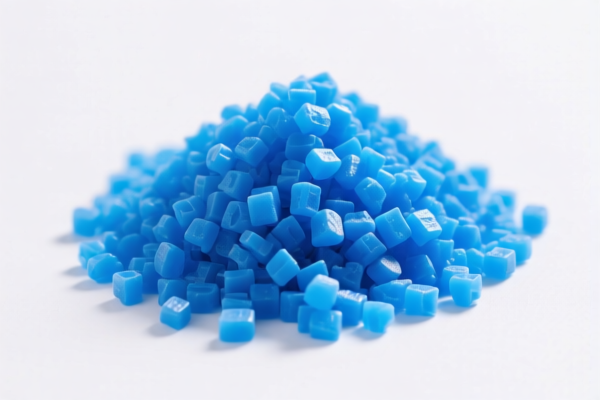

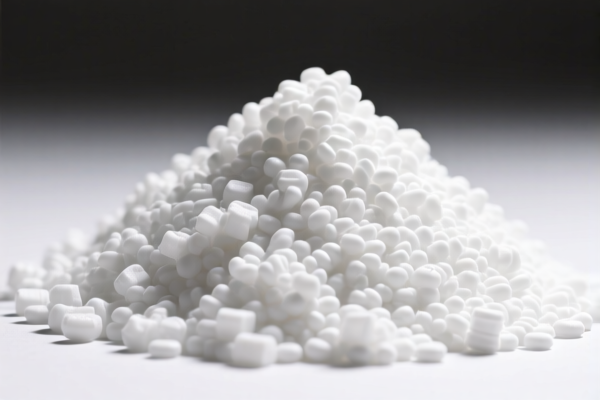
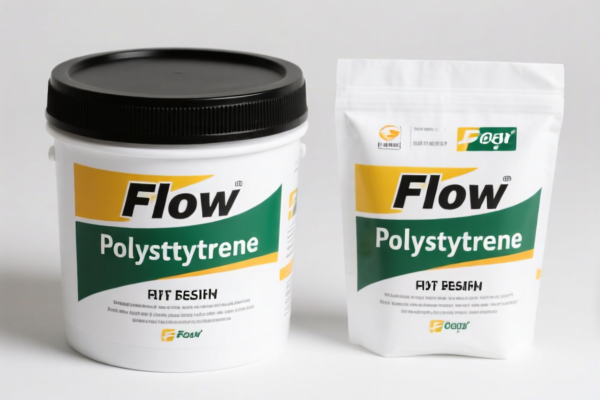
AI Analysis
🌊 High Flow Polypropylene (HPP) Films: Comprehensive HS Code Classification & Customs Clearance Guide
🌐 HS Code Reference & Customs Guide | 2026 Tariff Analysis | Expert Clearance Strategies
High Flow Polypropylene (HPP) films are specialized plastic films known for their superior tensile strength, flexibility, and ability to be drawn thin without breaking. In international trade, these films fall under Chapter 39: Plastics and Articles Thereof.
⚠️ Critical Distinction:
- "High Flow" refers to the processing characteristic (melt flow index) or mechanical property, not a separate chemical classification.
- The core material is Polypropylene (PP).
- The form is Film (flat, flexible sheets/rolls).
- Classification depends on:
1. Self-adhesive properties? → Chapter 3919
2. Specific polymer type (Cellulose Acetate vs. Other PP)? → Chapter 3920/3921
3. Reinforcement status? → Unreinforced PP films usually fall under 3920.99.
Based on the provided data, here is the detailed breakdown for High Flow Polypropylene Film imports into the US.
📦 II. HS Code Classification Details (2026 Latest Tariff Authority)
| HS Code | Product Description | Key Characteristics | Tax Rate (Total) |
|---|---|---|---|
3919.90.50.60 |
Self-adhesive Polypropylene Film | Self-adhesive, flat shape, plastic tape/film category | 40.8% |
3921.19.00.10 |
Polypropylene Film (Exact Match) | PP material, film form, fully compliant with code requirements | 41.5% |
3921.19.00.90 |
Polypropylene Film (Plate/Sheet) | PP material, film form, classified as plate/sheet/film | 41.5% |
3920.20.00.55 |
Unreinforced Polypropylene Film | PP material, film form, non-cellulose acetate, unreinforced | 39.2% |
3920.99.20.00 |
Polypropylene Film (Plate/Sheet) | PP material, film form, classified as plate/sheet/film (other) | 39.2% |
🔍 Key Insight:
- Self-adhesive films (3919) have a slightly lower base tariff (5.8%) but still attract high total taxes due to surcharges.
- Non-self-adhesive films (3920/3921) have higher base tariffs (4.2%-6.5%) but are the most common classification for standard HPP films.
-3920.20.00.55and3920.99.20.00offer the lowest total tax rate (39.2%) among non-adhesive options, making them cost-effective if the product fits the description.
💰 III. 2026 Latest Tariff Rate Breakdown (Including Surcharges & Policy Add-ons)
✅ Applicable Country: United States (US)
✅ Origin: China (CN)
✅ Effective Date: Ongoing (Section 301 & IEEPA Tariffs)
🎯 1. 3919.90.50.60 – Self-Adhesive Polypropylene Film
| Item | Content |
|---|---|
| Base Tariff | 5.8% (ad valorem) |
| Section 301 Surcharge | +25.0% (Section 301, 122 List) |
| IEEPA Surcharge | +10.0% (China-specific, IEEPA) |
| Total Rate | 40.8% |
| Tax Calculation | CIF Value × 40.8% |
| De Minimis Eligibility | ❌ No (Denied) |
| Legal Path | 3919.90.50.60 → Section 301: 122 → IEEPA: 9903.01.25 |
📌 Explanation:
- Base 5.8%: Standard MFN rate for self-adhesive plastic films.
- 25% Section 301: Applies to "122 List" items, including many plastic films.
- 10% IEEPA: Additional tariff for Chinese-origin goods under international emergency powers.
- Total 40.8%: High cost entry; verify if the film is truly self-adhesive. If not, misclassification risk.
🎯 2. 3921.19.00.10 & 3921.19.00.90 – Polypropylene Films (Other)
| Item | Content |
|---|---|
| Base Tariff | 6.5% (ad valorem) |
| Section 301 Surcharge | +25.0% |
| IEEPA Surcharge | +10.0% |
| Total Rate | 41.5% |
| Tax Calculation | CIF Value × 41.5% |
| De Minimis Eligibility | ❌ No |
| Legal Path | 3921.19 → Section 301: 122 → IEEPA: 9903.01.25 |
📌 Explanation:
- Base 6.5%: Higher base than3920due to "Plates, Sheets, Foils, Strips, and Film" classification in Chapter 3921 (Other Plastic Products).
- Total 41.5%: Highest tax rate in the dataset. Use only if the product strictly fits "Plates/Sheets" definition and cannot be classified under 3920.
🎯 3. 3920.20.00.55 & 3920.99.20.00 – Polypropylene Films (Unreinforced/Other)
| Item | Content |
|---|---|
| Base Tariff | 4.2% (ad valorem) |
| Section 301 Surcharge | +25.0% |
| IEEPA Surcharge | +10.0% |
| Total Rate | 39.2% |
| Tax Calculation | CIF Value × 39.2% |
| De Minimis Eligibility | ❌ No |
| Legal Path | 3920 → Section 301: 122 → IEEPA: 9903.01.25 |
📌 Explanation:
- Base 4.2%: Most favorable base rate among non-adhesive PP films.
- Total 39.2%: Lowest total tax rate in the provided data.
- Best For: Standard high-flow polypropylene films that are not self-adhesive and not reinforced.
- Note: Ensure the film is "unreinforced" and not "cellulose acetate" to qualify for3920.20.
🛠️ IV. Customs Clearance Practical Advice (Risk Mitigation)
✅ 1. Documentation Checklist (Mandatory)
| Document | Required | Notes |
|---|---|---|
| ✅ Product Specification Sheet | ✔️ | Must state: Material (PP), Form (Film), Thickness, Width, Tensile Strength, Melt Flow Index (if relevant) |
| ✅ Commercial Invoice | ✔️ | Clearly describe as "High Flow Polypropylene Film", NOT "Plastic Tape" or "Adhesive Tape" unless self-adhesive |
| ✅ Packing List | ✔️ | Include gross/net weight, dimensions, number of rolls |
| ✅ Certificate of Origin (CO) | ✔️ | Essential for verifying Chinese origin and applying correct surcharges |
| ✅ HS Code Pre-Ruling (Optional but Recommended) | ✔️ | Apply for US CBP Pre-Ruling to confirm 3920.20.00.55 vs 3921 classification |
| ✅ Photos of Product & Packaging | ✔️ | Show labels, brand, material code (PP), and physical form |
⚠️ Warning: Do not use vague terms like "Plastic Sheet" or "Polymer Film" without specifying Polypropylene. CBP may reject for insufficient detail.
✅ 2. Classification Strategy (Key Tips)
🔥 "Adhesive? Go to 3919. Non-Adhesive? Aim for 3920.99.20.00 for Lowest Tax!"
| Scenario | Recommended HS Code | Reason |
|---|---|---|
| Self-Adhesive HPP Film | 3919.90.50.60 |
Meets "self-adhesive" definition; tax 40.8% |
| Standard HPP Film (Unreinforced) | 3920.20.00.55 |
Best tax rate (39.2%); ensure it's not cellulose acetate |
| HPP Film (Reinforced/Composite) | 3920.99.20.00 |
If reinforced or other plastics, use "Other" category |
| HPP Film Classified as "Plate/Sheet" | 3921.19.00.10/90 |
Only if physical form is rigid/semi-rigid "plate" |
✅ 3. Common Pitfalls & Avoidance
❌ Mistake 1: Classifying self-adhesive film as non-adhesive (3920)
👉 Consequence: Penalty for misclassification; potential retroactive tax difference + interest.
❌ Mistake 2: Assuming "High Flow" changes the HS Code
👉 Consequence: "High Flow" is a processing parameter, not a chemical distinction. Stick to PP film classification.
❌ Mistake 3: Omitting "Polypropylene" in description
👉 Consequence: CBP may classify under generic "Plastic Films" (3920.99) with higher scrutiny or different rates.
✅ Correct Practice:
"Polypropylene Film, High Flow, Unreinforced, Width: X mm, Thickness: Y microns, Material: 100% PP, Non-Adhesive"
🌍 V. Global Market Comparison (2026)
| Country/Region | Recommended HS Code | Tariff (China Origin) | Notes |
|---|---|---|---|
| 🇺🇸 USA | 3920.20.00.55 |
39.2% | Includes 25% Section 301 + 10% IEEPA |
| 🇨🇳 China | 3920.20.00.55 |
~5-6% (Import) | No surcharges; lower cost for domestic use |
| 🇪🇺 EU | 3920.20.00.55 |
~3-5% | No Section 301/IEEPA surcharges |
| 🇬🇧 UK | 3920.20.00.55 |
~3-5% | Post-Brexit tariffs similar to EU |
| 🇨🇦 Canada | 3920.20.00.55 |
~5% | USMCA may apply if origin is Canadian/Mexican |
📌 Conclusion:
- USA is the most expensive market due to Section 301 & IEEPA tariffs.
- 39.2% is the minimum tax rate for Chinese-origin HPP films entering the US.
- Consider supply chain diversification (e.g., Vietnam, Thailand) if tariffs impact profitability.
📌 VI. Final Recommendations for Clearing Agents
- Pre-Ruling: Apply for a CBP Pre-Ruling using samples to confirm
3920.20.00.55eligibility. This provides legal protection against misclassification. - Documentation Precision: Ensure the commercial invoice explicitly states "Polypropylene Film" and "Non-Adhesive" if applicable.
- Tax Calculation: Budget for 39.2% - 41.5% total duty. No de minimis exemption.
- Compliance Check: Verify if the film contains any additives (fillers, stabilizers) that might shift it to "Reinforced" or "Other" categories (
3920.99).
🎯 VII. Summary: Key Takeaways
🎯 Remember:
🔹 Self-Adhesive? →
3919.90.50.60→ 40.8%
🔹 Non-Adhesive, Unreinforced PP? →3920.20.00.55→ 39.2% (Best Rate)
🔹 Non-Adhesive, Other PP? →3921.19.00.10→ 41.5% (Highest Rate)
📌 Pro Tip:
- Use
3920.20.00.55whenever possible for cost savings.- Always provide detailed product specs to avoid CBP reclassification.
- No de minimis exemption applies – all shipments are subject to full duty calculation.
📣 Action Required:
📞 Contact a licensed customs broker to file for a Pre-Ruling.
📄 Prepare detailed product descriptions and material safety data sheets (MSDS).
🚀 Optimize supply chain to mitigate high US tariff impact.
✨ Accurate Classification = Lower Costs = Faster Clearance
💼 Your Supply Chain Success Starts with the Right HS Code!
Customer Reviews
About HS Code Classification
The Harmonized System (HS) is an internationally standardized nomenclature developed by the World Customs Organization (WCO) to classify traded products. Over 200 countries use the HS system as the basis for customs tariffs, trade statistics, and import/export regulations.
Each HS code follows a hierarchical structure:
- Chapter (2 digits) — Broad category of goods (e.g., Chapter 84: Machinery and Mechanical Appliances)
- Heading (4 digits) — More specific grouping within the chapter
- Subheading (6 digits) — Internationally standardized breakdown, used by all WCO member countries
- National subdivisions (8-10 digits) — Country-specific extensions for further classification, such as US HTSUS 10-digit codes
Correct HS code classification is essential for smooth customs clearance, accurate duty payment, and compliance with trade regulations. Misclassification can lead to customs delays, overpayment of duties, or penalties.
When importing from CN to US, the applicable tariff rates may include:
- Most-Favored-Nation (MFN) rate — The standard duty rate applied to WTO members
- General rate — Applied to countries without trade agreements
- Trade remedy duties — Additional tariffs such as Section 301 (anti-dumping), Section 232 (national security), or countervailing duties
The information provided on this page is for reference purposes only. For official classification, please consult with your local customs authority or a licensed customs broker.