High Impact PVC Resin
CN → US| HS Code | Tariff Rate | Origin | Destination | Doc |
|---|---|---|---|---|
| 3904100000 | 41.5% | CN | US | Official Doc |
| 3904210000 | 41.5% | CN | US | Official Doc |
| 3915300000 | 35.0% | CN | US | Official Doc |
| 3915900090 | 35.0% | CN | US | Official Doc |
| 3904100000 | 41.5% | CN | US | Official Doc |
Product Images
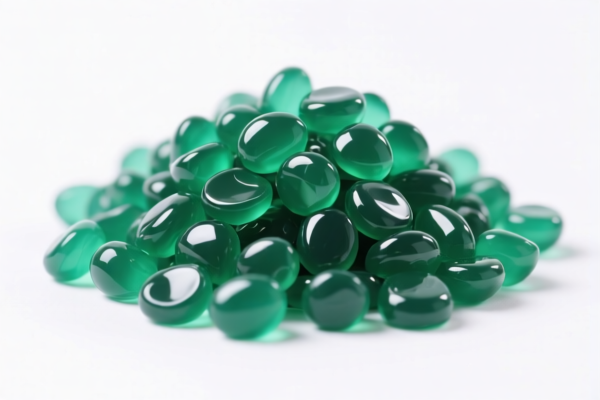

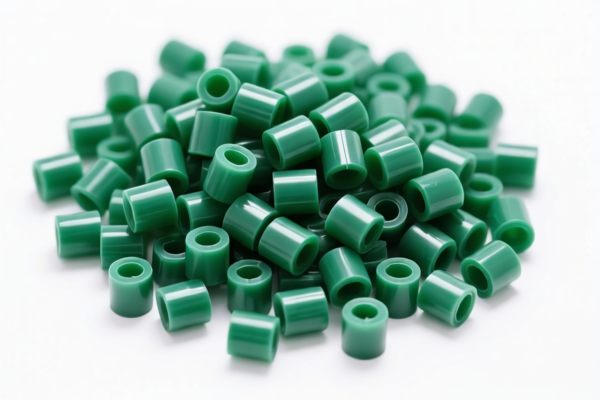
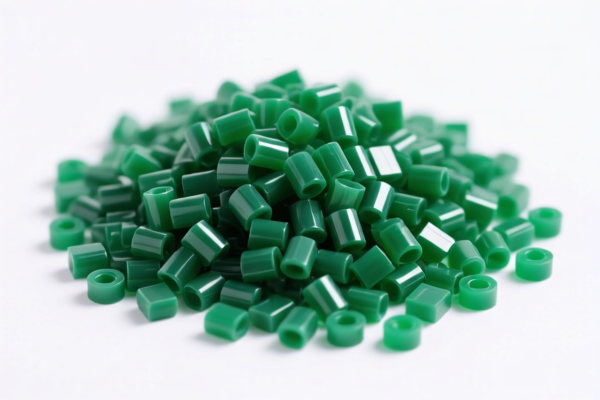
AI Analysis
🧪 High Impact PVC Resin (Polyvinyl Chloride)
🌐 HS Code Reference & Customs Clearance Guide | 2026 Latest Tariff Analysis | Professional Clearance Strategy
📌 I. Product Definition & Classification: Do You Truly Understand "High Impact PVC"?
High Impact PVC Resin is a specialized thermoplastic polymer in its primary form. Unlike standard rigid PVC, it is compounded with impact modifiers (such as CPE, MBS, or acrylics) to enhance toughness and durability. In international trade, it is classified based on its chemical nature (PVC) and physical state (Resin/Primary Form).
⚠️ Key Distinction:
- If the material is pure PVC resin without significant additives affecting its classification, it falls under 3904.
- If it is considered a polymer scrap or waste, it might fall under 3915.
- Note: "High Impact" is a performance characteristic, not a separate chemical category. Customs focuses on the base polymer (PVC) and form (Resin).
📦 II. HS Code Classification Details (2026 Latest Tariff Authority Comparison)
| HS Code | Product Description | Applicable Scenario | Key Classification Criteria |
|---|---|---|---|
3904.10.00.00 |
Poly(vinyl chloride) resins, primary forms | Standard High Impact PVC Resin | ✅ Base material is PVC; Primary form (powder/granules) |
3904.21.00.00 |
Non-plasticized poly(vinyl chloride) resins | Rigid/Unplasticized PVC Resin | ✅ PVC; No plasticizers added; Primary form |
3915.30.00.00 |
Waste, parings and scrap of polymers of vinyl chloride | PVC Scrap/Recycled Pellets | ❌ Must be waste/scrap, not virgin resin |
3915.90.00.90 |
Other waste, parings and scrap of plastics | General Plastic Scrap | ❌ Generic plastic waste, not specific to PVC resins |
3904.10.00.00 |
Poly(vinyl chloride) resins, primary forms | Duplicate Entry for Standard PVC | ✅ Same as first row; confirms primary form status |
🔍 Critical Reminder:
- Virgin Resin vs. Scrap: If the product is new, usable polymer material for manufacturing, it MUST be classified under 3904. If it is industrial waste, scraps, or recycled material not meeting primary form standards, it falls under 3915.
- "High Impact" Claim: If the product is a compounded pellet with additives that change its fundamental character significantly, it might still be 3904, but ensure the composition is declared accurately.
- Misclassification Risk: Declaring virgin resin as "scrap" (3915) to avoid tariffs is illegal and will result in penalties.
💰 III. 2026 Latest Tariff Rate Breakdown (Including Additional Duties & Policy Surcharges)
✅ Applicable Country: United States (US)
✅ Origin: China (CN)
✅ Effective Date: November 10, 2025 onwards (including subsequent imports)
🎯 1. 3904.10.00.00 & 3904.21.00.00 —— Virgin PVC Resin (Primary Form)
| Item | Content |
|---|---|
| Base Tariff Rate | 6.5% (Ad Valorem) |
| Section 301 Additional Tariff | +25.0% (From USITC Footnote 9903.88.01) |
| IEEPA Additional Tariff | +10.0% (Targeting China/HK products, effective Nov 10, 2025) |
| Total Tariff Rate | 41.5% |
| Tax Calculation | CIF Value × 41.5% |
| De Minimis Exemption Available? | ❌ No (deny_de_minimis) |
| Legal Basis Path | IEEPA:9903.01.25 → IEEPA:9903.01.24 → USITC:3904.x0.00.00 → FOOTNOTE:9903.88.01 |
📌 Explanation:
- The 6.5% is the standard Most Favored Nation (MFN) duty for PVC resins.
- The 25% is the Section 301 duty for Chinese-origin plastics.
- The 10% is the new IEEPA surcharge on Chinese chemical inputs.
- Total 41.5% is extremely high. This applies to both standard PVC (3904.10) and non-plasticized PVC (3904.21).
🎯 2. 3915.30.00.00 & 3915.90.00.90 —— PVC Waste/Scrap
| Item | Content |
|---|---|
| Base Tariff Rate | 0.0% |
| Section 301 Additional Tariff | +25.0% |
| IEEPA Additional Tariff | +10.0% |
| Total Tariff Rate | 35.0% |
| Tax Calculation | CIF Value × 35.0% |
| De Minimis Exemption Available? | ❌ No |
| Legal Basis Path | IEEPA:9903.01.25 → IEEPA:9903.01.24 → USITC:3915.x0.00.00 → FOOTNOTE:9903.88.01 |
📌 Note:
- Even though the base rate is 0%, the 35% total is still very high.
- Caution: Do not falsely classify virgin resin as scrap to save 6.5%. Customs will inspect the material. If it’s new pellets, they will reclassify to 3904 and charge 41.5%.
🛠️ IV. Customs Clearance Practical Advice (Battle-Proven Pitfall Guide)
✅ 1. Required Documentation Checklist (Non-Negotiable)
| Document | Must Provide | Explanation |
|---|---|---|
| ✅ Product Specification Sheet | ✔️ | Must state: "Polyvinyl Chloride Resin," Molecular Weight, Viscosity, Additives (%). |
| ✅ Safety Data Sheet (SDS) | ✔️ | Must confirm the product is not hazardous waste. |
| ✅ Commercial Invoice | ✔️ | Clearly state "PVC Resin for Extrusion/Injection" – Do NOT use vague terms like "Plastic Material." |
| ✅ Bill of Lading | ✔️ | Match HS Code and description. |
| ✅ Origin Certificate (CO) | ✔️ | If not CN origin, provide to avoid China-specific tariffs. |
| ✅ Proof of Primary Form | ✔️ | Photos of powder/granules vs. finished parts. |
✅ 2. Declaration Tips (Key Mnemonics)
🔥 "Resin is 3904, Scrap is 3915; Be honest, or pay more!"
| Scenario | Correct Declaration | Wrong Practice |
|---|---|---|
| Virgin PVC Pellets/Powder | 3904.10.00.00 |
Declaring as "Plastic Raw Material" → 41.5% |
| Non-Plasticized PVC | 3904.21.00.00 |
Declaring as 3904.10 → Same rate, but specify for accuracy |
| PVC Scrap/Regranulated | 3915.30.00.00 |
Declaring as Virgin Resin → Overpayment |
| Mixed Plastic Waste | 3915.90.00.90 |
Declaring as PVC-only → Misclassification |
✅ 3. Special Handling Cases
| Situation | Handling Advice |
|---|---|
| OEM Custom Color Masterbatch | If mixed with pigments, still 3904 if PVC is dominant. Declare "PVC Resin with Colorants." |
| Impact-Modified PVC | If additives are <10%, usually still 3904. If >10%, consult a customs broker. |
| Hybrid Resins (PVC/Other) | If mixed with other polymers, classification may change. Declare full composition. |
| Small Samples (<$800) | Cannot use de minimis (Section 321) due to IEEPA restrictions on China-origin chemicals. |
🌍 V. Global Market Clearance Comparison (2026 Latest)
| Country/Region | Recommended HS Code | Tariff (China Origin) | Certification Requirements | Notes |
|---|---|---|---|---|
| 🇺🇸 USA | 3904.10.00.00 |
41.5% | None specific, but FDA may apply if food-contact | High tariff; no de minimis |
| 🇨🇳 China | 3904.10.00.00 |
5.0% | None | No additional duties |
| 🇪🇺 EU | 3904.10.00 |
6.5% | REACH Compliance | No Section 301 equivalent |
| 🇨🇦 Canada | 3904.10.00 |
5.0% | WHMIS | CUSMA/USMCA may reduce duty |
| 🇯🇵 Japan | 3904.10.00 |
5.0% | JIS Standards | EPA duties may apply |
📌 Conclusion:
- USA is the most expensive market for PVC resin due to 41.5% total duty.
- China, EU, and Japan are more affordable.
- Consider supply chain diversification (e.g., sourcing from Vietnam or India) to mitigate US tariffs.
📌 VI. Common Errors & Pitfall Guide (Lessons from Blood and Tears)
❌ Error 1: Declaring "PVC Resin" as "Plastic Granules" (generic)
👉 Consequence: Customs may assign a higher duty code or request extensive documentation → Delays
❌ Error 2: Misclassifying Virgin Resin as "Scrap" (3915)
👉 Consequence: Audit risk, fines, and back-tariff of 6.5% + penalties
❌ Error 3: Ignoring "High Impact" additives
👉 Consequence: If additives change the chemical nature, misclassification occurs → Retaxation
❌ Error 4: Assuming de minimis applies to PVC resin
👉 Consequence: Packages <$800 are still taxed under IEEPA for China-origin goods → Unexpected Bills
✅ Correct Practice:
"Polyvinyl Chloride (PVC) Resin, Primary Form, Non-Plasticized, White Powder, Grade XYZ, For Extrusion, HS Code 3904.10.00.00"
🎯 VII. Conclusion: Professional Declaration, Save Cost, Ensure Smooth Clearance!
🎯 Remember the Mnemonic:
🔹 "Resin 3904, Scrap 3915; China Origin Pays 41.5%"
🔹 "HS Code Determines Tax; 6.5% Base + 25% + 10% = High Cost!"
🔹 "No De Minimis for Chemicals from China!"
📌 Pro Tip:
If your PVC resin is originated from Vietnam, India, Mexico, or Thailand, you may avoid the China-specific IEEPA 10% and possibly the 25% Section 301 duty (depending on trade agreements).
Recommendation: Apply for a Pre-Ruling from US Customs if the product composition is complex.
📣 Immediate Action:
📞 Contact a Professional Broker + Provide SDS + Verify Origin
🚀 Let your PVC resin, clear smoothly, reduce costs, and boost profits!
✨ Professional Clearance Starts with Accurate Classification!
💼 Every cent of your cost deserves precise calculation!
Customer Reviews
About HS Code Classification
The Harmonized System (HS) is an internationally standardized nomenclature developed by the World Customs Organization (WCO) to classify traded products. Over 200 countries use the HS system as the basis for customs tariffs, trade statistics, and import/export regulations.
Each HS code follows a hierarchical structure:
- Chapter (2 digits) — Broad category of goods (e.g., Chapter 84: Machinery and Mechanical Appliances)
- Heading (4 digits) — More specific grouping within the chapter
- Subheading (6 digits) — Internationally standardized breakdown, used by all WCO member countries
- National subdivisions (8-10 digits) — Country-specific extensions for further classification, such as US HTSUS 10-digit codes
Correct HS code classification is essential for smooth customs clearance, accurate duty payment, and compliance with trade regulations. Misclassification can lead to customs delays, overpayment of duties, or penalties.
When importing from CN to US, the applicable tariff rates may include:
- Most-Favored-Nation (MFN) rate — The standard duty rate applied to WTO members
- General rate — Applied to countries without trade agreements
- Trade remedy duties — Additional tariffs such as Section 301 (anti-dumping), Section 232 (national security), or countervailing duties
The information provided on this page is for reference purposes only. For official classification, please consult with your local customs authority or a licensed customs broker.