High Lead Acrylic Sheet
CN → US| HS Code | Tariff Rate | Origin | Destination | Doc |
|---|---|---|---|---|
| 3921190090 | 41.5% | CN | US | Official Doc |
| 3921905050 | 39.8% | CN | US | Official Doc |
| 3926909989 | 22.8% | CN | US | Official Doc |
| 3926305000 | 22.8% | CN | US | Official Doc |
| 3920515090 | 41.5% | CN | US | Official Doc |
Product Images
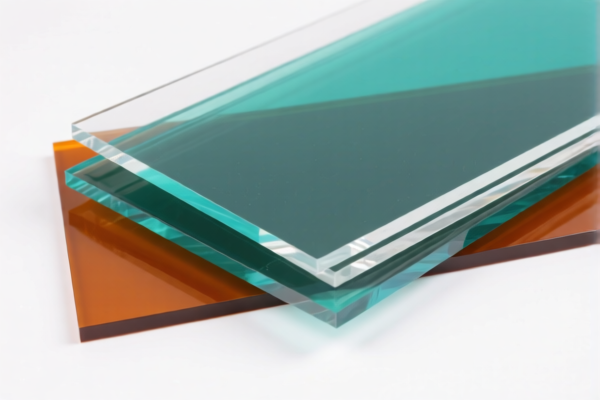

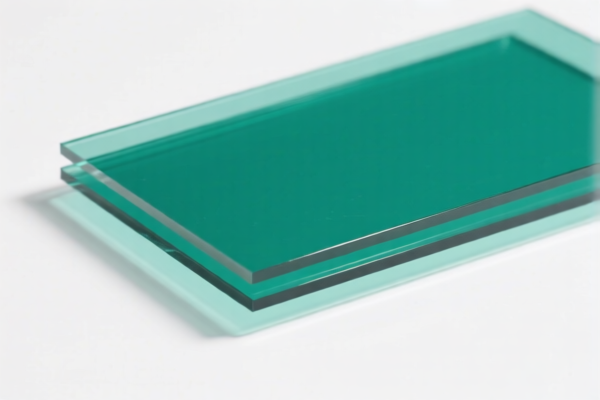
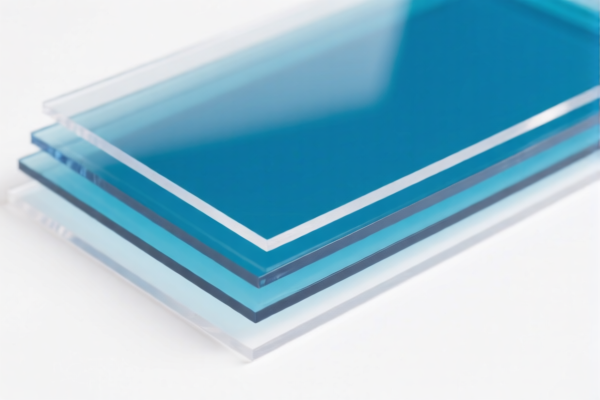
AI Analysis
📜 High Lead Acrylic Sheet (PMMA) – HS Code Classification & Customs Clearance Guide
🌐 HS Code Reference & Customs Strategy | 2026 Latest Tariff Analysis | Professional Clearance Protocol 📌 I. Product Definition: What is "High Lead Acrylic"?
In the context of international trade and customs classification, "High Lead Acrylic" typically refers to Poly methyl methacrylate (PMMA) sheets designed for radiation shielding or high-impact applications, often mimicking the appearance of glass but with superior durability. While "Lead" implies radiation protection, the core material remains Plastic (PMMA).
- Key Material: PMMA (Polymethyl Methacrylate), a transparent thermoplastic.
- Form: Sheets, Plates, or Boards.
- Misconception Alert: Despite the name, this is NOT classified under Chapter 85 (Electrical) or Chapter 80 (Lead). It is classified under Chapter 39 (Plastics and Articles Thereof).
⚠️ Critical Distinction:
- If the product is purely PMMA sheets (even with additives for shielding), it falls under Chapter 39.
- The term "High Lead" may be a marketing term for "High Impact" or "Lead-Free Radiation Shielding Acrylic," but customs classification relies on material composition, not brand marketing.
📦 II. HS Code Classification Matrix (2026 Latest Tariff Data)
Based on the provided data, here are the 5 possible HS Codes for High Lead Acrylic Sheets, with detailed tax breakdowns.
| HS Code | Product Description & Logic | Total Tax Rate | Tax Details (US Import) |
|---|---|---|---|
| 3921.19.00.90 | Other Plates/Sheets of Plastics: PMMA is a plastic; "High Lead" board is a plate form. Classified as "Other plastic plates/sheets." | 41.5% | Base: 6.5% Section 301 (Add-on): 25.0% Section 122 (AI/EU Retaliation): 10% |
| 3921.90.50.50 | Other Plates/Sheets of Plastics: PMMA is plastic; plate form fits "plates/sheets." Classified as "Other plastic plates/sheets." | 39.8% | Base: 4.8% Section 301 (Add-on): 25.0% Section 122 (AI/EU Retaliation): 10% |
| 3926.90.99.89 | Other Plastic Articles: PMMA is plastic; plate form not specifically listed elsewhere. Classified as "Other plastic articles." | 22.8% | Base: 5.3% Section 301 (Add-on): 7.5% Section 122 (AI/EU Retaliation): 10% |
| 3926.30.50.00 | Other Plastic Articles: PMMA is plastic; boards categorized under "Other plastic articles." | 22.8% | Base: 5.3% Section 301 (Add-on): 7.5% Section 122 (AI/EU Retaliation): 10% |
| 3920.51.50.90 | Non-Flammable Plastic Plates/Sheets: PMMA (Methyl Methacrylate); plate form; classified as "Non-flammable conventional plastic plates/sheets." | 41.5% | Base: 6.5% Section 301 (Add-on): 25.0% Section 122 (AI/EU Retaliation): 10% |
🔍 Key Insight:
- The lowest tax rate is 22.8% (HS Codes3926.90.99.89and3926.30.50.00).
- The highest tax rate is 41.5% (HS Codes3921.19.00.90and3920.51.50.90).
- The difference between the lowest and highest is 18.7 percentage points!
💰 III. Detailed Tax Clause Explanation (2026 US Tariff Rules)
✅ Applicable Country: United States (US)
✅ Origin: China (CN) (Assumed based on tariff structure)
✅ Effective Date: Current 2026 tariff schedule
🎯 1. High-Tax Categories: 41.5% Total Duty
HS Codes: 3921.19.00.90, 3920.51.50.90
| Component | Rate | Legal Basis |
|---|---|---|
| Base Duty | 6.5% | US Harmonized Tariff Schedule (HTS) |
| Section 301 Duty | +25.0% | USITC Footnote: 9903.01.24 (China-origin plastics) |
| Section 122 Duty | +10.0% | IEEPA: 9903.01.25 (Retaliatory tariffs) |
| Total | 41.5% | High Cost Alert |
📌 Explanation:
- These codes are classified under "Plates, Sheets, Film, Foil, and Strip" (Heading 3920/3921).
- They are subject to the maximum Section 301 tariff (25%) because PMMA sheets are considered industrial materials subject to trade restrictions.
- Cost Impact: For a $10,000 shipment, duty is $4,150.
🎯 2. Medium-Tax Category: 39.8% Total Duty
HS Code: 3921.90.50.50
| Component | Rate | Legal Basis |
|---|---|---|
| Base Duty | 4.8% | US HTS |
| Section 301 Duty | +25.0% | USITC Footnote: 9903.01.24 |
| Section 122 Duty | +10.0% | IEEPA: 9903.01.25 |
| Total | 39.8% | Slightly Lower |
📌 Explanation:
- Base duty is slightly lower (4.8% vs 6.5%), but Section 301 and 122 duties remain the same.
- Cost Impact: For a $10,000 shipment, duty is $3,980 (Save $170 vs. 41.5% code).
🎯 3. Low-Tax Categories: 22.8% Total Duty
HS Codes: 3926.90.99.89, 3926.30.50.00
| Component | Rate | Legal Basis |
|---|---|---|
| Base Duty | 5.3% | US HTS |
| Section 301 Duty | +7.5% | USITC Footnote: 9903.01.24 (Lower bracket) |
| Section 122 Duty | +10.0% | IEEPA: 9903.01.25 |
| Total | 22.8% | BEST OPTION |
📌 Explanation:
- These codes are classified under "Other Plastic Articles" (Heading 3926), which often have lower Section 301 tariffs (7.5% vs 25%).
- Crucial Strategy: If your "High Lead Acrylic" can be described as a finished article (e.g., radiation shielding panels, display stands, protective barriers) rather than raw "plates/sheets," you can qualify for this lower rate.
- Cost Impact: For a $10,000 shipment, duty is $2,280 (Save $1,870 vs. 41.5% code!).
🛠️ IV. Customs Clearance Practical Advice (Risk Mitigation)
✅ 1. Product Description Strategy
To qualify for the 22.8% tax rate (HS Code 3926.90.99.89 or 3926.30.50.00), you must avoid describing the product as raw "plastic sheets" or "plates."
| ❌ Bad Description (High Tax) | ✅ Good Description (Low Tax) |
|---|---|
| "High Lead Acrylic Sheet" | "PMMA Radiation Shielding Panel" |
| "PMMA Plate" | "Custom Plastic Barrier for Medical Equipment" |
| "Plastic Sheet for Construction" | "Finished Plastic Artwork Component" |
📌 Tip: Emphasize the finished form and specific application (e.g., medical shielding, display, decoration) rather than the raw material shape.
✅ 2. Required Documentation
| Document | Requirement |
|---|---|
| Product Specs | Must specify PMMA (Acrylic) composition, thickness, and dimensions. |
| Application Proof | Include photos showing the product in its final use (e.g., installed in a hospital, museum, or retail display). |
| Material Safety Data Sheet (MSDS) | Required for chemical compliance. |
| Commercial Invoice | Must clearly state "PMMA Plastic Article" rather than "Plastic Sheet." |
| Origin Certificate | To confirm Chinese origin for tariff calculations. |
✅ 3. Critical Warnings
- Do Not Split Shipment: If you ship "sheets" and "finished panels" together, customs may classify the entire shipment under the highest tax rate.
- Pre-Ruling Request: For large volumes, submit an Application for Advance Ruling to CBP (Customs and Border Protection) to confirm the 22.8% rate eligibility.
- Section 122 Duty: The 10% retaliatory tariff is currently in effect. Monitor US Trade Representative (USTR) updates for potential changes.
🌍 V. Global Market Comparison (2026)
| Country | Recommended HS Code | Est. Total Duty | Notes |
|---|---|---|---|
| 🇺🇸 USA | 3926.90.99.89 |
22.8% | Best option; avoid Chapter 3920/3921. |
| 🇨🇳 China | 3921.90.90.00 |
~5-10% | Import tax is lower; no Section 301. |
| 🇪🇺 EU | 3920.51.00.00 |
~6.5% | No additional retaliatory tariffs. |
| 🇬🇧 UK | 3920.51.00.00 |
~6.5% | Post-Brexit tariff remains low. |
📌 Conclusion:
- USA is the most complex market due to Section 301 and 122 duties.
- Strategic Focus: For US imports, classify as "Other Plastic Articles" (3926) to save 18.7% in duties.
📌 VI. Common Mistakes & Pitfalls
❌ Mistake 1: Using "Acrylic Sheet" as the product name.
👉 Result: CBP may classify under 3920 or 3921 → 41.5% tax.
✅ Fix: Use "PMMA Plastic Panel" or "Acrylic Shielding Product."
❌ Mistake 2: Ignoring Section 122 Tariffs.
👉 Result: Unexpected 10% additional tax on top of Section 301.
✅ Fix: Always account for Base + 301 + 122 in cost calculations.
❌ Mistake 3: Assuming "High Lead" implies metal classification.
👉 Result: Misclassification under Chapter 85 or 80 → Seizure or Penalty.
✅ Fix: Clearly state "PMMA (Plastic)" in the description.
🎯 VII. Final Recommendation: Save Money with Smart Classification
🎯 Golden Rule:
🔹 "Sheets & Plates = 41.5%"
🔹 "Finished Articles = 22.8%"
🔹 "Name Matters: 'Panel' > 'Sheet'"
📌 Pro Tip:
If you are importing large volumes, consider:
1. Modifying the Product Form: Instead of raw sheets, supply pre-cut or assembled panels to justify Chapter 3926.
2. Advance Ruling: Submit a binding ruling request to CBP to lock in the 22.8% rate.
3. Supply Chain Optimization: If possible, source PMMA sheets from non-Chinese origins (e.g., Vietnam, Mexico) to avoid Section 301 duties entirely.
📣 Call to Action:
📞 Contact a Customs Broker to review your product photos and final use case.
📄 Prepare a Detailed Product Spec highlighting "Finished Article" status.
🚀 Optimize Your HS Code to save up to 18.7% in duties!
✨ Professional Classification Saves Thousands!
💼 Every Percent Counts in International Trade!
Customer Reviews
About HS Code Classification
The Harmonized System (HS) is an internationally standardized nomenclature developed by the World Customs Organization (WCO) to classify traded products. Over 200 countries use the HS system as the basis for customs tariffs, trade statistics, and import/export regulations.
Each HS code follows a hierarchical structure:
- Chapter (2 digits) — Broad category of goods (e.g., Chapter 84: Machinery and Mechanical Appliances)
- Heading (4 digits) — More specific grouping within the chapter
- Subheading (6 digits) — Internationally standardized breakdown, used by all WCO member countries
- National subdivisions (8-10 digits) — Country-specific extensions for further classification, such as US HTSUS 10-digit codes
Correct HS code classification is essential for smooth customs clearance, accurate duty payment, and compliance with trade regulations. Misclassification can lead to customs delays, overpayment of duties, or penalties.
When importing from CN to US, the applicable tariff rates may include:
- Most-Favored-Nation (MFN) rate — The standard duty rate applied to WTO members
- General rate — Applied to countries without trade agreements
- Trade remedy duties — Additional tariffs such as Section 301 (anti-dumping), Section 232 (national security), or countervailing duties
The information provided on this page is for reference purposes only. For official classification, please consult with your local customs authority or a licensed customs broker.