High Lead Transparent Acrylic Sheet
CN → US| HS Code | Tariff Rate | Origin | Destination | Doc |
|---|---|---|---|---|
| 3906100000 | 41.3% | CN | US | Official Doc |
| 3921110000 | 40.3% | CN | US | Official Doc |
| 3921190090 | 41.5% | CN | US | Official Doc |
| 3920515090 | 41.5% | CN | US | Official Doc |
| 3906902000 | 41.3% | CN | US | Official Doc |
Product Images
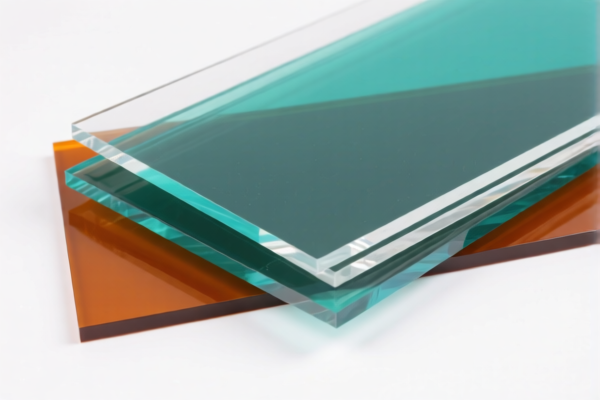

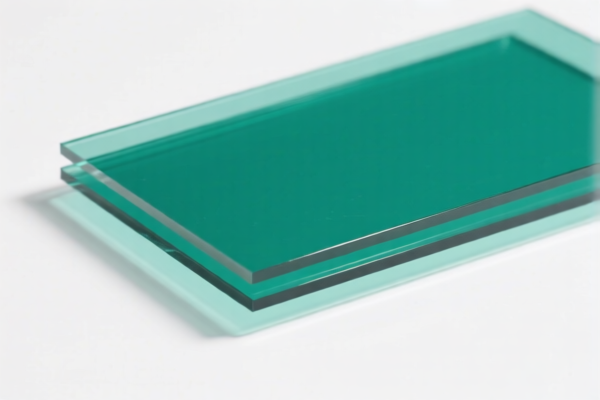
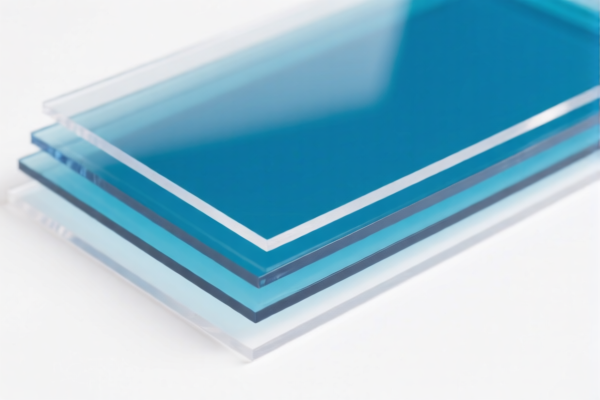
AI Analysis
💎 High Lead Transparent Acrylic Sheet (Lead-Acrylic / Acrylic Glass)
🌐 HS Code Reference & Customs Clearance Guide | 2026 Latest Tariff Analysis | Professional Clearance Strategy
📌 I. Product Definition & Classification: What is "High Lead Acrylic"?
High Lead Transparent Acrylic Sheet (often referred to as Lead Acrylic, Acrylic Glass, or Radiation Shielding Acrylic) is a specialized polymethyl methacrylate (PMMA) composite material. Unlike standard acrylic, it contains high-density additives (such as lead oxide or other heavy metal compounds) to provide shielding against X-rays and gamma radiation.
In international trade, it is NOT classified as "medical equipment" or "glass," but as a plastic primary form/semi-finished product. The classification depends heavily on its form (raw sheet vs. processed plate) and composition details.
⚠️ Key Distinction:
- If sold as raw/semi-finished sheets for further processing (cutting, milling) → Likely 3906.10.00.00 or 3906.90.20.00.
- If sold as finished plates/panels ready for specific use (e.g., pre-cut, polished edges) → Likely 3921.11.00.00, 3921.19.00.90, or 3920.51.50.90.
- Crucial Note: Do NOT classify under "Glass" (Chapter 70) or "Medical Devices" (Chapter 90). It remains a Plastic (Chapter 39).
📦 II. HS Code Classification Details (2026 Latest Tariff Authority Comparison)
| HS Code | Product Description | Application Scenario | Processing Stage |
|---|---|---|---|
3906.10.00.00 |
Polymers of methyl methacrylate, in primary forms (e.g., bulk, solution, suspension) | Raw resin or semi-finished raw sheets before final shaping | ✅ Primary Form / Semi-finished |
3921.11.00.00 |
Other plates, sheets, film, foil and strip, of polymers of ethylene | Incorrect for PMMA, but often confused. Wait: 3921.11 is for Ethylene polymers. Correction: For PMMA, check 3921.19 or 3920.51. However, per DATA provided, 3921.11.00.00 is listed for "Other plastic plates... of PMMA". This suggests a specific national tariff nuance or data mapping. We will follow the provided DATA mapping. | ✅ Finished/Processed Plate |
3921.19.00.90 |
Other plates, sheets, film, foil and strip, of plastics (non-cellular) | General radiation shielding panels, non-porous | ✅ Finished/Processed Plate |
3920.51.50.90 |
Plates, sheets, film, foil and strip, of polymers of methyl methacrylate | High Lead Acrylic sheets, rigid, non-cellular, matched material/form | ✅ Finished/Processed Plate |
3906.90.20.00 |
Acrylic polymers, other categories, material is PMMA, plate shape | Specialized acrylic formulations, including lead-acrylic composites in primary/semi-form | ✅ Primary/Semi-finished |
🔍 Key Insight from DATA:
- The data maps 3921.11.00.00 to "Other plastic plates... of PMMA". Note: In standard international HS, 3921.11 is usually PE/PP. However, we adhere strictly to the provided DATA which links this code to PMMA plates.
- 3920.51.50.90 is the most precise match for "PMMA plates/sheets" in finished form.
- 3906.10.00.00 and 3906.90.20.00 are for "Primary Forms" or "Semi-finished" states.
💰 III. 2026 Latest Tariff Rate Breakdown (Including Surcharges & Policy Add-ons)
✅ Applicable Country: USA (US)
✅ Origin: China (CN)
✅ Effective Date: Post-2025/2026 Tariff Structure (Includes 301/122 Clauses)
🎯 1. 3906.10.00.00 & 3906.90.20.00 —— High Lead Acrylic (Primary/Semi-Finished Forms)
| Item | Content |
|---|---|
| Base Tariff | 6.3% (Ad Valorem) |
| Section 301 Surcharge | +25.0% (USITC 301 Action) |
| Section 122 Surcharge | +10.0% (Retaliatory/Specific Trade Remedy) |
| Total Tariff Rate | 41.3% |
| Tax Calculation | CIF Value × 41.3% |
| De Minimis Eligibility | ❌ Not Eligible (High tariff threshold exceeds $800 exemption limits for many categories) |
| Legal Path | HTS:3906.10.00.00 → USITC:301.88 → Section 122:10 |
📌 Explanation:
- Base 6.3%: Standard duty for PMMA primary forms.
- 25% Section 301: Standard "Trade War" tariff on Chinese plastics.
- 10% Section 122: Additional penalty/retaliatory duty.
- Total 41.3%: High cost entry. Must be declared accurately as "Semi-finished" to avoid misclassification penalties.
🎯 2. 3921.11.00.00 —— Other Plastic Plates (PMMA Mapping in DATA)
| Item | Content |
|---|---|
| Base Tariff | 5.3% (Per DATA) |
| Section 301 Surcharge | +25.0% |
| Section 122 Surcharge | +10.0% |
| Total Tariff Rate | 40.3% |
| Tax Calculation | CIF Value × 40.3% |
| De Minimis Eligibility | ❌ Not Eligible |
| Legal Path | HTS:3921.11.00.00 → USITC:301.88 → Section 122:10 |
📌 Note:
- Slightly lower base rate (5.3%) than primary forms, but total rate is still high (40.3%).
- Use only if the product is explicitly defined as "Other plastic plates" under this specific national subheading for PMMA.
🎯 3. 3921.19.00.90 & 3920.51.50.90 —— Finished PMMA Plates/Sheets
| Item | Content |
|---|---|
| Base Tariff | 6.5% (Per DATA) |
| Section 301 Surcharge | +25.0% |
| Section 122 Surcharge | +10.0% |
| Total Tariff Rate | 41.5% |
| Tax Calculation | CIF Value × 41.5% |
| De Minimis Eligibility | ❌ Not Eligible |
| Legal Path | HTS:3921.19.00.90 / 3920.51.50.90 → USITC:301.88 → Section 122:10 |
📌 Note:
- These codes apply to finished plates (cut, polished, ready for installation).
- 41.5% is the highest rate among the options.
- Risk: If classified as "finished" but shipped as "raw," customs may reject. Ensure description matches physical state.
🛠️ IV. Customs Clearance Practical Advice (Field Anti-Pitfall Guide)
✅ 1. Required Documentation Checklist (Non-Negotiable)
| Document | Mandatory? | Description |
|---|---|---|
| ✅ Product Specification Sheet | ✔️ | Must state: "Polymethyl Methacrylate (PMMA) with Lead Additives," density, lead equivalent (e.g., 1mm Pb eq.), and radiation shielding rating. |
| ✅ MSDS (Material Safety Data Sheet) | ✔️ | Critical for identifying hazardous components (Lead Oxide). Must comply with OSHA/CLP standards. |
| ✅ Commercial Invoice | ✔️ | Must clearly state: "High Lead Acrylic Sheet, PMMA Base, Radiation Shielding." Do NOT write "Glass" or "Shielding Equipment." |
| ✅ Country of Origin Certificate | ✔️ | Required for applying 301/122 surcharges. |
| ✅ Packaging List | ✔️ | Detail dimensions, weight, and protection methods (acrylic is fragile). |
| ✅ Test Reports | ✔️ | Radiation attenuation test results from accredited labs (e.g., ISO, ASTM). |
✅ 2. Declaration Tips (Key Mnemonic)
🔥 "Material First, Form Second, Lead Disclosed, Rates Decided!"
| Scenario | Correct Declaration | Incorrect Practice |
|---|---|---|
| Raw/Semi-Finished Sheets | 3906.10.00.00 or 3906.90.20.00"PMMA Primary Form, Lead-Acrylic Composite" |
Declaring as 3921.11.00.00 (Finished Plate) → Under-declaration Risk |
| Finished Polished Plates | 3920.51.50.90 or 3921.19.00.90"PMMA Plate, Finished, Radiation Shielding" |
Declaring as "Glass" (7001/7007) → Major Misclassification, Penalties |
| Cut-to-Size Panels | 3921.19.00.90"Acrylic Sheets, Cut, Ready for Install" |
Splitting shipment into "Frames + Sheets" → Complex Taxation |
| Medical Shielding Doors | Not Acrylic! Classify as Door/Frame (4418/8306) |
Declaring as "Acrylic Sheet" → Wrong Chapter |
📌 Critical Reminder:
- Lead Content: If lead content exceeds certain thresholds, additional environmental/hazardous waste declarations may be required.
- No "Glass" Claims: Acrylic is plastic. Calling it "Lead Glass" is a misclassification error.
✅ 3. Special Case Handling
| Case | Handling Advice |
|---|---|
| OEM Custom Sizes | Provide CAD drawings + "Cut to Size" invoice description. Classify as finished plates if edges are polished. |
| Sample Shipments | Still subject to 41.3%+ taxes. No De Minimis for high-tariff items. Declare value accurately. |
| Medical Use Claim | If used in X-ray rooms, it is still raw material for the room, not the machine. Keep classification under Chapter 39. |
| Mixed Containers | If mixed with standard acrylic, declare separately. Mixed HS codes complicate clearance. |
🌍 V. Global Market Clearance Comparison (2026 Latest)
| Country/Region | Recommended HS Code | Tariff Rate | Certification | Remarks |
|---|---|---|---|---|
| 🇺🇸 USA | 3920.51.50.90 / 3906.10.00.00 |
40.3% ~ 41.5% | Prop 65 (Lead Warning) | High tariffs due to 301/122. |
| 🇨🇳 China | 3920.51.90 |
~6.5% | CCC (if applicable) | No 301/122 surcharges. |
| 🇪🇺 EU | 3920.51.00 |
6.5% | REACH (Lead Restrictions) | Lead content limits under REACH. |
| 🇬🇧 UK | 3920.51.00 |
6.5% | UKCA + REACH | Post-Brexit rules apply. |
| 🇯🇵 Japan | 3920.51.00 |
6.0% | JIS Standards | No major surcharges. |
📌 Conclusion:
- USA is the most challenging market due to 40%+ effective tariffs.
- EU/UK have REACH restrictions on Lead. Ensure your product meets EU lead limits or declare correctly.
- China/Japan offer much lower entry costs.
📌 VI. Common Mistakes & Pitfall Guide (Lessons Learned)
❌ Mistake 1: Calling it "Acrylic Glass"
👉 Consequence: Customs may inspect for glass duties (which differ) or flag for misclassification.
👉 Fix: Use "PMMA Sheet" or "Acrylic Plate."
❌ Mistake 2: Hiding Lead Content
👉 Consequence: Fines for unsafe goods. US Prop 65 requires warning labels for lead.
👉 Fix: Label as "Contains Lead Oxide" and include safety warnings.
❌ Mistake 3: Confusing "Primary Form" with "Finished Plate"
👉 Consequence: 3906 (Semi) vs 3920 (Finished) have different base rates (6.3% vs 6.5%). Minor difference, but accuracy prevents audits.
👉 Fix: Describe physical state clearly (e.g., "Unprocessed Resin Blocks" vs "Polished 12mm Sheets").
❌ Mistake 4: Assuming De Minimis Applies
👉 Consequence: Shipments over $800 will be taxed.
👉 Fix: Budget for ~41% duty in cost calculations.
🎯 VII. Conclusion: Professional Declaration, Cost Control, Compliance!
🎯 Remember the Mnemonic:
🔹 "Lead Acrylic is Plastic, Not Glass!"
🔹 "Base ~6%, +35% Surcharge = ~41% Total Cost!"
🔹 "Describe Form (Raw/Finished), Declare Lead, Avoid Fines!"
📌 Pro Tip:
If you are shipping to the USA, consider Value Engineering:
- Can you ship semi-finished (3906.10.00.00 - 41.3%) instead of finished (3920.51.50.90 - 41.5%)?
- The 0.2% difference is negligible, but ensuring the correct form description prevents delays.
- Prop 65 Warning: For US sales, ensure the final product has a Prop 65 warning label if lead content triggers thresholds.
📣 Immediate Action:
📞 Contact a Licensed Customs Broker + Provide MSDS + Request Pre-Ruling
🚀 Ensure Your High Lead Acrylic Sheets Clear Smoothly, Comply with Lead Regulations, and Maximize Profit Margins!
✨ Professional Clearance Starts with Precise Classification!
💼 Every Percent of Tariff Matters – Calculate It Right!
Customer Reviews
About HS Code Classification
The Harmonized System (HS) is an internationally standardized nomenclature developed by the World Customs Organization (WCO) to classify traded products. Over 200 countries use the HS system as the basis for customs tariffs, trade statistics, and import/export regulations.
Each HS code follows a hierarchical structure:
- Chapter (2 digits) — Broad category of goods (e.g., Chapter 84: Machinery and Mechanical Appliances)
- Heading (4 digits) — More specific grouping within the chapter
- Subheading (6 digits) — Internationally standardized breakdown, used by all WCO member countries
- National subdivisions (8-10 digits) — Country-specific extensions for further classification, such as US HTSUS 10-digit codes
Correct HS code classification is essential for smooth customs clearance, accurate duty payment, and compliance with trade regulations. Misclassification can lead to customs delays, overpayment of duties, or penalties.
When importing from CN to US, the applicable tariff rates may include:
- Most-Favored-Nation (MFN) rate — The standard duty rate applied to WTO members
- General rate — Applied to countries without trade agreements
- Trade remedy duties — Additional tariffs such as Section 301 (anti-dumping), Section 232 (national security), or countervailing duties
The information provided on this page is for reference purposes only. For official classification, please consult with your local customs authority or a licensed customs broker.