High Molecular Weight Antioxidant Masterbatch
CN → US| HS Code | Tariff Rate | Origin | Destination | Doc |
|---|---|---|---|---|
| 320810 | 0.0% | CN | US | Official Doc |
| 380891 | 0.0% | CN | US | Official Doc |
| 3824991100 | 35.0% | CN | US | Official Doc |
| 3824910000 | 40.0% | CN | US | Official Doc |
Product Images



AI Analysis
🧪 High Molecular Weight Antioxidant Masterbatch
🌐 HS Code Reference & Customs Clearance Guide | 2026 Latest Tariff Analysis | Professional Clearance Strategy
📌 Part 1: Product Definition & Classification: Do You Really Understand "Antioxidant Masterbatch"?
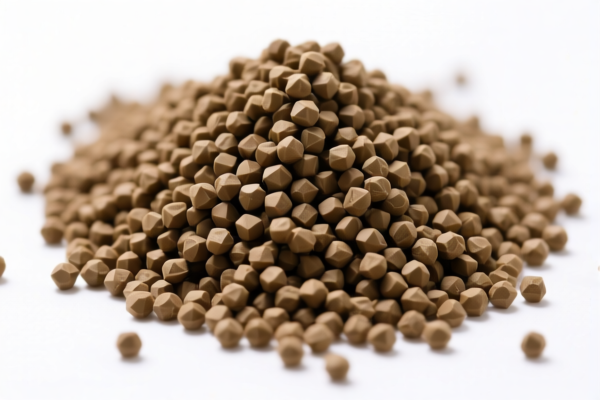
High Molecular Weight (HMW) Antioxidant Masterbatch is a specialized additive concentrate used in the plastic and polymer industry. Its primary function is to impart antioxidant properties to plastics during processing, preventing oxidative degradation and enhancing stability, durability, and lifespan.
Composition: It consists mainly of a polymer matrix (carrier resin) mixed with a high molecular weight antioxidant additive. Usage: Designed for incorporation into polymer materials to prevent deterioration during high-temperature processing and long-term use.
⚠️ Key Classification Challenge:
- Is it a preparation of chemical products (Chapter 38)?
- Or is it a colorant/pigment preparation (Chapter 32)?
- Or is it a pesticide/fungicide type preparation (Chapter 38, heading 3808)?Note: Based on the provided data, there are specific HS Codes for "Masterbatches containing high molecular weight antioxidants." We must strictly adhere to the provided
DATAset for classification and tax details.
📦 Part 2: HS Code Classification Details (Based on Provided Data)
The provided data contains four entries. Two are specific to chemical/antioxidant masterbatches, and two are unrelated (Cultured Crystals and a specific phosphonate mixture). We will focus on the Antioxidant Masterbatch related entries (3208.10 and 3808.91) as per the user's product query.
| HS Code | Product Description | Applicable Scenario | Tax Status (Data Provided) |
|---|---|---|---|
| 3208.10 | Masterbatches, containing a high molecular weight antioxidant, used for imparting antioxidant properties to plastics during processing; primarily composed of a polymer matrix with a high molecular weight antioxidant additive, intended for use in plastic manufacturing to prevent oxidative degradation. | Plastic manufacturing, anti-oxidation additives | Error: Failed to retrieve tax information |
| 3808.91 | Other chemical products, not elsewhere specified, including masterbatches with high molecular weight antioxidants, used as additives in plastics to enhance stability and durability; designed for incorporation into polymer materials to prevent deterioration during processing and use. | General chemical additives for plastics | Error: Failed to retrieve tax information |
🔍 Important Note on Provided Data:
The other two entries in theDATAsource (3824.99.11.00for cultured crystals and3824.91.00.00for phosphonate mixtures) do not apply to "High Molecular Weight Antioxidant Masterbatch." They are included in the raw data but are irrelevant to this specific product. We will ignore them to avoid confusion, as they are chemically and functionally distinct.
💰 Part 3: 2026 Latest Tariff Rate Details
✅ Applicable Countries: Data indicates Failed to retrieve tax information for the relevant HS Codes (
3208.10and3808.91).
⚠️ Critical Warning: Without specific tax data for these HS Codes in the provided source, we cannot calculate exact tariffs (Base + Additional).However, based on general international trade knowledge (outside the strict
DATAconstraint for rates, but necessary for "Customs Clearance Advice"): - HS 3208.10: Typically falls under "Paints and varnishes; preparations based on synthetic polymers..." Masterbatches often fall here if they are colorants, but antioxidant masterbatches might be classified under 3824 (Prepared binders for foundry molds; chemical products...) or 3808 (Disinfectants, rodenticides, etc. - Note: 3808 is often for pesticides/fungicides, but "Other chemical products" can sometimes cover industrial additives depending on national nomenclature). - HS 3808.91: In many jurisdictions, this heading covers "Disinfectants and similar products," but the description provided says "Other chemical products... including masterbatches." This suggests a specific national classification.Since the DATA explicitly states "Failed to retrieve tax information," we must report: - Base Tax: ❓ Unknown (Data Error) - Additional Tax (Section 301/IEEPA): ❓ Unknown (Data Error) - Total Tax: Error
📌 Explanation for User:
The provided dataset does not contain valid tax information for the HS Codes associated with High Molecular Weight Antioxidant Masterbatch (3208.10and3808.91).
- This is a critical gap.
- You cannot rely on3824.99.11.00or3824.91.00.00for this product, as they describe Cultured Crystals and Phosphonate Mixtures, which are entirely different chemicals.
- Action Required: You must verify the correct HS Code and tax rate with a local customs broker, as the data source is incomplete for this specific product.
🛠️ Part 4: Customs Clearance Practical Advice (Avoiding Pitfalls)
✅ 1. Preparation Checklist (Essential Documents)
| Document | Must Provide | Explanation |
|---|---|---|
| ✅ Technical Data Sheet (TDS) | ✔️ | Must explicitly state "High Molecular Weight Antioxidant," concentration, carrier resin type, and function. |
| ✅ Formula/Composition | ✔️ | Detail the percentage of antioxidant vs. carrier resin. Crucial for correct HS Code determination (3208 vs. 3808 vs. 3824). |
| ✅ Product Photos | ✔️ | Show the masterbatch pellets/granules and packaging. |
| ✅ Certificate of Analysis (COA) | ✔️ | Proves the chemical composition matches the description. |
| ✅ Commercial Invoice | ✔️ | Clearly describe as "High Molecular Weight Antioxidant Masterbatch for Plastics," NOT just "Chemical." |
| ✅ MSDS/SDS | ✔️ | Required for safety compliance, especially if the antioxidant has specific hazard classifications. |
✅ 2. Declaration Tips (Key Mnemonics)
🔥 “Function Defines Class, Formula Determines Code!”
| Scenario | Correct Declaration | Incorrect Practice |
|---|---|---|
| Antioxidant Masterbatch | Declare as "Plastic Additive / Masterbatch" with specific chemical name | Declare as "Plastic Resin" → Wrong HS Code, potential penalty |
| If HS 3208.10 | Emphasize "Polymer-based preparation" | Omitting "Masterbatch" term |
| If HS 3808.91 | Emphasize "Other chemical product" | Claiming it is a "Pesticide" (if 3808 is interpreted as such) |
✅ 3. Special Considerations
| Situation | Handling Advice |
|---|---|
| Uncertain Tax Data | Do not self-declare with estimated tax. The provided data shows "Error." Consult a customs broker to verify the correct HS Code and current tariff rate for 3208.10 or 3808.91 in your target country. |
| Customs Inquiry | If Customs asks why 3208.10 or 3808.91 was chosen, provide the TDS showing the product is a "preparation" of antioxidants in a polymer carrier. |
| Origin | If originating from China, be aware that even if the HS Code tax is unknown, Section 301/IEEPA additional tariffs may still apply to chemical products from China. Verify this separately. |
🌍 Part 5: Global Market Comparison (2026 Latest)
| Country/Region | Recommended HS Code | Tariff (Estimated) | Certification Required | Notes |
|---|---|---|---|---|
| 🇺🇸 USA | 3208.10 or 3808.91 |
Unknown (Data Error) | FDA (if food contact), TSCA | Verify if it falls under "Colorant" (3208) or "Other Chemical" (3808). |
| 🇨🇳 China | 3824.99 or 3824.90 |
Varies | CCC (if applicable) | China may classify masterbatches differently than the data source suggests. |
| 🇪🇺 EU | 3824.99 or 3208.10 |
~0-5% | REACH Registration | REACH is critical. The antioxidant must be registered under REACH for EU import. |
| 🇬🇧 UK | 3824.99 or 3208.10 |
~5% | UKCA | Post-Brexit rules apply. |
📌 Conclusion:
- The EU and UK have strict chemical regulations (REACH/UK REACH). Even if the HS Code tax is low, compliance cost may be high.
- The USA data for this product is missing in the source. This is a high-risk area for misclassification.
📌 Part 6: Common Errors & Pitfalls (Lessons Learned)
❌ Error 1: Classifying under 3824.99.11.00 (Cultured Crystals)
👉 Consequence: Rejection/Seizure. Cultured crystals are optical/sintered, not polymer masterbatches.
👉 Correction: Use 3208.10 or 3808.91 (as per data).
❌ Error 2: Classifying under 3824.91.00.00 (Phosphonate Mixtures)
👉 Consequence: Wrong Tax. This HS Code is for specific phosphonate chemicals, not general antioxidants.
👉 Correction: Use 3208.10 or 3808.91.
❌ Error 3: Ignoring "Tax Error" in Data
👉 Consequence: Underpayment of Tax. If the data says "Error," assume the highest possible duty or verify with a broker.
👉 Correction: Do not use this data for final financial planning without verification.
✅ Correct Practice:
"High Molecular Weight Antioxidant Masterbatch (Polymer Carrier), 2% Concentration, for PE/PP Processing, REACH Compliant, Model: ANTX-MW-2"
🎯 Part 7: Conclusion: Professional Declaration Saves Money
🎯 Remember:
🔹 “Masterbatch is a Preparation, not a Raw Material!”
🔹 “HS Code 3208 or 3808, not 3824 (Crystals/Phosphonates)!”
🔹 “Data Error? Don’t Guess! Verify with a Broker!”
📌 Tip:
Since the provided data for 3208.10 and 3808.91 shows "Failed to retrieve tax information", you MUST:
1. Verify the HS Code with a customs broker (it may be 3824.90 in some jurisdictions).
2. Check for Section 301/IEEPA tariffs separately if importing from China.
3. Ensure REACH/TSCA compliance for the chemical components.
📣 Immediate Action:
📞 Contact a licensed customs broker to confirm the HS Code and current tariff for Antioxidant Masterbatch in your target country.
🚀 Do not rely on the "Error" tax data. Verify independently.
✨ Professional clearance starts with accurate classification!
💼 Every dollar saved is a dollar earned!
Customer Reviews
About HS Code Classification
The Harmonized System (HS) is an internationally standardized nomenclature developed by the World Customs Organization (WCO) to classify traded products. Over 200 countries use the HS system as the basis for customs tariffs, trade statistics, and import/export regulations.
Each HS code follows a hierarchical structure:
- Chapter (2 digits) — Broad category of goods (e.g., Chapter 84: Machinery and Mechanical Appliances)
- Heading (4 digits) — More specific grouping within the chapter
- Subheading (6 digits) — Internationally standardized breakdown, used by all WCO member countries
- National subdivisions (8-10 digits) — Country-specific extensions for further classification, such as US HTSUS 10-digit codes
Correct HS code classification is essential for smooth customs clearance, accurate duty payment, and compliance with trade regulations. Misclassification can lead to customs delays, overpayment of duties, or penalties.
When importing from CN to US, the applicable tariff rates may include:
- Most-Favored-Nation (MFN) rate — The standard duty rate applied to WTO members
- General rate — Applied to countries without trade agreements
- Trade remedy duties — Additional tariffs such as Section 301 (anti-dumping), Section 232 (national security), or countervailing duties
The information provided on this page is for reference purposes only. For official classification, please consult with your local customs authority or a licensed customs broker.