High Percentage Polyurethane Textile Composite Board
CN → US| HS Code | Tariff Rate | Origin | Destination | Doc |
|---|---|---|---|---|
| 6810195000 | 38.9% | CN | US | Official Doc |
| 5903202000 | 35.0% | CN | US | Official Doc |
| 3921131950 | 40.3% | CN | US | Official Doc |
| 6810990080 | 35.0% | CN | US | Official Doc |
Product Images
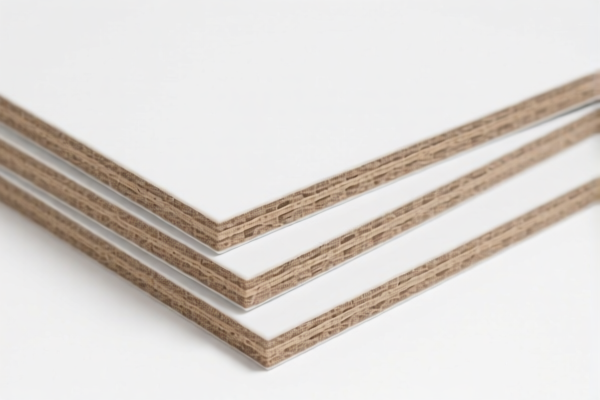
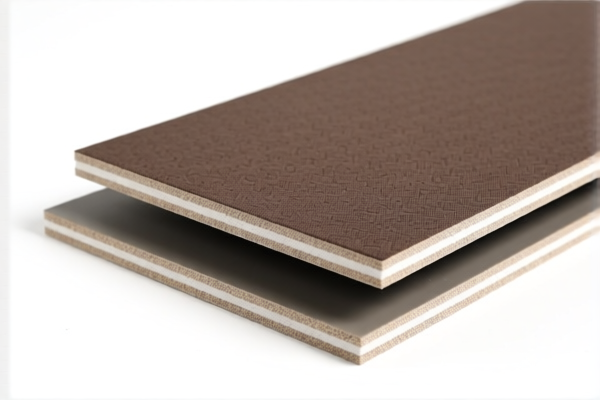
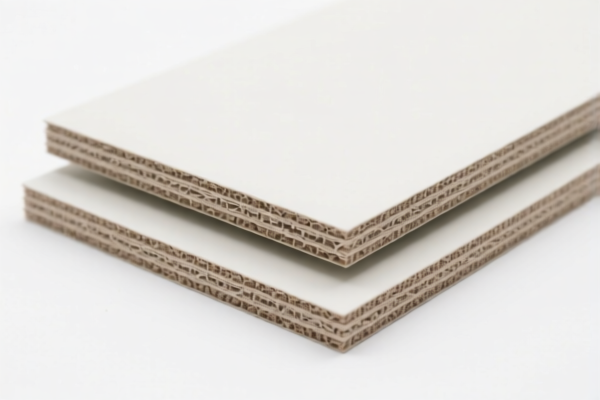
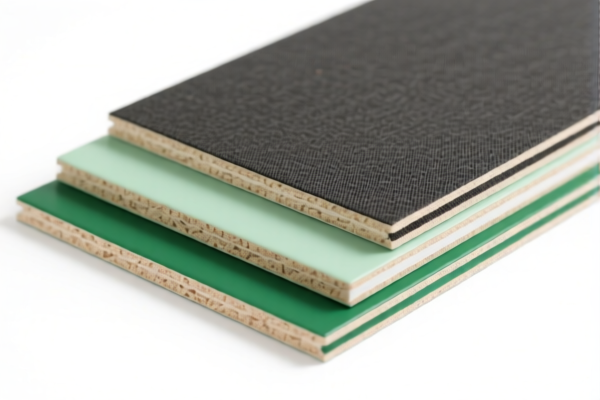
AI Analysis
🏗️ High Percentage Polyurethane Textile Composite Board for Construction
🌐 HS Code Classification & Customs Clearance Guide | 2026 Tax Rules & Strategic Insights
📌 1. Product Definition: What is the "Polyurethane Textile Composite Board"?
High Percentage Polyurethane Textile Composite Board is a specialized construction material. It typically consists of a core or layer made of polyurethane (PU) foam or resin, bonded with or reinforced by textile fabrics (such as fiberglass, mesh, or non-woven fabrics) to provide structural integrity, flexibility, and insulation.
In international trade, the classification depends heavily on the essential character of the board: * Is it primarily a building material made of concrete/cement? → Falls under Chapter 68. * Is it primarily a textile fabric treated with plastic? → Falls under Chapter 59. * Is it primarily a plastic product (PU)? → Falls under Chapter 39.
⚠️ Critical Distinction:
- If the textile acts merely as a backing for a plastic sheet, it may be classified as Plastics (Ch 39).
- If the textile is impregnated/coated with plastic and forms a sheet, it may be classified as Textile Articles (Ch 59).
- If the board is used for construction and contains cementitious materials or is considered a "building stone/concrete product," it may be classified under Articles of Stone/Cement (Ch 68).
📦 2. HS Code Classification Details (Based on Provided Data)
The following HS Codes represent potential classifications for "High Percentage Polyurethane Textile Composite Board" under current tariff schedules (likely US HTS, given the "122 Clause" and high additional duties).
| HS Code | Summary Description | Key Characteristics |
|---|---|---|
| 6810.19.50.00 | Other articles of cement, concrete, or artificial stone. | Classified as Building Board/Cementitious. Implies the board is viewed as a construction component similar to cement boards or artificial stone slabs. |
| 5903.20.20.00 | Textile fabrics impregnated, coated, covered, or laminated with plastics (PU). | Classified as Textile-Plastic Composite. Focuses on the textile nature being modified by PU. |
| 3921.13.19.50 | Other plates, sheets, film, foil, and strip of plastics (Polyurethane). | Classified as Plastic Product. Focuses on the PU material being the primary constituent. |
| 6810.99.00.80 | Other articles of cement, concrete, or artificial stone. | Another Cementitious/Stone-like classification, specifically for "other quartz-aggregate or non-specified stone products." |
🔍 Key Insight:
The classification varies significantly based on how the manufacturer defines the "essential character."
- Ch 68: Highest tax burden (38.9% & 35.0%).
- Ch 59: Moderate tax burden (35.0%).
- Ch 39: Highest base tax (40.3%).
💰 3. 2026 Tariff Rate Breakdown (Including Additional Duties)
✅ Applicable Country: United States (US)
✅ Origin: China (CN) (Implied by "122 Clause" and "Additional Duties" typical of US-China trade war context)
✅ Effective Time: Current rates apply
🎯 1. 6810.19.50.00 — Cement/Concrete/Artificial Stone Articles
| Item | Detail |
|---|---|
| Base Duty Rate | 3.9% |
| Section 301 / Additional Duty | +25.0% |
| Section 122 Duty | +10.0% |
| Total Tariff Rate | 38.9% |
| Calculation Base | CIF Value (Cost, Insurance, Freight) × 38.9% |
| De Minimis Exemption | ❌ Not Eligible (Value exceeds $800 threshold or specific exclusions apply) |
| Legal Path | HTSUS 6810.19.50 → Footnotes for China-origin goods → Section 301 & 122 lists |
📌 Explanation:
- "Section 122": Refers to specific anti-dumping/countervailing or special safeguard measures often applied to Chinese imports.
- "Additional Duty 25%": Standard US-China trade war tariff under Section 301.
- Total 38.9%: This is a very high effective rate, impacting competitiveness significantly.
🎯 2. 5903.20.20.00 — Impregnated/Coated Textile Fabrics
| Item | Detail |
|---|---|
| Base Duty Rate | 0.0% |
| Section 301 / Additional Duty | +25.0% |
| Section 122 Duty | +10.0% |
| Total Tariff Rate | 35.0% |
| Calculation Base | CIF Value × 35.0% |
| De Minimis Exemption | ❌ Not Eligible |
| Legal Path | HTSUS 5903.20.20 → Trade Act Section 301 → Section 122 |
📌 Explanation:
- Despite a 0% base duty, the additional tariffs make the total effective rate 35.0%.
- This is 3.9% cheaper than the Ch 68 classification, making it a potentially more cost-effective classification if legally justifiable.
🎯 3. 3921.13.19.50 — Polyurethane Plastic Plates/Sheets
| Item | Detail |
|---|---|
| Base Duty Rate | 5.3% |
| Section 301 / Additional Duty | +25.0% |
| Section 122 Duty | +10.0% |
| Total Tariff Rate | 40.3% |
| Calculation Base | CIF Value × 40.3% |
| De Minimis Exemption | ❌ Not Eligible |
| Legal Path | HTSUS 3921.13.19 → Trade Act Section 301 → Section 122 |
📌 Explanation:
- This is the most expensive option at 40.3%.
- The high base duty (5.3%) combined with the full additional tariffs results in the highest total cost.
- Avoid this classification unless the product is strictly a PU plastic sheet without textile reinforcement being the dominant feature.
🎯 4. 6810.99.00.80 — Other Cement/Concrete/Artificial Stone Articles
| Item | Detail |
|---|---|
| Base Duty Rate | 0.0% |
| Section 301 / Additional Duty | +25.0% |
| Section 122 Duty | +10.0% |
| Total Tariff Rate | 35.0% |
| Calculation Base | CIF Value × 35.0% |
| De Minimis Exemption | ❌ Not Eligible |
| Legal Path | HTSUS 6810.99.00 → Trade Act Section 301 → Section 122 |
📌 Explanation:
- Identical total rate (35.0%) to the textile classification.
- Suitable if the board contains significant cementitious/quartz aggregate components alongside the PU/textile mix.
🛠️ 4. Customs Clearance Practical Advice (Avoiding Pitfalls)
✅ 1. Documentation Checklist (Mandatory)
| Document | Required? | Notes |
|---|---|---|
| ✅ Product Specification Sheet | ✔️ | Must detail composition: % PU, % Textile, % Cement (if any). |
| ✅ Technical Data Sheet (TDS) | ✔️ | Shows physical properties (flexibility, weight, thickness). |
| ✅ Photographs (Clear) | ✔️ | Show cross-section to prove layer structure (PU core + textile fabric). |
| ✅ Commercial Invoice | ✔️ | Must clearly describe: "High Percentage Polyurethane Textile Composite Board for Construction." Avoid vague terms like "Plastic Sheet." |
| ✅ Packing List | ✔️ | Match invoice exactly. |
| ✅ Certificate of Origin | ✔️ | If applicable, prove non-China origin to avoid Section 301/122 duties. |
✅ 2. Classification Strategy & Tips
🔥 Golden Rule:
"Define by Essential Character. Structure dictates Code."
| Scenario | Recommended HS Code | Why? |
|---|---|---|
| Board is mostly PU foam with thin textile backing | 3921.13.19.50 |
Plastic is the essential character. (But highest tax: 40.3%) |
| Board is textile fabric coated/impregnated with PU | 5903.20.20.00 |
Textile is the essential character. (Lower tax: 35.0%) |
| Board is cementitious with PU/textile additive for strength | 6810.19.50.00 or 6810.99.00.80 |
Cement/concrete is the essential character. (Tax: 35.0%-38.9%) |
⚠️ Warning:
- Do NOT under-declare value.
- Do NOT misdescribe the product to avoid higher duties. Customs can audit and impose penalties + back taxes.
- "Section 122" duties are often subject to change. Verify current status with a customs broker.
✅ 3. Special Circumstances
| Situation | Handling Advice |
|---|---|
| Mixed Composition | If the product contains >50% PU by weight, Ch 39 may be argued. If >50% textile, Ch 59. If cement, Ch 68. |
| Import from Non-China Countries | If manufactured in Vietnam, Mexico, etc., apply for Certificate of Origin to potentially exclude Section 301 and 122 duties. |
| Pre-Ruling | File an Advance Ruling (CBP Form 5933) to get a binding classification decision from US Customs before shipping. This provides legal certainty. |
🌍 5. Global Market Comparison (2026)
| Market | Recommended HS Code | Est. Total Duty (China Origin) | Notes |
|---|---|---|---|
| 🇺🇸 USA | 5903.20.20.00 or 6810.19.50.00 |
35.0% - 38.9% | High additional duties. Pre-ruling recommended. |
| 🇨🇳 China | 3921.13.99.90 or 5903.20.90.90 |
~5-10% | Standard import duties. No Section 301/122. |
| 🇪🇺 EU | 3921.13.00 or 5903.20.00 |
~4-7% | No Section 301. Check anti-dumping duties on PU. |
| 🇬🇧 UK | 3921.13.00 or 5903.20.00 |
~4-7% | Post-Brexit tariffs. Similar to EU. |
📌 Conclusion:
- The USA is the most challenging market due to 35-40% effective tariffs.
- Strategic Sourcing: Consider manufacturing in Vietnam, Mexico, or Thailand to bypass US additional duties (verify rules of origin carefully).
- Documentation: Meticulous technical documentation is key to defending a Ch 59 classification (35%) over Ch 39 (40.3%) or Ch 68 (38.9%).
📌 6. Common Errors & Pitfalls (Lessons Learned)
❌ Error 1: Declaring as "Building Material" without specifying composition.
👉 Result: Customs assigns highest default rate (often Ch 39 or Ch 68) → 40.3% Tax.
❌ Error 2: Misclassifying PU-Coated Textile as "Textile Fabric" (without noting plastic coating).
👉 Result: Customs reclassifies to Ch 59 with additional duties → Back Taxes + Penalties.
❌ Error 3: Ignoring Section 122.
👉 Result: Underpayment of 10% additional duty → Seizure or Delay.
✅ Correct Practice:
"Polyurethane-Coated Fiberglass Composite Board, 12mm, Fire-Retardant, Model XYZ, HS 5903.20.20.00, Origin: China."
🎯 7. Conclusion: Smart Classification, Cost Savings!
🎯 Key Takeaways:
🔹 "Textile Core = Ch 59 (35%) | Cement Core = Ch 68 (35-39%) | Plastic Core = Ch 39 (40.3%)"
🔹 "Total Duty = Base + 25% (301) + 10% (122)"
🔹 "Always get a Pre-Ruling if value is high!"
📌 Pro Tip:
If your Polyurethane Textile Composite Board is exported to the US, calculate the landed cost including 35-40% tariffs. Consider supply chain diversification to non-Section 301 countries if margins are thin.
📣 Call to Action:
📞 Consult a Licensed Customs Broker before shipping.
📄 Request a Binding Ruling from US Customs (CBP).
🚀 Optimize Your Supply Chain to mitigate high tariffs.
✨ Precision in Classification, Profit in Clearance!
💼 Every Percent Saved is Pure Profit!
Customer Reviews
About HS Code Classification
The Harmonized System (HS) is an internationally standardized nomenclature developed by the World Customs Organization (WCO) to classify traded products. Over 200 countries use the HS system as the basis for customs tariffs, trade statistics, and import/export regulations.
Each HS code follows a hierarchical structure:
- Chapter (2 digits) — Broad category of goods (e.g., Chapter 84: Machinery and Mechanical Appliances)
- Heading (4 digits) — More specific grouping within the chapter
- Subheading (6 digits) — Internationally standardized breakdown, used by all WCO member countries
- National subdivisions (8-10 digits) — Country-specific extensions for further classification, such as US HTSUS 10-digit codes
Correct HS code classification is essential for smooth customs clearance, accurate duty payment, and compliance with trade regulations. Misclassification can lead to customs delays, overpayment of duties, or penalties.
When importing from CN to US, the applicable tariff rates may include:
- Most-Favored-Nation (MFN) rate — The standard duty rate applied to WTO members
- General rate — Applied to countries without trade agreements
- Trade remedy duties — Additional tariffs such as Section 301 (anti-dumping), Section 232 (national security), or countervailing duties
The information provided on this page is for reference purposes only. For official classification, please consult with your local customs authority or a licensed customs broker.