High Performance Car Radial Tire
CN → US| HS Code | Tariff Rate | Origin | Destination | Doc |
|---|---|---|---|---|
| 4011201005 | 39.0% | CN | US | Official Doc |
| 4011201015 | 39.0% | CN | US | Official Doc |
| 4012909000 | 37.7% | CN | US | Official Doc |
| 4013100020 | 38.7% | CN | US | Official Doc |
| 4012114000 | 39.0% | CN | US | Official Doc |
Product Images
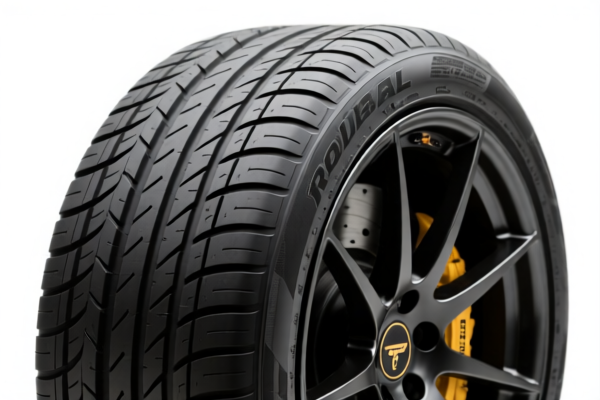
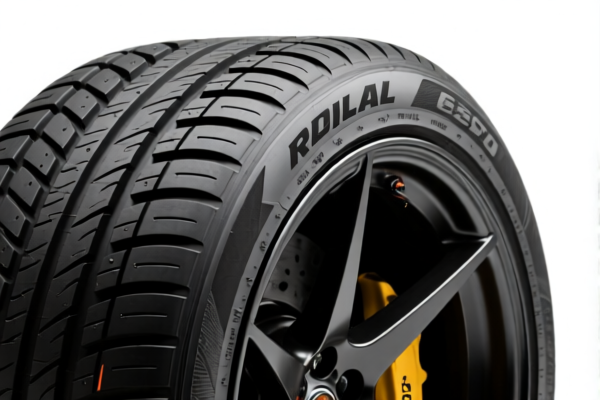
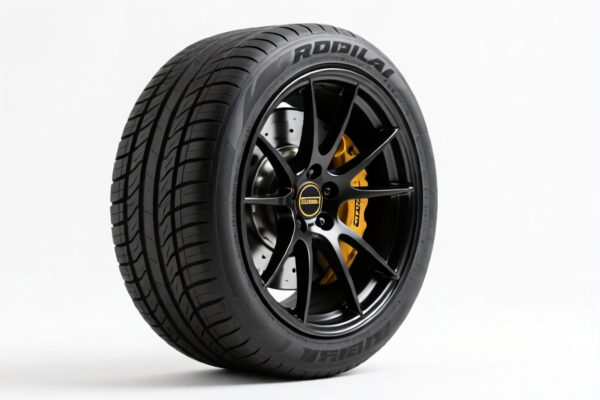
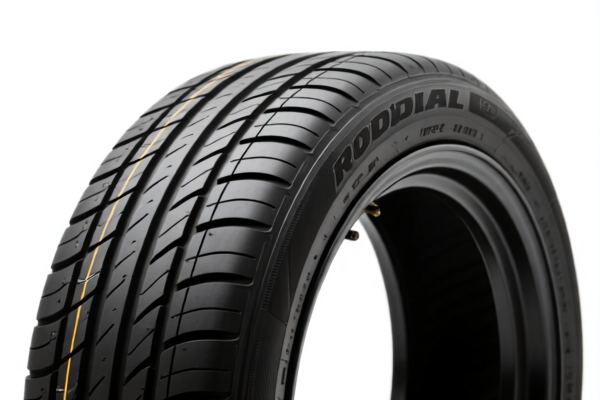
AI Analysis
🚗 High Performance Car Radial Tire (HP Tires)
🌐 HS Code Reference & Clearance Guide | 2026 Latest Tariff Analysis | Professional Customs Strategy
📌 I. Product Definition & Classification: Do You Truly Understand "HP Tires"?
High Performance (HP) Radial Tires are specialized automotive components designed for enhanced handling, braking, and speed stability. In international trade, precise classification depends on three critical factors:
1. Material: Rubber (standard for pneumatic tires).
2. Structure: Radial (indicated by "Radial" or "Belted Radial"; "Bias" is different).
3. Application: Passenger Vehicles (Cars/Sedans) vs. Trucks/Buses.
⚠️ Key Distinction Point:
- If the tire is for Cars/Sedans (Passenger Vehicles) →归入 4011.20.10.05 (Standard) or 4012.11.40.00 (Premium/Specialty).
- If the tire is for Trucks/Buses →归入 4011.20.10.15.
- If it is an Inner Tube (not the tire itself) →归入 4013.10.00.20.
- If it is a Solid/Rubber Part without air chamber (rare for HP cars) →归入 4012.90.90.00.
📦 II. HS Code Classification Details (2026 Latest Tariff Authority Comparison)
Based on the provided data, here is the breakdown of possible classifications for "High Performance Car Radial Tire":
| HS Code | Product Description | Application | Structure/Material | Total Tax Rate |
|---|---|---|---|---|
| 4011.20.10.05 | Pneumatic tires, new, of rubber, suitable for motor cars (including station wagons) and racing cars | Cars / Sedans | Radial, Rubber | 39.0% |
| 4011.20.10.15 | Pneumatic tires, new, of rubber, suitable for buses or trucks | Trucks / Buses | Radial, Rubber | 39.0% |
| 4012.90.90.00 | Retreaded or used pneumatic tires, or solid/rubber parts not specified elsewhere | Generic/Rubber Parts | Rubber, Non-specific | 37.7% |
| 4013.10.00.20 | Pneumatic inner tubes, new, of rubber | Inner Tubes | Rubber, Inner Tube | 38.7% |
| 4012.11.40.00 | Other tires of rubber, of a kind used on bicycles or motor cars (luxury/specialty) | Luxury Cars | Radial, Rubber | 39.0% |
🔍 Critical Note:
- "High Performance Car" typically falls under Passenger Vehicles (Cars).
- Radial is the key technical feature. If the tire is not radial (e.g., bias-ply), it would fall under a different subheading (not listed in the provided data).
- The most likely primary classification for a standard HP radial tire for cars is 4011.20.10.05.
- 4012.11.40.00 is often used for specialized/luxury car tires or specific rubber articles not fitting standard radial passenger tire codes.
💰 III. 2026 Latest Tariff Rate Breakdown (Including Surtaxes & Policy Add-ons)
✅ Applicable Country: United States (US)
✅ Country of Origin: China (CN)
✅ Effective Date: November 10, 2025 onwards (for subsequent imports)
🎯 1. 4011.20.10.05 – Passenger Car Radial Tires (Most Likely)
| Item | Details |
|---|---|
| Base Duty Rate | 4.0% (Ad Valorem) |
| Section 301 Surtax | +25.0% (Additional Duty under USITC Footnote 9903.88.01) |
| IEEPA Surtax | +10.0% (Section 122 Tariff for Chinese Products) |
| Total Effective Rate | 39.0% |
| Calculation | CIF Value × 39% |
| De Minimis Exemption | ❌ Not Eligible (High-value industrial/automotive parts are excluded) |
| Legal Basis Path | USITC:4011.20.10.05 → 301:Footnote 9903.88.01 → IEEPA:9903.01.25 |
📌 Explanation:
- The 4% is the standard Most Favored Nation (MFN) rate.
- The 25% is the prominent Section 301 tariff targeting Chinese imports.
- The 10% is an additional levy under Section 122 (IEEPA).
- Total: 39%. This is a high-cost category. Importers must budget accordingly.
🎯 2. 4011.20.10.15 – Truck/Bus Radial Tires (If Misclassified or Wrong Application)
| Item | Details |
|---|---|
| Base Duty Rate | 4.0% |
| Section 301 Surtax | +25.0% |
| IEEPA Surtax | +10.0% |
| Total Effective Rate | 39.0% |
| Calculation | CIF Value × 39% |
| De Minimis Exemption | ❌ Not Eligible |
📌 Note: Same tax structure as passenger tires if classified under this heading.
🎯 3. 4012.90.90.00 – Other Rubber Tire Parts/Retreaded
| Item | Details |
|---|---|
| Base Duty Rate | 2.7% |
| Section 301 Surtax | +25.0% |
| IEEPA Surtax | +10.0% |
| Total Effective Rate | 37.7% |
| Calculation | CIF Value × 37.7% |
| De Minimis Exemption | ❌ Not Eligible |
📌 Note: Slightly lower base rate (2.7% vs 4.0%), but still subject to high surtaxes.
🎯 4. 4013.10.00.20 – Inner Tubes (If Confused with Tire)
| Item | Details |
|---|---|
| Base Duty Rate | 3.7% |
| Section 301 Surtax | +25.0% |
| IEEPA Surtax | +10.0% |
| Total Effective Rate | 38.7% |
| Calculation | CIF Value × 38.7% |
| De Minimis Exemption | ❌ Not Eligible |
📌 Note: Only applies if the product is an inner tube, not the outer tire. Misclassification here can lead to penalties if customs determines the product is a tire.
🎯 5. 4012.11.40.00 – Specialty/Luxury Car Tires
| Item | Details |
|---|---|
| Base Duty Rate | 4.0% |
| Section 301 Surtax | +25.0% |
| IEEPA Surtax | +10.0% |
| Total Effective Rate | 39.0% |
| Calculation | CIF Value × 39% |
| De Minimis Exemption | ❌ Not Eligible |
📌 Note: Used for premium or specialized radial tires for cars. Same total rate as standard car tires.
🛠️ IV. Customs Clearance Practical Advice (Avoiding Pitfalls)
✅ 1. Documentation Checklist (Mandatory)
| Document | Required | Notes |
|---|---|---|
| ✅ Product Specification Sheet | ✔️ | Must state: Material (Rubber), Structure (Radial), Application (Car/Truck), Size (e.g., 225/45R17). |
| ✅ Commercial Invoice | ✔️ | Clearly describe as "Radial Pneumatic Tire for Passenger Cars". Avoid vague terms like "Auto Part". |
| ✅ Packing List | ✔️ | Detail number of tires, weight, and dimensions. |
| ✅ Certificate of Origin (CO) | ✔️ | To confirm Country of Origin (China). Essential for surtax calculation. |
| ✅ Brand Authorization | ✔️ | If branded (e.g., Michelin, Bridgestone), to prove authenticity and avoid IP claims. |
| ✅ Lab Test Report (Optional but Recommended) | ✔️ | To confirm radial construction if structure is disputed. |
✅ 2. Declaration Strategy (Key Mnemonics)
🔥 "Radial Car, 4011.05, 39% Total. Truck, 4011.15. Don’t Mix Them Up!"
| Scenario | Correct HS Code | Risk if Wrong |
|---|---|---|
| Standard HP Radial for Sedan/SUV | 4011.20.10.05 |
Over/Under-declaration penalties. |
| Radial Tire for Pickup/Truck | 4011.20.10.15 |
May face different duty scrutiny. |
| Inner Tube (no outer tire) | 4013.10.00.20 |
High risk of misclassification if declared as "Tire". |
| Retreaded Tire | 4012.90.90.00 |
Different base rate, but still high surtax. |
| Luxury/Performance Specialty | 4012.11.40.00 |
Acceptable if product doesn't fit standard radial passenger codes. |
✅ 3. Special Considerations
| Situation | Recommendation |
|---|---|
| High-Value Luxury Tires | Ensure 4012.11.40.00 is used only if truly specialized. Standard HP tires should use 4011.20.10.05. |
| China Origin | 39% is the baseline. No de minimis exemption. Budget for full CIF value tax. |
| Transshipment | If shipped via Vietnam/Mexico, rules of origin must be strictly verified. Simple transshipment does not avoid US surtaxes. |
| Returns/Warranty | Keep records of defective tires for potential duty drawback claims. |
🌍 V. Global Market Comparison (2026 Latest)
| Country/Region | Recommended HS Code | Base Tariff | Surtax (China) | Total Est. | Notes |
|---|---|---|---|---|---|
| 🇺🇸 USA | 4011.20.10.05 |
4.0% | +35% (301+IEEPA) | 39.0% | Highest barrier. Strict origin checks. |
| 🇨🇳 China | 4011.20.10.05 |
~10-15% | None | ~15-20% | Import duty into China is lower. |
| 🇪🇺 EU | 4011.20.10 |
~4.5% | None (if GSP not applied) | ~4.5-6% | No Section 301 equivalent. |
| 🇨🇦 Canada | 4011.20.10 |
~0% (if CUSMA compliant) | Varies | ~0-10% | Favorable under USMCA/CUSMA if originating. |
| 🇬🇧 UK | 4011.20.10 |
~4.5% | None | ~4.5-6% | Post-Brexit tariff applies. |
📌 Conclusion:
- USA remains the most challenging market due to the 39% combined duty.
- EU/UK/Canada offer significantly lower tariff barriers for non-China-origin or preferential-trade goods.
📌 VI. Common Mistakes & Pitfalls (Lessons Learned)
❌ Mistake 1: Declaring "Radial Tire" without specifying "Car" or "Truck".
👉 Result: Customs may assign the highest generic code or delay for classification.
✅ Fix: Always specify application: "For Passenger Cars" or "For Trucks".
❌ Mistake 2: Confusing "Radial" with "Bias".
👉 Result: Wrong HS Code. Bias tires fall under 4011.11/4011.19 (different tax).
✅ Fix: Verify construction type. HP tires are almost always radial.
❌ Mistake 3: Assuming De Minimis ($800) applies.
👉 Result: Denial. Tires are explicitly excluded from de minimis exemptions under Section 301/IEEPA.
✅ Fix: Prepare for full duty payment.
❌ Mistake 4: Using "Auto Part" as a generic description.
👉 Result: Misclassification risk. Customs may audit and reassess.
✅ Fix: Use precise terminology: "Pneumatic Radial Tire, Rubber, for Cars".
🎯 VII. Conclusion: Smart Classification, Cost Control
🎯 Remember the Formula:
🔹 Radial + Car = 4011.20.10.05 (39%)
🔹 Radial + Truck = 4011.20.10.15 (39%)
🔹 Inner Tube = 4013.10.00.20 (38.7%)
🔹 No De Minimis. No Exemptions for China Origin.
📌 Pro Tip:
If your tires are manufactured in the US, Mexico, Canada, or Southeast Asia (Vietnam/Thailand), verify if they qualify for preferential treatment or exemptions from Section 301/IEEPA. This can reduce the total tax from 39% to 0-4.5%.
📣 Immediate Action:
📞 Consult a Licensed Customs Broker before shipping.
📋 Request a Binding Tariff Ruling (BTR) from US CBP if the volume is high.
🚀 Optimize Supply Chain: Consider non-China origins to mitigate the 35% surtax burden.
✨ Precision in Classification Saves Thousands.
💼 Every Percent in Duty Impacts Your Bottom Line.
Customer Reviews
About HS Code Classification
The Harmonized System (HS) is an internationally standardized nomenclature developed by the World Customs Organization (WCO) to classify traded products. Over 200 countries use the HS system as the basis for customs tariffs, trade statistics, and import/export regulations.
Each HS code follows a hierarchical structure:
- Chapter (2 digits) — Broad category of goods (e.g., Chapter 84: Machinery and Mechanical Appliances)
- Heading (4 digits) — More specific grouping within the chapter
- Subheading (6 digits) — Internationally standardized breakdown, used by all WCO member countries
- National subdivisions (8-10 digits) — Country-specific extensions for further classification, such as US HTSUS 10-digit codes
Correct HS code classification is essential for smooth customs clearance, accurate duty payment, and compliance with trade regulations. Misclassification can lead to customs delays, overpayment of duties, or penalties.
When importing from CN to US, the applicable tariff rates may include:
- Most-Favored-Nation (MFN) rate — The standard duty rate applied to WTO members
- General rate — Applied to countries without trade agreements
- Trade remedy duties — Additional tariffs such as Section 301 (anti-dumping), Section 232 (national security), or countervailing duties
The information provided on this page is for reference purposes only. For official classification, please consult with your local customs authority or a licensed customs broker.