High Performance Mortar Admixture
CN → US| HS Code | Tariff Rate | Origin | Destination | Doc |
|---|---|---|---|---|
| 3824402000 | 35.0% | CN | US | Official Doc |
| 2829190100 | 38.3% | CN | US | Official Doc |
| 2829906100 | 38.7% | CN | US | Official Doc |
| 3824405000 | 40.0% | CN | US | Official Doc |
| 3506915000 | 37.1% | CN | US | Official Doc |
Product Images
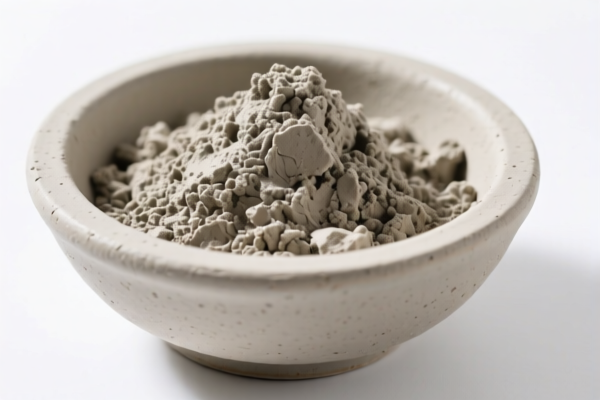
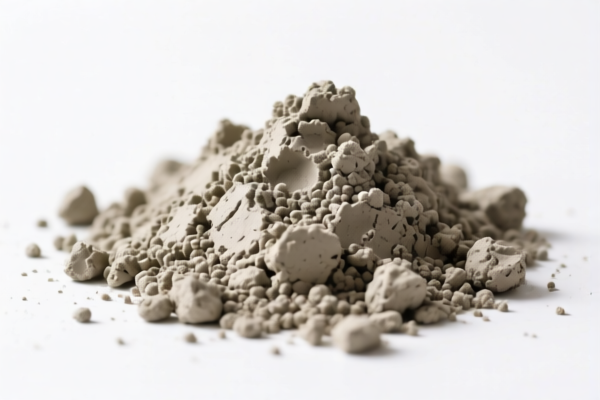
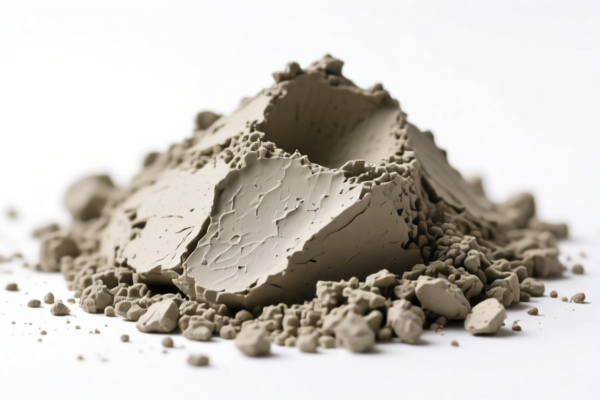
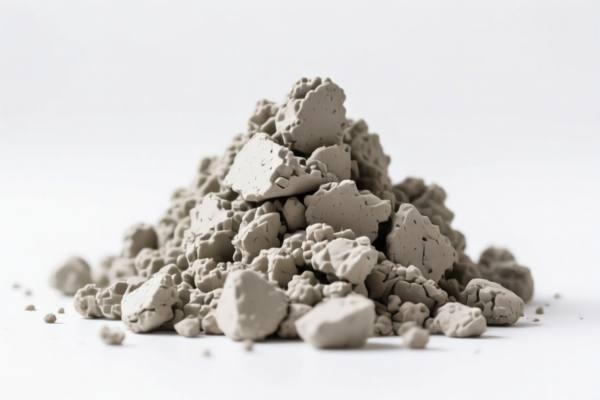
AI Analysis
🏗️ High Performance Mortar Admixture (无机砂浆外加剂)
🌐 HS Code Classification & Customs Clearance Guide | 2026 Latest Tariff Analysis | Professional Entry Strategy
📌 I. Product Definition & Classification: What Exactly is "High Performance Mortar Admixture"?
High-performance mortar admixtures are specialized chemical additives used to enhance the properties of mortar and concrete, such as workability, strength, durability, and setting time. In international trade, these products are not a single entity but are classified based on their chemical composition and primary function.
The core distinction lies in whether the additive is: 1. Primarily Chemical/Inorganic Salts: Classified under Chapter 28 (Inorganic Chemicals). 2. Prepared Additives for Building Materials: Classified under Chapter 38 (Prepared Binders/Additives). 3. Polymer-based/Adhesives: Classified under Chapter 35 (Albuminoidal Substances; Prepared Binders).
⚠️ Key Distinction Point:
- If the product is a pure inorganic salt (e.g., chlorates, bromates) → Goes to Chapter 28.
- If it is a prepared mixture specifically for cement/mortar (e.g., superplasticizers, water reducers) → Goes to 3824.40.
- If it is a polymer-based binder or pre-mixed mortar additive → Goes to 3506.91 or 3824.40.
📦 II. HS Code Classification Details (2026 Latest Tariff Authority Mapping)
Based on the specific chemical nature and usage described in the <DATA>, here are the precise HS Codes and their corresponding tax implications.
| HS Code | Product Description & Logic | Application Scenario | Key Chemical Characteristic |
|---|---|---|---|
3824.40.20.00 |
Prepared inorganic mortar additives specifically matching inorganic materials. | General-purpose inorganic mortar improvement. | Mixtures/Preparations of inorganic origin. |
2829.19.01.00 |
Inorganic Salt-based Additives falling under "Other Inorganic Salts". | Additives derived from specific salt compounds. | Pure or simple inorganic salts. |
2829.90.61.00 |
Chlorates, Bromates, etc. used as mortar additives. | Specific oxidative or chemical reaction agents. | Contains chlorate/bromate ions. |
3824.40.50.00 |
Prepared additives for cement, mortar, or concrete (Inorganic context). | High-performance concrete/mortar enhancement. | Complex prepared mixtures for building materials. |
3506.91.50.00 |
Pre-mixed mortar additives, classified as prepared adhesives or polymer-based chemicals. | Polymer-modified mortars, tile adhesives. | Contains polymers or protein/glue bases. |
🔍 Critical Reminder:
- Chapter 28 vs. 38: If the additive is a pure chemical salt, it goes to 2829. If it is a commercial preparation/mixture for construction, it often goes to 3824. Misclassification here leads to significant duty differences and customs holds.
- Polymer Content: If the product relies heavily on polymers for bonding, 3506.91.50.00 may be more accurate than inorganic codes, despite being called a "mortar additive."
💰 III. 2026 Latest Tariff Rate Breakdown (Including Surcharges & Policy Surcharges)
✅ Applicable Country: United States (US)
✅ Origin: China (CN)
✅ Effective Date: 2025/2026 (Current Trade War Context)
🎯 1. 3824.40.20.00 —— Prepared Inorganic Mortar Additives
| Item | Content |
|---|---|
| Base Tariff | 0.0% (Ad Valorem) |
| Section 301 Surtax | +25.0% (Standard USITC Footnote for Chapter 38) |
| Section 122 Tariff | +10.0% (Specific policy surcharge) |
| Total Rate | 35.0% |
| Tax Calculation | CIF Value × 35% |
| De Minimis Exemption | ❌ Not Applicable (High risk of scrutiny) |
| Legal Basis Path | USITC:3824.40.20.00 → SECTION301:10% → SECTION122:10% |
📌 Explanation:
- This code is for prepared mixtures. The base duty is low (0%), but the surcharges are heavy.
- Total 35% reflects the current trade environment for prepared chemical preparations from China.
🎯 2. 2829.19.01.00 —— Other Inorganic Salts (Mortar Additive)
| Item | Content |
|---|---|
| Base Tariff | 3.3% |
| Section 301 Surtax | +25.0% |
| Section 122 Tariff | +10.0% |
| Total Rate | 38.3% |
| Tax Calculation | CIF Value × 38.3% |
| De Minimis Exemption | ❌ Not Applicable |
| Legal Basis Path | USITC:2829.19.01.00 → SECTION301:25% → SECTION122:10% |
📌 Explanation:
- Classification under Chapter 28 incurs a higher base duty (3.3%) compared to Chapter 38.
- This is suitable if the product is primarily a specific inorganic salt rather than a complex mixture.
🎯 3. 2829.90.61.00 —— Chlorates, Bromates, etc.
| Item | Content |
|---|---|
| Base Tariff | 3.7% |
| Section 301 Surtax | +25.0% |
| Section 122 Tariff | +10.0% |
| Total Rate | 38.7% |
| Tax Calculation | CIF Value × 38.7% |
| De Minimis Exemption | ❌ Not Applicable |
| Legal Basis Path | USITC:2829.90.61.00 → SECTION301:25% → SECTION122:10% |
📌 Explanation:
- This is the highest duty among the options.
- Only use this if the product explicitly contains chlorates or bromates as the primary ingredient. These are often subject to stricter chemical regulations.
🎯 4. 3824.40.50.00 —— Prepared Additives for Cement/Mortar
| Item | Content |
|---|---|
| Base Tariff | 5.0% |
| Section 301 Surtax | +25.0% |
| Section 122 Tariff | +10.0% |
| Total Rate | 40.0% |
| Tax Calculation | CIF Value × 40.0% |
| De Minimis Exemption | ❌ Not Applicable |
| Legal Basis Path | USITC:3824.40.50.00 → SECTION301:25% → SECTION122:10% |
📌 Explanation:
- This code carries the highest base duty (5.0%) in the dataset.
- It is for complex prepared additives specifically for concrete/cement. If your product is a general mortar additive,3824.40.20.00(35%) is likely more accurate and cheaper.
🎯 5. 3506.91.50.00 —— Pre-mixed Mortar Additive (Polymer/Adhesive)
| Item | Content |
|---|---|
| Base Tariff | 2.1% |
| Section 301 Surtax | +25.0% |
| Section 122 Tariff | +10.0% |
| Total Rate | 37.1% |
| Tax Calculation | CIF Value × 37.1% |
| De Minimis Exemption | ❌ Not Applicable |
| Legal Basis Path | USITC:3506.91.50.00 → SECTION301:25% → SECTION122:10% |
📌 Explanation:
- If your admixture contains polymers or acts as a binder/adhesive, this code applies.
- It has a low base duty (2.1%) but still carries the full surcharges, totaling 37.1%.
🛠️ IV. Customs Clearance Practical Advice (Real-World Pitfall Guide)
✅ 1. Documentation Checklist (Must-Have)
| Document | Required? | Description |
|---|---|---|
| ✅ Product Specification Sheet | ✔️ | Must detail chemical composition (inorganic vs. polymer), density, pH, and main ingredients. |
| ✅ MSDS (Material Safety Data Sheet) | ✔️ | Critical for chemical imports. Must match the HS code classification (e.g., if classified as salt, MSDS must reflect inorganic salts). |
| ✅ Formula/Composition List | ✔️ | To prove whether it is a "Prepared Admixture" (3824) or "Pure Salt" (2829). |
| ✅ Commercial Invoice | ✔️ | Clearly state "Mortar Admixture" and specify the primary function (e.g., water reducer, accelerator, polymer modifier). |
| ✅ Certificate of Origin | ✔️ | Required to determine applicability of Section 301 and 122 tariffs. |
| ✅ Test Reports | ✔️ | Laboratory reports confirming chemical composition can prevent reclassification by customs. |
✅ 2. Declaration Strategy (Key Mantras)
🔥 "Chemical Nature First, Function Second. Don't Mix Chapters!"
| Scenario | Correct Declaration | Incorrect Practice |
|---|---|---|
| Inorganic Powder Additive | 3824.40.20.00 or 2829.19.01.00 |
Declaring as "Concrete" (Wrong Chapter) |
| Polymer-Modified Mortar | 3506.91.50.00 |
Declaring as "Inorganic Salt" → Penalty for misclassification |
| Chlorate-Based Accelerator | 2829.90.61.00 |
Declaring as generic "Admixture" → High duty + Regulatory hold |
| Complex Cement Additive | 3824.40.50.00 |
Declaring as 3824.40.20.00 → Lower duty risk if audited |
✅ 3. Special Cases Handling
| Situation | Handling Advice |
|---|---|
| High Polymer Content | If >50% polymer by weight, lean towards 3506.91.50.00 or 3824.40.50.00. Pure inorganic codes will be rejected. |
| Hazmat Chemicals | Chlorates (2829.90.61.00) may be classified as hazardous materials. Ensure proper IMDG/IATA compliance for shipping. |
| Customs Audit Risk | Customs may challenge 3824 vs. 2829. Provide a chemical analysis report to prove it is a "prepared mixture" (3824) or a "salt" (2829). |
| Section 122 Tariff | Verify if your product still qualifies for Section 122 exemptions (if any) or if the 10% surcharge is mandatory for your origin. |
🌍 V. Global Market Clearance Comparison (2026 Latest)
| Country/Region | Recommended HS Code | Estimated Duty | Certification Requirements | Notes |
|---|---|---|---|---|
| 🇺🇸 USA | 3824.40.20.00 |
35.0% (Total) | TSCA Compliance | High scrutiny on chemical composition. |
| 🇺🇸 USA | 2829.90.61.00 |
38.7% (Total) | TSCA + Hazmat Declaration | Highest duty due to chlorate/bromate content. |
| 🇨🇳 China | 3824.40.20.00 |
~3-5% (Import) | CCC (if applicable) | Lower duty for import into China, but export from China faces US tariffs. |
| 🇪🇺 EU | 3824.40.20.00 |
0-6.5% | REACH Registration | REACH compliance is critical for chemical imports into EU. |
| 🇲🇽 Mexico | 3824.40.20.00 |
0-5% | NOM Certifications | USMCA benefits may apply if originating rules are met. |
📌 Conclusion:
- USA is the most challenging market due to the 301 (25%) and 122 (10%) surcharges, totaling 35-40% duty.
- EU requires REACH registration, which is a high barrier for new chemical entrants.
- Mexico offers potential tariff advantages under USMCA if manufactured there.
📌 VI. Common Errors & Pitfall Guide (Blood & Tears Lessons)
❌ Error 1: Declaring a polymer-based mortar additive as Inorganic Salt (2829).
👉 Consequence: Customs reclassification → Back taxes + 10% penalty + Delayed shipment.
❌ Error 2: Using generic description "Mortar Additive" without specifying Chemical Nature.
👉 Consequence: Customs may assign the highest possible duty or request extensive documentation, causing customs holds.
❌ Error 3: Ignoring Section 122 Tariff implications.
👉 Consequence: Underestimating landed cost. Many traders only calculate Section 301 (25%) and forget the additional 10%.
❌ Error 4: Misclassifying Chlorates as general salts.
👉 Consequence: Safety violations. Chlorates are often regulated as hazardous materials. Proper Hazmat declaration is mandatory.
✅ Correct Approach:
"Inorganic Mortar Admixture, Chemical Name: [Specific Name], CAS Number: [If Applicable], Composition: [X]% Inorganic Salt, [Y]% Polymer. For use in [Specific Application]."
🎯 VII. Conclusion: Precise Classification, Cost Control!
🎯 Remember the Mantra:
🔹 "Inorganic = 3824/2829. Polymer = 3506/3824. Chlorate = 2829 (High Duty)."
🔹 "US Duty is 35-40%. Prepare for it!"
🔹 "Documentation is King. MSDS + Formula = Smooth Clearance."
📌 Pro Tip:
If your product is a complex mixture of inorganic salts and polymers, consult a licensed customs broker to determine if 3824.40.50.00 (40%) or 3824.40.20.00 (35%) is more appropriate. A 5% duty difference on large shipments is significant.
For polymer-based products, ensure REACH compliance for EU and TSCA for US.
📣 Immediate Action:
📞 Contact a customs classification expert.
📄 Prepare MSDS and Technical Data Sheets.
🚀 Accurate HS Code = Predictable Landed Cost = Competitive Advantage.
✨ Professional Clearance Starts with Accurate Classification!
💼 Every percent of duty matters in the construction chemical trade!
Customer Reviews
About HS Code Classification
The Harmonized System (HS) is an internationally standardized nomenclature developed by the World Customs Organization (WCO) to classify traded products. Over 200 countries use the HS system as the basis for customs tariffs, trade statistics, and import/export regulations.
Each HS code follows a hierarchical structure:
- Chapter (2 digits) — Broad category of goods (e.g., Chapter 84: Machinery and Mechanical Appliances)
- Heading (4 digits) — More specific grouping within the chapter
- Subheading (6 digits) — Internationally standardized breakdown, used by all WCO member countries
- National subdivisions (8-10 digits) — Country-specific extensions for further classification, such as US HTSUS 10-digit codes
Correct HS code classification is essential for smooth customs clearance, accurate duty payment, and compliance with trade regulations. Misclassification can lead to customs delays, overpayment of duties, or penalties.
When importing from CN to US, the applicable tariff rates may include:
- Most-Favored-Nation (MFN) rate — The standard duty rate applied to WTO members
- General rate — Applied to countries without trade agreements
- Trade remedy duties — Additional tariffs such as Section 301 (anti-dumping), Section 232 (national security), or countervailing duties
The information provided on this page is for reference purposes only. For official classification, please consult with your local customs authority or a licensed customs broker.