High Performance Radial Passenger Car Tires 18 Inch and Above Rim Diameter
CN → US| HS Code | Tariff Rate | Origin | Destination | Doc |
|---|---|---|---|---|
| 4011101070 | 39.0% | CN | US | Official Doc |
| 4011101060 | 39.0% | CN | US | Official Doc |
| 8708704560 | 37.5% | CN | US | Official Doc |
| 4011101070 | 39.0% | CN | US | Official Doc |
| 4011101060 | 39.0% | CN | US | Official Doc |
Product Images
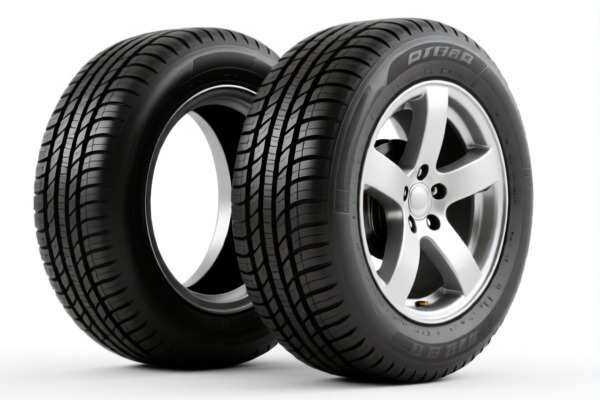
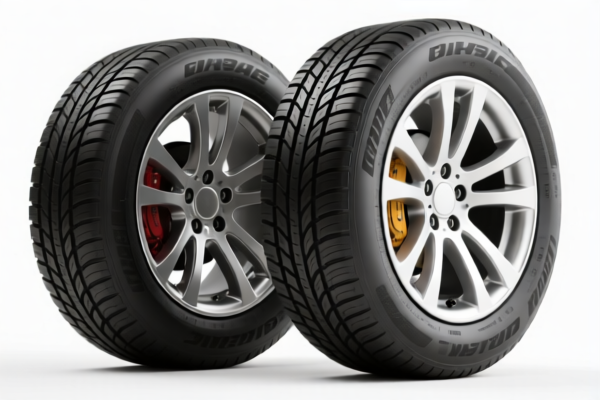
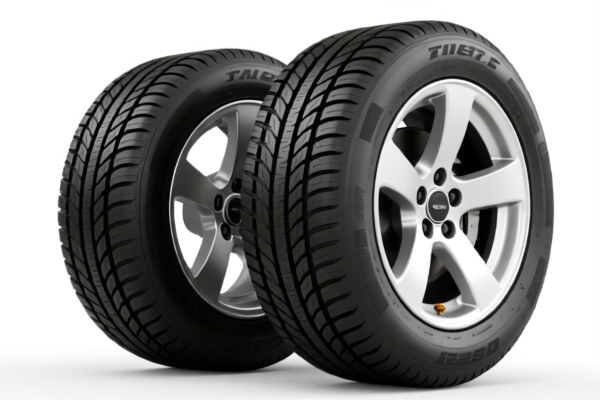
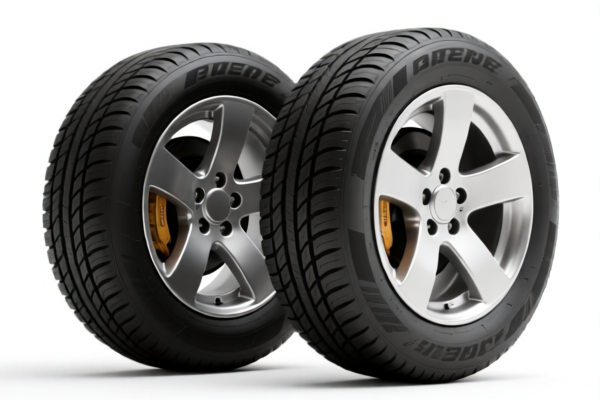
AI Analysis
🚗 High-Performance Radial Passenger Car Tires (Rim Diameter ≥ 18 Inches)
🌐 HS Code Reference & Customs Clearance Guide | 2026 Latest Tariff Analysis | Professional Clearance Strategy
📌 I. Product Definition & Classification: Do You Really Understand "High-Performance Tires"?
High-performance radial passenger car tires are specialized automotive components designed for vehicles with rim diameters of 18 inches or greater. In international trade, these are strictly categorized based on their technical specifications (radial structure, passenger car use, and rim diameter compatibility).
Key Distinction: * High-Performance vs. Standard: "High-performance" often implies specific tread compounds, speed ratings (V, W, Y), and reinforced sidewalls, but for HS Code purposes, the primary classifier is "Radial" and "Passenger Car" status combined with the Rim Diameter. * Rim Diameter Threshold: The critical cutoff for high tariff impact often lies at the 18-inch mark. Tires for rims ≥18 inches are treated differently than smaller sizes in certain trade jurisdictions (specifically under US Section 301/122 actions).
⚠️ Critical Classification Point:
- If the tire is Radial + Passenger Car + Rim ≥ 18 Inches → It falls under the specific high-duty subheadings provided in the dataset.
- Misclassifying these as "Standard Passenger Tires" (smaller rims) can lead to significant under-declaration of duties.
📦 II. HS Code Classification Details (Based on Provided Data)
| HS Code | Product Description | Applicability | Total Tax Rate | Tax Breakdown |
|---|---|---|---|---|
4011.10.10.70 |
High-performance radial passenger car tires for rim diameters ≥ 18 inches | Vehicles with large alloy wheels (e.g., Sports Sedans, SUVs, Performance Cars) | 39.0% | Base: 4.0%, Section 301: 25.0%, Section 122: 10% |
4011.10.10.60 |
High-performance radial passenger car tires for rim diameters 17–18 inches | Mainstream passenger cars, Crossover SUVs | 39.0% | Base: 4.0%, Section 301: 25.0%, Section 122: 10% |
8708.70.45.60 |
Radial tire rims for sports sedans with rim diameter > 18 inches | Components Only: The metal alloy wheel/ring itself, not the rubber tire | 37.5% | Base: 2.5%, Section 301: 25.0%, Section 122: 10% |
🔍 Key Insight:
- HS 4011.10.xx refers to the Rubber Tire itself.
- HS 8708.70.xx refers to the Rim/Wheel (metal part).
- Do not confuse the tire with the rim! Importing tires under 8708 will result in seizure or reclassification.
💰 III. 2026 Latest Tariff Rate Detail (Including Additional Duties & Policy Surcharges)
✅ Applicable Market: United States (US)
✅ Origin: China (CN) (Implied by Section 122 & 301 context)
✅ Effective Time: Current ongoing trade measures
🎯 1. 4011.10.10.70 & 4011.10.10.60 —— High-Performance Radial Tires
These two codes share the exact same tax structure due to the aggressive trade policies targeting automotive components and rubber goods.
| Item | Content |
|---|---|
| Base MFN Rate | 4.0% |
| Section 301 Additional Duty | +25.0% (Retaliatory tariffs on Chinese goods) |
| Section 122 Additional Duty | +10.0% (Specific tariff on certain tires/auto parts under US law) |
| Total Weighted Rate | 39.0% |
| Calculation Basis | CIF Value (Cost, Insurance, Freight) × 39.0% |
| De Minimis Eligibility | ❌ Not Eligible (Section 301 and 122 duties generally negate de minimis exemptions for direct imports) |
| Legal Authority Path | HTSUS: 4011.10.10 → USITC Footnotes → IEEPA/Section 301 List → Section 122 Statute |
📌 Explanation:
- 4.0% Base: The standard Most Favored Nation (MFN) rate for passenger car tires.
- 25.0% (Sec 301): This is the dominant cost driver. It applies to a vast array of Chinese industrial goods, including rubber tires.
- 10% (Sec 122): A specific duty often applied to vehicles and parts to protect domestic manufacturing.
- Total 39%: This is a very high entry barrier. It drastically reduces profit margins unless offset by high unit prices or strategic supply chain adjustments.
🎯 2. 8708.70.45.60 —— Radial Tire Rims (Sports Sedans, >18 inch)
| Item | Content |
|---|---|
| Base MFN Rate | 2.5% |
| Section 301 Additional Duty | +25.0% |
| Section 122 Additional Duty | +10.0% |
| Total Weighted Rate | 37.5% |
| Calculation Basis | CIF Value × 37.5% |
| De Minimis Eligibility | ❌ Not Eligible |
| Legal Authority Path | HTSUS: 8708.70.45 → Section 301 → Section 122 |
📌 Note:
- Although the base rate is lower (2.5% vs 4.0%), the additional duties push it to nearly the same level as the tires (37.5%).
- Component vs. Whole: Ensure you are importing the rim (metal wheel) and not the assembled tire. If a tire is mounted on the rim, it is usually classified as a tire (4011) or a vehicle part, depending on specific rules of origin, but typically the tire classification dominates unless declared as a bare rim.
🛠️ IV. Customs Clearance Practical Advice (Real-World Pitfall Guide)
✅ 1. Documentation Checklist (Non-Negotiable)
| Document | Required | Description |
|---|---|---|
| ✅ Commercial Invoice | ✔️ | Must explicitly state: "High-Performance Radial Passenger Car Tires," Rim Size (e.g., 19x8.5J), Load Index, Speed Rating. |
| ✅ Packing List | ✔️ | Detailed breakdown of units per carton. |
| ✅ Certificate of Origin | ✔️ | Crucial to confirm origin. If not China, duties may drop significantly (see Global Comparison). |
| ✅ Product Specification Sheet | ✔️ | Proof of "Radial" construction and "Passenger Car" use. |
| ✅ HTSUS Classification Statement | ✔️ | Optional but recommended to state the logic behind 4011.10.10.70/60. |
✅ 2. Classification Strategy (Key Mantra)
🔥 “Rim Size Decides, Performance Defines, Origin Dictates Cost!”
| Scenario | Correct HS Code | Incorrect Action | Consequence |
|---|---|---|---|
| Tire, Radial, Passenger, Rim 19" | 4011.10.10.70 |
Classify as "Truck Tire" (8708/4011 other) | Misclassification Penalty + Back Duties |
| Tire, Radial, Passenger, Rim 17" | 4011.10.10.60 |
Classify as "Bicycle Tire" (4011.20) | Seizure for Wrong Classification |
| Bare Alloy Wheel (No Tire) | 8708.70.45.60 |
Classify as "Part of Vehicle" (8708.99) | Higher Duty Risk or Rejection |
| Tire + Rim Assembled | Check Local Rules | Split incorrectly | Customs May Force Tire Classification (39%) |
✅ 3. Special Handling Cases
| Case | Recommendation |
|---|---|
| Origin Diversification | If tires are made in Vietnam, Thailand, or Mexico, they may be exempt from Section 301/122 duties. |
| Pre-Ruling Application | For large shipments, apply for an Advance Ruling from CBP to lock in the HS Code and duty rate. |
| Section 122 Exemptions | Check if any temporary exclusions apply for specific "high-performance" formulations (rare, but possible). |
| Anti-Dumping (AD/CVD) | Verify if specific Chinese tire manufacturers are on the AD/CVD list. Some tires face >100% duties on top of the 39%. This is the biggest hidden risk! |
🌍 V. Global Market Comparison (2026 Latest)
| Country/Region | Recommended HS Code | Tariff Rate (China Origin) | Key Certification | Note |
|---|---|---|---|---|
| 🇺🇸 USA | 4011.10.10.70 |
39.0% (High!) | DOT, FMVSS | Highest Cost. Check AD/CVD list. |
| 🇨🇳 China | 4011.10.10.70 |
~10-13% (Import Duty) | CCC | No Section 301/122. |
| 🇪🇺 EU | 4011.10.10.70 |
~4.5% | ECE R117, USTTR | No Section 301/122. Focus on Eco-labels. |
| 🇬🇧 UK | 4011.10.10.70 |
~4.5% | ECE Mark | Post-Brexit rules apply. |
| 🇲🇽 Mexico | 4011.10.10.70 |
0% (under USMCA if qualified) | NOM Certification | Best Hub for US Market. |
| 🇹🇭 Thailand | 4011.10.10.70 |
0-10% (varies) | TISI | Major tire manufacturing base, often avoids US Sec 301. |
📌 Conclusion:
- The USA is the most expensive market for Chinese-made high-performance tires due to the 39% composite duty.
- Supply Chain Shift: Many exporters move production to Thailand, Vietnam, or Mexico to mitigate the 25% (Sec 301) + 10% (Sec 122) surcharge.
- CRITICAL WARNING: Always check the Anti-Dumping (AD) and Countervailing Duty (CVD) lists for your specific manufacturer. Many Chinese tire companies face additional duties of 50-200% on top of the 39%. If AD/CVD applies, the total duty could exceed 80-90%.
📌 VI. Common Mistakes & Pitfall Guide (Lessons Learned)
❌ Mistake 1: Confusing "Tire" (4011) with "Rim" (8708)
👉 Result: If you import a tire but declare it as a rim, Customs will reclassify it and charge the difference + penalties. If you import a rim but declare it as a tire, it may be rejected for missing DOT markings.
❌ Mistake 2: Ignoring the "High-Performance" Label
👉 Result: While HS codes don't always distinguish "performance" vs "standard" in the first 6 digits, the 10/11th digit (as seen in 4011.10.10.70) often targets larger rims. Misdeclaring a 20-inch tire as a 17-inch tire is fraud.
❌ Mistake 3: Overlooking AD/CVD Duties
👉 Result: The 39% figure only includes Base + Sec 301 + Sec 122. It does NOT include Anti-Dumping. Many Chinese tires are subject to AD/CVD. Total cost could be double.
❌ Mistake 4: Assuming De Minimis Applies
👉 Result: Section 301 and 122 duties typically override the $800 de minimis exemption. Shipments under $800 can still be seized and taxed.
✅ Correct Practice:
"Radial Passenger Tire, High-Performance, Size 245/45R19, Load Index 101Y, DOT Certified, Origin: Thailand (to avoid Sec 301)"
🎯 VII. Conclusion: Professional Classification, Save Costs, Ensure Compliance!
🎯 Remember the Mantra:
🔹 "Rim ≥ 18? Think 4011.10.10.70!"
🔹 "39% is the Baseline, AD/CVD is the Killer!"
🔹 "China Origin = High Duty, Shift Supply Chain to Survive!"
📌 Pro Tip:
- If your tires are high-performance and large rim (≥18"), the US market is hostile to Chinese origins.
- Consider pre-import ruling to confirm if your specific tire model is exempt from AD/CVD.
- For US exports, Mexico (USMCA) or Thailand manufacturing is highly recommended to bypass the 35% in additional tariffs.
📣 Immediate Action:
📞 Verify AD/CVD Status for Your Manufacturer
🚀 Assess Supply Chain Location (China vs. SEA/Mexico)
💼 Engage a Licensed Customs Broker for Pre-Arrival Review
✨ Professional Clearance Starts with Precise Classification!
💼 Your Bottom Line Depends on the Last Digit of the HS Code!
Customer Reviews
About HS Code Classification
The Harmonized System (HS) is an internationally standardized nomenclature developed by the World Customs Organization (WCO) to classify traded products. Over 200 countries use the HS system as the basis for customs tariffs, trade statistics, and import/export regulations.
Each HS code follows a hierarchical structure:
- Chapter (2 digits) — Broad category of goods (e.g., Chapter 84: Machinery and Mechanical Appliances)
- Heading (4 digits) — More specific grouping within the chapter
- Subheading (6 digits) — Internationally standardized breakdown, used by all WCO member countries
- National subdivisions (8-10 digits) — Country-specific extensions for further classification, such as US HTSUS 10-digit codes
Correct HS code classification is essential for smooth customs clearance, accurate duty payment, and compliance with trade regulations. Misclassification can lead to customs delays, overpayment of duties, or penalties.
When importing from CN to US, the applicable tariff rates may include:
- Most-Favored-Nation (MFN) rate — The standard duty rate applied to WTO members
- General rate — Applied to countries without trade agreements
- Trade remedy duties — Additional tariffs such as Section 301 (anti-dumping), Section 232 (national security), or countervailing duties
The information provided on this page is for reference purposes only. For official classification, please consult with your local customs authority or a licensed customs broker.