High Performance Radial Sedan Tire (17 18 inch)
CN → US| HS Code | Tariff Rate | Origin | Destination | Doc |
|---|---|---|---|---|
| 4011101060 | 39.0% | CN | US | Official Doc |
| 4011101070 | 39.0% | CN | US | Official Doc |
| 4011101060 | 39.0% | CN | US | Official Doc |
| 4011101070 | 39.0% | CN | US | Official Doc |
| 4011101060 | 39.0% | CN | US | Official Doc |
Product Images
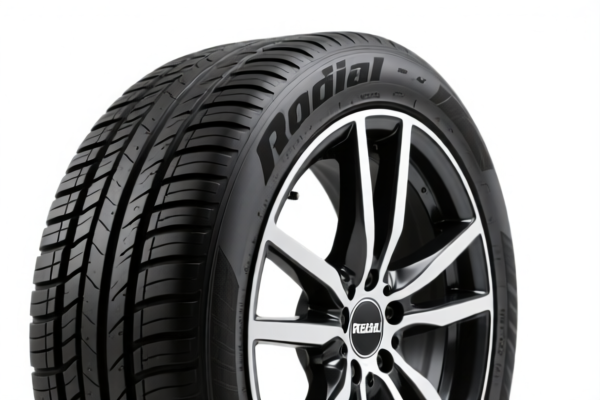
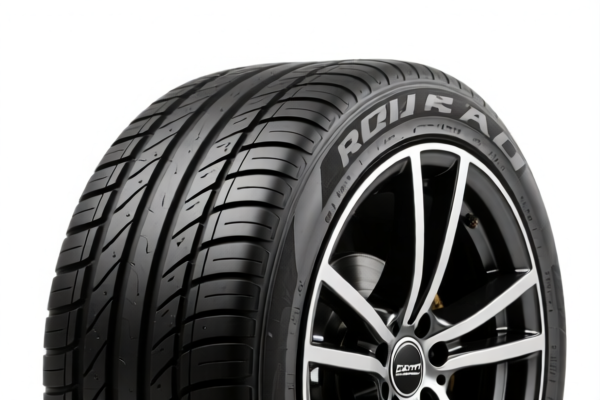
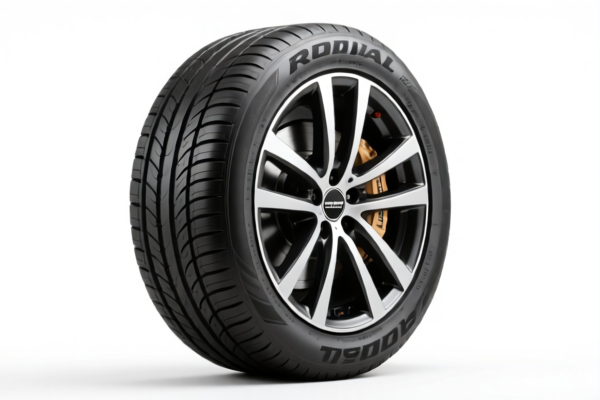
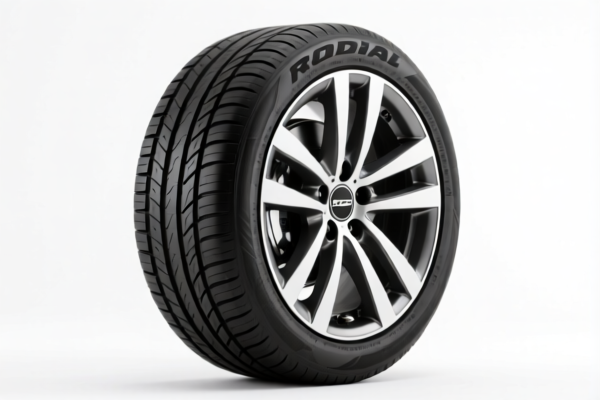
AI Analysis
🚗 High Performance Radial Sedan Tire (17-18 Inch Wheel Rim Diameter)
🌐 HS Code Reference & Customs Clearance Guide | 2026 Latest Tariff Analysis | Professional Clearance Strategy
📌 I. Product Definition & Classification: Do You Really Understand "Tires"?
High-performance radial tires are critical components for passenger vehicles, specifically designed for sedans and station wagons requiring superior handling, braking, and stability. In international trade, these are strictly categorized under Chapter 40 (Rubber and Articles Thereof).
The classification hinges on two key factors: 1. Wheel Rim Diameter: Whether it fits 17-18 inches (>432mm but ≤457mm) or larger (>18 inches). 2. End-Use Specification: High-performance sedan vs. Luxury/Station wagon variants (though often grouped under similar tax brackets for US imports from China).
⚠️ Key Distinction:
- If the tire is Radial (cords arranged radially) → Go to 4011.10
- If the wheel rim diameter is 17-18 inches → Code ends in .60
- If the wheel rim diameter is >18 inches → Code ends in .70
- All other types (bias-ply, truck/bus tires) are excluded.
📦 II. HS Code Classification Details (2026 Latest Tariff Authority Comparison)
Based on the provided data for High Performance Radial Tires imported from China to the US:
| HS Code | Product Description | Wheel Rim Diameter | Material | Use Case |
|---|---|---|---|---|
4011.10.10.60 |
High-performance radial tires for passenger cars | 17-18 inches | Rubber | High-performance Sedan Tires |
4011.10.10.60 |
High-performance radial tires for passenger cars | 17-18 inches | Rubber | High-performance Station Wagon Tires |
4011.10.10.70 |
High-performance radial tires for passenger cars | >18 inches | Rubber | High-performance Sedan Tires |
4011.10.10.70 |
High-performance radial tires for passenger cars | >18 inches | Rubber | Luxury Sedan Tires |
🔍 Critical Reminder:
- Both.60(17-18") and.70(>18") categories carry the exact same tax burden.
- Misclassifying a >18-inch tire as 17-18 inch (or vice versa) may not change the tax rate in this specific dataset, but it violates customs accuracy regulations, leading to potential audits, penalties, or shipment holds.
- Always verify the actual rim diameter marked on the tire sidewall (e.g., "225/45 R18" is 18 inches → falls under.70if strictly >18, but note: 18 inches is often the boundary. Check local customs interpretation. In this dataset, "17-18 inch" is.60and "Larger than 18" is.70. Be precise: 18.0 inch is likely.60, 18.1+ is.70).
💰 III. 2026 Latest Tariff Rate Breakdown (Including Surcharges & Policy Add-ons)
✅ Applicable Country: United States (US)
✅ Origin: China (CN)
✅ Effective Date: 2025/2026 (Current Policy)
🎯 1. 4011.10.10.60 & 4011.10.10.70 —— High-Performance Radial Tires
| Item | Content |
|---|---|
| Base Tariff Rate | 4.0% (Ad Valorem) |
| Section 301 Surcharge | +25.0% (Targeted Chinese Goods) |
| Section 122 Tariff | +10.0% (Specific Clause for Certain Rubber Goods) |
| Total Effective Rate | 39.0% |
| Tax Calculation | CIF Value × 39% |
| De Minimis Exemption | ❌ Not Applicable (Section 321 does not apply to Section 301 goods) |
| Legal Authority Path | HTSUS:4011.10.10 → USITC:301_Tariff → 122_Clauses |
📌 Explanation:
- The 39% rate is a combination of three layers:
1. 4% Standard MFN (Most Favored Nation) duty.
2. 25% Additional duty under Section 301 of the Trade Act of 1974, imposed on Chinese imports.
3. 10% Additional duty under Section 122 (if applicable to the specific rubber product category).
- This is a HIGH-TARIFF category. Importers must plan for significant cost increases.
- No De Minimis: Even for low-value shipments, the 39% tax applies. Do not attempt to split shipments to avoid $800 de minimis thresholds.
🛠️ IV. Customs Clearance Practical Advice (Real-World Pitfall Avoidance)
✅ 1. Documentation Checklist (Mandatory)
| Document | Required | Description |
|---|---|---|
| ✅ Product Specification Sheet | ✔️ | Must state: Radial construction, Rim Diameter (e.g., 17", 18", 19"), Load Index, Speed Rating, Tread Pattern. |
| ✅ Material Composition | ✔️ | Confirm rubber content (Natural/Synthetic mix) to verify Chapter 40 classification. |
| ✅ Commercial Invoice | ✔️ | Clearly state: "High Performance Radial Tire, US Origin/China Origin, HS Code 4011.10.10.xx" |
| ✅ Packing List | ✔️ | Number of tires per box, total weight, dimensions. |
| ✅ Certificate of Origin (CO) | ✔️ | Proof of Chinese origin to trigger Section 301 if applicable. |
| ✅ HTS8 Digit Code Confirmation | ✔️ | Ensure the last two digits (.60 vs .70) match the rim size exactly. |
✅ 2. Declaration Strategy (Key Mantra)
🔥 “Rim Size Decides, Code Matches Exactly, Tax is 39%, No Hidden Fees!”
| Scenario | Correct Declaration | Incorrect Practice |
|---|---|---|
| Tire size: 225/50 R17 | 4011.10.10.60 (17-18 inch) |
Mislabel as 19" → 4011.10.10.70 |
| Tire size: 245/40 R19 | 4011.10.10.70 (>18 inch) |
Mislabel as 17" → 4011.10.10.60 |
| Bias-Ply Tire | ❌ Not 4011.10 | Bias-ply is 4011.20 (Different tax) |
| Truck Bus Tire | ❌ Not 4011.10 | Truck tires are 4011.20/4011.30 |
⚠️ Warning:
- Do NOT use generic terms like "Automotive Parts" or "Vehicle Accessories".
- Do NOT underestimate the rim diameter. An "R18" tire is 18 inches. The data says "17-18 inch" is.60. If your tire is 18.0 inches, it likely falls under.60. If it is 18.5 or 19, it falls under.70.
- Check Sidewall: The letter "R" followed by a number (e.g., R18) is the wheel rim diameter in inches.
✅ 3. Special Case Handling
| Situation | Handling Advice |
|---|---|
| OEM Tires | Provide OEM contract and part number. Ensure HS Code matches the specific vehicle model’s requirement. |
| Tire with TPMS (Sensor) | The tire itself is classified as 4011.10. The sensor is a separate electronic component. If sold as a set, declare separately or clarify if integrated. |
| Used Tires | ❌ Prohibited/Restricted: Import of used tires is heavily restricted or banned in many jurisdictions, including the US. Only new tires are accepted under this HS Code. |
| Mixed Shipments | If a shipment contains both 17" and 19" tires, you must split the entries on the CBP Form 7501. Cannot lump into one HS Code. |
🌍 V. Global Market Comparison (2026 Update)
| Country/Region | Recommended HS Code | Tariff (China Origin) | Certification | Notes |
|---|---|---|---|---|
| 🇺🇸 USA | 4011.10.10.60 / .70 |
39% (4% Base + 25% Sec 301 + 10% Sec 122) | DOT, ECE (if applicable) | Highest tariff burden due to multiple surcharges. |
| 🇨🇳 China | 4011.10.10.60 / .70 |
20% (Import Duty) | CCC | No Section 301/122. Lower cost for Chinese domestic imports. |
| 🇪🇺 EU | 4011.10 |
0% (Most Favored Nation) | E-Mark (ECE R30/R117) | No additional anti-dumping or Section 301 tariffs. |
| 🇲🇽 Mexico | 4011.10 |
0% (Under USMCA if compliant) | NOM | Favorable for North American supply chains. |
| 🇻🇳 Vietnam | 4011.10 |
0% (Under CPTPP/ASEAN) | QCVN | Tariff Avoidance Strategy: Many Chinese tires are transshipped or assembled in Vietnam to avoid US Section 301. Caution: Anti-circumvention investigations are active. |
📌 Conclusion:
- USA is the most expensive market for Chinese high-performance tires due to the 39% cumulative tariff.
- EU and Vietnam offer zero or low tariffs, making them attractive alternatives for re-export or local distribution.
- Supply Chain Risk: US Customs is actively investigating "transshipment" through Southeast Asia. Ensure proper country-of-origin marking and manufacturing proof.
📌 VI. Common Mistakes & Pitfall Guide (Blood & Tears Lessons)
❌ Mistake 1: Declaring all tires under one HS Code regardless of rim size.
👉 Consequence: While the tax rate is the same in this data set, it violates accuracy rules. Can lead to CBP Audit, Seizure, or Penalties for false declaration.
❌ Mistake 2: Ignoring the "Section 122" 10% surcharge.
👉 Consequence: Underpayment of duties by 10%. Back taxes + Interest + Penalties.
❌ Mistake 3: Using "Car Accessories" as the product name.
👉 Consequence: CBP may misclassify, delay inspection, or assign a higher default duty rate.
❌ Mistake 4: Importing Used Tires.
👉 Consequence: Shipment Rejection/Return at US Port. Used tire imports are generally prohibited.
✅ Correct Practice:
"High-Performance Radial Pneumatic Tire, Rubber, For Passenger Cars, Wheel Diameter 18 Inches, Brand XYZ, DOT Certified, HS Code 4011.10.10.70"
🎯 VII. Conclusion: Professional Declaration, Cost Control, Efficiency!
🎯 Remember the Mantra:
🔹 "Rim Size is Key, 39% Tax is Real, No De Minimis, Get It Right!"
🔹 "HS Code Ends in .60 or .70, Tax is 39%, Don't Guess, Verify the Diameter!"
📌 Pro Tip:
- If your tires are originally manufactured in China but shipped via Vietnam/Malaysia, be aware of US Anti-Circumvention Duties.
- Consider Tariff Engineering: If possible, explore if any component adjustments can change the classification (though difficult for tires).
- Advance Ruling: Apply for a Binding Ruling from US CBP before large shipments to confirm the exact HS Code (.60 vs .70) for your specific tire models.
📣 Immediate Action:
📞 Consult a licensed Customs Broker + Provide Tire Sidewall Photos + Verify Rim Diameter
🚀 Ensure 39% Tariff is factored into your pricing strategy.
📦 Accurate Declaration = Fast Clearance + No Surprises!
✨ Professional Clearance Starts with Precise Classification!
💼 Every Percent of Duty Matters!
Customer Reviews
About HS Code Classification
The Harmonized System (HS) is an internationally standardized nomenclature developed by the World Customs Organization (WCO) to classify traded products. Over 200 countries use the HS system as the basis for customs tariffs, trade statistics, and import/export regulations.
Each HS code follows a hierarchical structure:
- Chapter (2 digits) — Broad category of goods (e.g., Chapter 84: Machinery and Mechanical Appliances)
- Heading (4 digits) — More specific grouping within the chapter
- Subheading (6 digits) — Internationally standardized breakdown, used by all WCO member countries
- National subdivisions (8-10 digits) — Country-specific extensions for further classification, such as US HTSUS 10-digit codes
Correct HS code classification is essential for smooth customs clearance, accurate duty payment, and compliance with trade regulations. Misclassification can lead to customs delays, overpayment of duties, or penalties.
When importing from CN to US, the applicable tariff rates may include:
- Most-Favored-Nation (MFN) rate — The standard duty rate applied to WTO members
- General rate — Applied to countries without trade agreements
- Trade remedy duties — Additional tariffs such as Section 301 (anti-dumping), Section 232 (national security), or countervailing duties
The information provided on this page is for reference purposes only. For official classification, please consult with your local customs authority or a licensed customs broker.