High Performance Rubber and Plastic Anti aging Agent Base
CN → US| HS Code | Tariff Rate | Origin | Destination | Doc |
|---|---|---|---|---|
| 3824994900 | 41.5% | CN | US | Official Doc |
| 3824992900 | 41.5% | CN | US | Official Doc |
| 3824991100 | 35.0% | CN | US | Official Doc |
| 3824910000 | 40.0% | CN | US | Official Doc |
| 3403990000 | 41.5% | CN | US | Official Doc |
Product Images
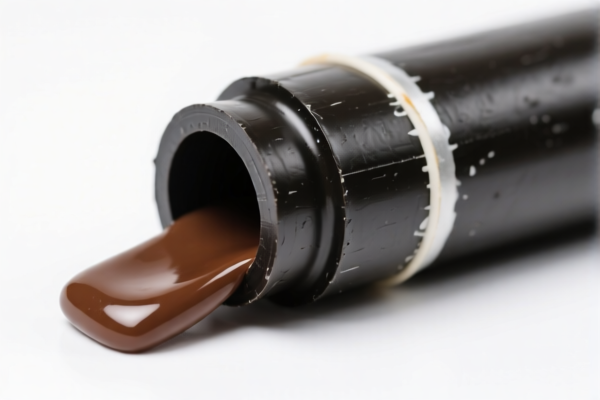
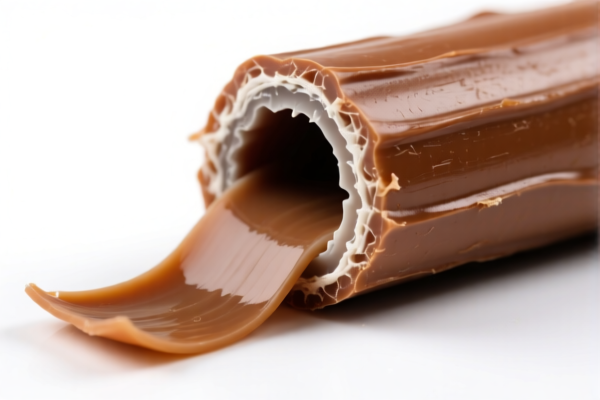
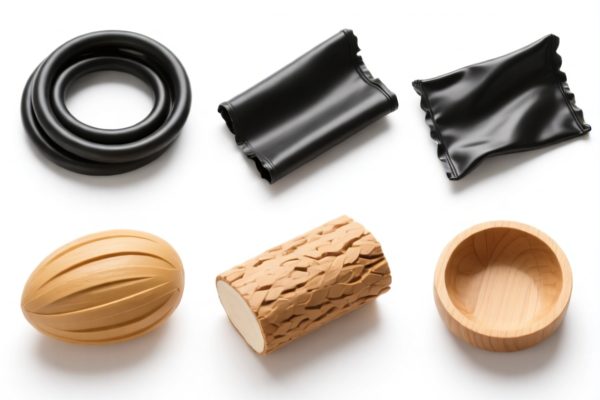
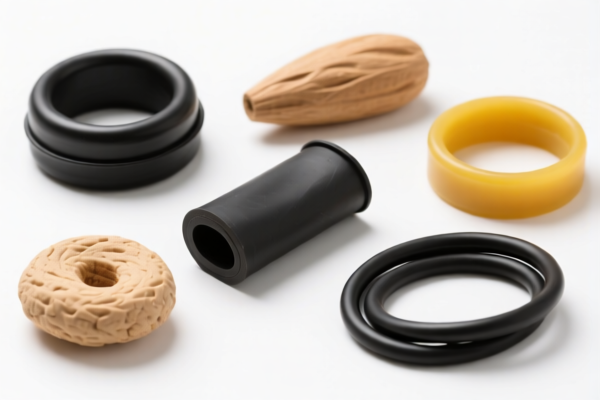
AI Analysis
🛡️ High-Performance Rubber & Plastic Anti-Aging Agent Base
🌐 HS Code Reference & Customs Clearance Guide | 2026 Latest Tariff Analysis | Professional Level Clearance Strategy
📌 I. Product Definition & Classification: Do You Really Understand "Anti-Aging Agents"?
"High-performance Rubber and Plastic Anti-aging Agent Base" refers to chemical additives designed to extend the service life of rubber and plastic products by preventing degradation caused by heat, oxygen, ozone, or light. In international trade, these are classified as chemical preparations or industrial chemicals.
However, the specific HS Code depends heavily on the chemical composition and the primary function of the additive: * General Anti-aging Agents: Usually fall under "Other chemical products and preparations." * Specific Antioxidants (High-Performance): If primarily composed of specific antioxidant compounds, they may fall under "Other chemical products" with lower base tariffs but still subject to trade wars. * Oils/Grease Preparations: If the base is oil-based and used for surface protection rather than internal stabilization, it might be misclassified under Chapter 34.
⚠️ Key Distinction:
- If it is a solid powder or specific chemical compound for internal stabilization → Group 38 (Chemical Products).
- If it is a liquid oil-based surface protector → Group 34 (Oils/Preparations).
- Crucial: Do not confuse "Anti-aging" with "Stabilizers." Specific antioxidant formulations often enjoy lower base tariffs but are heavily impacted by Section 301 and IEEPA tariffs.
📦 II. HS Code Classification Details (2026 Latest Tariff Authority Comparison)
Based on the provided data, here are the exact HS Codes applicable to this product:
| HS Code | Product Description | Applicable Scenario | Tax Rate |
|---|---|---|---|
3824.99.49.00 |
Rubber & Plastic Anti-aging Agent (Unlisted Chemicals) | General chemical preparations, unlisted additives | 41.5% |
3824.99.29.00 |
Rubber & Plastic Anti-aging Agent (Other Chemicals) | Other chemical products & preparations | 41.5% |
3824.99.11.00 |
High-Performance Rubber Antioxidant | Specific high-performance antioxidant formulations | 35.0% |
3824.91.00.00 |
High-Performance Rubber Antioxidant (Chemical Prep) | Chemical preparations meeting chemical category specs | 40.0% |
3403.99.00.00 |
Rubber Anti-aging Agent (Oil/Chemical Prep) | Lubricating/preparations for material protection (Oil-based) | 41.5% |
🔍 Key Insight:
-3824.99.11.00offers the lowest total tax (35%), but only applies if the product is strictly defined as a "High-Performance Rubber Antioxidant" with specific chemical characteristics.
-3824.99.49.00and3824.99.29.00are catch-all categories for unlisted chemical preparations, resulting in higher base tariffs (6.5%).
-3403.99.00.00is risky; if the product is a solid antioxidant, classifying it here may lead to customs audits for misclassification.
💰 III. 2026 Latest Tariff Rate Breakdown (Including Surcharges & Policy Add-ons)
✅ Applicable Country: United States (US)
✅ Country of Origin: China (CN)
✅ Effective Date: November 10, 2025 (and subsequent imports)
🎯 1. 3824.99.49.00 & 3824.99.29.00 —— General Anti-Aging Chemical Preparations
| Item | Content |
|---|---|
| Base Tariff | 6.5% (Ad Valorem) |
| Section 301 Surcharge | +25% (USITC Footnote related to Chinese goods) |
| Section 122 / IEEPA Surcharge | +10% (Targeting China/HK products) |
| Total Tax Rate | 41.5% |
| Tax Calculation | CIF Value × 41.5% |
| De Minimis Exemption | ❌ Not Eligible (deny_de_minimis) |
| Legal Basis Path | USITC:3824.99.49.00 → Section 301: 25% → IEEPA: 10% |
📌 Explanation:
- The 6.5% base rate is applied first.
- The 25% Section 301 tariff is added for being manufactured in China.
- The 10% IEEPA/Section 122 tariff is an additional layer for specific strategic chemicals.
- Total: 6.5 + 25 + 10 = 41.5%. This is a high-cost category.
🎯 2. 3824.99.11.00 —— High-Performance Rubber Antioxidant (Optimized)
| Item | Content |
|---|---|
| Base Tariff | 0.0% (Preferential/Low Base) |
| Section 301 Surcharge | +25% |
| Section 122 / IEEPA Surcharge | +10% |
| Total Tax Rate | 35.0% |
| Tax Calculation | CIF Value × 35.0% |
| De Minimis Exemption | ❌ Not Eligible (deny_de_minimis) |
| Legal Basis Path | USITC:3824.99.11.00 → Section 301: 25% → IEEPA: 10% |
📌 Note:
- If your product is a true high-performance antioxidant (e.g., hindered phenols, phosphites), you may qualify for this 0% base rate.
- Savings: 6.5% lower than the general category.
- Challenge: Must prove the product meets the strict definition of "High-Performance Antioxidant" in the HS Nomenclature.
🎯 3. 3824.91.00.00 —— High-Performance Rubber Antioxidant (Chemical Prep)
| Item | Content |
|---|---|
| Base Tariff | 5.0% |
| Section 301 Surcharge | +25% |
| Section 122 / IEEPA Surcharge | +10% |
| Total Tax Rate | 40.0% |
| Tax Calculation | CIF Value × 40.0% |
| Legal Basis Path | USITC:3824.91.00.00 → Section 301: 25% → IEEPA: 10% |
📌 Note:
- A middle-ground option if the product is a "chemical preparation" but not strictly an "antioxidant" under subheading 3824.99.11.
🎯 4. 3403.99.00.00 —— Oil-Based Anti-Aging Agent (Risk Category)
| Item | Content |
|---|---|
| Base Tariff | 6.5% |
| Section 301 Surcharge | +25% |
| Section 122 / IEEPA Surcharge | +10% |
| Total Tax Rate | 41.5% |
| Legal Basis Path | USITC:3403.99.00.00 → Section 301: 25% → IEEPA: 10% |
📌 Warning:
- Only use if the product is oil-based and used for surface protection (e.g., rubber preservative oils).
- If it is a solid antioxidant added to the rubber compound during manufacturing, this classification is incorrect and risks customs penalties.
🛠️ IV. Customs Clearance Practical Advice (Battle-Tested Pitfall Guide)
✅ 1. Preparation Checklist (Non-Negotiable)
| Document | Required | Explanation |
|---|---|---|
| ✅ Product Specification Sheet | ✔️ | Must detail chemical composition (CAS numbers), physical form (powder/liquid), and function. |
| ✅ MSDS/SDS (Safety Data Sheet) | ✔️ | Critical for customs to classify as "Chemical Preparation" vs. "Oil." |
| ✅ Product Photos (Label & Bulk) | ✔️ | Show packaging, warnings, and product appearance. |
| ✅ Third-Party Lab Report | ✔️ | Prove it is an "Antioxidant" or "Anti-aging Agent" to support 3824.99.11.00. |
| ✅ Commercial Invoice | ✔️ | Must clearly state: "High-Performance Rubber Antioxidant" or "Anti-aging Chemical Preparation." Avoid vague terms like "Additive." |
| ✅ Packing List | ✔️ | Net/Gross weight, volume. |
✅ 2. Declaration Tips (Key Mantra)
🔥 “Be Specific, Not Vague: ‘Antioxidant’ beats ‘Additive’!”
| Scenario | Correct Declaration | Incorrect Declaration |
|---|---|---|
| Solid Powder Antioxidant | 3824.99.11.00 - "High-Performance Rubber Antioxidant" |
"Plastic Additive" (Risk: High Base Rate) |
| General Anti-Aging Powder | 3824.99.49.00 - "Rubber Anti-aging Chemical Preparation" |
"Rubber Protector" (Vague) |
| Liquid Oil Preservative | 3403.99.00.00 - "Rubber Preservation Oil" |
"Anti-aging Agent" (If solid) |
✅ 3. Special Cases Handling
| Situation | Advice |
|---|---|
| Customs Audit on Composition | Provide CAS numbers. If the product contains specific hindered phenols, argue for 3824.99.11.00. |
| Mixed Shipments | If shipping antioxidants with other chemicals, declare separately to avoid misclassification of the whole lot. |
| Free Trade Agreements (FTAs) | Check if any specific FTAs apply. However, due to Section 301/IEEPA, most Chinese-origin goods still face high tariffs. |
🌍 V. Global Market Clearance Comparison (2026 Latest)
| Country/Region | Recommended HS Code | Total Tax (China Origin) | Certification Requirements | Notes |
|---|---|---|---|---|
| 🇺🇸 USA | 3824.99.11.00 |
35.0% | TSCA Compliance | Highest barriers due to 301/IEEPA. |
| 🇪🇺 EU | 3824.99.98 |
~6-8% | REACH Registration | No Section 301/IEEPA. REACH is key. |
| 🇨🇳 China | 3824.99.90 |
~5-6% | None | Low tariff, but focus on export. |
| 🇯🇵 Japan | 3824.99.990 |
~6-8% | JIS Standards | Moderate barriers. |
📌 Conclusion:
- The US market is the most expensive due to layered tariffs (Base + 301 + IEEPA).
- Optimization is Key: Strive to classify under3824.99.11.00(35%) rather than3824.99.49.00(41.5%). The 6.5% difference is significant on large volumes.
📌 VI. Common Errors & Pitfalls (Lessons Learned)
❌ Error 1: Declaring "Anti-aging Agent" under 3403 when it is a solid chemical.
👉 Consequence: Customs reclassification, fines, and delay.
👉 Fix: Ensure physical form (solid vs. liquid) matches HS Code description.
❌ Error 2: Using vague terms like "Chemical Mix" on the Invoice.
👉 Consequence: Customs may assign a default high tariff or hold for exam.
👉 Fix: Use precise chemical names or standard HS descriptions.
❌ Error 3: Ignoring TSCA (Toxic Substances Control Act) for US imports.
👉 Consequence: Cargo detained at port.
👉 Fix: Ensure TSCA certification is provided with customs entry.
✅ Correct Practice:
"High-Performance Hindered Phenolic Antioxidant for Rubber, Powder Form, CAS No. XXX, TSCA Compliant, Model ABC"
🎯 VII. Conclusion: Precision Classification Saves Cost!
🎯 Remember the Mantra:
🔹 “Solid Powder? Think 3824.99.11.00 (35%). Liquid Oil? Think 3403 (41.5%).”
🔹 “0% Base Rate saves 6.5% overall. Don’t settle for 41.5% if you can argue 35%.”
🔹 “TSCA + MSDS are your best friends in the US.”
📌 Pro Tip:
If your product is a unique formulation, consider applying for an Advance Ruling from US Customs (CBP) to confirm the HS Code and tariff rate before shipping. This avoids unexpected costs and delays.
📣 Immediate Action:
📞 Contact your customs broker + Provide Chemical Composition + Request HS Code Pre-Ruling
🚀 Clearance is smooth, costs are managed, and profits are protected!
✨ Professional Clearance Starts with Precise Classification!
💼 Your Every Dollar is Worth Calculating!
Customer Reviews
About HS Code Classification
The Harmonized System (HS) is an internationally standardized nomenclature developed by the World Customs Organization (WCO) to classify traded products. Over 200 countries use the HS system as the basis for customs tariffs, trade statistics, and import/export regulations.
Each HS code follows a hierarchical structure:
- Chapter (2 digits) — Broad category of goods (e.g., Chapter 84: Machinery and Mechanical Appliances)
- Heading (4 digits) — More specific grouping within the chapter
- Subheading (6 digits) — Internationally standardized breakdown, used by all WCO member countries
- National subdivisions (8-10 digits) — Country-specific extensions for further classification, such as US HTSUS 10-digit codes
Correct HS code classification is essential for smooth customs clearance, accurate duty payment, and compliance with trade regulations. Misclassification can lead to customs delays, overpayment of duties, or penalties.
When importing from CN to US, the applicable tariff rates may include:
- Most-Favored-Nation (MFN) rate — The standard duty rate applied to WTO members
- General rate — Applied to countries without trade agreements
- Trade remedy duties — Additional tariffs such as Section 301 (anti-dumping), Section 232 (national security), or countervailing duties
The information provided on this page is for reference purposes only. For official classification, please consult with your local customs authority or a licensed customs broker.