High Precision Perforated Card
CN → US| HS Code | Tariff Rate | Origin | Destination | Doc |
|---|---|---|---|---|
| 731815 | 0.0% | CN | US | Official Doc |
| 848690 | 0.0% | CN | US | Official Doc |
| 8523520010 | 35.0% | CN | US | Official Doc |
| 8523590000 | 35.0% | CN | US | Official Doc |
| 4823903100 | 35.0% | CN | US | Official Doc |
| 4823908000 | 35.0% | CN | US | Official Doc |
Product Images
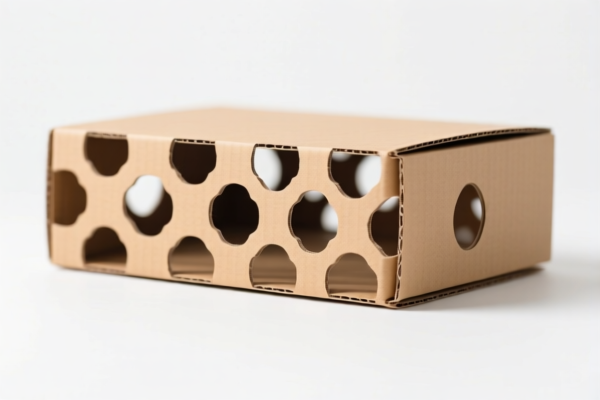
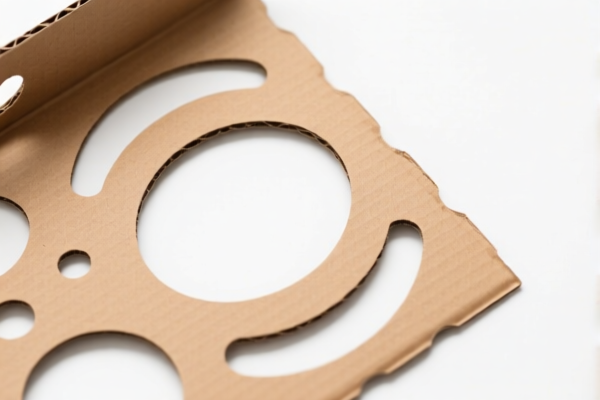
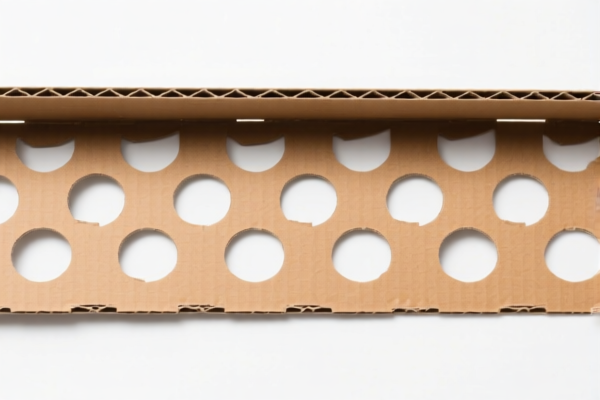
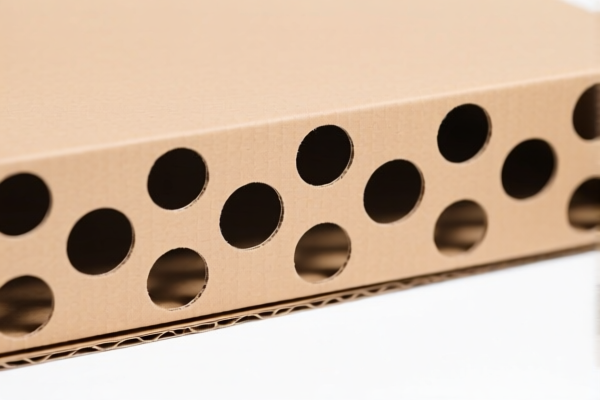
AI Analysis
🎴 High Precision Perforated Cards & Paper Seals | 2026 HS Code Classification & US Customs Strategy
🌐 HS Code Reference & Clearance Guide | 2026 Latest Tariff Analysis | Professional Customs Strategy
📌 I. Product Definition & Classification: What Are "High Precision Perforated Cards"?
In international trade, the term "High Precision Perforated Card" is ambiguous and often leads to misclassification. It generally falls into one of two distinct physical categories, each with vastly different HS Codes and tax implications:
-
Paper/Cardboard Punched Cards:
These are traditional or modern punchcards made of paper, paperboard, cellulose wadding, or webs of cellulose fibers. They are used for data input in punchcard machines, industrial automation, or scientific equipment.- Key Characteristic: Made of paper-based materials.
- Key Feature: Perforated (holes punched) to specific patterns.
-
Precision Metal Perforated Sheets/Cards:
These are made of iron or steel. They are cut to size/shape and used for high-precision applications like filtration, screening, or as parts in scientific machinery.- Key Characteristic: Made of metal (iron/steel).
- Key Feature: Micro-perforated for fluid/particle control.
⚠️ Critical Distinction Point:
- If the material is Paper/Cardboard → It belongs to Chapter 48.
- If the material is Metal → It belongs to Chapter 73.
- If the product is described vaguely as a "Part of Machinery" without specifying material, it may fall under Chapter 84.
📦 II. HS Code Classification Details (2026 Latest Tariff Authority Mapping)
Based on the provided data, here are the exact HS Codes and descriptions available:
| HS Code | Product Description | Material Basis | Primary Use Case |
|---|---|---|---|
4823.90.31.00 |
Cards, not punched, for punchcard machines, whether or not in strips | Paper/Cardboard/Cellulose | Data entry, industrial controls, historical data processing. |
4823.90.80.00 |
Other: Other: Other: Other: Gaskets, washers and other seals | Paper/Cardboard/Cellulose | Paper-based seals, gaskets, or non-card paper articles. |
8523.52.00.10 |
Semiconductor media: "Smart cards" Unrecorded | Plastic/Semiconductor | Electronic smart cards (e.g., SIM cards, ID cards). Note: Not perforated paper. |
8523.59.00.00 |
Semiconductor media: Other | Plastic/Semiconductor | Other electronic storage media. |
7318.15 |
Perforated metal sheets, of iron or steel, not further worked than cut to size, used for high precision applications such as filtration or screening. | Iron/Steel | Filtration, screening, acoustic panels. |
8486.90 |
Parts and accessories for machinery, specifically precision perforated cards used in industrial or scientific equipment for controlled fluid or particle passage. | Mixed/Metal (Contextual) | Specific parts for semiconductor or precision machinery. |
🔍 Focus Note:
The user input is "High Precision Perforated Card".
- If it is a Paper Punchcard: It likely falls under4823.90.31.00(if intended for punchcard machines) or potentially4823.90.80.00if it is a general paper article.
- If it is a Metal Perforated Sheet: It falls under7318.15.
- If it is a Machinery Part: It falls under8486.90.
💰 III. 2026 Latest Tariff Rate Analysis (US Imports from China)
✅ Applicable Country: United States (US)
✅ Origin: China (CN)
✅ Effective Date: Post-2025 Trade Rules (Section 301 / IEEPA)
🎯 1. Paper-Based Perforated Cards (4823.90.31.00 / 4823.90.80.00)
| Item | Details |
|---|---|
| Base Tariff | 0.0% (Ad Valorem) |
| Section 301 / Additional Tariff | +25.0% |
| Total Tax Rate | 25.0% |
| Tax Calculation | CIF Value × 25% |
| De Minimis Exemption | ❌ Not Eligible (High tariff items usually excluded) |
| Legal Basis | Chapter 48 goods subject to USITC additional duties. |
📌 Explanation:
- Paper products from China are subject to a 25% additional tariff under current trade policies.
- Although the base tariff is 0%, the effective landing cost increases by 25%.
-4823.90.31.00is specifically for "Cards for punchcard machines." If your "high precision card" is indeed a punchcard, this is the correct code.
-4823.90.80.00is a catch-all for "Other" paper articles. If it is not a punchcard (e.g., a paper seal or gasket), use this code. Both carry the 25% total tax.
🎯 2. Metal Perforated Sheets (7318.15)
| Item | Details |
|---|---|
| Base Tariff | Failed to retrieve tax information |
| Additional Tariff | Failed to retrieve tax information |
| Total Tax Rate | Error |
| Recommendation | Contact Customs Broker Immediately |
📌 Warning:
- The provided data shows an Error for tax retrieval on HS Code7318.15.
- Metal products (Chapter 73) often face 25% Section 301 tariffs as well, but this is not confirmed in the provided data.
- Do not assume 0% or 25% without verification. This category requires expert manual classification.
🎯 3. Machinery Parts (8486.90)
| Item | Details |
|---|---|
| Base Tariff | Failed to retrieve tax information |
| Additional Tariff | Failed to retrieve tax information |
| Total Tax Rate | Error |
| Recommendation | High Risk of Misclassification |
📌 Warning:
- HS Code8486.90is for "Parts and accessories for machinery."
- The provided data shows an Error for tax retrieval.
- This code is broad and may attract anti-dumping duties or countervailing duties depending on the specific machinery it serves.
- High Risk Category.
🛠️ IV. Clearance Practical Advice (Real-World Pitfall Guide)
✅ 1. Documentation Checklist (Mandatory)
| Document | Required? | Purpose |
|---|---|---|
| ✅ Product Specifications | ✔️ | Must clearly state: Material (Paper vs. Metal), Dimensions, Hole Pattern/Size, Application (Punchcard vs. Filtration). |
| ✅ Material Certificate | ✔️ | Crucial for distinguishing between 4823 (Paper) and 7318 (Metal). |
| ✅ Photos (Labeled) | ✔️ | Show the "High Precision" aspect. Are the holes laser-cut? Stamped? |
| ✅ Statement of Use | ✔️ | "Used as input for punchcard machine" → 4823.90.31.00 "Used for filtration/screening" → 7318.15 "Part of semiconductor equipment" → 8486.90 |
| ✅ Commercial Invoice | ✔️ | Clearly describe the item. Avoid vague terms like "Card." Use "Perforated Paper Card for Data Input" or "Precision Metal Perforated Sheet." |
✅ 2. Declaration Strategy (Key Rules)
🔥 "Know Your Material, Know Your Use, Avoid the Error Trap!"
| Scenario | Correct HS Code | Tax Rate | Risk Level |
|---|---|---|---|
| Paper Punchcard | 4823.90.31.00 |
25% | 🟢 Low (Clear from data) |
| Paper Seal/Gasket | 4823.90.80.00 |
25% | 🟢 Low (Clear from data) |
| Metal Perforated Sheet | 7318.15 |
Error | 🔴 High (Verify with broker) |
| Machinery Part (Precision Card) | 8486.90 |
Error | 🔴 High (Verify with broker) |
📌 Critical Advice:
- If you are importing Paper Cards, you can confidently budget for 25% additional duty.
- If you are importing Metal Sheets or Machinery Parts, DO NOT self-decide. The tax retrieval failed. You must engage a licensed customs broker to check the latest USITC database and any applicable Anti-Dumping (AD) or Countervailing Duty (CVD) orders.
✅ 3. Special Cases
| Case | Handling Advice |
|---|---|
| "Smart Cards" (Electronic) | If the card has a chip (e.g., SIM, RFID), it is NOT a paper perforated card. Use 8523.52.00.10 or 8523.59.00.00. These also carry 25% total tax. |
| Unrecorded vs. Recorded | For electronic smart cards, unrecorded (8523.52) and recorded (8523.59) have the same 25% tax. For paper, "not punched" vs. "punched" matters. Ensure the description matches the physical state. |
| Origin Verification | Ensure the goods are indeed from China. If from Vietnam or Thailand, different rules may apply. |
🌍 V. Global Market Comparison (2026)
| Country/Region | Recommended HS Code (Paper) | Tariff Rate | Note |
|---|---|---|---|
| 🇺🇸 USA | 4823.90.31.00 |
25% (Total) | High additional duty. |
| 🇨🇳 China (Import) | 4823.90.31.00 |
Varies | Check China Customs Tariff. |
| 🇪🇺 EU | 4823.90 |
~0-6% | Varies by subheading. No 25% surcharge. |
| 🇬🇧 UK | 4823.90 |
~0-6% | Post-Brexit tariffs. |
| 🇯🇵 Japan | 4823.90 |
~0-3% | Generally low tariffs. |
📌 Conclusion:
- USA is the most expensive market for Chinese-origin paper perforated cards due to the 25% additional tariff.
- EU/UK/Japan do not have these specific Section 301-style surcharges, making them more cost-effective for imports.
📌 VI. Common Errors & Pitfall Guide (Blood Lessons)
❌ Error 1: Describing "Perforated Metal Sheet" as "Paper Card"
👉 Consequence: Misclassification. If caught, penalties + back taxes. Metal has different AD/CVD risks.
❌ Error 2: Using 8486.90 without proving it's a "Part of Machinery"
👉 Consequence: Rejection. Customs will demand proof of integration into specific machinery. Tax retrieval FAILED in data.
❌ Error 3: Ignoring the "Punched" vs. "Not Punched" distinction in 4823.90.31.00
👉 Consequence: The HS code 4823.90.31.00 description says "Cards, not punched...". If your card is already punched, it may still fall here, but ensure the description matches. If it's a "Punched Card" for data input, it's still 4823.90.31.00.
❌ Error 4: Assuming 0% Tax for Paper
👉 Consequence: Base tax is 0%, but Additional Tax is 25%. Total cost increase is significant.
✅ Correct Approach:
"Perforated Paper Cards, Cellulose Fiber, Size XxY, for Use in Punchcard Data Input System, Model ZZZ, Made in China"
🎯 VII. Conclusion: Professional Declaration, Cost Control
🎯 Remember the Mantra:
🔹 "Paper is 25%, Metal is Unknown, Part is Risky!"
🔹 "Material determines Chapter, Use determines Subheading!"
📌 Tips:
- If your product is Electronic Smart Cards, use 8523.52.00.10 or 8523.59.00.00 (Also 25% Total Tax).
- If your product is Paper Punchcards, use 4823.90.31.00 (25% Total Tax).
- If your product is Metal or Machinery Parts, STOP. Contact a customs broker immediately. The tax data is missing in this reference, and errors can lead to seizure or high penalties.
📣 Immediate Action:
📞 If Paper/Metal: Confirm material with supplier.
📄 If Metal/Machinery: Hire a licensed US Customs Broker for Pre-Ruling.
💰 Budget: Include 25% additional duty for all China-origin paper/electronic cards entering the USA.
✨ Professional clearance starts with precise classification!
💼 Your cost is calculated accurately, your shipment clears smoothly!
Customer Reviews
About HS Code Classification
The Harmonized System (HS) is an internationally standardized nomenclature developed by the World Customs Organization (WCO) to classify traded products. Over 200 countries use the HS system as the basis for customs tariffs, trade statistics, and import/export regulations.
Each HS code follows a hierarchical structure:
- Chapter (2 digits) — Broad category of goods (e.g., Chapter 84: Machinery and Mechanical Appliances)
- Heading (4 digits) — More specific grouping within the chapter
- Subheading (6 digits) — Internationally standardized breakdown, used by all WCO member countries
- National subdivisions (8-10 digits) — Country-specific extensions for further classification, such as US HTSUS 10-digit codes
Correct HS code classification is essential for smooth customs clearance, accurate duty payment, and compliance with trade regulations. Misclassification can lead to customs delays, overpayment of duties, or penalties.
When importing from CN to US, the applicable tariff rates may include:
- Most-Favored-Nation (MFN) rate — The standard duty rate applied to WTO members
- General rate — Applied to countries without trade agreements
- Trade remedy duties — Additional tariffs such as Section 301 (anti-dumping), Section 232 (national security), or countervailing duties
The information provided on this page is for reference purposes only. For official classification, please consult with your local customs authority or a licensed customs broker.