High Precision Punch Card
CN → US| HS Code | Tariff Rate | Origin | Destination | Doc |
|---|---|---|---|---|
| 4823903100 | 35.0% | CN | US | Official Doc |
| 4823908000 | 35.0% | CN | US | Official Doc |
| 8471609030 | 35.0% | CN | US | Official Doc |
| 3926909400 | 35.0% | CN | US | Official Doc |
Product Images
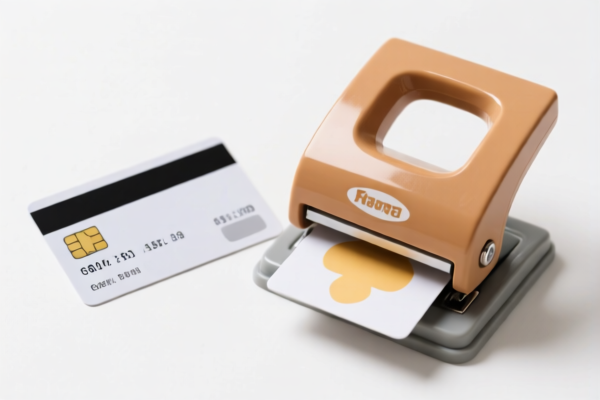
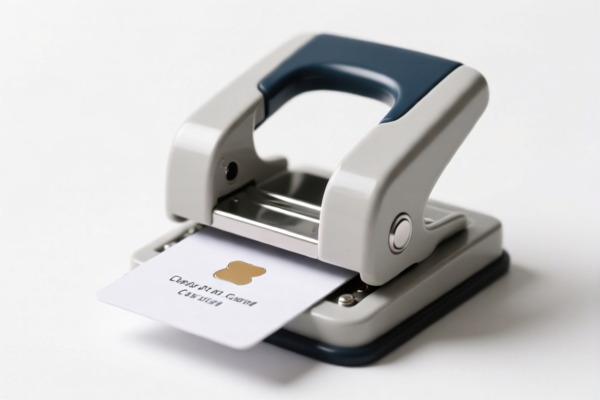
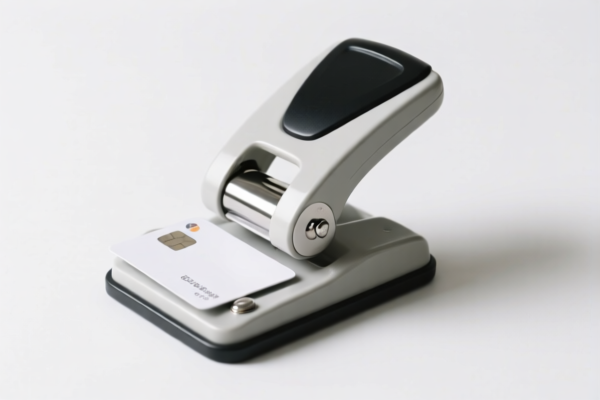
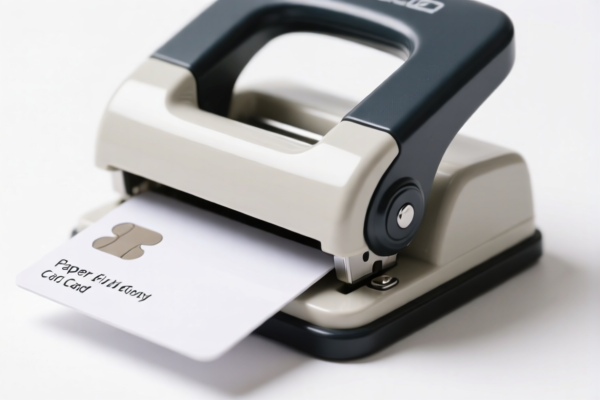
AI Analysis
🃏 High Precision Punch Cards (Perforated Cards)
🌐 HS Code Reference & Customs Clearance Guide | 2026 Latest Tariff Analysis | Professional-Level Clearance Strategy
📌 I. Product Definition & Classification: Do You Really Understand “Punch Cards”?
High Precision Punch Cards are specialized input media used in historical or niche industrial automation systems (e.g., mechanical looms, legacy mainframes, or specific CNC machines). In international trade, their classification hinges heavily on material composition and functional purpose, as they sit at the intersection of paper products, plastics, and data input devices.
Two Main Interpretations: 1. Paper/Cardstock-Based: Traditional punch cards made of cellulose/paper. Classified under Chapter 48 (Paper/Paperboard). 2. Plastic-Based: Modern or durable punch cards made of PVC or other polymers. Classified under Chapter 39 (Plastics) or potentially Chapter 84 if viewed as input media for data processing.
⚠️ Key Distinction Point:
- If the card is paper/cellulose → Look to 4823.90.31.00 / 4823.90.80.00
- If the card is plastic → Look to 3926.90.94.00
- If viewed as data input medium → Look to 8471.60.90.30
📦 II. HS Code Classification Details (2026 Latest Tariff Authority Comparison)
| HS Code | Product Description | Applicable Scenario | Material Assumption |
|---|---|---|---|
4823.90.31.00 |
Paper/Cardboard articles, specifically "cards for punch machines" | Traditional paper punch cards, legacy data cards | Paper/Cardboard |
4823.90.80.00 |
Other paper/cardboard articles (perforated cards as specific shape) | Paper punch cards not specifically named as "for punch machines" but inferred by form | Paper/Cardboard |
8471.60.90.30 |
Card keys and magnetic media input devices | Viewed as input media for automatic data processing machines | Any (functional focus) |
3926.90.94.00 |
Other articles of plastics (specifically "Jacquard cards" or perforated plastic cards) | Plastic punch cards, durable industrial cards | Plastic |
🔍 Critical Reminder:
- Material is King: If the HS code description mentions "paper" but your product is plastic, you risk misclassification. Conversely, if it’s plastic but declared as paper, customs will reject it. - Functional vs. Material: HS 8471 classifies by function (input device), while HS 48/39 classify by material. Choose the classification that best reflects the primary nature of the good.
💰 III. 2026 Latest Tariff Rate Breakdown (Including Additional Taxes & Policy Surcharges)
✅ Applicable Country: United States (US)
✅ Country of Origin: China (CN)
✅ Effective Date: November 10, 2025 onwards (for subsequent imports)
🎯 1. 4823.90.31.00 & 4823.90.80.00 —— Paper/Cardboard Punch Cards
| Item | Content |
|---|---|
| Base Duty Rate | 0.0% (ad valorem) |
| USITC Additional Duty | +25.0% (under Section 301) |
| IEEPA Additional Duty | +10.0% (targeting Chinese/HK products, effective Nov 10, 2025) |
| Total Duty Rate | 35.0% |
| Tax Calculation | CIF Value × 35% |
| De Minimis Exemption Eligible? | ❌ No (deny_de_minimis) |
| Legal Basis Path | IEEPA:9903.01.25 → IEEPA:9903.01.24 → USITC:4823.90.31.00 / 4823.90.80.00 → FOOTNOTE:9903.88.01 |
📌 Explanation:
- The 25% USITC surcharge applies to most Chinese-made paper products under Section 301. - The 10% IEEPA surcharge is a new layer targeting Chinese origins. - Total 35% is significant. Even though the base is 0%, the add-ons make it expensive.
🎯 2. 8471.60.90.30 —— Card Keys & Input Media
| Item | Content |
|---|---|
| Base Duty Rate | 0.0% |
| USITC Additional Duty | +25.0% |
| IEEPA Additional Duty | +10.0% |
| Total Duty Rate | 35.0% |
| Tax Calculation | CIF Value × 35% |
| De Minimis Exemption Eligible? | ❌ No (deny_de_minimis) |
| Legal Basis Path | IEEPA:9901.25 → IEEPA:9903.01.24 → USITC:8471.60.90.30 → FOOTNOTE:9903.88.01 |
📌 Note:
- Classified as an "input device/media," this code still falls under the same tariff schedule for Chinese goods. - Total 35%. No difference in cost from paper-based codes, but the classification rationale is different (function vs. material).
🎯 3. 3926.90.94.00 —— Plastic Punch Cards (Jacquard Cards)
| Item | Content |
|---|---|
| Base Duty Rate | 0.0% |
| USITC Additional Duty | +25.0% |
| IEEPA Additional Duty | +10.0% |
| Total Duty Rate | 35.0% |
| Tax Calculation | CIF Value × 35% |
| De Minimis Exemption Eligible? | ❌ No (deny_de_minimis) |
| Legal Basis Path | IEEPA:9903.01.25 → IEEPA:9903.01.24 → USITC:3926.90.94.00 → FOOTNOTE:9903.88.01 |
📌 Note:
- If your punch cards are plastic, this is the most accurate material-based code. - Total 35%. Same as above. - Warning: Do not declare plastic cards as "paper" (4823) or vice versa. Customs may assess penalties for misdeclaration.
🛠️ IV. Customs Clearance Practical Advice (Battle-Tested Pitfall Avoidance Guide)
✅ 1. Preparation Checklist (All Documents Mandatory)
| Document | Required? | Explanation |
|---|---|---|
| ✅ Product Spec Sheet | ✔️ | Must specify material (Paper vs. Plastic), dimensions, and perforation pattern. |
| ✅ Material Certificate | ✔️ | Proof of material (e.g., cellulose content or plastic polymer type). |
| ✅ Product Photos | ✔️ | Clear shots of front/back, showing perforations and any branding. |
| ✅ Commercial Invoice | ✔️ | Must clearly state "Punch Cards for Industrial Use" or similar. Avoid vague terms like "Cards." |
| ✅ Packing List | ✔️ | Detail quantity, weight, and packaging type. |
| ✅ Origin Certificate (CO) | ✔️ | To prove Chinese origin and apply correct tariff rates. |
✅ 2. Declaration Tactics (Key Mantras)
🔥 "Material First, Function Second, Name Precise, Tax Clear!"
| Scenario | Correct Declaration | Wrong Practice |
|---|---|---|
| Paper Punch Cards | 4823.90.31.00 or 4823.90.80.00 |
Declare as Plastic → Customs Inspection Delay |
| Plastic Punch Cards | 3926.90.94.00 |
Declare as Paper → Misclassification Penalty |
| Input Media for Machines | 8471.60.90.30 |
Declare as "Stationery" → Potential Rejection |
| Mixed Lot (Paper + Plastic) | Split Declaration | Mix in one line → Customs Rejects Entire Shipment |
✅ 3. Special Situation Handling
| Situation | Handling Advice |
|---|---|
| Customs Inquiry on Material | Provide a material test report from a third-party lab (e.g., SGS, Intertek). |
| "Jacquard Card" Labeling | If the product is for looms, use 3926.90.94.00 explicitly mentioning "Jacquard Cards." |
| Legacy Data Cards | For obsolete computer cards, 8471.60.90.30 is defensible as "input media." |
| Low-Value Shipments | ❌ No De Minimis Exemption. Even small samples are subject to 35% duty. |
🌍 V. Global Market Customs Comparison (2026 Latest)
| Country/Region | Recommended HS Code | Duty Rate (China Origin) | Certification Required | Remarks |
|---|---|---|---|---|
| 🇺🇸 USA | 3926.90.94.00 / 4823.90.31.00 |
35% | None specific | High additional tariffs apply |
| 🇨🇳 China | 3926.90.94.00 / 4823.90.31.00 |
5-10% | None | No additional surcharges |
| 🇪🇺 EU | 3926.90.94.00 / 4823.90.31.00 |
0-6.5% | REACH (if plastic) | No Section 301-style tariffs |
| 🇯🇵 Japan | 3926.90.94.00 / 4823.90.31.00 |
0-3% | PSE (if electrical) | Low duty, stable policy |
📌 Conclusion:
- The US is the most expensive market due to the 35% cumulative tariff (25% + 10%). - EU and Japan offer competitive rates (0-6.5%) with fewer restrictions. - If shipping to the US, consider supply chain diversification (e.g., producing in Vietnam or Thailand) to avoid IEEPA surcharges.
📌 VI. Common Errors & Pitfalls (Blood-Tested Lessons)
❌ Error 1: Declaring plastic cards as "Paper Cards"
👉 Consequence: Customs seizes goods, fines + back taxes + 35% penalty.
❌ Error 2: Ignoring the IEEPA 10% surcharge
👉 Consequence: Underpaying duty by 10% → Back payment + Interest + Penalties.
❌ Error 3: Using vague terms like "Perforated Sheets"
👉 Consequence: Customs lacks clarity → Delays of 2-4 weeks.
❌ Error 4: Assuming de minimis applies to small quantities
👉 Consequence: Shipment held at border, duties collected + storage fees.
✅ Correct Approach:
"Punch Cards, Plastic, 100x200mm, Perforated, for Jacquard Looms, HS 3926.90.94.00, Made in China"
🎯 VII. Conclusion: Precision Classification Saves Money!
🎯 Remember the Mantra:
🔹 "Paper vs. Plastic, Check the Material!"
🔹 "35% Total in US, Don't Miss the Surcharge!"
🔹 "De Minimis is Dead for China, Pay Up Front!"
📌 Pro Tip:
If your punch cards are essential for critical infrastructure (e.g., medical or energy sector), explore HTS Exclusions or Advance Rulings with US CBP to confirm classification and tariff applicability.
📣 Immediate Action:
📞 Consult a licensed customs broker + Provide Material Specs + Request HTS Advance Ruling
🚀 Ensure your High Precision Punch Cards clear smoothly, avoid 35% surprises, and protect your margins!
✨ Professional Customs Clearance Starts with Accurate Classification!
💼 Your Every Cent Matters, Calculate Precisely!
Customer Reviews
About HS Code Classification
The Harmonized System (HS) is an internationally standardized nomenclature developed by the World Customs Organization (WCO) to classify traded products. Over 200 countries use the HS system as the basis for customs tariffs, trade statistics, and import/export regulations.
Each HS code follows a hierarchical structure:
- Chapter (2 digits) — Broad category of goods (e.g., Chapter 84: Machinery and Mechanical Appliances)
- Heading (4 digits) — More specific grouping within the chapter
- Subheading (6 digits) — Internationally standardized breakdown, used by all WCO member countries
- National subdivisions (8-10 digits) — Country-specific extensions for further classification, such as US HTSUS 10-digit codes
Correct HS code classification is essential for smooth customs clearance, accurate duty payment, and compliance with trade regulations. Misclassification can lead to customs delays, overpayment of duties, or penalties.
When importing from CN to US, the applicable tariff rates may include:
- Most-Favored-Nation (MFN) rate — The standard duty rate applied to WTO members
- General rate — Applied to countries without trade agreements
- Trade remedy duties — Additional tariffs such as Section 301 (anti-dumping), Section 232 (national security), or countervailing duties
The information provided on this page is for reference purposes only. For official classification, please consult with your local customs authority or a licensed customs broker.