High Pressure Decorative Laminate Wood Grain Veneer
CN → US| HS Code | Tariff Rate | Origin | Destination | Doc |
|---|---|---|---|---|
| 3921905010 | 39.8% | CN | US | Official Doc |
| 4410110030 | 35.0% | CN | US | Official Doc |
| 4410190030 | 35.0% | CN | US | Official Doc |
| 3921904090 | 39.2% | CN | US | Official Doc |
Product Images
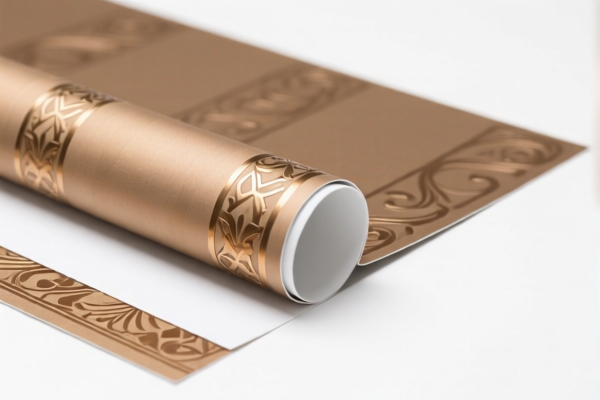
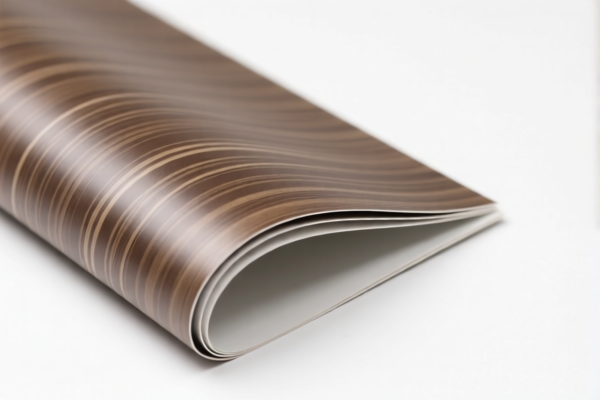
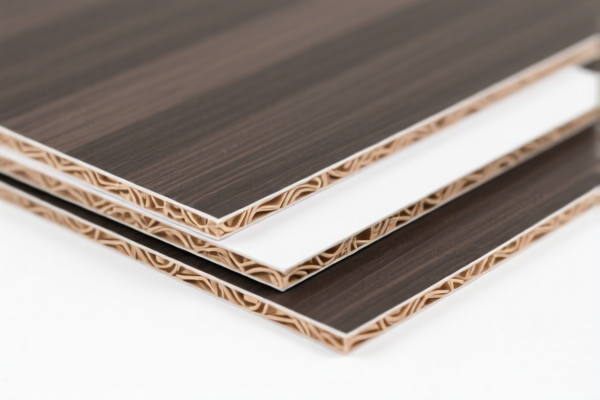
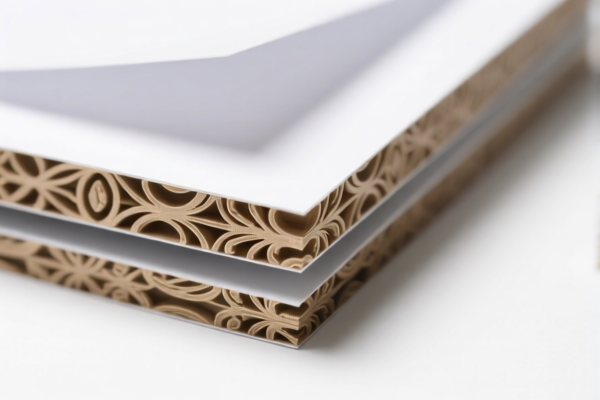
AI Analysis
🪵 High Pressure Decorative Laminate (HPDL) - Wood Grain Veneer
🌐 HS Code Reference & Customs Clearance Guide | 2024/2025 Latest Tariff Analysis | Professional Customs Strategy
📌 I. Product Definition & Classification: Do You Really Understand "HPDL"?
High Pressure Decorative Laminate (HPDL), often referred to as Compact Laminate or Formica-style sheets, is a versatile surfacing material made by fusing decorative paper under high heat and pressure with thermosetting resins. The "Wood Grain Veneer" description indicates the aesthetic finish mimics natural wood.
In international trade, HPDL is a borderline product between Plastics and Wood-based Panels. Its classification depends heavily on its physical structure, resin content, and manufacturing process:
1. Plastic/Resin-based Classification (Chapter 39):
If the product is primarily composed of phenolic or melamine resins impregnated with paper, forming a hard, plastic-like sheet, it falls under HS 3921 (Plastics and articles thereof). This is the most common classification for standard HPDL used in furniture and cabinetry.
2. Wood-based Panel Classification (Chapter 44):
If the product is essentially a particleboard, MDF, or fiberboard core with a decorative plastic overlay (laminated wood), it may fall under HS 4410 (Wood-based panels). This applies when the wood substrate is the dominant structural component.
⚠️ Key Distinction Point:
- If it is a pure resin-paper composite sheet (no wood core) →归类 to HS 3921.
- If it is a wood particle/MDF board covered with decorative paper →归类 to HS 4410.
📦 II. HS Code Classification Details (Latest Tariff Authority Comparison)
Based on the provided data, here are the four potential HS Codes for "High Pressure Decorative Laminate Wood Grain Veneer." Note that duplicate entries in the source data have been consolidated for clarity.
| HS Code | Product Description | Application Scenario | Classification Basis |
|---|---|---|---|
3921.90.50.10 |
High Pressure Decorative Laminate, Wood Grain Veneer, matching high-pressure paper-enhanced laminates | Standard HPDL sheets for countertops, wall cladding, furniture surfaces | ✅ Primary: Plastic/Resin Composite |
4410.11.00.30 |
Decorative Laminate, Wood Grain Veneer, conforming to characteristics of plastic-decorated wood particleboard surfaces | Particleboard or MDF with decorative overlay | ✅ Secondary: Wood Substrate |
4410.19.00.30 |
Decorative Laminate, Wood Grain Veneer, conforming to board morphology and surface plastic decoration | Fiberboard or other wood-based panels with surface lamination | ✅ Secondary: Wood Substrate |
3921.90.40.90 |
Laminated Board, Material inferred as plastic/resin composite material, conforming to Chapter 39 | General plastic composite laminates | ✅ Tertiary: General Plastic Composite |
🔍 Critical Note:
- HS 3921.90.50.10 is the most precise fit for pure High Pressure Decorative Laminate (HPDL) where the resin-paper structure is dominant.
- HS 4410 Series applies only if the product is fundamentally a wood-based panel (particleboard/MDF) with a decorative layer, not a standalone resin sheet.
- Misclassification between Chapter 39 and 44 can lead to significant duty differences due to "Section 301" and "Section 122" tariffs.
💰 III. 2024/2025 Latest Tariff Rate Breakdown (Including Surtaxes & Policy Add-ons)
✅ Applicable Country: United States (US)
✅ Country of Origin: China (CN)
✅ Effective Time: Current (Includes ongoing Section 301 and Section 122 measures)
🎯 1. 3921.90.50.10 —— High Pressure Decorative Laminate (Primary Classification)
| Item | Content |
|---|---|
| Base Duty Rate | 4.8% (Ad Valorem) |
| USITC Surtax (Section 301) | +25.0% |
| IEEPA/Special Surtax (Section 122) | +10.0% |
| Total Effective Tax Rate | 39.8% |
| Tax Calculation | CIF Value × 39.8% |
| De Minimis Exemption Available? | ❌ NO (Denied) |
| Legal Basis Path | USITC:3921.90.50.10 → USITC:9903.88.01 (301 Tariff) → IEEPA:9903.01.25 (Section 122) |
📌 Explanation:
- The 4.8% is the standard Most Favored Nation (MFN) duty for plastic laminates.
- The 25.0% is the Section 301 tariff on Chinese goods.
- The 10.0% is the Section 122 tariff (U.S. International Trade Commission duty-free treatment suspension).
- Total: 39.8%. This is a high-cost category for Chinese-origin HPDL.
🎯 2. 4410.11.00.30 & 4410.19.00.30 —— Wood-Based Panels with Decorative Lamination
| Item | Content |
|---|---|
| Base Duty Rate | 0.0% |
| USITC Surtax (Section 301) | +25.0% |
| IEEPA/Special Surtax (Section 122) | +10.0% |
| Total Effective Tax Rate | 35.0% |
| Tax Calculation | CIF Value × 35.0% |
| De Minimis Exemption Available? | ❌ NO (Denied) |
| Legal Basis Path | USITC:4410.x1.x0 → USITC:9903.88.01 → IEEPA:9903.01.25 |
📌 Explanation:
- The 0.0% base duty is due to the specific subheading for certain wood panels.
- However, the 25.0% and 10.0% surcharges still apply.
- Total: 35.0%. This is 4.8% lower than the plastic classification, but requires strict proof that the product is a wood-based panel (particleboard/MDF), not a pure resin sheet.
🎯 3. 3921.90.40.90 —— General Plastic Composite Laminate
| Item | Content |
|---|---|
| Base Duty Rate | 4.2% |
| USITC Surtax (Section 301) | +25.0% |
| IEEPA/Special Surtax (Section 122) | +10.0% |
| Total Effective Tax Rate | 39.2% |
| Tax Calculation | CIF Value × 39.2% |
| De Minimis Exemption Available? | ❌ NO (Denied) |
📌 Explanation:
- This is a residual category for plastic laminates not specified elsewhere.
- Total: 39.2%. Slightly cheaper than3921.90.50.10due to a lower base rate (4.2% vs 4.8%), but carries higher classification risk if the product is specifically "High Pressure Decorative Laminate."
🛠️ IV. Customs Clearance Practical Advice (Battle-Tested Pitfall Guide)
✅ 1. Essential Document Checklist (Non-Negotiable)
| Document | Required | Explanation |
|---|---|---|
| ✅ Product Specification Sheet | ✔️ | Must detail: Resin type (phenolic/melamine), paper layers, pressure/temperature of lamination, thickness. |
| ✅ Material Composition Analysis | ✔️ | Proof of resin vs. wood content. Critical for deciding between Chapter 39 and 44. |
| ✅ Product Photos (Raw & Finished) | ✔️ | Show cross-section to identify if there is a wood core or pure resin/paper layers. |
| ✅ Commercial Invoice | ✔️ | Clearly state "High Pressure Decorative Laminate" or "Wood-Based Panel with Decorative Overlay." Avoid vague terms like "Veneer Sheet." |
| ✅ Packing List | ✔️ | Confirm weight and dimensions. |
| ✅ Certificate of Origin (CO) | ✔️ | Mandatory for proving Chinese origin to apply surcharges correctly. |
✅ 2. Declaration Strategy (Key Mnemonic)
🔥 "Structure Defines Chapter, Resin vs. Wood, Tax Rate Shifts!"
| Scenario | Correct HS Code | Incorrect Classification | Consequence |
|---|---|---|---|
| Pure HPDL Sheet (No wood core) | 3921.90.50.10 |
4410.11.00.30 |
Under-declaration: Risk of penalty + back duty (39.8% vs 35.0%) |
| Laminated Particleboard/MDF | 4410.11.00.30 |
3921.90.50.10 |
Over-declaration: Slight overpayment (39.8% vs 35.0%), but avoids fraud risk |
| Unspecified "Decorative Board" | 3921.90.40.90 |
Any specific code | Risk: Customs may reclassify, causing delays |
| Wood Veneer Only (Thin slice of real wood) | 4408.10 (Not in data) |
3921... |
Major Error: Wrong chapter entirely |
✅ 3. Special Considerations
| Situation | Handling Advice |
|---|---|
| OEM Custom Laminates | Provide design specs and material safety data sheets (MSDS) to prove resin composition. |
| Mixed Shipments | If shipping both HPDL sheets (3921) and laminated boards (4410), declare separately. Do not lump them together. |
| Origin Marking | Ensure all products are clearly marked "Made in China" to avoid anti-dumping issues or origin fraud penalties. |
| Pre-Ruling Application | Strongly Recommended. Apply for an Advance Ruling from CBP if unsure whether the product is Chapter 39 or 44. Saves huge costs in disputes. |
🌍 V. Global Market Comparison (2024/2025)
| Country/Region | Recommended HS Code | Tariff (China Origin) | Certification | Notes |
|---|---|---|---|---|
| 🇺🇸 USA | 3921.90.50.10 or 4410.11.00.30 |
39.8% or 35.0% | No specific certs, but strict origin rules | High tariffs due to Section 301 & 122. |
| 🇨🇳 China | 3921.90.50.10 or 4410.11.00.30 |
~5% - 9% | No special certs | Low import duty for domestic production. |
| 🇪🇺 EU | 4410.11 or 3921.90 |
0% - 4.5% | CE (if furniture), FSC (if wood) | No Section 301 equivalent, but EUTR compliance needed for wood. |
| 🇯🇵 Japan | 4410.11 or 3921.90 |
3.0% - 6.0% | None | JIS standards may apply. |
| 🇸🇬 Singapore | 3921.90 or 4410.11 |
0% | None | Free trade agreement (ASEAN-China) may apply if RVC criteria met. |
📌 Conclusion:
- USA is the highest-cost market due to aggressive surtaxes.
- Chapter 44 (4410) offers a 4.8% saving over Chapter 39 (3921), but only if the product is truly wood-based.
- Compliance with "Made in China" surcharges is mandatory. No evasion possible via minor packaging changes.
📌 VI. Common Errors & Pitfall Guide (Lessons Learned)
❌ Error 1: Declaring HPDL sheets as "Wood Veneer" (4408) to avoid plastics tariff.
👉 Consequence: Customs will reject if resin content is >50% or structure is plastic. Penalty + Back Duty.
❌ Error 2: Combining HPDL (3921) and Particleboard (4410) in one line item.
👉 Consequence: Customs may audit the entire shipment. Delay + Inspection Fee.
❌ Error 3: Ignoring Section 122 (10%) surcharge.
👉 Consequence: Underpayment of 10%. Interest + Penalty.
❌ Error 4: Using vague description "Decorative Sheet."
👉 Consequence: CBP will assign the highest possible duty or reject the entry. Clear description is key.
✅ Correct Practice:
"High Pressure Decorative Laminate, 1.6mm Thick, Wood Grain Finish, Phenolic Resin Impregnated Paper, For Furniture Surfacing, Model HPDL-WG-16, Made in China"
🎯 VII. Conclusion: Professional Declaration, Cost Efficiency, Risk Mitigation
🎯 Remember the Mnemonic:
🔹 "Resin Sheet = 3921 (39.8%), Wood Board = 4410 (35.0%).
🔄 "301 is 25%, 122 is 10%, Total is High, Don't Go!"
🔹 "HS Code Choosy, Tax Rate Heavy, Declaration Precise, Profit Steady!"
📌 Pro Tip:
If your HPDL is sourced from Vietnam, Thailand, or Indonesia, you may qualify for preferential tariffs under ASEAN agreements (e.g., ATIGA, ACFTA), potentially reducing or eliminating the 25% Section 301 duty.
Action: Verify Country of Origin carefully. If processed sufficiently in third countries, a Certificate of Origin (CO) from those countries can significantly lower costs.
📣 Immediate Action:
📞 Engage a licensed customs broker + Provide cross-section photos + Apply for Advance Ruling if unsure.
🚀 Ensure your HPDL clears US customs smoothly, maximizing your profit margin!
✨ Professional Customs Clearance Starts with Precise Classification!
💼 Every percentage point matters in the age of surtaxes!
Customer Reviews
About HS Code Classification
The Harmonized System (HS) is an internationally standardized nomenclature developed by the World Customs Organization (WCO) to classify traded products. Over 200 countries use the HS system as the basis for customs tariffs, trade statistics, and import/export regulations.
Each HS code follows a hierarchical structure:
- Chapter (2 digits) — Broad category of goods (e.g., Chapter 84: Machinery and Mechanical Appliances)
- Heading (4 digits) — More specific grouping within the chapter
- Subheading (6 digits) — Internationally standardized breakdown, used by all WCO member countries
- National subdivisions (8-10 digits) — Country-specific extensions for further classification, such as US HTSUS 10-digit codes
Correct HS code classification is essential for smooth customs clearance, accurate duty payment, and compliance with trade regulations. Misclassification can lead to customs delays, overpayment of duties, or penalties.
When importing from CN to US, the applicable tariff rates may include:
- Most-Favored-Nation (MFN) rate — The standard duty rate applied to WTO members
- General rate — Applied to countries without trade agreements
- Trade remedy duties — Additional tariffs such as Section 301 (anti-dumping), Section 232 (national security), or countervailing duties
The information provided on this page is for reference purposes only. For official classification, please consult with your local customs authority or a licensed customs broker.