High Pressure Washer Gun for Washing Machine
CN → US| HS Code | Tariff Rate | Origin | Destination | Doc |
|---|---|---|---|---|
| 8424309000 | 35.0% | CN | US | Official Doc |
| 8424899000 | 36.8% | CN | US | Official Doc |
| 8509805095 | 14.2% | CN | US | Official Doc |
| 8424301000 | 35.0% | CN | US | Official Doc |
| 8479899595 | 37.5% | CN | US | Official Doc |
Product Images
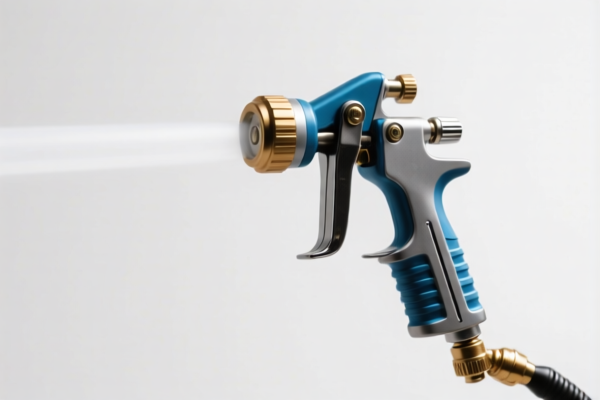
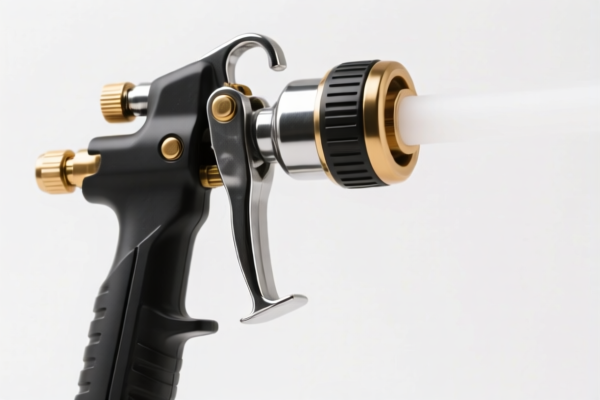
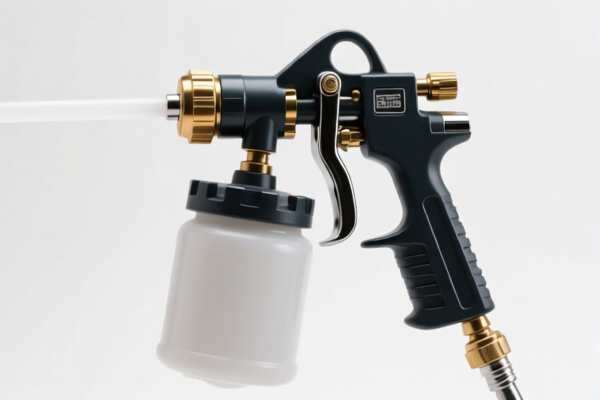
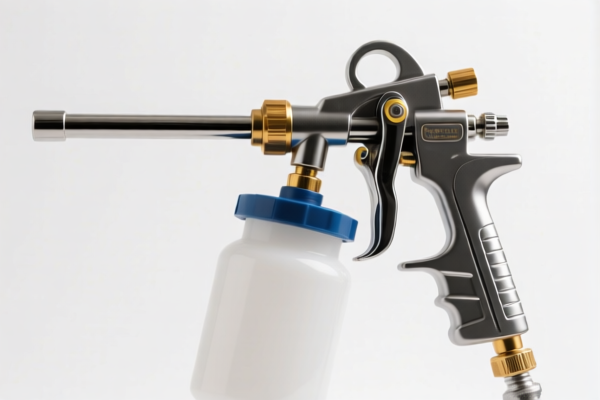
AI Analysis
🔫 High Pressure Washer Gun & Spray Tools (High-Pressure Washing Accessories)
🌐 HS Code Reference & Customs Clearance Guide | 2026 Latest Tariff Analysis | Professional Compliance Strategy
📌 I. Product Definition & Classification: Do You Really Understand "High-Pressure Washer Guns"?
High-pressure washer guns are critical components of cleaning systems, categorized based on their mechanical function, power source, and integration level. In international trade, they are often confused with general machinery or household appliances, leading to significant tariff discrepancies.
Key Categories:
1. Industrial/Specialized Spraying Equipment (8424): Guns designed for high-pressure mechanical spraying (water/chemicals), often part of industrial cleaning systems.
2. Electrical Household Appliances (8509): If the gun has a built-in electric motor/pump unit and is marketed for home use.
3. Machine Parts/Accessories (8479, 8424): Nozzles, hoses, and attachments that serve as accessories to larger cleaning machinery.
⚠️ Critical Distinction Point:
- If it is a standalone mechanical spraying device (even if high-tech) → Likely 8424.
- If it is an electrical appliance with its own motor, not fitting other specific electrical categories → Likely 8509.
- If it is purely an attachment/accessory to a larger machine → Likely 8479 or specific subheadings of 8424.
📦 II. HS Code Classification Details (2026 Authoritative Comparison)
Based on the provided data analysis, here are the four most relevant HS Codes and their matching logic:
| HS Code | Product Description | Matching Logic & Usage | Total Tax Rate (US/China) |
|---|---|---|---|
8424.30.90.00 |
Spraying Machinery (General) | Mechanical Spraying Device. Matches "machinery for projecting, dispersing or spraying liquids." High-pressure water guns fall under "steam or sand-blasting machines and similar jet projecting machinery." No material conflict. | 35.0% |
8424.89.90.00 |
Other Machinery for Projecting Liquids | Liquid Projection. Fits the definition of machinery for spraying/dispersing liquids. Broader category than 8424.30 but still within mechanical spraying. | 36.8% |
8509.80.50.95 |
Electro-Mechanical Household Appliances | Electric Appliance. Classified as a "household appliance with self-contained electric motor." Does not fall into excluded categories (toothbrush, can opener, humidifier). Suitable if the unit is electrically powered and marketed for home use. | 14.2% |
8424.30.10.00 |
Sandblasting & Similar Jets | Tool Kit/Pack. Specifically for "sandblasting tool kits." Includes "sandblasting" core function. Treated as accessories/parts for these machines. | 35.0% |
8479.89.95.95 |
Machinery with Individual Functions | Machine Accessory. Treated as an accessory/tool kit for a cleaning machine. Function aligns with industrial machinery attachments. No material conflict. | 37.5% |
🔍 Key Insight:
- The lowest tax rate (14.2%) applies if the product is classified as a Household Electrical Appliance (8509).
- The highest tax rates (35%-37.5%) apply if classified under Mechanical Spraying Machinery (8424,8479) due to the 25% Section 301 Tariff and 10% IEEPA Tariff.
- Classification Risk: Misclassifying a mechanical washer gun as an "electrical appliance" to avoid Section 301 tariffs can lead to severe penalties if the primary function is mechanical spraying.
💰 III. 2026 Latest Tariff Rate Breakdown (Including Surtaxes & Policy Add-ons)
✅ Applicable Country: United States (US)
✅ Origin: China (CN)
✅ Effective Date: November 10, 2025 (and subsequent imports)
🎯 1. 8509.80.50.95 —— Electro-Mechanical Household Appliances (The "Optimal" Rate)
| Item | Details |
|---|---|
| Base Tariff | 4.2% (ad valorem) |
| USITC Section 301 Surcharge | 0.0% (Exempt or not applicable for this specific subheading in the provided data) |
| IEEPA Surcharge | +10% (China-specific) |
| Total Tax Rate | 14.2% |
| Tax Calculation | CIF Value × 14.2% |
| De Minimis Eligibility | ❌ No (Denied) |
| Legal Basis Path | IEEPA:9903.01.24 → USITC:8509.80.50.95 |
📌 Explanation:
- This classification assumes the product is a standalone electrical appliance for household use.
- Advantage: Significantly lower tax burden (14.2% vs. 35%+).
- Condition: Must be proven to be a "household appliance" with a self-contained motor, not an industrial attachment.
🎯 2. 8424.30.90.00 & 8424.30.10.00 —— Spraying Machinery & Sandblasting Tools
| Item | Details |
|---|---|
| Base Tariff | 0.0% |
| USITC Section 301 Surcharge | +25.0% |
| IEEPA Surcharge | +10% |
| Total Tax Rate | 35.0% |
| Tax Calculation | CIF Value × 35.0% |
| De Minimis Eligibility | ❌ No (Denied) |
| Legal Basis Path | IEEPA:9903.01.24 → USITC:8424.30.90.00 → FOOTNOTE:301 |
📌 Explanation:
- High-pressure washer guns used for mechanical spraying fall under this category.
- Disadvantage: High tariff due to Section 301.
- Note: Even if base tariff is 0%, the 35% total makes it expensive.
🎯 3. 8424.89.90.00 —— Other Liquid Projection Machinery
| Item | Details |
|---|---|
| Base Tariff | 1.8% |
| USITC Section 301 Surcharge | +25.0% |
| IEEPA Surcharge | +10% |
| Total Tax Rate | 36.8% |
| Tax Calculation | CIF Value × 36.8% |
| De Minimis Eligibility | ❌ No (Denied) |
📌 Explanation:
- A broader category for spraying machinery. Higher base tariff than 8424.30 results in a higher total rate.
🎯 4. 8479.89.95.95 —— Machinery Accessories/Tool Kits
| Item | Details |
|---|---|
| Base Tariff | 2.5% |
| USITC Section 301 Surcharge | +25.0% |
| IEEPA Surcharge | +10% |
| Total Tax Rate | 37.5% |
| Tax Calculation | CIF Value × 37.5% |
| De Minimis Eligibility | ❌ No (Denied) |
📌 Explanation:
- Classified as an accessory to industrial cleaning machinery.
- Highest Tax Burden: 37.5%. Generally the least favorable classification if avoidable.
🛠️ IV. Customs Clearance Practical Advice (Pitfall Avoidance Guide)
✅ 1. Preparation Checklist (Non-Negotiable)
| Document | Required | Purpose |
|---|---|---|
| ✅ Product Specification Sheet | ✔️ | Must clearly state: Power source (Electric/Mechanical), Pressure (PSI/Bar), Flow Rate, Intended Use (Industrial/Home). |
| ✅ Circuit Diagram/Structure Photo | ✔️ | Crucial for 8509 classification. Proves it has a self-contained electric motor if claiming household appliance status. |
| ✅ Commercial Invoice | ✔️ | Description must match HS Code intent (e.g., "Electric Household Sprayer" vs. "Industrial High-Pressure Spray Gun"). |
| ✅ Original Packaging/Labels | ✔️ | Branding should reflect "Home Appliance" or "Industrial Equipment" to support classification. |
| ✅ Third-Party Certifications | ✔️ | UL/ETL (for electrical), NSF (for food/water contact if applicable). |
✅ 2. Classification Strategy (Key Tactics)
🔥 "Motor Determines Category, Function Defines Code, Tariffs Follow Fit!"
| Scenario | Recommended HS Code | Why? |
|---|---|---|
| Electric Washer Gun with Built-in Motor | 8509.80.50.95 |
Lowest Tax (14.2%). Must prove it's a household appliance with its own motor, not just a nozzle. |
| Mechanical Gun (No Motor, Attached to Pump) | 8424.30.90.00 |
Standard Mechanical Spray (35.0%). Falls under jet projecting machinery. |
| Tool Kit with Multiple Nozzles/Attachments | 8424.30.10.00 or 8479.89.95.95 |
High Tax (35-37.5%). Treated as accessories/parts for machinery. |
| Industrial High-Pressure Unit | 8424.89.90.00 |
High Tax (36.8%). Broad category for liquid projection. |
⚠️ Warning:
- Do NOT misclassify an industrial mechanical gun as an electrical appliance (8509) to save taxes. Customs may demand proof of "household use" and "self-contained motor." If rejected, you will face back taxes + penalties.
- If the gun is merely a nozzle/trigger assembly without a motor, it cannot be8509. It must be8424or8479.
✅ 3. Special Cases Handling
| Case | Strategy |
|---|---|
| Combo Kits (Gun + Hose + Nozzle) | Declare as a single unit under the primary function. If electrical, 8509. If mechanical, 8424. Do not split into parts unless necessary for logistics. |
| OEM/White Label | Ensure marketing materials and specifications support the declared classification. If marketed as "Home Use," 8509 is stronger. |
| Industrial vs. Home Use | Critical. "Home Use" supports 8509. "Industrial Cleaning" supports 8424/8479. Be consistent across all documents. |
🌍 V. Global Market Comparison (2026)
| Country/Region | Recommended HS Code | Est. Tax Rate | Note |
|---|---|---|---|
| 🇺🇸 USA | 8509.80.50.95 (if electric) |
14.2% | Best rate. 8424 codes incur 35%+. |
| 🇺🇸 USA | 8424.30.90.00 (if mechanical) |
35.0% | High due to Section 301. |
| 🇨🇳 China | 8424.30.90.00 |
Low/Standard | No Section 301 surcharge. |
| 🇪🇺 EU | 8424.30.90 |
~2.7% | Lower base rates, but verify VAT. |
📌 Conclusion:
- USA is the most challenging market due to the 25% Section 301 tariff on mechanical washing equipment (8424).
- Strategic Goal: If the product has an electric motor and is marketed for household use, strive for classification under8509to achieve the 14.2% rate.
- If it is purely mechanical (no motor), the 35% rate is unavoidable for US imports from China.
📌 VI. Common Errors & Pitfalls (Lessons Learned)
❌ Error 1: Classifying a mechanical spray gun (no motor) as 8509 (Household Appliance).
👉 Consequence: Customs rejection, demand for original classification (8424), back taxes (35%), and fines.
✅ Fix: Only use 8509 if there is a self-contained electric motor and household marketing.
❌ Error 2: Declaring a Tool Kit as a single "Washer Gun."
👉 Consequence: Misclassification as parts/accessories (8479) leading to 37.5% tax.
✅ Fix: Ensure the primary function is clear. If it's a kit, declare accurately under the appropriate machinery code.
❌ Error 3: Ignoring IEEPA 10% surcharge.
👉 Consequence: Underpayment of 10% on all Chinese-origin goods, leading to customs holds.
✅ Fix: Always calculate Total Tax = Base + 25% (if 301) + 10% (IEEPA).
🎯 VII. Conclusion: Professional Classification Saves Money!
🎯 Remember the Rule:
🔹 "Electric + Home = 14.2% (
8509)"
🔹 "Mechanical + Spray = 35% (8424)"
🔹 "Accessory + Industrial = 37.5% (8479)"
📌 Final Tip:
- If your high-pressure washer gun has no electric motor, you cannot achieve the 14.2% rate. Expect 35%+.
- Consider supply chain adjustments (e.g., assembling in Vietnam/Mexico) if the 35% tariff impacts profitability significantly.
- Always apply for an Advance Ruling if the classification is ambiguous.
📣 Take Action Now:
📞 Provide circuit diagrams and marketing materials to your customs broker.
🚀 Aim for8509.80.50.95if possible. Otherwise, budget for 35%.
💼 Accurate classification is the first step to profitable exports!
✨ Professional Customs Compliance, Starting with Precision!
💼 Every Percentage Point Counts in Your Bottom Line!
Customer Reviews
About HS Code Classification
The Harmonized System (HS) is an internationally standardized nomenclature developed by the World Customs Organization (WCO) to classify traded products. Over 200 countries use the HS system as the basis for customs tariffs, trade statistics, and import/export regulations.
Each HS code follows a hierarchical structure:
- Chapter (2 digits) — Broad category of goods (e.g., Chapter 84: Machinery and Mechanical Appliances)
- Heading (4 digits) — More specific grouping within the chapter
- Subheading (6 digits) — Internationally standardized breakdown, used by all WCO member countries
- National subdivisions (8-10 digits) — Country-specific extensions for further classification, such as US HTSUS 10-digit codes
Correct HS code classification is essential for smooth customs clearance, accurate duty payment, and compliance with trade regulations. Misclassification can lead to customs delays, overpayment of duties, or penalties.
When importing from CN to US, the applicable tariff rates may include:
- Most-Favored-Nation (MFN) rate — The standard duty rate applied to WTO members
- General rate — Applied to countries without trade agreements
- Trade remedy duties — Additional tariffs such as Section 301 (anti-dumping), Section 232 (national security), or countervailing duties
The information provided on this page is for reference purposes only. For official classification, please consult with your local customs authority or a licensed customs broker.