High Purity Germanium Rod
CN → USProduct Images
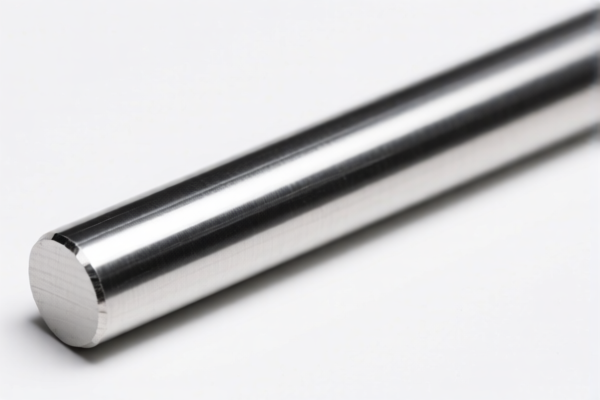
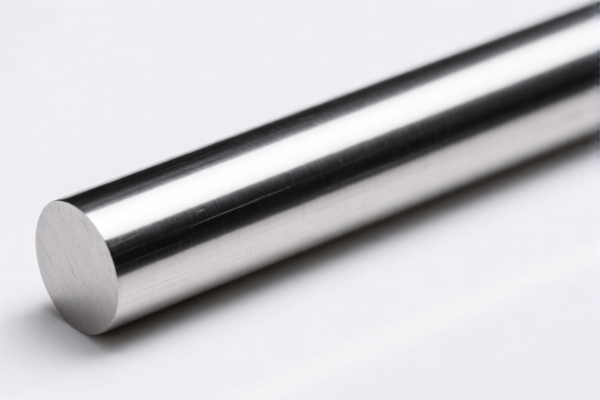
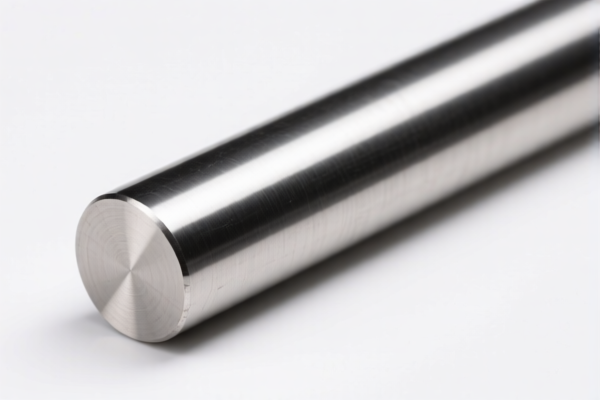
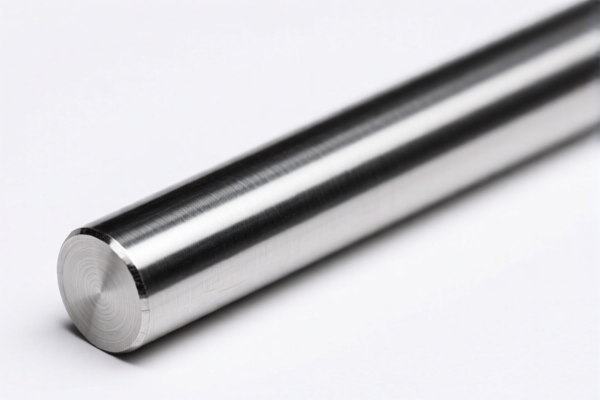
AI Analysis
🧪 High Purity Germanium Rod (HPGe)
🌐 HS Code Reference & Clearance Guide | 2026 Latest Tariff Analysis | Professional Customs Strategy
📌 I. Product Definition & Classification: Do You Really Understand "Germanium Rod"?
High Purity Germanium Rods are critical materials in the semiconductor, infrared optics, and solar energy industries. They are not just "metals"; they are highly refined functional materials. In international trade, they are categorized based on their form and purity.
Polycrystalline Germanium Rods (Polycrystalline): Multi-crystalline structures, typically used as feedstock for pulling single crystals or manufacturing solar cells.
Monocrystalline Germanium Rods (Monocrystalline): Single-crystal structure, primarily used for high-performance infrared lenses, fiber optics, and semiconductor detectors.
⚠️ Key Distinction Point:
- If the product is highly refined (>99.9999% purity) and in rod/bar form → Classified under Chapter 81 (Miscellaneous Metals), specifically 8112.
- If the product is already shaped into lenses or detectors (finished articles) → Classified under Chapter 90 (Optical/Scientific Instruments), specifically 9001 or 9031.
- Crucial Note: Raw rods, even if ultra-pure, remain under Chapter 81. Do not confuse them with finished optical components.
📦 II. HS Code Classification Details (2026 Latest Tariff Authority Comparison)
| HS Code | Product Description | Application Scenario | Purity/Form |
|---|---|---|---|
8112.99.10.00 |
Germanium, undeworked (includes rods, bars, wires, powder) | High-purity feedstock for semiconductors/infrared optics | ✅ Raw Rod/Bar |
8112.99.90.00 |
Other germanium, undeworked | Lower purity or non-standard forms of raw germanium | ✅ Raw/Unrefined |
9001.10.00.00 |
Optical fibers, bundles, etc. | Telecommunications, endoscopy (Made from Ge, but finished) | ❌ Finished Article |
9001.20.00.00 |
Lenses (including contact lenses), prisms | Infrared lenses, camera lenses (Made from Ge, but finished) | ❌ Finished Article |
2852.00.00.00 |
Germanium oxides, halogenides, etc. | Chemical precursors, powders, compounds | ❌ Chemical Compound |
🔍 Critical Reminder:
- High Purity Germanium (HPGe) Rods are classified under8112.99.10.00as "Germanium, undeworked."
- Do NOT classify them under Chapter 28 (Chemicals) unless they are in powder/oxide form. Rods are metallic products.
- If the rod is cut into wafers or polished into lenses, it moves to Chapter 90. Keep the classification aligned with the physical form at the time of import.
💰 III. 2026 Latest Tariff Rate Details (Including Surtax & Policy Surcharges)
✅ Applicable Country: United States (US)
✅ Country of Origin: China (CN)
✅ Effective Time: From November 10, 2025 (including subsequent imports)
🎯 1. 8112.99.10.00 —— Germanium, Undeworked (High Purity Rods)
| Item | Content |
|---|---|
| Base Tariff Rate | 0% (ad valorem) |
| USITC Surtax | +25% (Under USITC Footnote 9903.88.01, Section 301) |
| IEEPA Surtax | +10% (Targeting China/HK products, effective Nov 10, 2025) |
| Total Tariff Rate | 35% |
| Tax Calculation | CIF Value × 35% |
| De Minimis Exemption Eligible? | ❌ NO (deny_de_minimis) |
| Legal Basis Path | IEEPA:9903.01.25 → IEEPA:9903.01.24 → USITC:8112.99.10.00 → FOOTNOTE:9903.88.01 |
📌 Explanation:
- Germanium is a critical mineral and strategic material. The US imposes heavy tariffs to protect domestic supply chains and counter non-market practices.
- The 35% total rate (25% Section 301 + 10% IEEPA) is significant.
- No De Minimis Exemption: Even small shipments (e.g., <$800) are subject to these tariffs. This is a common trap for R&D samples.
🎯 2. Comparison: If Classified as "Chemical Precursor" (Incorrect but Potential Misunderstanding)
| Item | Content |
|---|---|
| HS Code | 2852.00.00.00 |
| Base Tariff | 0% |
| Surtax | +25% (Section 301) |
| IEEPA | +10% |
| Total | 35% |
| Risk | Misclassification can lead to penalties. However, the tariff rate is similar. The key is correct HS code for regulatory compliance (e.g., BIS checks). |
📌 Note:
- While the rate might seem similar, Germanium is subject to BIS (Bureau of Industry and Security) scrutiny. Incorrect HS codes may delay customs clearance for export control verification.
🛠️ IV. Customs Clearance Practical Advice (Field Pitfall Avoidance Guide)
✅ 1. Required Documentation Checklist (Missing Items Will Cause Delays)
| Document | Mandatory? | Description |
|---|---|---|
| ✅ Certificate of Analysis (CoA) | ✔️ | Must specify purity (e.g., 6N, 7N), crystal structure (Mono/Polycrystalline), and form (Rod/Bar). |
| ✅ Product Specification Sheet | ✔️ | Detailed dimensions, weight, packaging method. |
| ✅ Commercial Invoice | ✔️ | Clearly state "High Purity Germanium Rod, Undeworked, for Semiconductor Use." |
| ✅ Packing List | ✔️ | Include net/gross weight, and ensure no mixed goods. |
| ✅ Export License (If Applicable) | ✔️ | Check if the origin requires export licenses; US importers must verify BIS compliance. |
| ✅ Bill of Lading/Air Waybill | ✔️ | Standard shipping document. |
✅ 2. Declaration Techniques (Key Mantra)
🔥 "Purity Matters, Form Defines, Don't Split, Declare Whole!"
| Scenario | Correct Declaration | Wrong Practice |
|---|---|---|
| High Purity Rod (Raw) | 8112.99.10.00 |
Misdeclare as "Electronic Component" → Delays |
| Germanium Powder | 2852.00.00.00 |
Misdeclare as "Rod" → Wrong HS Code |
| Finished Infrared Lens | 9001.20.00.00 |
Misdeclare as "Rod" → Undervaluation Risk |
| Mixed Shipment (Rod + Wafers) | Split HS Codes | Combine into one HS Code → Customs Rejection |
✅ 3. Special Situation Handling
| Situation | Handling Advice |
|---|---|
| Small R&D Sample (<$800) | ❌ Still Taxable! 35% applies. Do not rely on De Minimis. |
| Germanium from Vietnam/Malaysia | ✅ Potential Benefit: May avoid IEEPA surtax if proof of substantial transformation is provided. Check Rule of Origin carefully. |
| Export Control (BIS) | ⚠️ High Scrutiny: Germanium is on the Commerce Control List. Ensure end-user is legitimate and not on the Entity List. |
| Packaging Damage | 📦 Germanium is brittle. Ensure vacuum-sealed, shock-proof packaging. Damage may lead to "Condition of Goods" disputes. |
🌍 V. Global Market Clearance Comparison (2026 Latest)
| Country/Region | Recommended HS Code | Tariff Rate (China Origin) | Certification Requirements | Notes |
|---|---|---|---|---|
| 🇺🇸 USA | 8112.99.10.00 |
35% (25% + 10%) | BIS Compliance + COA | High scrutiny, no De Minimis |
| 🇨🇳 China | 8112.99.10.00 |
0% | N/A | Free trade, major producer |
| 🇪🇺 EU | 8112.99.00 |
0% | REACH Registration | No major surtaxes, but strict REACH |
| 🇯🇵 Japan | 8112.99.00 |
0% | JIS Standards | Stable supply chain, low tariffs |
| 🇰🇷 South Korea | 8112.99.00 |
0% (KORUS FTA) | KGS Standards | Zero tariff if origin certified |
📌 Conclusion:
- USA is the most expensive market for Chinese-sourced Germanium due to 35% effective tariff.
- EU/Japan/Korea are more tariff-friendly, but require strict chemical/environmental compliance (REACH, etc.).
- Strategic Advice: For US imports, consider sourcing from non-China origins (e.g., Japan, South Korea, or recycled sources) to mitigate tariff risk.
📌 VI. Common Errors & Pitfall Guide (Lessons Learned)
❌ Error 1: Declaring "Germanium" as "Semiconductor Material" under Chapter 38
👉 Consequence: Customs will reclassify to Chapter 81, causing delays and potential penalties.
👉 Correct: Always use Chapter 81 for raw/metals.
❌ Error 2: Ignoring BIS (Bureau of Industry and Security) checks
👉 Consequence: Shipment held for "Export Control Review." Germanium is a strategic dual-use material.
👉 Correct: Provide end-user statements and ensure no sanctions violations.
❌ Error 3: Claiming De Minimis for small samples
👉 Consequence: 35% tax + penalties. The US explicitly denies De Minimis for Chinese goods under Section 301 and IEEPA.
👉 Correct: Budget for full tariff even for samples.
✅ Correct Declaration Example:
"High Purity Polycrystalline Germanium Rods, 99.9999% Pure, Undeworked, for Semiconductor Feedstock, HS Code 8112.99.10.00, Country of Origin: China"
🎯 VII. Conclusion: Precision Classification Saves Costs!
🎯 Remember the Mantra:
🔹 "Rods are Metals (Ch81), Lenses are Optics (Ch90). Don't confuse the two!"
🔹 "35% Tariff for US from China, Samples Not Exempt!"
🔹 "Check BIS, Check CoA, Clear Customs Fast!"
📌 Pro Tip:
If your Germanium rods are sourced from Japan, South Korea, or Europe, you can avoid the 10% IEEPA surtax and potentially the 25% Section 301 tax, bringing your total tariff to 0% (US) or very low rates.
Recommendation: Conduct a Pre-Ruling (Advance Ruling) with US CBP if importing large volumes to confirm classification and duty liability.
📣 Immediate Action:
📞 Consult a Customs Broker + Verify BIS Eligibility + Prepare CoA
🚀 Let your Germanium rods pass smoothly, avoid delays, and protect your margins!
✨ Professional Clearance, Starting with Accurate Classification!
💼 Every dollar of duty is calculated precisely!
Customer Reviews
About HS Code Classification
The Harmonized System (HS) is an internationally standardized nomenclature developed by the World Customs Organization (WCO) to classify traded products. Over 200 countries use the HS system as the basis for customs tariffs, trade statistics, and import/export regulations.
Each HS code follows a hierarchical structure:
- Chapter (2 digits) — Broad category of goods (e.g., Chapter 84: Machinery and Mechanical Appliances)
- Heading (4 digits) — More specific grouping within the chapter
- Subheading (6 digits) — Internationally standardized breakdown, used by all WCO member countries
- National subdivisions (8-10 digits) — Country-specific extensions for further classification, such as US HTSUS 10-digit codes
Correct HS code classification is essential for smooth customs clearance, accurate duty payment, and compliance with trade regulations. Misclassification can lead to customs delays, overpayment of duties, or penalties.
When importing from CN to US, the applicable tariff rates may include:
- Most-Favored-Nation (MFN) rate — The standard duty rate applied to WTO members
- General rate — Applied to countries without trade agreements
- Trade remedy duties — Additional tariffs such as Section 301 (anti-dumping), Section 232 (national security), or countervailing duties
The information provided on this page is for reference purposes only. For official classification, please consult with your local customs authority or a licensed customs broker.