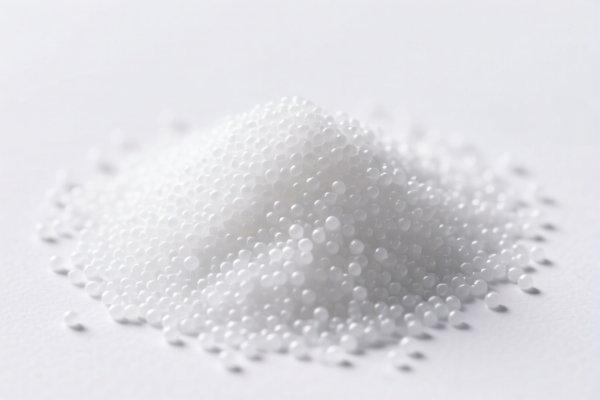
High Purity PTFE Resin Granules
CN → US| HS Code | Tariff Rate | Origin | Destination | Doc |
|---|---|---|---|---|
| 3901905501 | 41.5% | CN | US | Official Doc |
| 3901909000 | 41.5% | CN | US | Official Doc |
| 3907995050 | 41.5% | CN | US | Official Doc |
| 3907992000 | 35.0% | CN | US | Official Doc |
| 3901909000 | 41.5% | CN | US | Official Doc |
Product Images



AI Analysis
🏭 High Purity PTFE Resin Granules (Polytetrafluoroethylene)
🌐 HS Code Reference & Customs Clearance Guide | 2026 Latest Tariff Analysis | Specialized Compliance Strategy
📌 I. Product Definition & Classification: Understanding "PTFE Resin"
High Purity PTFE Resin Granules are semi-finished fluoropolymer materials used primarily in the manufacturing of piping, sealing rings, electrical insulation, and industrial equipment components. In international trade, PTFE (Polytetrafluoroethylene) is a synthetic fluoropolymer.
However, customs classification varies significantly based on the chemical composition description, intended use (e.g., food-grade), and specific polymer category cited by customs authorities.
⚠️ Key Classification Distinctions: - Vinyl Polymer Classification: If classified under "Ethylene Polymers" (Chapter 3901), it attracts a 6.5% base duty + surcharges. - Other Polymers/Fluoropolymers: If classified under "Other Plastics" or specific Fluoropolymer codes (Chapter 3907), it may attract 0% base duty (if eligible) but still faces surcharges. - Food Grade vs. Industrial Grade: Some codes specifically mention "Food Grade," affecting the base rate.
📦 II. HS Code Classification Details (2026 Latest Tariff Authority Match)
Based on the provided data, there are 5 distinct classification scenarios for PTFE Resin Granules. Note that while the product is the same, the descriptive classification leads to different HS Codes and Base Duty Rates.
| HS Code | Product Description & Classification Logic | Base Duty | Total Tax Rate | Key Surcharge Components |
|---|---|---|---|---|
| 3901.90.55.01 | PTFE Resin Granules, Polyethylene Teflon, Primary Shape, Classified as Ethylene Polymer. | 6.5% | 41.5% | Base: 6.5% Add: 25.0% 122 Clause: 10% |
| 3901.90.90.00 | PTFE Resin Granules, Classified as Ethylene Polymer, Other Category. | 6.5% | 41.5% | Base: 6.5% Add: 25.0% 122 Clause: 10% |
| 3907.99.50.50 | Food Grade PTFE Resin Granules, Classified as Polyether/Polyester Resin. | 6.5% | 41.5% | Base: 6.5% Add: 25.0% 122 Clause: 10% |
| 3907.99.20.00 | Food Grade PTFE Resin Granules, Classified as Fluoropolymer, Primary Shape. | 0.0% | 35.0% | Base: 0.0% Add: 25.0% 122 Clause: 10% |
| 3901.90.90.00 | PTFE Resin Granules, Classified as Ethylene Polymer, Other Category. | 6.5% | 41.5% | Base: 6.5% Add: 25.0% 122 Clause: 10% |
🔍 Critical Insight: - The lowest total tax rate (35.0%) is achieved only under HS Code 3907.99.20.00, which requires the product to be described as a "Fluoropolymer" and potentially "Food Grade" (as per the data summary). - All other classifications default to a 6.5% base duty, resulting in a 41.5% total tax rate. - The 25% Additional Duty and 10% Section 122 Duty are universal across all these classifications for this product type in the current data set.
💰 III. 2026 Latest Tariff Rate Breakdown (With Surcharges & Policy Add-ons)
✅ Applicable Country: United States (US)
✅ Country of Origin: China (CN)
✅ Effective Time: Current Rates Apply (Based on provided data)
🎯 1. The "Standard" Path: Ethylene Polymer Classification (Codes 3901.90.55.01 & 3901.90.90.00)
HS Codes: 3901.90.55.01, 3901.90.90.00
Summary: Classified under Chapter 3901 (Polymers of Ethylene), even though PTFE is not ethylene. This is a common misclassification or broad interpretation.
| Item | Content |
|---|---|
| Base Duty Rate | 6.5% (Ad Valorem) |
| Additional Duty (USITC) | +25.0% (Section 301 Tariff) |
| Section 122 Duty | +10.0% (Specific clause tariff) |
| Total Tax Rate | 41.5% |
| Calculation Basis | CIF Value × 41.5% |
| De Minimis Exemption | ❌ Not Applicable (High value goods, specific tariff lines) |
| Legal Basis Path | USITC:3901.90.55.00 / 3901.90.90.00 → FOOTNOTE:301 → SECTION:122 |
📌 Explanation: - Why is it 6.5%? Customs may broadly categorize certain fluoropolymers under "Other Polymers of Ethylene" if specific fluoropolymer codes are not clearly declared or if the chemical structure is interpreted broadly. - Warning: This is the highest tax bracket in the provided data.
🎯 2. The "Optimized" Path: Fluoropolymer / Food Grade Classification (Code 3907.99.20.00)
HS Code: 3907.99.20.00
Summary: Classified under Chapter 3907 (Polymers of Propylene or Other Single Olefins) as a Fluoropolymer. This description is chemically more accurate for PTFE.
| Item | Content |
|---|---|
| Base Duty Rate | 0.0% (Duty-Free Base) |
| Additional Duty (USITC) | +25.0% (Section 301 Tariff) |
| Section 122 Duty | +10.0% (Specific clause tariff) |
| Total Tax Rate | 35.0% |
| Calculation Basis | CIF Value × 35.0% |
| De Minimis Exemption | ❌ Not Applicable |
| Legal Basis Path | USITC:3907.99.20.00 → FOOTNOTE:301 → SECTION:122 |
📌 Explanation: - Cost Saving: This classification saves 6.5% on the base duty, reducing the total tariff from 41.5% to 35.0%. - Condition: The product must be accurately described as a "Fluoropolymer" and potentially "Food Grade" to qualify for this specific subheading according to the provided data summary.
🎯 3. The "Food Grade / Polyester" Path (Code 3907.99.50.50)
HS Code: 3907.99.50.50
Summary: Food Grade PTFE, but classified as "Polyether/Polyester Resin".
| Item | Content |
|---|---|
| Base Duty Rate | 6.5% |
| Additional Duty | +25.0% |
| Section 122 Duty | +10.0% |
| Total Tax Rate | 41.5% |
📌 Explanation: - Even if labeled "Food Grade," if classified under "Polyether/Polyester" rather than "Fluoropolymer," the base duty remains 6.5%. This is NOT the optimal code for tax savings.
🛠️ IV. Customs Clearance Practical Advice (Pitfall Avoidance Guide)
✅ 1. Documentation Checklist (Critical for Clearance)
| Document | Required? | Reason |
|---|---|---|
| ✅ Product Specification Sheet | ✔️ | Must explicitly state: "Polytetrafluoroethylene (PTFE)", "Fluoropolymer", and "Primary Shape/Granules". |
| ✅ Certificate of Origin | ✔️ | To prove Country of Origin (China) and assess surcharges. |
| ✅ Commercial Invoice | ✔️ | Must match HS Code description. If using 3907.99.20.00, describe as "Fluoropolymer Resin." |
| ✅ Safety Data Sheet (SDS) | ✔️ | To confirm chemical nature (PTFE is inert). |
| ✅ Food Grade Certification (If applicable) | ✔️ | Only required if claiming 3907.99.20.00 or 3907.99.50.50 as "Food Grade" to justify the description. |
✅ 2. Declaration Strategy (Key Mantra)
🔥 “Correct Chemical Name, Lowest Base Duty, Avoid ‘Ethylene’ Trap!”
| Scenario | Correct Declaration | Wrong Declaration | Result |
|---|---|---|---|
| PTFE Granules | 3907.99.20.00"Fluoropolymer Resin, Granules" |
3901.90.90.00"PTFE, Ethylene Polymer" |
Save 6.5% (35% vs 41.5%) |
| Food Grade PTFE | 3907.99.20.00 |
3907.99.50.50 |
Save 6.5% |
| Industrial PTFE | 3907.99.20.00 |
3901.90.55.01 |
Save 6.5% |
📌 Key Advice: - Do NOT use "Ethylene Polymer" description unless your customs broker insists it’s the only available code. PTFE is chemically a fluoropolymer, not an ethylene polymer. Using
3901codes invites 6.5% base duty. - Use "Fluoropolymer" description to qualify for3907.99.20.00with 0% base duty.
✅ 3. Special Circumstances
| Situation | Handling Advice |
|---|---|
| Mixed Grades | If you have both Food Grade and Industrial Grade, declare separately. Food Grade can use the 35% rate if described as Fluoropolymer. |
| Customs Audit | If customs questions the "Fluoropolymer" classification, provide chemical structure diagrams and SDS proving it is PTFE. |
| Section 122 Applicability | Ensure the "122 Clause" tariff is correctly applied. It is 10% across all scenarios in the provided data. |
🌍 V. Global Market Comparison (2026 Update)
| Country/Region | Recommended HS Code | Base Duty | Additional Duties | Total Effective Rate | Remarks |
|---|---|---|---|---|---|
| 🇺🇸 USA | 3907.99.20.00 |
0% | 25% (301) + 10% (122) | 35.0% | Best Rate. Must describe as Fluoropolymer. |
| 🇨🇳 China (Import) | 3908.10.00.00 |
0% | None | 0% | PTFE is typically 0% in China. |
| 🇪🇺 EU | 3908.10.00 |
0% | None | 0% | No Section 301/122 equivalents. |
| 🇬🇧 UK | 3908.10.00 |
0% | None | 0% | Post-Brexit, standard UK tariff. |
📌 Conclusion: - USA is the ONLY market in this data with significant surcharges (35-41.5%). - Optimizing the HS Code description from "Ethylene Polymer" to "Fluoropolymer" is the single most effective way to reduce costs in the US market.
📌 VI. Common Errors & Pitfalls (Lessons Learned)
❌ Error 1: Describing PTFE as "Plastic Pellets" or "General Polymer"
👉 Consequence: Customs may assign a general code with higher base duty or trigger an audit.
Fix: Always specify "Polytetrafluoroethylene (PTFE)" and "Fluoropolymer."
❌ Error 2: Using HS Code 3901 (Ethylene) for PTFE
👉 Consequence: Pay 6.5% extra base duty (Total 41.5% vs 35%).
Fix: Use 3907 (Other Olefins/Fluoropolymers) if chemically accurate.
❌ Error 3: Ignoring the "122 Clause"
👉 Consequence: Underestimating total landed cost.
Fix: Include 10% in all financial calculations.
✅ Correct Declaration Example:
"PTFE (Polytetrafluoroethylene) Resin Granules, Food Grade, Fluoropolymer, Primary Shape, Model XYZ, Certified for Industrial Use"
🎯 VII. Conclusion: Precision Classification for Cost Efficiency
🎯 Key Takeaway:
🔹 "PTFE is a Fluoropolymer, NOT an Ethylene Polymer."
🔹 Use HS Code3907.99.20.00to achieve 35% Total Tax Rate.
🔹 Avoid3901codes to save 6.5% Base Duty.
🔹 Always account for 25% (301) + 10% (122) Surcharges.
📌 Pro Tip:
If you are importing Food Grade PTFE, ensure your documentation explicitly states "Food Grade" and "Fluoropolymer" to support the 3907.99.20.00 classification. This combination offers the lowest effective tax rate in the provided data.
📣 Immediate Action:
📞 Consult your Customs Broker: Confirm if
3907.99.20.00is accepted for your specific PTFE grade.
📄 Update Product Descriptions: Change "Ethylene Polymer" to "Fluoropolymer" in all invoices and specs.
📊 Calculate Savings: Apply 35% vs 41.5% to your COGS model.
✨ Customs Clearance, Starting with Accurate Classification!
💼 Every Percentage Point Counts in Your Supply Chain!
Customer Reviews
About HS Code Classification
The Harmonized System (HS) is an internationally standardized nomenclature developed by the World Customs Organization (WCO) to classify traded products. Over 200 countries use the HS system as the basis for customs tariffs, trade statistics, and import/export regulations.
Each HS code follows a hierarchical structure:
- Chapter (2 digits) — Broad category of goods (e.g., Chapter 84: Machinery and Mechanical Appliances)
- Heading (4 digits) — More specific grouping within the chapter
- Subheading (6 digits) — Internationally standardized breakdown, used by all WCO member countries
- National subdivisions (8-10 digits) — Country-specific extensions for further classification, such as US HTSUS 10-digit codes
Correct HS code classification is essential for smooth customs clearance, accurate duty payment, and compliance with trade regulations. Misclassification can lead to customs delays, overpayment of duties, or penalties.
When importing from CN to US, the applicable tariff rates may include:
- Most-Favored-Nation (MFN) rate — The standard duty rate applied to WTO members
- General rate — Applied to countries without trade agreements
- Trade remedy duties — Additional tariffs such as Section 301 (anti-dumping), Section 232 (national security), or countervailing duties
The information provided on this page is for reference purposes only. For official classification, please consult with your local customs authority or a licensed customs broker.