High Purity Reference Material
CN → US| HS Code | Tariff Rate | Origin | Destination | Doc |
|---|---|---|---|---|
| 8541600080 | 35.0% | CN | US | Official Doc |
| 3824991100 | 35.0% | CN | US | Official Doc |
| 8541600010 | 35.0% | CN | US | Official Doc |
Product Images
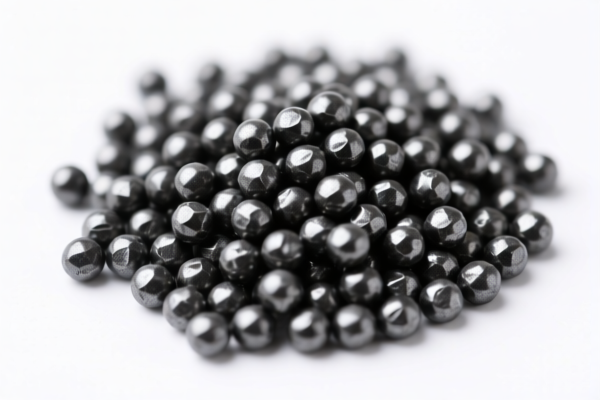
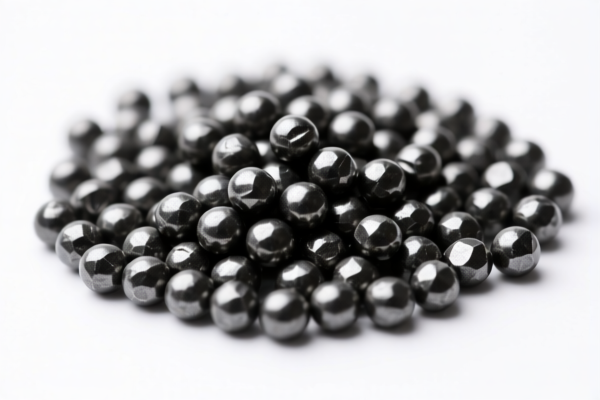
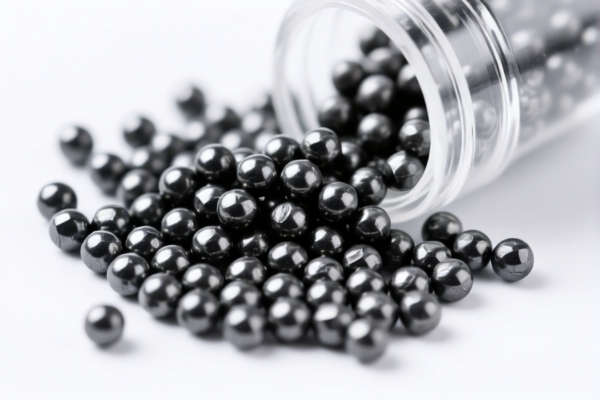
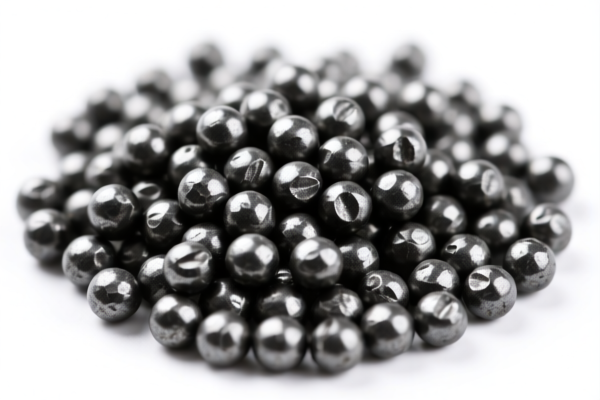
AI Analysis
🧪 High Purity Reference Material (HP RM)
🌐 HS Code Reference & Customs Clearance Guide | 2026 Latest Tariff Analysis | Professional Clearance Strategy
📌 I. Product Definition & Classification: What Exactly is "High Purity"?
High Purity Reference Materials (HP RM) are substances with extremely high chemical purity and precisely known composition, used for calibrating instruments, validating methods, or as primary standards in analytical chemistry. In international trade, they are often ambiguous because they can be viewed as semiconductors, chemical reagents, or piezoelectric components depending on their material form (e.g., Silicon, Germanium, Quartz) and physical state.
Key Distinction: * Semiconductor Crystals (Si/Ge): If the material is single-crystal silicon/germanium intended for electronic applications, it leans towards Chapter 85. * Chemical Reagents/Preparations: If it is a processed powder, liquid, or non-crystalline solid used purely for chemical analysis, it leans towards Chapter 38. * Piezoelectric Components: If the crystal is cut and prepared for frequency control or sensing, it may fall under Chapter 85 as a piezoelectric crystal.
⚠️ Critical Classification Point:
- If it is a raw or processed semiconductor wafer/crystal (Si, Ge, GaAs) → 8541.60 (Piezoelectric crystals/semiconductor bases).
- If it is a chemical mixture, solution, or non-semiconductor reagent → 3824.99 (Chemical products/names not elsewhere specified).
- Note: Even if "Reference Material," the physical form dictates the HS Code.
📦 II. HS Code Classification Details (2026 Latest Tariff Authority)
Based on the provided data, here are the three possible classifications for High Purity Reference Materials:
| HS Code | Product Description | Summary/Rationale | Material Form |
|---|---|---|---|
8541.60.00.80 |
Other Piezoelectric Crystals | High purity crystals classified as piezoelectric crystals. Material attributes are consistent; falls under the "Other" catch-all category. | Single Crystal (e.g., Quartz, Si, Ge) |
3824.99.11.00 |
Other Chemical Preparations | High purity crystals share usage and form with cultivated crystals, classified under chemical industry-related preparations. | Chemical Reagent / Processed Solid |
8541.60.00.10 |
Semiconductor Device Base Crystals | High purity materials inferred to be Silicon, Germanium, etc., fitting the basic crystal form of semiconductor devices. | Single Crystal (Si/Ge) |
🔍 Key Reminder:
-8541.60variants are for crystalline solids (Si, Ge, Quartz) used in electronics or piezoelectric applications.
-3824.99is for chemical preparations or when the crystal is not strictly defined as a semiconductor device component.
- Do not classify as simple chemicals if the material is a structured crystal lattice intended for electronic/physical use.
💰 III. 2026 Latest Tariff Rate Breakdown (Including Surcharges & Policy Add-ons)
✅ Applicable Country: United States (US)
✅ Origin: China (CN)
✅ Effective Date: 2025/2026 (Current US Trade Policy)
All three HS Codes listed in the share the same total tariff burden due to ongoing US-China trade restrictions.
🎯 1. General Tariff Structure for All Listed HS Codes
| Item | Content |
|---|---|
| Basic Tariff (MFN) | 0.0% |
| Section 301 Additional Tariff | +25.0% |
| Section 122 Tariff (Specific Policy) | +10.0% |
| Total Effective Tariff | 35.0% |
| Tax Calculation Base | CIF Value × 35% |
| De Minimis Exemption Available? | ❌ NO (Highly unlikely for industrial/chemical goods from CN) |
| Legal Basis Path | USITC:8541.60/3824.99 → FOOTNOTE:301 (25%) → FOOTNOTE:122 (10%) |
📌 Explanation of Surcharges:
- +25% (Section 301): The standard additional duty on most Chinese goods under US Trade Law Section 301.
- +10% (Section 122): Refers to specific national security or emergency powers tariffs (often associated with broad Chinese import restrictions).
- Combined Impact: A 35% flat rate applies regardless of whether you classify under3824.99or8541.60. This means HS Code selection does NOT save tax in this specific dataset, but it does affect regulatory compliance (e.g., FCC, EPA, or Department of Commerce rules).
🛠️ IV. Customs Clearance Practical Advice (Avoiding Pitfalls)
✅ 1. Required Documentation Checklist
| Document | Mandatory? | Explanation |
|---|---|---|
| ✅ Certificate of Analysis (CoA) | ✔️ | Critical. Must prove purity level (e.g., 99.999%) and material composition (Si, Ge, etc.). |
| ✅ Material Safety Data Sheet (MSDS) | ✔️ | Required for chemical handling, even if solid. |
| ✅ Product Photograph | ✔️ | Clear image showing crystal form (wafer, ingot, powder, block). |
| ✅ Commercial Invoice | ✔️ | Must clearly state "High Purity Reference Material" and specific chemical formula. |
| ✅ Intended Use Statement | ✔️ | e.g., "For calibrating semiconductor testing equipment" vs. "For laboratory chemical analysis." |
| ✅ Origin Certificate | ✔️ | To confirm CN origin (which triggers the 35% tax). |
✅ 2. Classification Strategy & Declaration Tips
🔥 "Form Defines Code, Use Defines Compliance"
| Scenario | Recommended HS Code | Reasoning |
|---|---|---|
| Silicon/Germanium Wafer/Ingot | 8541.60.00.10 |
Clearly semiconductor material. |
| Quartz/Piezoelectric Crystal | 8541.60.00.80 |
Falls under piezoelectric/catch-all. |
| Chemical Powder/Solution | 3824.99.11.00 |
Not a structured crystal; treated as chemical prep. |
| Mixed/Unknown | 8541.60.00.80 |
Safer "catch-all" for crystals if semiconductor status is ambiguous. |
⚠️ Warning:
- Do not declare as "General Chemical" if it is a semiconductor wafer. This can lead to delays by the Department of Commerce (BIS) if it involves dual-use tech.
- Ensure the HTSUS description matches the physical form (e.g., "Single Crystal Silicon" vs. "Silicon Powder").
✅ 3. Special Considerations
| Situation | Handling Advice |
|---|---|
| Export Control (EAR) | Check if the HP RM is on the Commerce Control List (CCL). High-purity Si/Ge may require an export license from the origin country. |
| FDA/EPA Regulations | If the material interacts with food/drugs or is an environmental agent, additional agency clearances may apply. |
| Packaging | Ensure packaging is inert (e.g., nitrogen-filled) to prevent oxidation during transit, which could affect the "purity" claim at customs. |
🌍 V. Global Market Comparison (2026 Context)
| Region | Recommended HS Code | Estimated Duty (CN Origin) | Key Regulatory Body |
|---|---|---|---|
| 🇺🇸 USA | 8541.60 or 3824.99 |
35% (25% Sec 301 + 10% Sec 122) | CBP, BIS, EPA |
| 🇪🇺 EU | 3824.99 or 2804/3824 |
~0-5% (Varies by exact sub-heading) | REACH, ECHA |
| 🇨🇳 China | 3824.99 or 8541.60 |
~0-5% | CIQ (Inspection & Quarantine) |
| 🇯🇵 Japan | 3824.99 or 8541.60 |
~0-5% | METI, PMDA |
📌 Conclusion for US Imports:
- The 35% tariff is unavoidable for CN-origin HP RMs in these categories.
- Cost optimization should focus on supply chain efficiency and accurate documentation to prevent clearance delays, rather than trying to shift the HS Code to avoid tax (as rates are identical in this dataset).
📌 VI. Common Mistakes & Pitfalls (Lessons Learned)
❌ Mistake 1: Classifying Semiconductor Crystals as "General Chemicals" (2933/2904)
👉 Consequence: Incorrect HS Code leads to regulatory scrutiny (BIS/EPA) and potential fines.
❌ Mistake 2: Failing to provide a Certificate of Analysis (CoA)
👉 Consequence: Customs may downgrade the value or reject the "High Purity" claim, leading to re-inspection and storage fees.
❌ Mistake 3: Ignoring Section 122/301 Surcharges in Costing
👉 Consequence: Budgeting for 0% duty when 35% is actually due.
✅ Correct Practice:
Declare as: "High Purity Single Crystal Silicon Reference Material, 99.999%, for Semiconductor Calibration, Model XYZ, Origin: China"
HS Code:8541.60.00.10
Duty: 35%
🎯 VII. Conclusion: Precision in Classification Saves Time and Money
🎯 Key Takeaway:
🔹 "High Purity" is a quality attribute, not a customs category.
🔹 Form dictates Code: Crystals →8541.60; Chemicals/Preps →3824.99.
🔹 Tax is Fixed at 35%: Regardless of the HS Code choice in this dataset, the financial impact is the same. Focus on compliance accuracy to avoid delays.
📌 Pro Tip:
Always secure a pre-ruling from US Customs if the material form is borderline (e.g., polycrystalline vs. single crystal). This ensures certainty before shipment.
📣 Immediate Action Items:
📞 Contact your freight forwarder to confirm packaging requirements for crystalline materials.
📄 Prepare the CoA in advance for each batch.
🚀 Budget for 35% duty in your landed cost calculation.
✨ Professional Clearance Starts with Accurate Classification!
💼 Every percentage point and document counts in high-stakes trade!
Customer Reviews
About HS Code Classification
The Harmonized System (HS) is an internationally standardized nomenclature developed by the World Customs Organization (WCO) to classify traded products. Over 200 countries use the HS system as the basis for customs tariffs, trade statistics, and import/export regulations.
Each HS code follows a hierarchical structure:
- Chapter (2 digits) — Broad category of goods (e.g., Chapter 84: Machinery and Mechanical Appliances)
- Heading (4 digits) — More specific grouping within the chapter
- Subheading (6 digits) — Internationally standardized breakdown, used by all WCO member countries
- National subdivisions (8-10 digits) — Country-specific extensions for further classification, such as US HTSUS 10-digit codes
Correct HS code classification is essential for smooth customs clearance, accurate duty payment, and compliance with trade regulations. Misclassification can lead to customs delays, overpayment of duties, or penalties.
When importing from CN to US, the applicable tariff rates may include:
- Most-Favored-Nation (MFN) rate — The standard duty rate applied to WTO members
- General rate — Applied to countries without trade agreements
- Trade remedy duties — Additional tariffs such as Section 301 (anti-dumping), Section 232 (national security), or countervailing duties
The information provided on this page is for reference purposes only. For official classification, please consult with your local customs authority or a licensed customs broker.