High Purity Sodium Tungstate Catalyst
CN → US| HS Code | Tariff Rate | Origin | Destination | Doc |
|---|---|---|---|---|
| 2825300050 | 40.5% | CN | US | Official Doc |
| 2841905000 | 38.7% | CN | US | Official Doc |
| 3824993600 | 24.0% | CN | US | Official Doc |
| 2825300010 | 40.5% | CN | US | Official Doc |
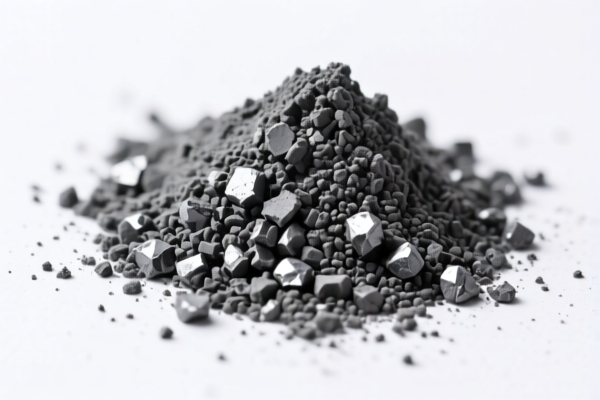
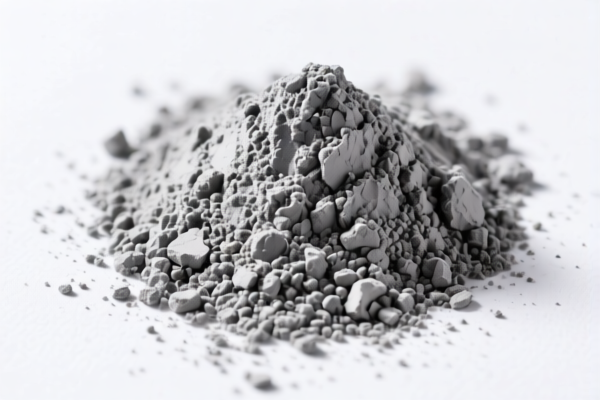
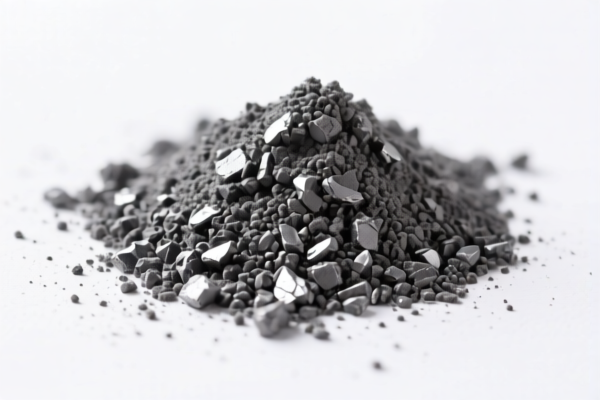
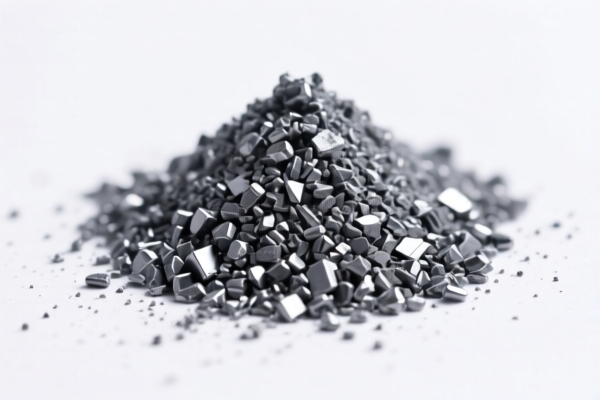
Product Images
AI Analysis
🧪 High Purity Sodium Tungstate Catalyst (High Purity Sodium Tungstate Catalyst)
🌐 HS Code Reference & Customs Clearance Guide | 2026 Latest Tariff Analysis | Professional-Level Clearance Strategy
📌 I. Product Definition & Classification: Do You Really Understand "Sodium Tungstate"?
Sodium Tungstate ($Na_2WO_4$) is a critical inorganic chemical compound widely used as a corrosion inhibitor, dye mordant, and specifically, as a catalyst in industrial chemical processes and high-purity applications. In international trade, its classification depends strictly on its chemical composition, purity level, and intended use (catalytic vs. general chemical).
Key Distinction: * Inorganic Compounds of Tungsten: Pure sodium tungstate falls primarily under Chapter 28. * Prepared Catalysts/Chemical Preparations: If formulated as a specific catalyst mixture or preparation not elsewhere specified, it may fall under Chapter 38.
⚠️ Critical Classification Point:
- If it is pure sodium tungstate used as a chemical reagent or intermediate → Chapter 28.
- If it is a mixture or preparation specifically designed as a catalyst (not elsewhere specified) → Chapter 38.
- Note: The data provided lists multiple HS codes due to ambiguity in description ("not elsewhere specified," "mixtures," "catalysts"). We will break down each code below.
📦 II. HS Code Classification Details (2026 Latest Tariff Authority Cross-Reference)
Based on the provided data, here are the relevant HS codes and their specific descriptions:
| HS Code | Product Description | Application Scenario | Key Characteristics |
|---|---|---|---|
2833.29 |
Other inorganic compounds of tungsten, not elsewhere specified, including sodium tungstate, used as a catalyst in chemical processes. | Chemical synthesis, industrial catalysis using pure tungsten compounds. | Pure inorganic compound. "Not elsewhere specified" implies it doesn't fit more specific tungsten categories. |
3824.99 |
Other chemical products and preparations not elsewhere specified, including high purity sodium tungstate used as a catalyst in industrial applications. | Industrial catalytic processes where sodium tungstate is part of a broader "other" chemical preparation. | Broad category for "other" chemical products. High purity noted. |
3824.99 |
Other catalysts and catalytic preparations, not elsewhere specified, including high purity sodium tungstate used in industrial catalytic applications. | Specifically marketed/formulated as a "catalyst preparation." | Focuses on the function (catalyst) rather than just the chemical nature. |
3824.99.35.00 |
Prepared binders for foundry molds or cores; chemical products... Mixtures of two or more inorganic compounds: Of tungsten | Industrial mixtures containing tungsten compounds. | Mixtures of inorganic compounds. Specifically "Of tungsten." |
3824.99.39.90 |
Prepared binders for foundry molds or cores; chemical products... Mixtures of two or more inorganic compounds: Other Other | General inorganic mixtures not specifically identified as tungsten or other specific types. | Other inorganic mixtures. Broadest category for "other." |
🔍 Important Reminder:
-2833.29is the most direct fit for pure sodium tungstate as an inorganic compound.
-3824.99variants are used when the product is considered a "preparation" or "mixture" rather than a pure substance, or when classified under "other catalysts."
-3824.99.35.00and3824.99.39.90apply specifically to mixtures of inorganic compounds. If your product is pure sodium tungstate, these may be incorrect unless it is explicitly a mixture.
💰 III. 2026 Latest Tariff Rate Breakdown (Including Additional Duties & Policy Surcharges)
✅ Applicable Country: United States (US)
✅ Origin: China (CN) (Assumed based on typical tariff context in such queries)
✅ Effective Time: Current tariffs apply
🎯 1. 2833.29 —— Other Inorganic Compounds of Tungsten
| Item | Content |
|---|---|
| Base Tariff | Error / Failed to Retrieve |
| Additional Duties | Error / Failed to Retrieve |
| Total Tax | Error |
| Explanation | The system failed to retrieve specific tax details for this HS code in the provided data. |
📌 Note: This code is for pure sodium tungstate. In standard US tariffs, Chapter 28 goods often have lower base duties, but specific rates depend on the exact subheading and current trade policies. Verification required.
🎯 2. 3824.99 —— Other Chemical Products / Catalysts (General)
| Item | Content |
|---|---|
| Base Tariff | Failed to Retrieve |
| Additional Duties | Failed to Retrieve |
| Total Tax | Error |
| Explanation | Broad category. Tax rates vary significantly based on the specific nature of the "other" chemical. |
📌 Note: This code is often a "catch-all." Customs may scrutinize this more heavily to ensure it’s not misclassified from a more specific category.
🎯 3. 3824.99.35.00 —— Mixtures of Two or More Inorganic Compounds: Of Tungsten
| Item | Content |
|---|---|
| Base Tariff | 6.5% |
| Additional Tariff | 0.0% |
| Total Tax | 6.5% |
| Tax Calculation | CIF Value × 6.5% |
| De Minimis Exemption | ❌ Not Applicable (Standard commercial import) |
| Legal Basis | HTSUS 3824.99.35.00 |
📌 Explanation:
- This code applies if the product is a mixture containing tungsten compounds.
- Lowest tax rate among the provided options (6.5%).
- Key Condition: Must be a mixture of inorganic compounds, not pure sodium tungstate.
🎯 4. 3824.99.39.90 —— Mixtures of Two or More Inorganic Compounds: Other Other
| Item | Content |
|---|---|
| Base Tariff | 0.0% |
| Additional Tariff | 25.0% |
| Total Tax | 25.0% |
| Tax Calculation | CIF Value × 25.0% |
| De Minimis Exemption | ❌ Not Applicable |
| Legal Basis | HTSUS 3824.99.39.90 |
📌 Explanation:
- Base rate is 0%, but a 25% additional tariff applies (likely due to Section 301 or other trade remedies).
- Total 25% is significantly higher than3824.99.35.00.
- Key Condition: Also requires the product to be a mixture.
🛠️ IV. Customs Clearance Practical Advice (Pitfall Avoidance Guide)
✅ 1. Document Checklist (Indispensable)
| Document | Required | Description |
|---|---|---|
| ✅ Product Specification Sheet | ✔️ | Must specify purity (e.g., 99.9%, 99.99%) and chemical formula ($Na_2WO_4$). |
| ✅ MSDS (Material Safety Data Sheet) | ✔️ | Required for chemical imports. Shows hazards and handling instructions. |
| ✅ Certificate of Analysis (COA) | ✔️ | Proves purity and composition. Critical for distinguishing between "pure compound" and "mixture." |
| ✅ Commercial Invoice | ✔️ | Clearly state "Sodium Tungstate" and intended use (e.g., "Catalyst in Chemical Process"). |
| ✅ Packing List | ✔️ | Detail net/gross weight, packaging type. |
| ✅ Intended Use Declaration | ✔️ | Confirm if it’s a pure chemical or a formulated catalyst preparation. |
✅ 2. Declaration Tips (Key Mnemonic)
🔥 "Pure in Chapter 28, Mixture in Chapter 38, Purity Determines the Code!"
| Scenario | Correct HS Code | Incorrect Code | Consequence |
|---|---|---|---|
| Pure Sodium Tungstate (≥99% purity, single compound) | 2833.29 |
3824.99.35.00 |
Misclassification penalty. Tax rate uncertainty. |
| Mixture of Tungsten Compounds | 3824.99.35.00 |
2833.29 |
Overpaying tax (if 6.5% is lower) or underpaying (if higher duties apply). |
| Other Inorganic Mixture (Non-tungsten specific) | 3824.99.39.90 |
3824.99.35.00 |
Higher tax (25% vs 6.5%). |
| Catalyst Preparation (Formulated blend) | 3824.99 |
2833.29 |
Potential audit for "catalyst" vs "chemical." |
📌 Critical Advice:
- If your product is pure sodium tungstate, DO NOT use3824.99.35.00or3824.99.39.90unless it is explicitly a mixture.
- Pure sodium tungstate should be declared under2833.29.
- If the customs officer questions the "catalyst" use, provide COA and technical data proving it’s a pure chemical, not a formulated catalyst blend.
✅ 3. Special Case Handling
| Situation | Handling Advice |
|---|---|
| High Purity (>99.9%) | Strongly argue for 2833.29 (Chapter 28) as it’s a pure inorganic compound. |
| Lower Purity or Contaminants | If it’s a technical grade with impurities, it may be considered a "preparation" → 3824.99. |
| Mixed with Other Salts | If mixed with other inorganic salts (e.g., sodium chloride), it’s a mixture → 3824.99.35.00 (if tungsten is the key component) or 3824.99.39.90. |
| Catalyst Formulation | If combined with supports (e.g., alumina, silica) → 3824.99 (Catalytic preparations). |
🌍 V. Global Market Comparison (2026 Latest)
| Country/Region | Recommended HS Code | Tariff | Certification Requirement | Notes |
|---|---|---|---|---|
| 🇺🇸 USA | 2833.29 |
Error/Unspecified | None | If mixture, use 3824.99.35.00 (6.5%) or 3824.99.39.90 (25%). |
| 🇨🇳 China | 2833.29 |
~6.5% | None | Import duty similar to US base rate. |
| 🇪🇺 EU | 2833.29 |
0% | REACH Registration | No duty if pure. REACH compliance required. |
| 🇯🇵 Japan | 2833.29 |
0-3.5% | None | Low duty for inorganic compounds. |
📌 Conclusion:
- USA: Tariff ambiguity for2833.29requires verification. For mixtures,3824.99.35.00(6.5%) is more favorable than3824.99.39.90(25%).
- EU/Japan: Lower duties for pure compounds. REACH/chemical safety regulations apply.
📌 VI. Common Errors & Pitfall Guide (Lessons Learned)
❌ Error 1: Declaring pure sodium tungstate as 3824.99.35.00 (Mixture)
👉 Consequence: Customs may reject if no mixture is present. Potential misdeclaration penalty.
❌ Error 2: Using 3824.99.39.90 for pure sodium tungstate
👉 Consequence: 25% tax instead of potentially lower (or unknown) rate for pure compound. Overpayment.
❌ Error 3: Failing to provide COA for "High Purity" claims
👉 Consequence: Customs may classify as "technical grade" or "mixture," leading to higher duties or delays.
❌ Error 4: Not specifying "Catalyst" use in invoice
👉 Consequence: Customs may classify as general chemical, affecting valuation or regulatory review.
✅ Correct Approach:
"High Purity Sodium Tungstate ($Na_2WO_4$), 99.9% Purity, Pure Inorganic Compound, Not a Mixture, For Use as Catalyst in Chemical Synthesis."
🎯 VII. Conclusion: Professional Declaration, Cost Optimization!
🎯 Remember the Mnemonic:
🔹 "Pure = 2833.29, Mixture = 3824.99, Purity is Key!"
🔹 "If it’s a mixture, choose 35.00 (6.5%) over 39.90 (25%)."
📌 Tips:
- If your product is pure, always push for 2833.29.
- If it’s a mixture, ensure it fits 3824.99.35.00 (Tungsten-specific) for lower tax (6.5%) vs 3824.99.39.90 (25%).
- Request a Pre-Ruling from US Customs (CBP) if the classification is ambiguous to avoid post-entry audits.
📣 Immediate Action:
📞 Provide COA and Specification Sheet to your customs broker.
🚀 Clarify Purity & Composition to ensure correct HS code assignment.
✨ Professional clearance starts with precise classification!
💼 Your every cent of tax cost deserves precise calculation!
Customer Reviews
About HS Code Classification
The Harmonized System (HS) is an internationally standardized nomenclature developed by the World Customs Organization (WCO) to classify traded products. Over 200 countries use the HS system as the basis for customs tariffs, trade statistics, and import/export regulations.
Each HS code follows a hierarchical structure:
- Chapter (2 digits) — Broad category of goods (e.g., Chapter 84: Machinery and Mechanical Appliances)
- Heading (4 digits) — More specific grouping within the chapter
- Subheading (6 digits) — Internationally standardized breakdown, used by all WCO member countries
- National subdivisions (8-10 digits) — Country-specific extensions for further classification, such as US HTSUS 10-digit codes
Correct HS code classification is essential for smooth customs clearance, accurate duty payment, and compliance with trade regulations. Misclassification can lead to customs delays, overpayment of duties, or penalties.
When importing from CN to US, the applicable tariff rates may include:
- Most-Favored-Nation (MFN) rate — The standard duty rate applied to WTO members
- General rate — Applied to countries without trade agreements
- Trade remedy duties — Additional tariffs such as Section 301 (anti-dumping), Section 232 (national security), or countervailing duties
The information provided on this page is for reference purposes only. For official classification, please consult with your local customs authority or a licensed customs broker.