High Purity Sodium Vanadate Catalyst
CN → US| HS Code | Tariff Rate | Origin | Destination | Doc |
|---|---|---|---|---|
| 2825300050 | 40.5% | CN | US | Official Doc |
| 2841905000 | 38.7% | CN | US | Official Doc |
| 3824993600 | 24.0% | CN | US | Official Doc |
| 2825300010 | 40.5% | CN | US | Official Doc |
Product Images
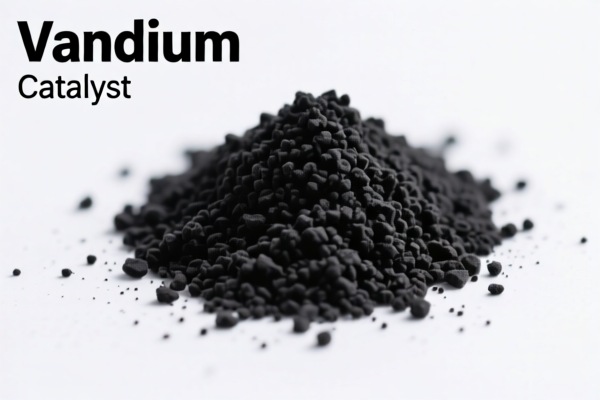

AI Analysis
🧪 High Purity Sodium Vanadate Catalyst: HS Code Classification & Clearance Strategy (2026 Guide)
🌐 HS Code Reference & Customs Clearance Guide | 2026 Latest Tariff Analysis | Professional Clearance Strategy
📌 I. Product Definition & Classification: Do You Really Understand "Sodium Vanadate"?
High Purity Sodium Vanadate Catalyst is a critical chemical intermediate and catalyst used in industrial chemical synthesis, such as the oxidation of organic compounds or in the production of polymers. In international trade, its classification depends heavily on its chemical structure and specific use.
It generally falls into two main categories: * Vanadium Salts (Inorganic Salts): If classified primarily as a salt of vanadium, it may fall under Chapter 28 (Inorganic Chemicals). * Chemical Preparations/Catalysts: If classified based on its specific catalytic preparation or mixed formulation, it may fall under Chapter 38 (Miscellaneous Chemical Products).
⚠️ Key Distinction Point: - If it is a pure inorganic salt of vanadium → Likely Chapter 28 (
2825.30...). - If it is considered a "preparation" or has specific catalytic properties not covered by pure salts → Likely Chapter 38 (3824.99...) or other subheadings in Chapter 28 (2841.90...).
📦 II. HS Code Classification Details (2026 Latest Tariff Authority Cross-Reference)
Based on the provided data, there are four potential HS Code classifications for High Purity Sodium Vanadate Catalyst. Please note the significant differences in tax rates.
| HS Code | Product Description & Logic | Tax Rate (Total) | Key Reasoning |
|---|---|---|---|
2825.30.00.50 |
Other salts of vanadium. Classified as an inorganic salt/alkali. | 40.5% | Core material is a vanadium salt. Fits "Other" category under inorganic salts. |
2841.90.50.00 |
Other oxy-metal salts or peroxo-metal salts. Classified as an oxy-metal salt. | 38.7% | Core material is an oxy-metal salt. Fits "Other" fallback category under oxy-metal salts. |
3824.99.36.00 |
Chemical products & preparations (Miscellaneous). Material is vanadium-based, used as a chemical agent. | 24.0% | Considered a chemical preparation/product. Lowest Total Tax. |
2825.30.00.10 |
Specific inorganic salt. Highly related to Vanadium Pentoxide (V2O5). |
40.5% | Specifically categorized under inorganic salts, closely tied to V2O5 material attributes. |
🔍 Important Reminder: -
3824.99.36.00offers the lowest total tax (24.0%), but requires justification that it is a "chemical preparation" rather than a pure inorganic salt. -2825.30...and2841.90...have higher taxes (38.7%-40.5%) but are more scientifically accurate if the product is a pure chemical compound. - Misclassification can lead to severe penalties and delayed clearance.
💰 III. 2026 Latest Tariff Rate Details (Including Surtaxes & Policy Add-ons)
✅ Applicable Country: United States (US)
✅ Origin: China (CN)
✅ Effective Time: Ongoing (including subsequent imports)
🎯 1. 2825.30.00.50 & 2825.30.00.10 —— Vanadium Salts (Inorganic Chemicals)
| Item | Content |
|---|---|
| Base Tariff | 5.5% |
| Section 301 Surtax | +25.0% |
| 122 Clause Tariff | +10% |
| Total Tax Rate | 40.5% |
| Tax Calculation | CIF Value × 40.5% |
| De Minimis Exemption? | ❌ No (Deny de minimis for Section 301 goods) |
| Legal Basis Path | USITC:2825.30.00.50 → Section 301: 25% → 122 Clause: 10% |
📌 Explanation: - These codes are classified as inorganic chemicals. - They are subject to the full Section 301 surtax (25%) and the 122 Clause tariff (10%). - Total burden is high (40.5%).
🎯 2. 2841.90.50.00 —— Oxy-Metal Salts (Inorganic Chemicals)
| Item | Content |
|---|---|
| Base Tariff | 3.7% |
| Section 301 Surtax | +25.0% |
| 122 Clause Tariff | +10% |
| Total Tax Rate | 38.7% |
| Tax Calculation | CIF Value × 38.7% |
| De Minimis Exemption? | ❌ No |
| Legal Basis Path | USITC:2841.90.50.00 → Section 301: 25% → 122 Clause: 10% |
📌 Explanation: - Slightly lower base tariff (3.7%) than
2825, but still subject to 35% additional surtaxes. - Total burden: 38.7%.
🎯 3. 3824.99.36.00 —— Chemical Preparations (Miscellaneous Chemical Products)
| Item | Content |
|---|---|
| Base Tariff | 6.5% |
| Section 301 Surtax | +7.5% |
| 122 Clause Tariff | +10% |
| Total Tax Rate | 24.0% |
| Tax Calculation | CIF Value × 24.0% |
| De Minimis Exemption? | ❌ No |
| Legal Basis Path | USITC:3824.99.36.00 → Section 301: 7.5% → 122 Clause: 10% |
📌 Explanation: - This is the most tax-efficient classification (24.0%). - The Section 301 surtax is only 7.5% (not 25%), likely due to different list coverage or specific exemptions for certain chemical preparations. - Crucial: You must prove the product is a "preparation" or has specific catalytic properties not covered by pure inorganic salt definitions.
🛠️ IV. Customs Clearance Practical Advice (Battle-Tested Pitfall Avoidance Guide)
✅ 1. Preparation Material Checklist (No Shortcuts)
| Material | Must Provide | Description |
|---|---|---|
| ✅ Product Specification Sheet | ✔️ | Purity level, chemical formula, molecular weight, CAS number. |
| ✅ MSDS (Safety Data Sheet) | ✔️ | Essential for hazardous material classification (if any). |
| ✅ Certificate of Analysis (COA) | ✔️ | Proves "High Purity" and specific composition. |
| ✅ Third-Party Test Report | ✔️ | Independent lab report confirming it is a catalyst or chemical preparation. |
| ✅ Commercial Invoice | ✔️ | Must clearly state "High Purity Sodium Vanadate Catalyst" and HS Code. |
| ✅ Packing List | ✔️ | Detail net/gross weight, dimensions, and packaging type. |
✅ 2. Declaration Tips (Key Mantras)
🔥 "Pure Salt? High Tax. Catalyst Prep? Low Tax. Justify Structure, Not Just Name!"
| Situation | Correct Declaration | Wrong Approach |
|---|---|---|
| Pure Sodium Vanadate (99%+ purity, no additives) | 2825.30.00.50 or 2841.90.50.00 |
Claiming it's a "preparation" without evidence → Risk of Audit/Fine |
| Sodium Vanadate mixed with carriers/supports (Catalyst Form) | 3824.99.36.00 |
Declaring as pure salt → Overpaying Tax |
| Used in specific industrial synthesis | Provide Application Statement | No usage description → Ambiguity |
✅ 3. Special Circumstances Handling
| Situation | Handling Advice |
|---|---|
| OEM Custom Catalyst | Provide client order + design specs. Show it's a specialized preparation, not a commodity chemical. |
| High Purity (>99.9%) | Likely classified as inorganic salt (2825). Be prepared for 40.5% tax. |
| Supported Catalyst (on Carbon/Alumina) | Strong case for 3824.99.36.00 (Preparation). Tax is 24.0%. |
| Unclear Classification | Apply for CBP Advance Ruling before shipment. Avoids retroactive duties. |
🌍 V. Global Main Market Clearance Comparison (2026 Latest)
| Country/Region | Recommended HS Code | Tariff (China Origin) | Certification Requirements | Remarks |
|---|---|---|---|---|
| 🇺🇸 USA | 3824.99.36.00 (if applicable) |
24.0% (Total) | TSCA (Toxic Substances Control Act) | Cheapest option if justified as preparation. |
| 🇺🇸 USA | 2825.30.00.50 |
40.5% (Total) | TSCA | Standard for inorganic salts. |
| 🇨🇳 China | 2825.30.00.00 |
~5-7% | None specific | Import duties are lower. |
| 🇪🇺 EU | 2825.30.00.00 |
~6.5% | REACH Registration | Requires REACH compliance for chemicals. |
| 🇮🇳 India | 2825.30.00.00 |
~7.5-10% | BIS/ICCP | Varies by purity and end-use. |
📌 Conclusion: - The USA is the most complex market due to Section 301 and 122 Clause tariffs. - Tax savings of 16.5% (40.5% - 24.0%) are significant for high-volume shipments. - Recommendation: If your product is a supported catalyst or mixed preparation, aggressively pursue
3824.99.36.00with strong technical documentation.
📌 VI. Common Mistakes & Pitfall Guide (Lessons Learned the Hard Way)
❌ Mistake 1: Declaring a supported catalyst as "Pure Sodium Vanadate" to match 2825
👉 Consequence: If audited, CBP may reclassify it as 3824, but you may have missed opportunity for smoother clearance. Actually, if it's a preparation, 3824 is cheaper, so this mistake is costly (paying 40.5% instead of 24.0%).
❌ Mistake 2: Using "Chemical" as a generic description 👉 Consequence: Customs lacks clarity → Inspection delay → Demurrage charges.
❌ Mistake 3: Ignoring the 122 Clause Tariff 👉 Consequence: Underestimating total landed cost. The 10% surtax applies regardless of HS code in many cases.
❌ Mistake 4: Assuming "High Purity" automatically means 2825
👉 Consequence: If it has catalytic additives, 2825 is incorrect. Justify the "Preparation" status to access 3824.
✅ Correct Action:
"High Purity Sodium Vanadate Supported on Alumina, Catalytic Grade for Oxidation Reactions, CAS No. XXXXX, 99% Purity"
🎯 VII. Conclusion: Professional Declaration, Time-Saving, Cost-Efficient!
🎯 Remember the Mantra:
🔹 "Supported Catalyst = Preparation = 24% Tax" 🔹 "Pure Salt = Inorganic = 40.5% Tax" 🔹 "Documentation is King!"
📌 Pro Tip:
If your Sodium Vanadate is mixed with a carrier (e.g., activated carbon, silica, alumina) to form a catalyst, it is technically a chemical preparation. You have a strong case for 3824.99.36.00.
- Action: Obtain a detailed technical sheet showing the support material and catalytic function.
- Benefit: Save 16.5% in total duties.
📣 Immediate Action:
📞 Consult with a customs broker + Provide MSDS & COA + Apply for CBP Advance Ruling if shipment value is high. 🚀 Let your catalyst, clear smoothly, and maximize your margin!
✨ Professional Clearance, Starting from Precise Classification! 💼 Every cent of your cost deserves precise calculation!
Customer Reviews
About HS Code Classification
The Harmonized System (HS) is an internationally standardized nomenclature developed by the World Customs Organization (WCO) to classify traded products. Over 200 countries use the HS system as the basis for customs tariffs, trade statistics, and import/export regulations.
Each HS code follows a hierarchical structure:
- Chapter (2 digits) — Broad category of goods (e.g., Chapter 84: Machinery and Mechanical Appliances)
- Heading (4 digits) — More specific grouping within the chapter
- Subheading (6 digits) — Internationally standardized breakdown, used by all WCO member countries
- National subdivisions (8-10 digits) — Country-specific extensions for further classification, such as US HTSUS 10-digit codes
Correct HS code classification is essential for smooth customs clearance, accurate duty payment, and compliance with trade regulations. Misclassification can lead to customs delays, overpayment of duties, or penalties.
When importing from CN to US, the applicable tariff rates may include:
- Most-Favored-Nation (MFN) rate — The standard duty rate applied to WTO members
- General rate — Applied to countries without trade agreements
- Trade remedy duties — Additional tariffs such as Section 301 (anti-dumping), Section 232 (national security), or countervailing duties
The information provided on this page is for reference purposes only. For official classification, please consult with your local customs authority or a licensed customs broker.