High Purity Standard Substance
CN → US| HS Code | Tariff Rate | Origin | Destination | Doc |
|---|---|---|---|---|
| 8541600080 | 35.0% | CN | US | Official Doc |
| 3824991100 | 35.0% | CN | US | Official Doc |
| 8541600010 | 35.0% | CN | US | Official Doc |
Product Images
AI Analysis
🧪 High Purity Standard Substance (High Purity Crystal)
🌐 HS Code Reference & Customs Clearance Guide | 2026 Latest Tariff Analysis | Professional Entry Strategy
📌 I. Product Definition & Classification: Do You Really Understand "High Purity Crystals"?
High purity standard substances, particularly in crystalline form, are critical materials used in semiconductor manufacturing, chemical analysis, and precision instrumentation. In international trade, their classification depends heavily on their chemical composition, physical state, and specific intended use.
Key Distinction Points: * If used as a raw material for semiconductors or optoelectronics: Likely classified under Chapter 85 (Electrical Machinery). * If used as a chemical reagent or reference standard: Likely classified under Chapter 38 (Chemical Products). * If specifically a piezoelectric crystal: Classified under specific subheadings within Chapter 85.
⚠️ Critical Warning:
- High purity is not a standalone HS Code determinant.
- Misclassification can lead to severe penalties, delays, or unexpected tax burdens (especially with current US-China trade policies).
📦 II. HS Code Classification Details (2026 Latest Authorized Reference)
Based on the provided data, three primary HS Codes are applicable depending on the specific nature of the "High Purity Crystal."
| HS Code | Product Description | Applicability Context | Key Attribute |
|---|---|---|---|
8541.60.00.80 |
Piezoelectric Crystals (Other) | High purity crystals used for frequency control, filtering, or sensing. | Piezoelectric Property |
8541.60.00.10 |
Semiconductor Base Crystals | Crystals made of Silicon (Si), Germanium (Ge), etc., used in basic semiconductor devices. | Semiconductor Material |
3824.99.11.00 |
Chemical Preparations/Reagents | High purity crystals used as chemical standards, reference materials, or in chemical processing. | Chemical/Reference Use |
🔍 Important Note:
-8541.60.00.10is for semiconductor-grade crystals (e.g., Si, Ge).
-8541.60.00.80is for other electronic/piezoelectric crystals (e.g., Quartz, Lithium Niobate).
-3824.99.11.00is for non-electronic, chemical-grade high-purity standards.
💰 III. 2026 Latest Tariff Rate Breakdown (Including Surcharges)
✅ Applicable Country: United States (US)
✅ Country of Origin: China (CN)
✅ Effective Date: From November 10, 2025 (and onwards)
All three HS Codes listed below are subject to identical tariff structures due to current US trade policies targeting Chinese imports.
🎯 1. 8541.60.00.80 —— Piezoelectric Crystals (Other)
| Item | Content |
|---|---|
| Base Tariff | 0.0% |
| Section 301 Additional Tariff | +25.0% |
| Section 122 Additional Tariff | +10.0% |
| Total Tariff Rate | 35.0% |
| Tax Calculation | CIF Value × 35% |
| De Minimis Exemption | ❌ Not Available |
| Legal Basis Path | Section 301: 8541.60.00 → Section 122: 8541.60.00 → USITC Tariff Schedule |
📌 Explanation:
- The 25% is the standard Section 301 tariff on Chinese electronics components.
- The 10% is the Section 122 tariff (likely referring to specific additional measures on critical minerals/semiconductors).
- Total Burden: 35% is a significant cost driver.
🎯 2. 8541.60.00.10 —— Semiconductor Base Crystals
| Item | Content |
|---|---|
| Base Tariff | 0.0% |
| Section 301 Additional Tariff | +25.0% |
| Section 122 Additional Tariff | +10.0% |
| Total Tariff Rate | 35.0% |
| Tax Calculation | CIF Value × 35% |
| De Minimis Exemption | ❌ Not Available |
| Legal Basis Path | Section 301: 8541.60.00 → Section 122: 8541.60.00 → USITC Tariff Schedule |
📌 Note:
- Even though these are "semiconductor materials," they are not exempt from Section 301/122 tariffs if originating from China.
- High-purity Silicon/Germanium wafers fall under this category.
🎯 3. 3824.99.11.00 —— Chemical Preparations (High Purity Standards)
| Item | Content |
|---|---|
| Base Tariff | 0.0% |
| Section 301 Additional Tariff | +25.0% |
| Section 122 Additional Tariff | +10.0% |
| Total Tariff Rate | 35.0% |
| Tax Calculation | CIF Value × 35% |
| De Minimis Exemption | ❌ Not Available |
| Legal Basis Path | Section 301: 3824.99.11 → Section 122: 3824.99.11 → USITC Tariff Schedule |
📌 Note:
- If the crystal is used purely as a chemical reference standard (e.g., for calibration in labs) and not as an electronic component, it may fall here.
- However, the 35% total tariff remains the same.
🛠️ IV. Customs Clearance Practical Advice (Real-World Pitfall Avoidance)
✅ 1. Required Documentation Checklist (All Required)
| Document | Must Provide | Notes |
|---|---|---|
| ✅ Product Specification Sheet | ✔️ | Must detail purity level (e.g., 99.999%), crystal structure, and material (Si, Ge, Quartz, etc.). |
| ✅ Certificate of Analysis (CoA) | ✔️ | Proof of high purity from an accredited lab. |
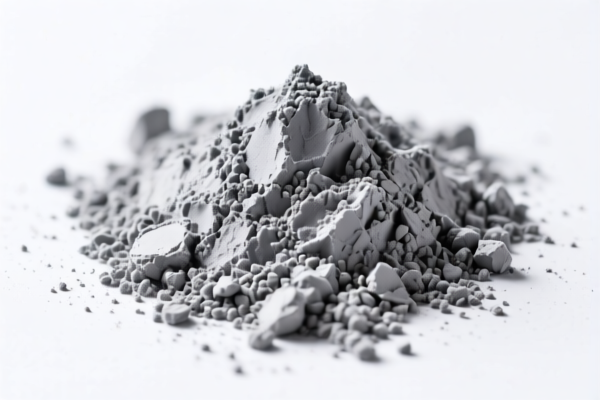
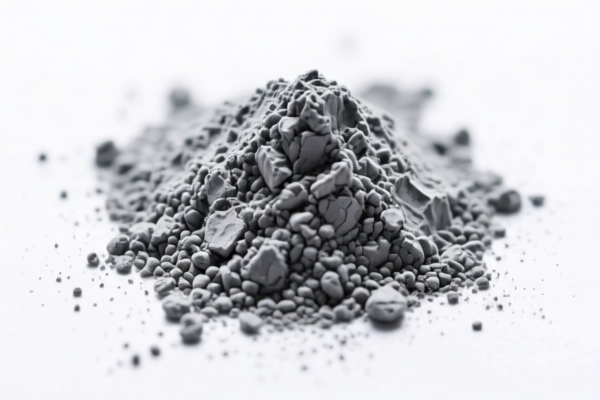
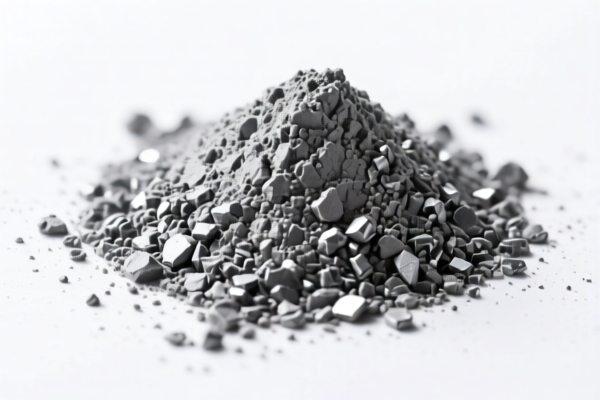
| ✅ Product Photos | ✔️ | Showing form (powder, wafer, boule, single crystal). |
| ✅ Statement of Use | ✔️ | Explicitly state if it is for semiconductor manufacturing, piezoelectric devices, or chemical analysis. |
| ✅ Commercial Invoice | ✔️ | Accurate HS Code must be declared. |
| ✅ Packing List | ✔️ | Detail net/gross weight, packaging type. |
✅ 2. Declaration Tips (Key Rules)
🔥 "Define Use, Define Form, Choose Code Right, Avoid 35% Surprise!"
| Scenario | Correct HS Code | Incorrect Practice |
|---|---|---|
| Silicon Wafer for Chip Manufacturing | 8541.60.00.10 |
Misclassifying as general chemical → Risk of audit |
| Quartz Crystal for Watch/Filter | 8541.60.00.80 |
Misclassifying as 3824 → Potential penalty |
| Calibration Standard for Lab | 3824.99.11.00 |
Misclassifying as electronic component → Over/Under payment |
| Mixed Purpose (Electron + Chem) | 8541.60.00.10 or .80 |
Using 3824 if electronic use is primary → Compliance risk |
📌 Key Insight:
- Primary Use determines the HS Code. If the crystal is primarily for electronic devices (even if high purity), Chapter 85 is preferred.
- If it is strictly a reference material for chemical testing with no electronic function, Chapter 38 may apply.
- All options result in 35% tariff for Chinese origin, so focus on correct classification to avoid customs delays and seizures.
✅ 3. Special Considerations
| Situation | Handling Advice |
|---|---|
| Non-Chinese Origin | If the crystal is sourced from USA, Germany, Japan, etc., the 301/122 tariffs may not apply. Check specific country rules. |
| Sample Shipments | No de minimis exemption applies for these goods from China. Even small samples incur 35% tax. |
| Packaging | Ensure packaging does not imply a different product (e.g., do not pack a crystal in a generic "chemical sample" bag if it’s an electronic component). |
🌍 V. Global Market Comparison (2026 Latest)
| Country/Region | Recommended HS Code | Tariff (China Origin) | Notes |
|---|---|---|---|
| 🇺🇸 USA | 8541.60.00.10 / .80 / 3824.99.11.00 |
35.0% | High tariffs due to 301 & 122 clauses. |
| 🇨🇳 China | Varies | 0% - 5% | No additional punitive tariffs. |
| 🇪🇺 EU | Varies | 0% - 4% | No Section 301/122 equivalent, but check Anti-Dumping duties. |
| 🇬🇧 UK | Varies | 0% - 4% | Post-Brexit rules apply. |
| 🇯🇵 Japan | Varies | 0% - 3% | No additional punitive tariffs. |
📌 Conclusion:
- The US market is uniquely expensive for Chinese high-purity crystals due to layered tariffs.
- Consider supply chain diversification (e.g., sourcing from non-China origins) if exporting to the US to avoid the 35% burden.
📌 VI. Common Errors & Pitfall Guide (Lessons Learned)
❌ Error 1: Declaring "High Purity Silicon" as 2804.29 (Silicon in crude form)
👉 Consequence: Incorrect classification. If it’s processed for electronics, it must be 8541. Customs will reclassify and assess back-tariffs.
❌ Error 2: Assuming "Standard Substance" automatically means 3824
👉 Consequence: If the substance is used in electronic devices (e.g., quartz watches), it should be 8541. Misclassification leads to audit flags.
❌ Error 3: Ignoring Section 122 Tariff
👉 Consequence: Many importers only calculate the 25% Section 301 tariff, forgetting the additional 10%. Total is 35%, not 25%.
✅ Correct Practice:
"High Purity Single Crystal Silicon, Grade E6, for Semiconductor Wafer Production, Origin: China, HS Code: 8541.60.00.10"
🎯 VII. Conclusion: Professional Declaration, Cost Control, Compliance!
🎯 Remember the Rules:
🔹 "Chinese Origin = 35% Total Tax for High Purity Crystals"
🔹 "Electronic Use → Chapter 85; Chemical Reference → Chapter 38"
🔹 "No De Minimis Exemption!"
📌 Pro Tip:
If your high-purity crystal is not of Chinese origin (e.g., from Germany, USA, or South Korea), you may be eligible for 0% additional tariffs.
Action: Provide a valid Certificate of Origin to prove non-Chinese origin and save 35% in costs.
📣 Immediate Action:
📞 Consult a Licensed Customs Broker
📄 Provide Product Specs & Certificate of Analysis
🚀 Verify HS Code with USITC before Shipment
✨ Precision in Classification, Savings in Taxes!
💼 Don’t Let Hidden Tariffs Erode Your Profits!
Customer Reviews
About HS Code Classification
The Harmonized System (HS) is an internationally standardized nomenclature developed by the World Customs Organization (WCO) to classify traded products. Over 200 countries use the HS system as the basis for customs tariffs, trade statistics, and import/export regulations.
Each HS code follows a hierarchical structure:
- Chapter (2 digits) — Broad category of goods (e.g., Chapter 84: Machinery and Mechanical Appliances)
- Heading (4 digits) — More specific grouping within the chapter
- Subheading (6 digits) — Internationally standardized breakdown, used by all WCO member countries
- National subdivisions (8-10 digits) — Country-specific extensions for further classification, such as US HTSUS 10-digit codes
Correct HS code classification is essential for smooth customs clearance, accurate duty payment, and compliance with trade regulations. Misclassification can lead to customs delays, overpayment of duties, or penalties.
When importing from CN to US, the applicable tariff rates may include:
- Most-Favored-Nation (MFN) rate — The standard duty rate applied to WTO members
- General rate — Applied to countries without trade agreements
- Trade remedy duties — Additional tariffs such as Section 301 (anti-dumping), Section 232 (national security), or countervailing duties
The information provided on this page is for reference purposes only. For official classification, please consult with your local customs authority or a licensed customs broker.