High Quality Flame Retardant Fabric
CN → US| HS Code | Tariff Rate | Origin | Destination | Doc |
|---|---|---|---|---|
| 590320 | 0.0% | CN | US | Official Doc |
| 590390 | 0.0% | CN | US | Official Doc |
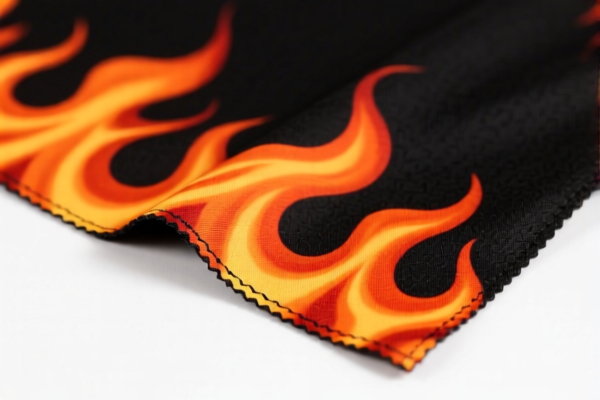
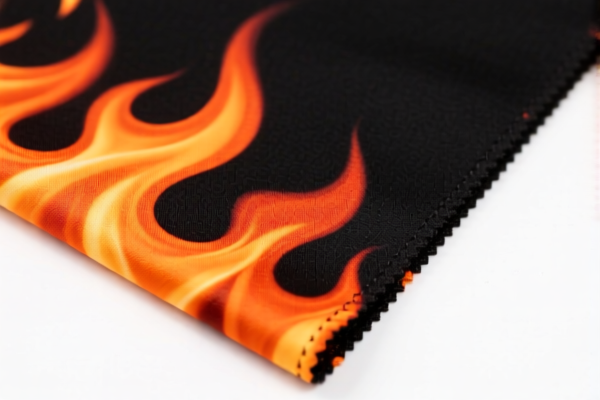
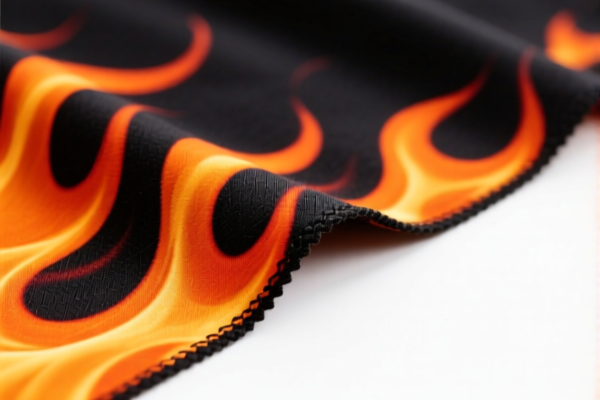
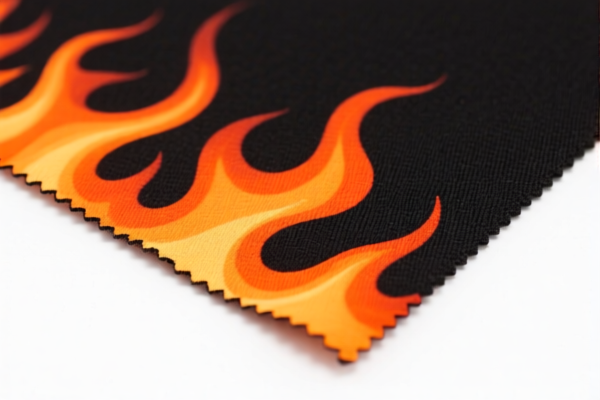
Product Images
AI Analysis
🔥 High Quality Flame Retardant Fabrics (Industrial & Protective Grade)
🌐 HS Code Reference & Customs Clearance Guide | 2026 Latest Tariff Analysis | Professional-Level Compliance Strategy
📌 I. Product Definition & Classification: What Exactly Are "Flame Retardant Fabrics"?
Flame retardant fabrics are specialized textiles designed to inhibit, suppress, or extinguish combustion. In international trade, they are primarily categorized by their manufacturing method (woven vs. knitted) and fiber composition (synthetic vs. other).
Based on the provided data, these products fall into two main categories under Chapter 59 (Impregnated, Coated, Covered or Layered Textile Fabrics):
1. Synthetic Fiber Based (HS 5903.20):
Fabrics made from synthetic fibers (e.g., Nylon, Polyester, Aramid) that have been treated or manufactured to be flame retardant. These are heavily used in high-performance protective clothing (PPE), industrial workwear, and safety gear.
2. Other Flame Retardant Fabrics (HS 5903.90):
This is a "catch-all" category for flame retardant fabrics that are not primarily classified as synthetic fiber-based (or where the synthetic distinction doesn't apply in the same way), or for technical/industrial applications where the specific fiber content is less defining than the function (flame resistance). This includes blends, natural fiber blends treated for FR, or other technical textiles used in automotive, industrial, or safety applications.
⚠️ Key Distinction Point:
- If the fabric is knitted or crocheted, it generally falls under Chapter 60 (Knitted Fabrics), NOT Chapter 59.
- If the fabric is woven (not knitted/crocheted) and made from synthetic fibers, it goes to 5903.20.
- If the fabric is woven (not knitted/crocheted) but is "other" (not strictly synthetic fiber-based under the specific customs definition, or for general technical use), it goes to 5903.90.
- Note: The provided data explicitly states "not knitted or crocheted" for both codes.
📦 II. HS Code Classification Details (2026 Latest Tariff Authority Comparison)
| HS Code | Product Description | Application Scenario | Fiber Content/Type |
|---|---|---|---|
5903.20 |
Flame retardant fabrics, not knitted or crocheted, made from synthetic fibers | Protective clothing, industrial fire-resistant gear, aramid blends | ✅ Synthetic Fibers (e.g., Polyester, Nylon, Aramid) |
5903.90 |
Other flame retardant fabrics, not knitted or crocheted, regardless of fiber content | Technical textiles, automotive interiors, general industrial safety, non-synthetic blends | ⚠️ Other/Mixed (Includes non-synthetic or unspecified technical FR fabrics) |
🔍 Critical Reminder:
- Both codes require the fabric to be "not knitted or crocheted" (i.e., woven).
- HS 5903.20 is specific to synthetic fibers.
- HS 5903.90 is for "Other" flame retardant fabrics, often used for technical/protective purposes where the fiber type is not the primary classifier or includes non-synthetic components.
- Misclassification can lead to significant customs delays or penalties.
💰 III. 2026 Latest Tariff Rate Details (Including Surcharges & Policy Add-ons)
✅ Applicable Country: United States (US)
✅ Origin: China (CN)
✅ Effective Date: 2025 November 10 onwards (including subsequent imports)
🎯 1. 5903.20 – Flame Retardant Fabrics, Synthetic Fibers
| Item | Content |
|---|---|
| Base Tariff Rate | Error (Failed to retrieve tax information) |
| USITC Surcharges | Error (Failed to retrieve tax information) |
| IEEPA Surcharges | Error (Failed to retrieve tax information) |
| Total Tariff Rate | Error (Failed to retrieve tax information) |
| Tax Calculation | Unable to determine without base rate data |
| De Minimis Eligibility | ❌ Unknown/Error (Tax retrieval failed) |
| Legal Pathway | Error: Failed to retrieve tax information |
📌 Explanation:
- ⚠️ CRITICAL WARNING: The provided data indicates "Failed to retrieve tax information" for this HS code.
- This means the base tariff, USITC surcharges (Section 301), and IEEPA surcharges (EO 14034) could not be automatically calculated.
- Do not assume 0% or any specific rate.
- Action Required: You MUST consult a licensed customs broker or use official USITC/HTS lookup tools to verify the current applicable duty rate for5903.20from China.
- Historically, woven synthetic fabrics may face standard MFN rates + potential Section 301 tariffs (25%) + IEEPA surcharges (10% or more, depending on the specific product code and EO updates). The "Error" status here is a red flag for automated systems; manual verification is mandatory.
🎯 2. 5903.90 – Other Flame Retardant Fabrics
| Item | Content |
|---|---|
| Base Tariff Rate | Error (Failed to retrieve tax information) |
| USITC Surcharges | Error (Failed to retrieve tax information) |
| IEEPA Surcharges | Error (Failed to retrieve tax information) |
| Total Tariff Rate | Error (Failed to retrieve tax information) |
| Tax Calculation | Unable to determine without base rate data |
| De Minimis Eligibility | ❌ Unknown/Error (Tax retrieval failed) |
| Legal Pathway | Error: Failed to retrieve tax information |
📌 Explanation:
- ⚠️ CRITICAL WARNING: Similar to5903.20, the provided data shows "Failed to retrieve tax information" for5903.90.
- This category covers "other" flame retardant fabrics. The tariff rate can vary significantly based on the specific fiber composition (e.g., if it contains natural fibers, wool, etc.).
- Do not assume a uniform rate.
- Action Required: Mandatory manual verification via USITC HTS Search or consultation with a customs expert.
- Note: Some "other" textile products may have different tariff treatment than synthetic-specific ones. The lack of data here means you cannot rely on automated estimates.
🛠️ IV. Customs Clearance Practical Advice (Real-World Pitfall Avoidance Guide)
✅ 1. Required Documentation Checklist (Non-negotiable)
| Document | Must Provide | Description |
|---|---|---|
| ✅ Product Specification Sheet | ✔️ | Must explicitly state: "Flame Retardant," "Not Knitted," "Woven," Fiber Content (% Synthetic vs. Other), and FR Standard (e.g., NFPA 2112, ISO 11612). |
| ✅ Material Composition Declaration | ✔️ | Crucial for distinguishing between 5903.20 (Synthetic) and 5903.90 (Other). If >50% synthetic, lean towards 5903.20 if applicable, but verify. |
| ✅ FR Test Reports | ✔️ | Third-party lab reports (e.g., Intertek, SGS) proving flame retardancy. Customs may request this to verify the "flame retardant" claim. |
| ✅ Commercial Invoice | ✔️ | Must clearly describe the goods as "Flame Retardant Woven Fabric, Synthetic/Other." Do not use vague terms like "Textile." |
| ✅ Packing List | ✔️ | Detail weight, dimensions, and number of rolls. |
| ✅ Bill of Lading/Air Waybill | ✔️ | Standard shipping document. |
✅ 2. Classification Tips (Key Mnemonics)
🔥 "Weave, Not Knit; Synthetic vs. Other; Test for FR!"
| Scenario | Correct HS Code Approach | Common Mistake |
|---|---|---|
| Woven fabric, 100% Polyester, FR treated | 5903.20 (if synthetic classification applies) |
Misclassifying as 5903.90 |
| Woven fabric, Aramid (Synthetic), FR | 5903.20 |
Misclassifying as 5903.90 |
| Woven fabric, Cotton/Poly Blend, FR | Verify Composition! | Assuming "Blend" = 5903.90 automatically; may still be 5903.20 if synthetic content meets criteria. |
| Woven fabric, Natural Fiber (e.g., Wool), FR | 5903.90 |
Misclassifying as 5903.20 |
| Knitted FR Fabric | NOT in this data | Using 5903.xx for knitted goods → Rejection |
📌 Note:
- If the fabric is knitted, it belongs to Chapter 60, not Chapter 59. Using5903.xxfor knitted items is a major error.
- The description "not knitted or crocheted" is mandatory for both codes provided.
✅ 3. Special Handling Cases
| Scenario | Handling Advice |
|---|---|
| OEM/Custom FR Fabric | Provide client-specific FR standards (e.g., for firefighting suits vs. industrial workwear). |
| Mixed Shipments (Synthetic + Other) | Split申报! Do not mix 5903.20 and 5903.90 in one line item. Customs may require separate entries. |
| High-Value Technical Textiles | Consider applying for an Advance Ruling from US Customs to confirm the correct HS Code and tariff, especially given the "Error" in tax data. |
| Uncertain Fiber Content | If unsure if it's "synthetic" under customs definition, lean towards 5903.90 ("Other") to avoid misclassification penalties, but be prepared for potential audits. |
🌍 V. Global Customs Comparison (2026 Latest)
| Country/Region | Recommended HS Code | Tariff (China Origin) | Certification Requirements | Notes |
|---|---|---|---|---|
| 🇺🇸 USA | 5903.20 / 5903.90 |
ERROR (Must Verify Manually) | None specific for FR, but FR standard compliance may be required by end-use (e.g., OSHA) | Critical: Due to "Error" in tax data, manual HTS lookup is mandatory. |
| 🇨🇳 China | 5903.20 / 5903.90 |
Varies (Check PRC Tariff) | CCC (if applicable for specific uses) | Domestic market may have different labeling rules. |
| 🇪🇺 EU | 5903.20 / 5903.90 |
Varies (0% for many textiles under GSP/TARIC) | CE Marking (if PPE), REACH Compliance | EU has strict REACH regulations for chemicals in textiles. |
| 🇬🇧 UK | 5903.20 / 5903.90 |
Varies | UKCA Marking (if PPE) | Post-Brexit rules apply. |
📌 Conclusion:
- The USA is the primary market referenced in the data, but the tax information is unavailable ("Error").
- EU and UK markets may have different FR certification requirements (REACH, PPE Regulation).
- Always verify the HS Code and Tariff manually for5903.20and5903.90from China due to the data error.
📌 VI. Common Errors & Pitfall Guide (Lessons Learned)
❌ Error 1: Classifying Knitted FR fabric under 5903.xx
👉 Consequence: Customs rejection, delay, or reclassification with penalties.
Solution: Check if the fabric is knitted. If yes, go to Chapter 60.
❌ Error 2: Assuming "Flame Retardant" automatically means a specific tariff rate
👉 Consequence: Underpayment/Overpayment of duties due to "Error" in data.
Solution: Manually verify the tariff rate in the USITC HTS database for the specific 10-digit code.
❌ Error 3: Failing to provide FR Test Reports
👉 Consequence: Customs may doubt the "Flame Retardant" claim, leading to inspection delays or reclassification.
Solution: Include third-party FR test reports with the shipment.
❌ Error 4: Mixing Synthetic and Non-Synthetic FR Fabrics in One HS Code
👉 Consequence: Misclassification. 5903.20 is for synthetic; 5903.90 is for other.
Solution: Separate shipments by fiber content if possible, or clearly declare composition.
✅ Correct Practice:
"Woven Flame Retardant Fabric, 100% Aramid (Synthetic), NFPA 2112 Compliant, for Protective Clothing" → Likely
5903.20
"Woven Flame Retardant Fabric, Cotton-Poly Blend, Technical Use" → Verify if5903.20or5903.90based on synthetic content %
🎯 VII. Conclusion: Precise Classification Saves Money and Time!
🎯 Remember the Key Rules:
🔹 "Not Knitted is a Must for 5903!"
🔹 "Synthetic = 5903.20, Other = 5903.90"
🔹 "Tax Data is ERROR – Verify Manually!"
🔹 "FR Certificates are Your Best Friend"
📌 Pro Tip:
Given the "Error" in the provided tax data:
1. Do not rely on automated tax calculators for 5903.20 and 5903.90.
2. Use the USITC HTS Search Tool to find the current duty rate for China-origin textiles.
3. Consult a Licensed Customs Broker to apply for an Advance Ruling if you are importing large volumes. This provides legal certainty on the HS Code and tariff.
📣 Immediate Action:
📞 Contact a Customs Broker + Provide FR Test Reports + Verify HTS Code Manually
🚀 Ensure Smooth Clearance, Avoid Penalties, and Protect Your Margins!
✨ Professional Customs Clearance Starts with Accurate Classification!
💼 Every Dollar in Duties Should Be Accounted For!
Customer Reviews
About HS Code Classification
The Harmonized System (HS) is an internationally standardized nomenclature developed by the World Customs Organization (WCO) to classify traded products. Over 200 countries use the HS system as the basis for customs tariffs, trade statistics, and import/export regulations.
Each HS code follows a hierarchical structure:
- Chapter (2 digits) — Broad category of goods (e.g., Chapter 84: Machinery and Mechanical Appliances)
- Heading (4 digits) — More specific grouping within the chapter
- Subheading (6 digits) — Internationally standardized breakdown, used by all WCO member countries
- National subdivisions (8-10 digits) — Country-specific extensions for further classification, such as US HTSUS 10-digit codes
Correct HS code classification is essential for smooth customs clearance, accurate duty payment, and compliance with trade regulations. Misclassification can lead to customs delays, overpayment of duties, or penalties.
When importing from CN to US, the applicable tariff rates may include:
- Most-Favored-Nation (MFN) rate — The standard duty rate applied to WTO members
- General rate — Applied to countries without trade agreements
- Trade remedy duties — Additional tariffs such as Section 301 (anti-dumping), Section 232 (national security), or countervailing duties
The information provided on this page is for reference purposes only. For official classification, please consult with your local customs authority or a licensed customs broker.