High Saturation Color Film
CN → US| HS Code | Tariff Rate | Origin | Destination | Doc |
|---|---|---|---|---|
| 3702310100 | 38.7% | CN | US | Official Doc |
| 3702520130 | 38.7% | CN | US | Official Doc |
| 3704000000 | 35.0% | CN | US | Official Doc |
| 3701910030 | 38.7% | CN | US | Official Doc |
| 3702520160 | 38.7% | CN | US | Official Doc |
Product Images
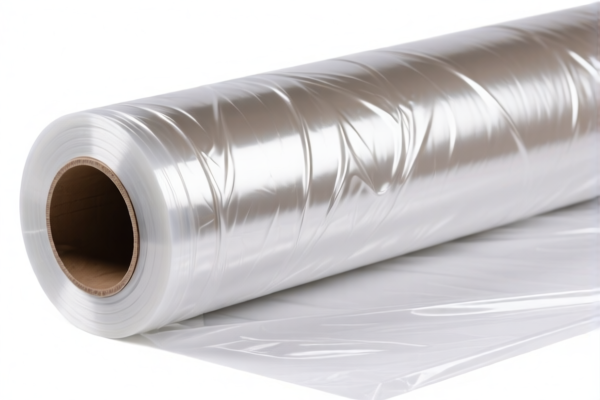


AI Analysis
🎞️ High Saturation Color Film (Photochemical Imaging Products)
🌐 HS Code Reference & Customs Clearance Guide | 2026 Latest Tariff Analysis | Professional Clearance Strategy
📌 I. Product Definition & Classification: What Exactly is "High Saturation Color Film"?
High Saturation Color Film refers to light-sensitive photochemical materials designed for capturing images with vibrant, intense colors. In international trade, these products are strictly regulated under Chapter 37 (Photographic or Cinematographic Goods). The classification depends heavily on the specific form (roll, sheet, instant print) and state (exposed vs. unexposed).
Key Distinctions: - Color Negative/Reversal Film (Rolls/Sheets): Standard photo film for cameras. - Instant Print Film: Self-developing films (e.g., Polaroid-style). - Raw/Unprocessed Material: The base chemical coating without final formatting.
⚠️ Critical Classification Point:
- If it is unexposed color photographic film (standard rolls/sheets) →归入 3702 or 3701 series.
- If it is already exposed but not yet developed (processed emulsion) → May fall under 3704.00.
- If it is instant self-developing (chemical pouch included) → Often grouped with specific unexposed categories.
📦 II. HS Code Classification Details (2026 Latest Tariff Authority Comparison)
Based on the provided data, here are the precise HS Codes for High Saturation Color Film variants:
| HS Code | Product Description | Application Scenario | State of Film |
|---|---|---|---|
3702.31.01.00 |
Color Photographic Film | Standard color negative/reversal film rolls. High saturation formulation. | ✅ Unexposed |
3702.52.01.30 |
Color Reversal Film | Slide film/Ektachrome-type. High color fidelity required. | ✅ Unexposed |
3704.00.00.00 |
Exposed Photographic Film | Film that has been exposed to light but not yet developed. Material matches film substrate. | ✅ Exposed (Pre-development) |
3701.91.00.30 |
Instant Self-Developing Film | Multi-color instant print film (e.g., for instant cameras). | ✅ Unexposed (Instant) |
3702.52.01.60 |
Color Photographic Material | Specific subclass for color film, non-paper/non-textile base. | ✅ Unexposed |
🔍 Key Reminder:
- Unexposed Film generally falls under 3701 (Instant) or 3702 (Other photographic films).
- Exposed Film (waiting for development) falls under 3704.00.
- All codes assume the film is on a non-paper, non-textile base (cellulose acetate/polyester).
💰 III. 2026 Latest Tariff Rate Breakdown (Including Surtaxes & Policy Add-ons)
✅ Applicable Country: United States (US)
✅ Origin: China (CN)
✅ Effective Date: From November 10, 2025 (and subsequent imports)
🎯 1. 3702.31.01.00 & 3702.52.01.30 & 3702.52.01.60 & 3701.91.00.30 —— Standard Color Films
These four HS Codes share the same tariff structure due to similar material nature and US trade policy impacts.
| Item | Content |
|---|---|
| Base Tariff | 3.7% (Ad Valorem) |
| Section 301 Surtax | +25.0% (USITC Footnote associated with Chinese origin goods) |
| IEEPA Surtax (Section 122) | +10.0% (Targeted additional tariff for Chinese products) |
| Total Effective Rate | 38.7% |
| Tax Calculation | CIF Value × 38.7% |
| De Minimis Exemption? | ❌ NO (Denied for these HS Codes under current US-China trade rules) |
| Legal Basis Path | USITC: 3.7% → USITC Footnote 301: 25% → IEEPA Sec 122: 10% |
📌 Explanation:
- Base 3.7%: The standard MFN (Most Favored Nation) duty for photographic films.
- 25% Surtax: Imposed under Section 301 of the Trade Act to address unfair trade practices.
- 10% Surtax: Imposed under the International Emergency Economic Powers Act (IEEPA), specifically Section 122, targeting certain Chinese imports.
- Total 38.7%: This is a high-cost barrier. Importers must factor this into landed cost calculations immediately.
🎯 2. 3704.00.00.00 —— Exposed Film (Unprocessed)
This code applies if the film has already been exposed (shadows captured) but not chemically processed.
| Item | Content |
|---|---|
| Base Tariff | 0.0% |
| Section 301 Surtax | +25.0% |
| IEEPA Surtax (Section 122) | +10.0% |
| Total Effective Rate | 35.0% |
| Tax Calculation | CIF Value × 35.0% |
| De Minimis Exemption? | ❌ NO |
| Legal Basis Path | USITC: 0.0% → USITC Footnote 301: 25% → IEEPA Sec 122: 10% |
📌 Note:
- Although the base tariff is 0%, the surtaxes bring the total to 35.0%.
- This is 3.7% cheaper than unexposed film, but still subject to heavy penalties.
- Ensure the film is genuinely "exposed" (e.g., returned rolls from a lab or user) to justify this classification. Misclassification as unexposed could lead to penalties.
🛠️ IV. Customs Clearance Practical Advice (Battle-Tested Pitfall Avoidance)
✅ 1. Required Documentation Checklist (Non-negotiable)
| Document | Must Provide? | Description |
|---|---|---|
| ✅ Product Specification Sheet | ✔️ | Details: Brand, Model, Sensitivity (ISO), Format (35mm/120), Color Type (Negative/Slide/Instant). |
| ✅ Material Composition Statement | ✔️ | Confirm base material (e.g., Polyester, Acetate) to exclude paper/textile HS codes. |
| ✅ Commercial Invoice | ✔️ | Must explicitly state: "High Saturation Color Photographic Film, Unexposed/Exposed." |
| ✅ Packing List | ✔️ | Clear quantity, weight, and dimensions. |
| ✅ Certificate of Origin (CO) | ✔️ | If originating from China, this triggers the 25% + 10% surtax. |
| ✅ Safety Data Sheet (SDS) | ✔️ | Photographic chemicals may contain hazardous substances; required for shipping compliance. |
✅ 2. Declaration Tips (Key Mnemonics)
🔥 “State Matters: Exposed vs. Unexposed; Base Matters: Not Paper!”
| Scenario | Correct HS Code | Common Mistake | Consequence |
|---|---|---|---|
| Standard Roll Film (Unexposed) | 3702.31.01.00 |
Misclassifying as 3704 (Exposed) |
Overpayment (38.7% vs 35.0%) or underpayment penalty |
| Slide Film (Unexposed) | 3702.52.01.30 |
General "Film" description | Delays for reclassification |
| Instant Film (Unexposed) | 3701.91.00.30 |
Classifying as standard film | Potential mismatch in chemical handling rules |
| Exposed Rolls (Pre-Development) | 3704.00.00.00 |
Calling it "New Film" | Fraud Risk: Significant duty evasion penalty |
| Paper-based Photo Paper | NOT Listed Here | Using Film HS Codes | Rejection: Paper falls under Chapter 49, different duties |
✅ 3. Special Case Handling
| Situation | Handling Advice |
|---|---|
| OEM Private Label Film | Provide manufacturer authorization and original brand registration to avoid "counterfeit" flags. |
| Film with Chemical Developer Pouches | Ensure HS Code 3701.91.00.30 is used for "Instant Self-Developing." Standard film codes may not account for the chemical component. |
| High-Volume Commercial Import | Consider applying for an Exclusion under Section 301 if available (check USTR website periodically). |
| Sample Shipments (< $800) | ❌ No De Minimis: Unlike some other goods, these HS Codes are explicitly excluded from the $800 de minimis exemption for Chinese origin. Full duties apply. |
🌍 V. Global Market Comparison (2026 Latest)
| Country/Region | Recommended HS Code | Tariff Rate (China Origin) | Certification Requirements | Remarks |
|---|---|---|---|---|
| 🇺🇸 USA | 3702.31.01.00 etc. |
38.7% (Unexposed) 35.0% (Exposed) |
None specific, but SDS required | High Surtax Zone: 301 + IEEPA 122 apply. |
| 🇨🇳 China | 3702.31.01.00 |
3.7% | CCC (if applicable) | No additional surtaxes. |
| 🇪🇺 EU | 3702.31.01.00 |
0% | CE (if applicable), REACH compliance | No Section 301/IEEPA equivalents. |
| 🇬🇧 UK | 3702.31.01.00 |
0% | UKCA marking (if applicable) | Post-Brexit tariffs are generally favorable for photo goods. |
| 🇦🇺 Australia | 3702.31.01.00 |
5% | TGA (if chemicals involved) | Moderate duty, no punitive surtaxes. |
📌 Conclusion:
- USA is the most expensive market for Chinese-origin color film due to 38.7% total duties.
- EU and UK are the most cost-effective, with 0% base duties and no retaliatory surtaxes.
- For US imports, Cost Optimization strategies are essential.
📌 VI. Common Errors & Pitfall Guide (Lessons from Experience)
❌ Error 1: Declaring "Exposed Film" (3704.00) as "Unexposed Film" (3702) to save 3.7%
👉 Consequence: Customs audit reveals exposed emulsion → Penalty + Back Taxes + Possible Criminal Charges.
❌ Error 2: Ignoring the IEEPA 10% Surtax
👉 Consequence: Underpayment by 10% → 100% Penalty + Interest. Many brokers only quote the 25% 301 tax.
❌ Error 3: Using "Photographic Paper" HS Codes for Film
👉 Consequence: Rejection at Border. Paper is Chapter 49; Film is Chapter 37. Different materials, different rules.
❌ Error 4: Assuming De Minimis ($800) applies to samples
👉 Consequence: Seizure or Duty Assessment. These HS codes are explicitly excluded from de minimis for Chinese goods.
✅ Correct Practice:
"High Saturation Color Photographic Film, Unexposed, Polyester Base, ISO 400, 35mm Roll, Model XYZ, Origin: China"
🎯 VII. Conclusion: Professional Declaration, Cost Control
🎯 Remember the Golden Rules:
🔹 "Exposed is 35%, Unexposed is 38.7%. Don't mix them up!"
🔹 "China Origin = 35-38.7% Total Tax. Plan Your Pricing!"
🔹 "No De Minimis for Photo Film from China. Pay the Duty!"
📌 Pro Tip:
If you are importing large volumes, consider:
1. Pre-Clearance Rulings: Request a binding ruling from US CBP on your specific film formulation.
2. Supply Chain Diversification: If possible, source film from Vietnam, Thailand, or Malaysia to potentially avoid Chinese origin surtaxes (subject to rules of origin checks).
3. Duty Drawback: If you export finished photo products, you may recover some duties paid on imported film.
📣 Immediate Action Required:
📞 Consult a licensed Customs Broker for Pre-Classification.
📊 Calculate Landed Cost including 38.7% duty for US market.
🚀 Ensure SDS is ready for hazardous chemical declaration.
✨ Professional Customs Clearance Starts with Accurate Classification!
💼 Your Profit Margin Depends on Precision!
Customer Reviews
About HS Code Classification
The Harmonized System (HS) is an internationally standardized nomenclature developed by the World Customs Organization (WCO) to classify traded products. Over 200 countries use the HS system as the basis for customs tariffs, trade statistics, and import/export regulations.
Each HS code follows a hierarchical structure:
- Chapter (2 digits) — Broad category of goods (e.g., Chapter 84: Machinery and Mechanical Appliances)
- Heading (4 digits) — More specific grouping within the chapter
- Subheading (6 digits) — Internationally standardized breakdown, used by all WCO member countries
- National subdivisions (8-10 digits) — Country-specific extensions for further classification, such as US HTSUS 10-digit codes
Correct HS code classification is essential for smooth customs clearance, accurate duty payment, and compliance with trade regulations. Misclassification can lead to customs delays, overpayment of duties, or penalties.
When importing from CN to US, the applicable tariff rates may include:
- Most-Favored-Nation (MFN) rate — The standard duty rate applied to WTO members
- General rate — Applied to countries without trade agreements
- Trade remedy duties — Additional tariffs such as Section 301 (anti-dumping), Section 232 (national security), or countervailing duties
The information provided on this page is for reference purposes only. For official classification, please consult with your local customs authority or a licensed customs broker.