High Stool Leg Guard Ring
CN → US| HS Code | Tariff Rate | Origin | Destination | Doc |
|---|---|---|---|---|
| 7616995150 | 37.5% | CN | US | Official Doc |
| 7616995190 | 87.5% | CN | US | Official Doc |
| 7326908688 | 87.9% | CN | US | Official Doc |
| 7326190080 | 87.9% | CN | US | Official Doc |
| 3926305000 | 22.8% | CN | US | Official Doc |
| 3926902500 | 24.0% | CN | US | Official Doc |
Product Images

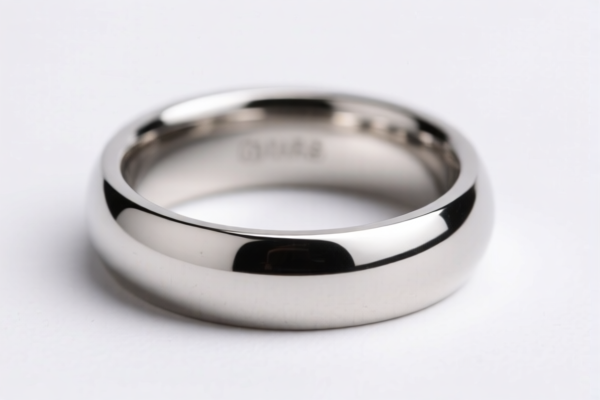
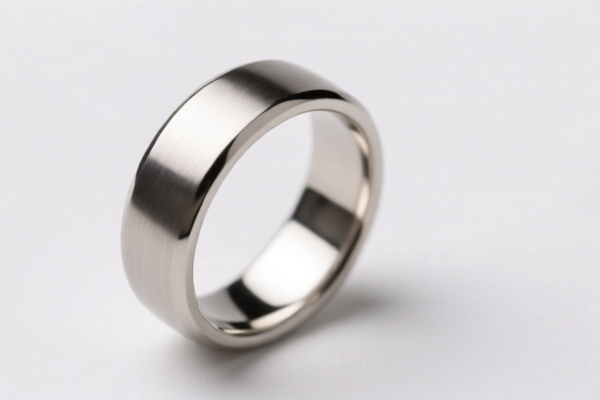

AI Analysis
🪑 High Stool Leg Guard Ring
🌐 HS Code Reference & Customs Clearance Guide | 2026 Latest Tariff Analysis | Professional Import Strategy
📌 I. Product Definition & Classification: Do You Understand the "Leg Guard Ring"?
A High Stool Leg Guard Ring is a structural component designed to provide foot support, safety, and stability for high chairs, bar stools, or industrial work stools. In international trade, its classification depends heavily on material composition and degree of processing. It is generally categorized under Metal Parts of Furniture or Other Articles of Iron/Steel, unless it is specifically made of plastic, wood, or rubber.
⚠️ Key Distinction Points:
- If made of metal (iron, steel, aluminum) and used as a structural part of furniture → Classified under Chapter 73 (Articles of Iron or Steel).
- If made of plastic and intended specifically for furniture assembly → Classified under Chapter 39 (Plastics and Articles Thereof) or Chapter 94 (Furniture Parts).
- If it is a general-purpose ring not specifically designed for furniture → May fall under Chapter 73 generic articles.
📦 II. HS Code Classification Details (2026 Latest Tariff Authority Comparison)
| HS Code | Product Description | Application Scenario | Material |
|---|---|---|---|
7326.90.88.00 |
Other articles of iron or steel (not elsewhere specified) | Metal leg guards, footrest rings for steel stools | ✅ Metal |
7326.20.00.00 |
Other articles of iron or steel, cast | Cast metal footrests or support rings | ✅ Metal (Cast) |
3926.90.97.00 |
Other articles of plastics (not elsewhere specified) | Plastic leg guards for office/home stools | ✅ Plastic |
9403.90.00.00 |
Parts of furniture of wood, metal, etc. | Generic furniture parts (if specifically identified as such in customs practice) | ✅ Any |
8302.41.00.00 |
Base metal mountings, fittings and similar articles | If treated as "fittings" rather than structural parts | ✅ Metal |
🔍 Key Reminder:
- Metal components are most commonly declared under7326.90.88.00as "Other articles of iron or steel."
- If the part is integral to the furniture (e.g., welded or fixed), some customs authorities may require declaration under9403.90.00.00(Parts of Furniture).
- Plastic components are typically classified under3926.90.97.00.
- Avoid declaring metal parts under9403if they are clearly identifiable as metal articles, as this may trigger audits for misclassification.
💰 III. 2026 Latest Tariff Rate Details (Including Additional Duties & Policy Add-ons)
✅ Applicable Country: United States (US)
✅ Country of Origin: China (CN)
✅ Effective Date: From November 10, 2025 (and subsequent imports)
🎯 1. 7326.90.88.00 —— Other Articles of Iron or Steel (Metal Leg Guard)
| Item | Details |
|---|---|
| Base Rate | 0% (ad valorem) |
| USITC Additional Duty | +25% (from USITC Footnote 9903.88.01) |
| IEEPA Additional Duty | +10% (Against China/HK products, effective from Nov 10, 2025) |
| Total Rate | 35% |
| Tax Calculation | CIF Value × 35% |
| De Minimis Eligibility | ❌ Not Eligible (deny_de_minimis) |
| Legal Basis Path | IEEPA:9903.01.25 → IEEPA:9903.01.24 → USITC:7326.90.88.00 → FOOTNOTE:9903.88.01 |
📌 Explanation:
- The 25% USITC duty is part of the Section 301 tariffs on Chinese goods;
- The 10% IEEPA duty is a new additional levy against China starting November 2025;
- Total 35% is a high tariff for a seemingly simple part. Must be anticipated in cost planning!
🎯 2. 3926.90.97.00 —— Other Articles of Plastics (Plastic Leg Guard)
| Item | Details |
|---|---|
| Base Rate | 0% |
| USITC Additional Duty | +25% |
| IEEPA Additional Duty | +10% |
| Total Rate | 35% |
| Tax Calculation | CIF × 35% |
| De Minimis Eligibility | ❌ Not Eligible |
| Legal Basis Path | IEEPA:9903.01.25 → IEEPA:9903.01.24 → USITC:3926.90.97.00 → FOOTNOTE:9903.88.01 |
📌 Note:
- Plastic parts face the same additional duties as metal parts if imported from China.
- Ensure material declaration is accurate; misdeclaring plastic as metal or vice versa can lead to penalties.
🎯 3. 9403.90.00.00 —— Parts of Furniture (If Classified as Furniture Part)
| Item | Details |
|---|---|
| Base Rate | 0% |
| USITC Additional Duty | +25% |
| IEEPA Additional Duty | +10% |
| Total Rate | 35% |
| Tax Calculation | CIF × 35% |
| De Minimis Eligibility | ❌ Not Eligible |
📌 Note:
- Even if classified as a "part of furniture," the additional duties still apply because the origin is China.
- Some importers attempt to classify under9403to avoid "metal article" scrutiny, but the tariff burden remains identical.
🛠️ IV. Customs Clearance Practical Advice (Combat Anti-Pitfall Guide)
✅ 1. Preparation Checklist (All Must Be Provided)
| Document | Required? | Notes |
|---|---|---|
| ✅ Product Specifications | ✔️ | Include dimensions, weight, material (e.g., "Steel, Powder-Coated"), usage |
| ✅ Material Certificate | ✔️ | Prove material composition (e.g., "Carbon Steel, SAE 1018") |
| ✅ Product Photos | ✔️ | Clear images showing the ring, markings, and how it attaches to the stool |
| ✅ Commercial Invoice | ✔️ | Clearly state "Leg Guard Ring for High Stool, Material: Metal" |
| ✅ Packing List | ✔️ | Detail quantity, gross/net weight per box |
| ✅ Proof of Origin | ✔️ | If not from China, can reduce or eliminate additional duties |
✅ 2. Declaration Tips (Key Mantra)
🔥 "Material First, Usage Second, Name Specific, Tariff Clear!"
| Scenario | Correct Declaration | Wrong Practice |
|---|---|---|
| Metal ring for stool | 7326.90.88.00 |
Misdeclare as 9403 to look like furniture part → Still 35%, but higher audit risk |
| Plastic ring | 3926.90.97.00 |
Declare as 7326 (metal) → Penalty for false declaration |
| Part of a set | Declare as part of main item | Split declaration → Complex customs processing, possible delays |
| Unmarked generic ring | 7326.90.88.00 |
Declare as "Fitting" (8302) → May be rejected if not specifically a mounting |
✅ 3. Special Case Handling
| Situation | Handling Advice |
|---|---|
| OEM Custom Design | Provide design drawings to prove it is a specific part of a stool, not a generic ring |
| Mixed Material | If it has plastic coating, still classify under Chapter 73 (metal core) unless plastic is the primary material |
| Export to Non-US Markets | EU: 0% for metal parts; UK: 0%; Australia: 0% → Only US has high additional duties |
| De Minimis Exemption | Even if value < $800, additional duties apply to Chinese goods under Section 301/IEEPA |
🌍 V. Global Market Comparison (2026 Latest)
| Country/Region | Recommended HS Code | Tariff Rate (CN Origin) | Certification | Notes |
|---|---|---|---|---|
| 🇺🇸 USA | 7326.90.88.00 |
35% (25% + 10%) | None | High duty, no exemption |
| 🇪🇺 EU | 7326.90.88.00 |
0% | CE (if applicable) | No additional duties |
| 🇬🇧 UK | 7326.90.88.00 |
0% | UKCA | No additional duties |
| 🇨🇦 Canada | 7326.90.88.00 |
0% | CSA (if applicable) | No additional duties |
| 🇦🇺 Australia | 7326.90.88.00 |
5% | RCM (if applicable) | No additional duties |
| 🇯🇵 Japan | 7326.90.88.00 |
0% | PSE (if applicable) | No additional duties |
📌 Conclusion:
- The US is the only major market imposing 35% total duties on these items from China.
- Other markets are duty-free or low-duty. Consider supply chain diversification (e.g., Vietnam, Mexico) for US-bound goods to mitigate costs.
📌 VI. Common Errors & Pitfalls (Blood & Tears Lessons)
❌ Error 1: Declaring metal leg guards under 9403.90.00.00 (Furniture Parts)
👉 Consequence: No tariff advantage, but higher audit risk because it looks like a general furniture part. Customs may demand proof of being a "part of furniture."
❌ Error 2: Misdeclaring plastic parts as metal
👉 Consequence: Penalties for false declaration. HS code difference is significant.
❌ Error 3: Ignoring the IEEPA 10% Additional Duty
👉 Consequence: Underpayment of duties → Seizure, fines, and retroactive taxes when caught in 2026+
❌ Error 4: Using vague descriptions like "Metal Ring"
👉 Consequence: Customs may classify under a higher-duty generic category. Always specify "Leg Guard for Stool".
✅ Correct Approach:
"Metal Leg Guard Ring, Material: Steel, Usage: For High Stool, Model: XYZ, Origin: China"
🎯 VII. Conclusion: Precision Declaration Saves Costs!
🎯 Remember the Mantra:
🔹 "Material determines chapter, usage determines subheading, origin determines additional duty!"
🔹 "35% is the US price for CN metal parts, don't gamble on classification!"
📌 Pro Tip:
If your leg guards are manufactured in Vietnam, Mexico, or Thailand, you may qualify for IEEPA Exemption or lower Section 301 rates.
Recommendation: Apply for an Advance Ruling with US CBP before large shipments to confirm HS code and duty liability.
📣 Immediate Action:
📞 Contact a licensed customs broker + Provide product specs + Request HS Code Advance Ruling
🚀 Ensure smooth clearance, minimize tariffs, and maximize profit margins!
✨ Professional Clearance Starts with Accurate Classification!
💼 Every cent saved is a cent earned!
Customer Reviews
About HS Code Classification
The Harmonized System (HS) is an internationally standardized nomenclature developed by the World Customs Organization (WCO) to classify traded products. Over 200 countries use the HS system as the basis for customs tariffs, trade statistics, and import/export regulations.
Each HS code follows a hierarchical structure:
- Chapter (2 digits) — Broad category of goods (e.g., Chapter 84: Machinery and Mechanical Appliances)
- Heading (4 digits) — More specific grouping within the chapter
- Subheading (6 digits) — Internationally standardized breakdown, used by all WCO member countries
- National subdivisions (8-10 digits) — Country-specific extensions for further classification, such as US HTSUS 10-digit codes
Correct HS code classification is essential for smooth customs clearance, accurate duty payment, and compliance with trade regulations. Misclassification can lead to customs delays, overpayment of duties, or penalties.
When importing from CN to US, the applicable tariff rates may include:
- Most-Favored-Nation (MFN) rate — The standard duty rate applied to WTO members
- General rate — Applied to countries without trade agreements
- Trade remedy duties — Additional tariffs such as Section 301 (anti-dumping), Section 232 (national security), or countervailing duties
The information provided on this page is for reference purposes only. For official classification, please consult with your local customs authority or a licensed customs broker.