High Strength Adhesive Formula
CN → US| HS Code | Tariff Rate | Origin | Destination | Doc |
|---|---|---|---|---|
| 3824992900 | 41.5% | CN | US | Official Doc |
| 3506915000 | 37.1% | CN | US | Official Doc |
| 3506990000 | 37.1% | CN | US | Official Doc |
| 3824995000 | 41.5% | CN | US | Official Doc |
| 3901302000 | 35.0% | CN | US | Official Doc |
Product Images
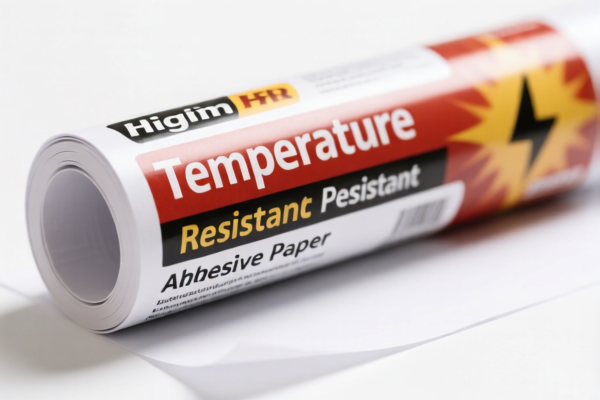
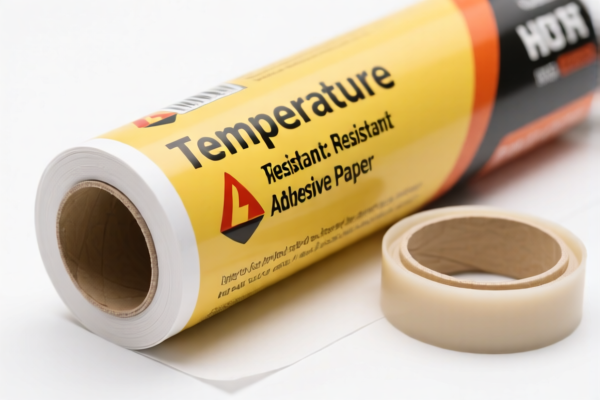
AI Analysis
🧪 High Strength Adhesive Formula: HS Code Classification & US Customs Clearance Guide
🌐 HS Code Reference & Customs Clearance Guide | 2026 Latest Tariff Analysis | Professional Compliance Strategy
📌 I. Product Definition & Classification: Do You Understand "High Strength Adhesive Formula"?
"High Strength Adhesive Formula" is a generic trade term referring to chemically prepared bonding agents used in industrial, construction, or manufacturing applications. In international trade, the correct classification depends heavily on the specific chemical composition and intended end-use.
The provided data identifies four potential HS Codes, split into two main categories: 1. Chapter 38 (Miscellaneous Chemical Products): Classified as "Prepared Binders for Foundry Molds or Cores" or "Prepared Binders for Similar Uses" (Construction/General Industrial). 2. Chapter 35 (Albuminoidal Substances; Glues): Classified as "Prepared Glues and Other Prepared Binders Not Elsewhere Specified or Included."
⚠️ Key Distinction:
- If the adhesive is specifically formulated for casting/molding cores (e.g., sand casting), it falls under Chapter 38.
- If it is a general-purpose high-strength chemical adhesive (e.g., epoxy, cyanoacrylate blends) not specific to foundry cores, it typically falls under Chapter 35.
- The term "Formula" implies it is a preparation (mixed chemical), not a raw polymer base.
📦 II. HS Code Classification Details (2026 Latest Tariff Authority Comparison)
Based on the provided data, here is the breakdown of the four potential HS Codes and their matching logic:
| HS Code | Product Description | Matching Logic from Data | Key Characteristic |
|---|---|---|---|
| 3824.99.29.00 | Prepared Binders for Foundry Molds/Cores | "Formula" matches "Preparation"; "Chlorinated Binder" matches use in molding cores. No material conflict. | Foundry/Industrial Use |
| 3506.91.50.00 | Prepared Glues/Binders (Other) | "Adhesive" matches purpose; "Chlorinated" indicates chemical nature consistent with polymer-modified glues. | General Chemical Adhesive |
| 3506.99.00.00 | Other Prepared Adhesives | "Adhesive" defines use; "Formula" implies prepared chemical state. "Chlorinated" is a chemical feature compatible with adhesive materials. | General Purpose Adhesive |
| 3824.99.50.00 | Prepared Binders (Misc. Chemical Products) | "Chlorinated" corresponds to "Chlorinated but not halogenated other elements"; "Binder Formula" corresponds to "Prepared Binder" & "Chemical Products." | Chemical Preparation |
🔍 Critical Note:
- The term "Chlorinated" (氯化) appears in the summary logic for all codes, suggesting the product contains chlorine-based compounds.
- "Formula" (配方) confirms it is a preparation, not a raw material (like raw PVC or chlorinated polyethylene).
- 3506 series generally applies to glues/adhesives not elsewhere specified.
- 3824 series applies to prepared binders for specific industrial uses (like foundries) or other miscellaneous chemical preparations.
💰 III. 2026 Latest Tariff Rate Breakdown (Including Surtaxes & Policy Add-ons)
✅ Applicable Country: United States (US)
✅ Country of Origin: China (CN)
✅ Effective Time: From November 10, 2025 (and subsequent imports)
🎯 1. 3824.99.29.00 & 3824.99.50.00 — Prepared Binders (Chapter 38)
These codes carry the highest base tariff due to their classification under "Miscellaneous Chemical Products."
| Item | Content |
|---|---|
| Base Tariff Rate | 6.5% (ad valorem) |
| USITC Surcharge (Section 301) | +25.0% |
| IEEPA Surcharge (Section 122/Other) | +10.0% |
| Total Tariff Rate | 41.5% |
| Tax Calculation | CIF Value × 41.5% |
| De Minimis Exemption Available? | ❌ No (deny_de_minimis) |
| Legal Authority Path | Base Rate 6.5% → Section 301: 25% → 122 Clause: 10% |
📌 Explanation:
- The 6.5% base rate is standard for many Chapter 38 chemicals.
- The 25% Section 301 tariff is the standard USITC surcharge on Chinese goods.
- The 10% "122 Clause" tariff is an additional US government surcharge on specific Chinese imports.
- Total: 41.5% is a significant cost factor. Cost optimization requires accurate classification to ensure no misdeclaration.
🎯 2. 3506.91.50.00 & 3506.99.00.00 — Prepared Adhesives (Chapter 35)
These codes have a lower base tariff, as Chapter 35 (Glues/Adhesives) often enjoys more favorable base rates.
| Item | Content |
|---|---|
| Base Tariff Rate | 2.1% (ad valorem) |
| USITC Surcharge (Section 301) | +25.0% |
| IEEPA Surcharge (Section 122/Other) | +10.0% |
| Total Tariff Rate | 37.1% |
| Tax Calculation | CIF Value × 37.1% |
| De Minimis Exemption Available? | ❌ No (deny_de_minimis) |
| Legal Authority Path | Base Rate 2.1% → Section 301: 25% → 122 Clause: 10% |
📌 Note:
- The 2.1% base rate is significantly lower than the 6.5% for Chapter 38.
- This results in a 4.4% total tax difference compared to Chapter 38 codes.
- Justification for 3506: If the product is primarily an "adhesive" for general bonding (e.g., metals, plastics, wood) rather than a "binder" for foundry molds, 3506 is often more appropriate and cost-effective.
- The summaries explicitly state: "Adhesive" matches the purpose, supporting this classification.
🛠️ IV. Customs Clearance Practical Advice (Battle-Tested Pitfall Guide)
✅ 1. Documentation Checklist (Must-Haves)
| Document | Mandatory? | Purpose |
|---|---|---|
| ✅ Technical Data Sheet (TDS) | ✔️ | Must clearly state: "Prepared Adhesive/Binder," chemical composition (e.g., chlorinated polymers), and intended use (e.g., bonding, not molding). |
| ✅ Safety Data Sheet (SDS) | ✔️ | Required for hazardous chemical declaration. |
| ✅ Product Photos | ✔️ | Show packaging, label, and product form (liquid, powder, paste). |
| ✅ Commercial Invoice | ✔️ | Must use precise terminology: "High Strength Adhesive, Prepared Chemical, Model XYZ." Avoid vague terms like "Glue." |
| ✅ Certificate of Origin (CO) | ✔️ | Crucial for proving Origin China to apply 301/122 tariffs correctly. |
| ✅ Declaration of Non-Foundry Use | ✔️ | If classifying under 3506, provide a statement that the adhesive is NOT for use in foundry molds/castings. This supports the lower 2.1% base rate. |
✅ 2. Declaration Strategy (Key Mantra)
🔥 "Use Defines Code, Base Rate Dictates Cost!"
| Scenario | Recommended HS Code | Total Tariff | Reasoning |
|---|---|---|---|
| Adhesive for general bonding (metal, plastic, wood) | 3506.91.50.00 or 3506.99.00.00 | 37.1% | Lower base rate (2.1%). "Adhesive" is the key function. |
| Binder for sand casting/foundry cores | 3824.99.29.00 | 41.5% | Specific industrial use (molding). Higher base rate (6.5%). |
| Miscellaneous chemical binder (non-specific) | 3824.99.50.00 | 41.5% | Falls under "Other Prepared Chemicals." |
⚠️ Warning:
- Misdeclaring a general adhesive as a foundry binder (3824) will increase your tax by 4.4%.
- Misdeclaring a foundry binder as a general adhesive (3506) is high risk. If customs audits and finds it’s only used for casting, you face penalties, back taxes, and potential delays.
✅ 3. Special Considerations
| Situation | Handling Advice |
|---|---|
| "Chlorinated" Component | Ensure the chemical name is specific (e.g., "Chlorinated Polyvinyl Chloride Adhesive"). Vague "Chlorinated" claims may trigger additional scrutiny for hazardous materials. |
| "Formula" / "Preparation" | Emphasize that it is a preparation (mixture) in the declaration. This distinguishes it from raw polymers (Chapter 39), which have different tariffs. |
| Low-Value Shipments | ❌ No De Minimis: Even under $800, these HS Codes are denied de minimis exemption due to Section 301/122 surcharges. Full duty must be paid. |
| Labeling | Ensure English labeling includes: "High Strength Adhesive," "Chlorinated Polymer," and "Made in China." |
🌍 V. Global Market Clearance Comparison (2026 Latest)
| Market | Recommended HS Code | Base Tariff | Total Tax (China Origin) | Notes |
|---|---|---|---|---|
| 🇺🇸 USA | 3506.99.00.00 |
2.1% | 37.1% (incl. 301+122) | Most favorable for general adhesives. |
| 🇺🇸 USA | 3824.99.29.00 |
6.5% | 41.5% (incl. 301+122) | Higher tax for foundry-specific binders. |
| 🇨🇳 China | 3506.99.00.00 |
~2-5% | Low | Import into China has different rules. |
| 🇪🇺 EU | 3506.91.99 |
~2-3% | Low | No Section 301/122 surcharges. |
| 🇬🇧 UK | 3506.91.99 |
~2-3% | Low | Post-Brexit, tariffs mirror EU closely. |
📌 Conclusion:
- USA is the most expensive market due to Section 301 (25%) and 122 Clause (10%) surcharges.
- Classifying under 3506 (Adhesives) saves 4.4% in total duty compared to 3824 (Prepared Chemicals/Binders).
- Always justify the "General Adhesive" purpose to secure the lower base rate.
📌 VI. Common Errors & Pitfall Guide (Lessons Learned)
❌ Error 1: Declaring as "Glue" without specifying "High Strength" or "Chemical Preparation"
👉 Consequence: Customs may downgrade to raw material or misclassify, leading to duty underpayment penalties.
❌ Error 2: Using HS Code 3901.30.20.00 (Chlorinated Polymers) for a pre-mixed adhesive
👉 Consequence: Wrong Classification! This code is for raw polymers/resins, not prepared adhesives. Adhesives are Chapter 35 or 38.
❌ Error 3: Ignoring the "Chlorinated" content in SDS
👉 Consequence: If the product is deemed hazardous, additional hazardous material handling fees and documentation are required.
❌ Error 4: Assuming de minimis ($800) applies
👉 Consequence: Denied. These codes are explicitly subject to surcharges. Small shipments still pay 37.1% or 41.5%.
✅ Correct Practice:
"High Strength Chlorinated Polymer Adhesive, Prepared Formula, For Industrial Bonding, Model XYZ, Made in China"
🎯 VII. Conclusion: Professional Declaration, Cost Optimization!
🎯 Remember the Mantra:
🔹 "General Bonding = Chapter 35 (37.1% Total)"
🔹 "Foundry Binder = Chapter 38 (41.5% Total)"
🔹 "No De Minimis, Pay Full Duty!"
🔹 "Justify the Use, Save the Cost!"
📌 Pro Tip:
If your adhesive is used for multiple purposes (general bonding AND occasional mold binding), declare it as a General Adhesive (3506). However, ensure your Technical Data Sheet emphasizes general bonding applications to withstand customs scrutiny.
📣 Immediate Action:
📞 Contact your freight forwarder with the TDS and SDS.
📄 Prepare a "Use Statement" clarifying the adhesive is for general industrial bonding.
🚀 Apply for an Advance Ruling if the value is high and the classification is ambiguous.
✨ Professional Clearance Starts with Precise Classification!
💼 Every 1% of duty saved is pure profit added!
Customer Reviews
About HS Code Classification
The Harmonized System (HS) is an internationally standardized nomenclature developed by the World Customs Organization (WCO) to classify traded products. Over 200 countries use the HS system as the basis for customs tariffs, trade statistics, and import/export regulations.
Each HS code follows a hierarchical structure:
- Chapter (2 digits) — Broad category of goods (e.g., Chapter 84: Machinery and Mechanical Appliances)
- Heading (4 digits) — More specific grouping within the chapter
- Subheading (6 digits) — Internationally standardized breakdown, used by all WCO member countries
- National subdivisions (8-10 digits) — Country-specific extensions for further classification, such as US HTSUS 10-digit codes
Correct HS code classification is essential for smooth customs clearance, accurate duty payment, and compliance with trade regulations. Misclassification can lead to customs delays, overpayment of duties, or penalties.
When importing from CN to US, the applicable tariff rates may include:
- Most-Favored-Nation (MFN) rate — The standard duty rate applied to WTO members
- General rate — Applied to countries without trade agreements
- Trade remedy duties — Additional tariffs such as Section 301 (anti-dumping), Section 232 (national security), or countervailing duties
The information provided on this page is for reference purposes only. For official classification, please consult with your local customs authority or a licensed customs broker.