High Strength Mercury Based Casting Adhesive
CN → US| HS Code | Tariff Rate | Origin | Destination | Doc |
|---|---|---|---|---|
| 3824993990 | 35.0% | CN | US | Official Doc |
| 3824993300 | 39.2% | CN | US | Official Doc |
| 3824993300 | 39.2% | CN | US | Official Doc |
| 3824993990 | 35.0% | CN | US | Official Doc |
| 3214100010 | 38.7% | CN | US | Official Doc |
Product Images
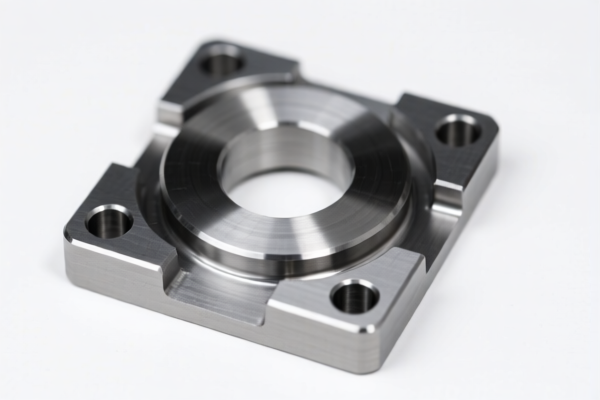
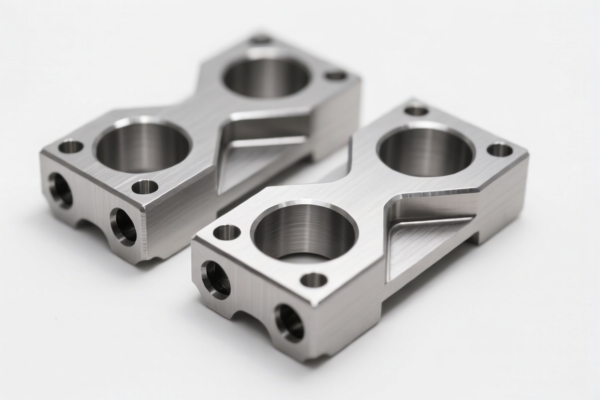
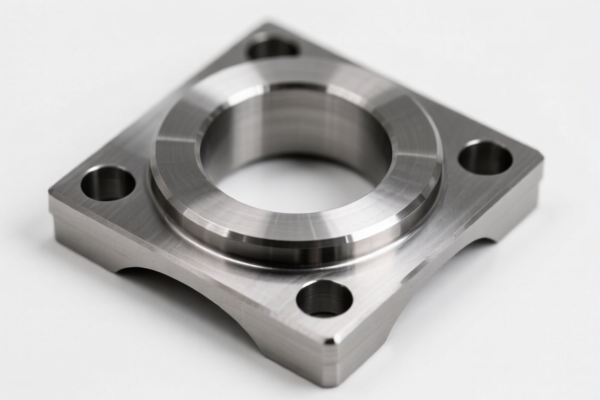
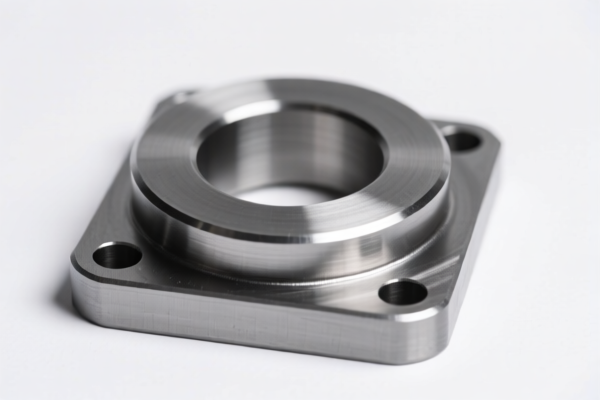
AI Analysis
🏭 High Strength Mercury Based Casting Adhesive (High-Performance Industrial Sealant)
🌐 HS Code Reference & Customs Clearance Guide | 2026 Latest Tariff Analysis | Professional Clearance Strategy
📌 One, Product Definition and Classification: Do You Really Understand “Mercury-Based Casting Adhesive”?
“High Strength Mercury Based Casting Adhesive” is a specialized chemical mixture used in metal casting processes to bind molds or cores. In international trade, its classification depends heavily on two factors: 1. Material Composition: It contains Mercury (Hg), which is a heavy metal and falls under inorganic compounds. 2. Function/Use: It is explicitly for casting (mold/core preparation), classifying it as a “prepared adhesive” or “mold/core adhesive.”
⚠️ Key Distinction Point:
- If the mercury content is significant and the product is primarily identified as a “mercury product” or a mixture where mercury is a key inorganic component → It tends to be classified under Heading 38.24 (Prepared Binders for Foundry Molds and Cores). - If viewed merely as a general-purpose sealant or putty without specific foundry application emphasis → It might be misclassified under 3214 (Ready-made Putty, Fillers, Sealants). - Critical Note: Due to the presence of Mercury, this product is strictly regulated and often subject to higher tariffs and environmental restrictions.
📦 Two, HS Code Classification Details (2026 Latest Tariff Authoritative Comparison)
| HS Code | Product Description | Applicable Scenario | Mercury Content? | Foundry Use? |
|---|---|---|---|---|
3824.99.33.00 |
Prepared binders for foundry molds or cores: Mercury (Mercury) Products | Specialized casting adhesives containing mercury | ✅ Yes (Explicit) | ✅ Yes |
3824.99.39.90 |
Other prepared binders for foundry molds or cores: Other (Inorganic Compound Mixtures) | Mercury-based adhesives where mercury is considered part of a broader inorganic mixture | ✅ Yes (Implied) | ✅ Yes |
3214.10.00.10 |
Ready-made putties, caulking, pumice stone, etc.: Of polyesters, whether or not reinforced with other materials | Misclassification risk: General sealants/putties | ❌ No (Generally) | ❌ No (General purpose) |
🔍 Key Reminder:
-3824.99.33.00is the most accurate if the product is explicitly marketed or chemically defined as a mercury product for foundry use. -3824.99.39.90is acceptable if mercury is part of a complex inorganic mixture not specifically listed elsewhere. -3214.10.00.10is incorrect if the product is primarily for casting molds/cores, as it belongs to foundry binders (38.24), not general sealants (32.14). Misclassification here can lead to penalties.
💰 Three, 2026 Latest Tariff Rate Details (Including Surtaxes, Policy Add-ons)
✅ Applicable Country: United States (US)
✅ Country of Origin: China (CN)
✅ Effective Date: From November 10, 2025 (including subsequent imports)
🎯 1. 3824.99.33.00 —— Prepared Binders for Foundry Molds/Cores: Mercury Products
| Item | Content |
|---|---|
| Base Duty Rate | 4.2% (ad valorem) |
| USITC Surtax (Section 301) | +25% |
| IEEPA Surtax (122 Clauses) | +10% (for Chinese/Hong Kong products) |
| Total Tariff Rate | 39.2% |
| Tax Calculation | CIF Value × 39.2% |
| De Minimis Exemption | ❌ Not Eligible (deny_de_minimis) |
| Legal Authority Path | IEEPA:9903.01.25 → IEEPA:9903.01.24 → USITC:3824.99.33.00 → FOOTNOTE:9903.88.01 |
📌 Explanation:
- The 25% surtax is from the U.S. Trade Law Section 301 “Additional Duties”; - The 10% IEEPA surtax is the additional duty on Chinese products under the International Emergency Economic Powers Act; - Total 39.2% is a very high tariff, requiring advance planning!
🎯 2. 3824.99.39.90 —— Other Prepared Binders for Foundry Molds/Cores: Other (Inorganic Mixtures)
| Item | Content |
|---|---|
| Base Duty Rate | 0.0% (ad valorem) |
| USITC Surtax (Section 301) | +25% |
| IEEPA Surtax (122 Clauses) | +10% |
| Total Tariff Rate | 35.0% |
| Tax Calculation | CIF Value × 35.0% |
| De Minimis Exemption | ❌ Not Eligible (deny_de_minimis) |
| Legal Authority Path | IEEPA:9903.01.25 → IEEPA:9903.01.24 → USITC:3824.99.39.90 → FOOTNOTE:9903.88.01 |
📌 Note:
- Although the base duty is lower (0%), the total tariff (35%) is still significant; - This code is used when mercury is considered part of a broader “inorganic compound mixture” rather than a specific “mercury product”; - Even with a lower rate, environmental regulations on mercury may still apply.
🎯 3. 3214.10.00.10 —— Ready-made Putties, Fillers, Sealants: Polyesters (Misclassification Risk)
| Item | Content |
|---|---|
| Base Duty Rate | 3.7% (ad valorem) |
| USITC Surtax (Section 301) | +25% |
| IEEPA Surtax (122 Clauses) | +10% |
| Total Tariff Rate | 38.7% |
| Tax Calculation | CIF Value × 38.7% |
| De Minimis Exemption | ❌ Not Eligible (deny_de_minimis) |
| Legal Authority Path | IEEPA:9903.01.25 → IEEPA:9903.01.24 → USITC:3214.10.00.10 → FOOTNOTE:9903.88.01 |
📌 Warning:
- This classification is incorrect for casting adhesives if the primary use is foundry mold/core preparation; - If misclassified, the U.S. Customs and Border Protection (CBP) may reclassify the goods, leading to back taxes, penalties, and delays; - The 38.7% rate is not favorable compared to proper classification under 38.24, and the risk of audit is high.
🛠️ Four, Customs Clearance Practical Advice (Combat Avoidance Guide)
✅ 1. Required Document List (No Omission Allowed)
| Document | Must Provide | Description |
|---|---|---|
| ✅ Product Specification Sheet | ✔️ | Include chemical composition, mercury content %, application method, curing time |
| ✅ MSDS (Material Safety Data Sheet) | ✔️ | Critical for mercury-containing products; must comply with OSHA/GHS standards |
| ✅ Product Photos (Label/Nameplate) | ✔️ | Clear image of packaging, warning labels, and technical specs |
| ✅ Third-Party Test Report | ✔️ | Environmental compliance (RoHS, REACH, mercury limits) if applicable |
| ✅ Commercial Invoice | ✔️ | Must explicitly state “Prepared Adhesive for Foundry Molds/Cores” and not “General Sealant” |
| ✅ Certificate of Origin (CO) | ✔️ | If non-Chinese origin, may qualify for preferential rates (rare for mercury products) |
| ✅ Packing List | ✔️ | Detail packaging to avoid misdeclaration as “accessories” or “parts” |
✅ 2. Declaration Skills (Key Mantra)
🔥 “Use Explicitly, Don’t Mislabel, Mercury Needs Proof, Tariffs Drop with Truth!”
| Situation | Correct Declaration | Wrong Practice |
|---|---|---|
| Product for casting molds/cores with mercury | 3824.99.33.00 or 3824.99.39.90 |
Mislabel as “Sealant” → 3214 → High risk of audit |
| Product is general-purpose putty | 3214.10.00.10 |
Over-declare as “Foundry Binder” → Unnecessary scrutiny |
| Mercury content is < certain threshold | Provide MSDS proving compliance | Hide mercury content → Illegal and dangerous |
| OEM Custom Adhesive | Provide client order + formula sheet (if allowed) | Generic description → Delayed clearance |
✅ 3. Special Handling Cases
| Situation | Handling Advice |
|---|---|
| Mercury Content Verification | Provide detailed chemical analysis from a certified lab; CBP may request this for environmental compliance |
| Environmental Regulations | Mercury is a restricted substance under various international treaties (e.g., Minamata Convention); ensure compliance with U.S. EPA regulations |
| Pre-classification Ruling | Highly Recommended: Apply for an Advance Ruling from U.S. CBP to confirm HS Code and tariff rate |
| Supply Chain Diversification | If tariffs are too high, consider sourcing from countries not subject to Section 301/IEEPA duties (if possible and compliant) |
🌍 Five, Global Main Market Clearance Comparison (2026 Latest)
| Country/Region | Recommended HS Code | Tariff | Certification Requirement | Notes |
|---|---|---|---|---|
| 🇺🇸 United States | 3824.99.33.00 |
39.2% (Chinese origin) | OSHA/GHS Compliance, EPA Mercury Rules | High duty, strict environmental checks |
| 🇨🇳 China | 3824.99.33.00 |
Varies (Import Duty ~0-5%) | CCC (if applicable), Environmental Approval | Lower duty, but mercury import regulated |
| 🇪🇺 European Union | 3824.99.33.00 |
0-4% (if CE compliant) | REACH, RoHS, CLP | Mercury heavily restricted; may be banned |
| 🇦🇺 Australia | 3824.99.33.00 |
5% | ADR (Transport of Dangerous Goods) | Mercury transport regulated |
| 🇯🇵 Japan | 3824.99.33.00 |
0-2% | PSE (if electrical component, not applicable here) | Mercury use limited; check PRTR Law |
📌 Conclusion:
- The U.S. imposes the highest tariffs (39.2%) and strict environmental controls on mercury-based products; - EU and other markets may ban or severely restrict mercury-containing products under REACH/RoHS; - Cost and Compliance Risk are extremely high; pre-clearance ruling is essential.
📌 Six, Common Errors & Avoidance Guide (Blood-and-Teach Lessons)
❌ Error 1: Declaring as “General Sealant” (3214) instead of “Foundry Binder” (3824)
👉 Consequence: CBP reclassifies → Back taxes + 10% penalty + delay
❌ Error 2: Failing to declare mercury content in MSDS
👉 Consequence: Seizure by CBP/EPA, potential fines for violating environmental laws
❌ Error 3: Not applying for Advance Ruling for high-risk mercury products
👉 Consequence: Uncertainty in tariff rate, risk of audit, cash flow disruption
❌ Error 4: Using vague terms like “Industrial Adhesive” without specifying use
👉 Consequence: CBP requests additional information → Clearance delay
✅ Correct Practice:
“Prepared Adhesive for Foundry Molds/Cores, Mercury-Containing, Chemical Composition: [Details], MSDS Attached, Compliant with OSHA/GHS”
🎯 Seven, Conclusion: Professional Declaration Saves Time, Money, and Headaches!
🎯 Remember the Mantra:
🔹 “Mercury Needs Proof, Don’t Hide It, Foundry Use First, Not Sealant, Tariff 39.2%, Plan Ahead!”
🔹 “HS Code is Life, Misclassification Costs Thousands, Advance Ruling is Your Friend!”
📌 Pro Tip:
If your product contains mercury, verify environmental compliance (EPA, REACH) before shipping;
Apply for an Advance Ruling with U.S. CBP to confirm HS Code and tariff rate;
Consider supply chain alternatives if tariffs are prohibitive.
📣 Act Now:
📞 Contact a professional customs broker + Provide Product Specs + Apply for HS Code Advance Ruling
🚀 Ensure smooth clearance, avoid penalties, and protect your profits!
✨ Professional Customs Clearance Starts with Accurate Classification!
💼 Every Dollar of Cost Deserves Precise Calculation!
Customer Reviews
About HS Code Classification
The Harmonized System (HS) is an internationally standardized nomenclature developed by the World Customs Organization (WCO) to classify traded products. Over 200 countries use the HS system as the basis for customs tariffs, trade statistics, and import/export regulations.
Each HS code follows a hierarchical structure:
- Chapter (2 digits) — Broad category of goods (e.g., Chapter 84: Machinery and Mechanical Appliances)
- Heading (4 digits) — More specific grouping within the chapter
- Subheading (6 digits) — Internationally standardized breakdown, used by all WCO member countries
- National subdivisions (8-10 digits) — Country-specific extensions for further classification, such as US HTSUS 10-digit codes
Correct HS code classification is essential for smooth customs clearance, accurate duty payment, and compliance with trade regulations. Misclassification can lead to customs delays, overpayment of duties, or penalties.
When importing from CN to US, the applicable tariff rates may include:
- Most-Favored-Nation (MFN) rate — The standard duty rate applied to WTO members
- General rate — Applied to countries without trade agreements
- Trade remedy duties — Additional tariffs such as Section 301 (anti-dumping), Section 232 (national security), or countervailing duties
The information provided on this page is for reference purposes only. For official classification, please consult with your local customs authority or a licensed customs broker.