High Strength Mortar Additive
CN → US| HS Code | Tariff Rate | Origin | Destination | Doc |
|---|---|---|---|---|
| 3824405000 | 40.0% | CN | US | Official Doc |
| 3824401000 | 41.5% | CN | US | Official Doc |
| 382499 | 0.0% | CN | US | Official Doc |
| 381590 | 0.0% | CN | US | Official Doc |
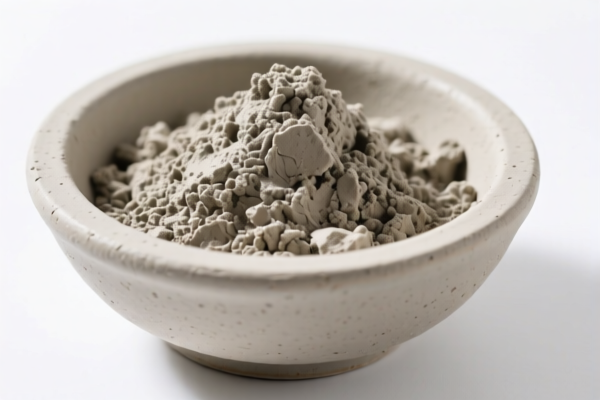
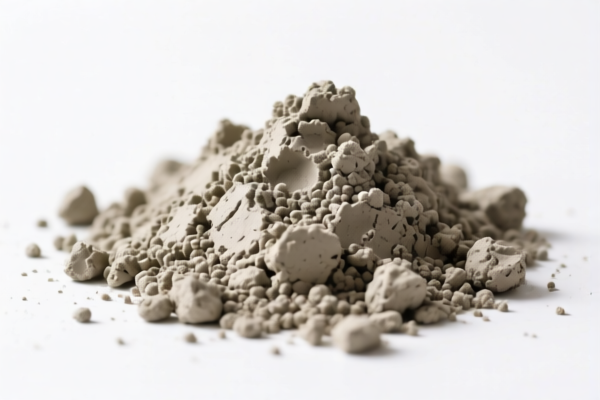
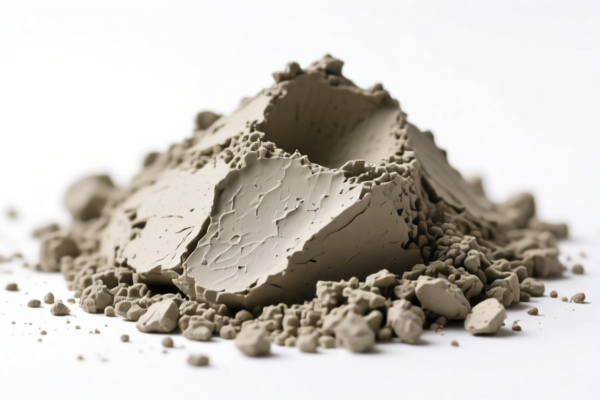
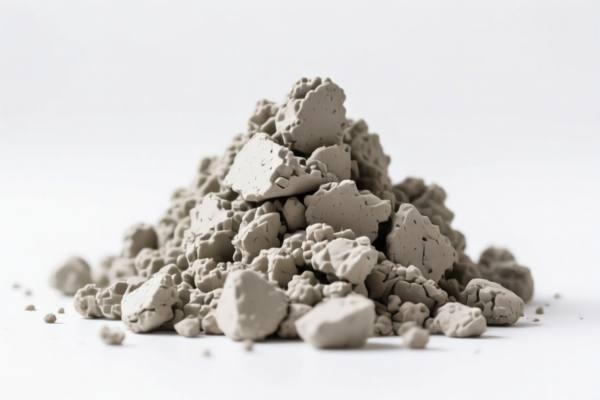
Product Images
AI Analysis
🧪 High Strength Mortar Additive (Construction Chemicals)
🌐 HS Code Reference & Customs Clearance Guide | 2026 Latest Tariff Analysis | Professional Compliance Strategy
📌 I. Product Definition & Classification: What Exactly is a "High Strength Mortar Additive"?
High Strength Mortar Additives are specialized chemical preparations designed to enhance the mechanical properties, workability, and durability of cementitious materials (mortar, concrete, plaster). In international trade, these are not generic "chemicals" but preparation products specifically formulated for construction applications.
Key characteristics that define the classification: * Function: Used to improve strength, reduce water demand, accelerate setting, or enhance adhesion. * Composition: Mixtures of natural or synthetic products (polymers, mineral powders, surfactants, etc.). * Application: Added directly to mortar/concrete mixtures at the construction site or pre-mixed in factory-produced mortar bags.
⚠️ Critical Distinction:
- If the product is a pure chemical substance (e.g., pure sodium silicate) not specifically prepared for construction use → It may fall under other chapters (e.g., Chapter 28 or 382499 if unspecified).
- If it is a prepared preparation/mixture specifically for cements/mortars → It must be classified under Heading 3824.
📦 II. HS Code Classification Details (2026 Official Tariff Alignment)
Based on the provided data, there are four potential HS Codes. However, only two are practically viable for specifically formulated mortar additives. The other two represent generic or unspecified categories which are not recommended for specific construction additives due to higher risk of re-classification.
| HS Code | Product Description (From Data) | Applicability | Recommendation |
|---|---|---|---|
3824.40.50.00 |
Prepared binders for foundry molds or cores... Prepared additives for cements, mortars or concretes: Other | ✅ Primary Choice for most general high-strength mortar additives (e.g., plasticizers, strengthening agents without high aromatic content). | High Confidence |
3824.40.10.00 |
... Prepared additives for cements, mortars or concretes: Containing 5% or more by weight of one or more aromatic or modified aromatic substances | ⚠️ Specific Case ONLY if your additive contains ≥5% aromatic substances (e.g., certain polymer dispersions or solvents-based enhancers). | Conditional (Check Composition!) |
3824.99 |
Other chemical products not elsewhere specified... including additives for mortars... | ❌ Avoid | Generic "catch-all" code. Customs may reject this if a more specific code (3824.40) exists. Risk of re-classification. |
3815.90 |
Other chemical products for use in construction... additives designed to improve mechanical properties... | ❌ Avoid | This heading typically refers to catalysts/activators for other industries. For mortar/concrete, 3824 is the lex specialis (specific law). |
🔍 Key Takeaway:
- Do NOT use3824.99or3815.90for standard mortar additives if they fit the description in 3824.40.
- The choice between3824.40.50.00and3824.40.10.00depends strictly on the aromatic content.
💰 III. 2026 Tariff Rate Breakdown (Detailed Tax Analysis)
✅ Applicable Country: United States (US)
✅ Origin: China (CN) (Assumed based on typical 301/IEEPA patterns in data)
✅ Effective Date: Current (2025–2026)
🎯 1. 3824.40.50.00 — Prepared Additives for Cements, Mortars, or Concretes (Other)
| Item | Detail |
|---|---|
| Base Duty Rate | 5.0% (Ad Valorem) |
| Section 301 Additional Duty | +25.0% (USITC Footnote for HTS 3824.40.50) |
| Total Duty Rate | 30.0% |
| Tax Calculation | CIF Value × 30% |
| Legal Basis Path | HTSUS: 3824.40.50.00 → USITC: Footnote 9903.01 (301 List 3/4) |
📌 Explanation:
- The 5% base rate is the standard Most Favored Nation (MFN) duty for chemical preparations.
- The +25% surcharge is imposed under Section 301 of the Trade Act of 1974 on Chinese-origin goods.
- No de minimis exemption applies for general cargo; this rate applies to all commercial imports.
🎯 2. 3824.40.10.00 — Prepared Additives Containing ≥5% Aromatic Substances
| Item | Detail |
|---|---|
| Base Duty Rate | 6.5% (Ad Valorem) |
| Section 301 Additional Duty | +25.0% (USITC Footnote for HTS 3824.40.10) |
| Total Duty Rate | 31.5% |
| Tax Calculation | CIF Value × 31.5% |
| Legal Basis Path | HTSUS: 3824.40.10.00 → USITC: Footnote 9903.01 (301 List 3/4) |
📌 Explanation:
- The higher base rate (6.5% vs 5%) reflects the specific subheading for aromatic-containing products.
- The +25% surcharge remains identical because the additional duty is applied at the heading level for Chinese goods under current policies.
- Critical Check: If your product contains less than 5% aromatic substances, you cannot use this code. Using it incorrectly may lead to penalties.
🛠️ IV. Customs Clearance Practical Advice (Avoiding Pitfalls)
✅ 1. Documentation Checklist (Mandatory)
| Document | Required? | Why? |
|---|---|---|
| Product Specification Sheet | ✔️ | Must explicitly state: "Prepared Additive for Mortar/Concrete," usage instructions, and chemical composition breakdown. |
| Safety Data Sheet (SDS) | ✔️ | Required for chemical classification. SDS must confirm it is a mixture/preparation, not a raw chemical. |
| Statement of Aromatic Content | ✔️ | Crucial! A signed letter stating: "The product contains [X]% aromatic substances by weight." This determines if it’s 3824.40.10.00 or 30.00%. |
| Commercial Invoice | ✔️ | Clearly describe as "Mortar Strength Additive" not just "Chemical." |
| Packing List | ✔️ | Show net weight vs. gross weight accurately. |
| Certificate of Origin | ✔️ | To prove origin (China vs. non-China). If non-Chinese, 301 duty may not apply. |
✅ 2. Classification Strategy (Key Decision Tree)
🔥 "Check the Aromatics, Choose the Code, Avoid the Generic!"
| Scenario | Recommended HS Code | Duty Rate | Action |
|---|---|---|---|
| Standard Mortar Additive (Plasticizers, polymers, minerals) with <5% aromatics | 3824.40.50.00 |
30.0% | ✅ Most common. Safe choice for generic strengthening agents. |
| Additive with ≥5% Aromatics (e.g., solvent-based, certain resins) | 3824.40.10.00 |
31.5% | ⚠️ Only if composition confirms ≥5%. |
| Unknown or Unspecified Chemical Mix | 3824.99 |
Error/Failed | ❌ Avoid. High risk of rejection. Customs will ask for composition. |
| Non-Construction Chemical (e.g., industrial cleaner) | 3815.90 |
Error/Failed | ❌ Avoid. Wrong use case. |
✅ 3. Special Cases & Optimization
| Situation | Recommendation |
|---|---|
| Origin is NOT China (e.g., Vietnam, EU) | Verify if Section 301 (+25%) still applies. If yes, total duty is 5% or 6.5%. If no, total duty is 5% or 6.5%. Contact broker to confirm country-specific exemptions. |
| Sample Shipment (De Minimis) | ❌ Not Eligible. Chemical preparations for construction are typically excluded from $800 de minimis exemption if they are commercial-grade or restricted. |
| Blended with Cement (Factory Ready-Mix) | If sold as a pre-mixed mortar, the HS Code changes to Chapter 3824.40 is still correct, but description changes to "Ready-to-use mortar additive" vs "Bulk additive." |
| Liquid vs. Powder | Both can be 3824.40. Physical form does not change the code, but aromatic content does. |
🌍 V. Global Market Comparison (2026)
| Country/Region | Recommended HS Code | Base Duty | Additional Duty (China) | Total Duty | Notes |
|---|---|---|---|---|---|
| 🇺🇸 USA | 3824.40.50.00 |
5.0% | +25% (301) | 30.0% | Highest Cost Market |
| 🇪🇺 EU | 3824.40.90 | 6.5% | 0% | 6.5% | Lower tariffs, stricter REACH compliance |
| 🇨🇳 China (Import) | 3824.40.90 | 5.0% | 0% | 5.0% | Import duty, no 301 |
| 🇦🇺 Australia | 3824.40.90 | 5.0% | 0% | 5.0% | GST 10% applies on top |
📌 Insight:
- The US market imposes a significant penalty (25%) on Chinese-origin mortar additives.
- For non-Chinese origin (e.g., EU, India, Vietnam), the US duty drops to 5.0–6.5%, making supply chain diversification highly attractive.
📌 VI. Common Mistakes & Pitfalls (Lessons Learned)
❌ Mistake 1: Classifying as 3824.99 ("Other") to avoid scrutiny.
👉 Consequence: Customs will request detailed composition. If found to be a specific mortar additive, they will re-classify to 3824.40, potentially delaying shipment and imposing penalties for misclassification.
❌ Mistake 2: Ignoring the 5% aromatic threshold.
👉 Consequence: Using 3824.40.50.00 for a product with 6% aromatics leads to an underpayment of 1.5%. Customs can audit past 5 years for duty deficiency.
❌ Mistake 3: Describing product vaguely as "Chemical Additive."
👉 Consequence: Customs cannot determine the correct subheading. Hold for Inspection.
✅ Correct Description Example:
"Prepared mortar additive for high-strength concrete, polymeric emulsion, contains 2% aromatic substances, Net Weight: 20kg, HS 3824.40.50.00"
🎯 VII. Conclusion: Professional Clearance, Cost Efficiency
🎯 Key Action Items:
1. Analyze Formula: Determine exact aromatic content %.
2. Select Code:
- <5% Aromatics → 3824.40.50.00 (30%)
- ≥5% Aromatics → 3824.40.10.00 (31.5%)
3. Verify Origin: If not China, 301 duty may not apply, saving 25%.
4. Document Everything: SDS, Spec Sheet, and Composition Statement are mandatory.
🔹 "Code 3824.40 is King for Mortar Additives."
🔹 "Aromatics <5%? Save 1.5% and Simplify."
🔹 "Non-China Origin? Slash Tariffs by 25%."
📣 Immediate Next Steps:
📞 Consult a Licensed Customs Broker to review your product's chemical analysis.
📄 Prepare a Composition Declaration to support your HS Code selection.
🚀 Optimize Supply Chain: Consider sourcing from non-301 countries if volume is high.
✨ Precise Classification, Predictable Costs!
💼 Your Mortar Additive Deserves a Smarter Clearance Path!
Customer Reviews
About HS Code Classification
The Harmonized System (HS) is an internationally standardized nomenclature developed by the World Customs Organization (WCO) to classify traded products. Over 200 countries use the HS system as the basis for customs tariffs, trade statistics, and import/export regulations.
Each HS code follows a hierarchical structure:
- Chapter (2 digits) — Broad category of goods (e.g., Chapter 84: Machinery and Mechanical Appliances)
- Heading (4 digits) — More specific grouping within the chapter
- Subheading (6 digits) — Internationally standardized breakdown, used by all WCO member countries
- National subdivisions (8-10 digits) — Country-specific extensions for further classification, such as US HTSUS 10-digit codes
Correct HS code classification is essential for smooth customs clearance, accurate duty payment, and compliance with trade regulations. Misclassification can lead to customs delays, overpayment of duties, or penalties.
When importing from CN to US, the applicable tariff rates may include:
- Most-Favored-Nation (MFN) rate — The standard duty rate applied to WTO members
- General rate — Applied to countries without trade agreements
- Trade remedy duties — Additional tariffs such as Section 301 (anti-dumping), Section 232 (national security), or countervailing duties
The information provided on this page is for reference purposes only. For official classification, please consult with your local customs authority or a licensed customs broker.