High Strength Polypropylene Film
CN → US| HS Code | Tariff Rate | Origin | Destination | Doc |
|---|---|---|---|---|
| 3919905060 | 40.8% | CN | US | Official Doc |
| 3921190010 | 41.5% | CN | US | Official Doc |
| 3921190090 | 41.5% | CN | US | Official Doc |
| 3919905040 | 40.8% | CN | US | Official Doc |
| 3920200055 | 39.2% | CN | US | Official Doc |
Product Images
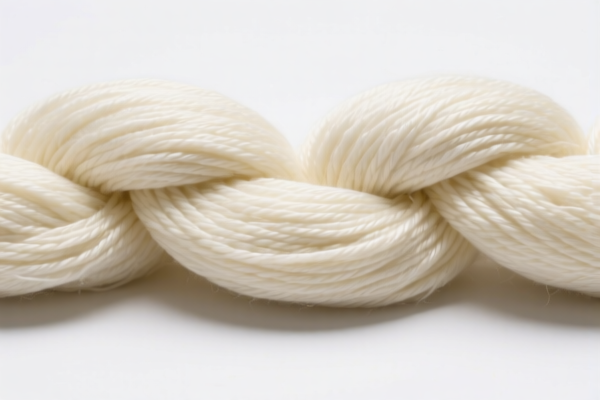
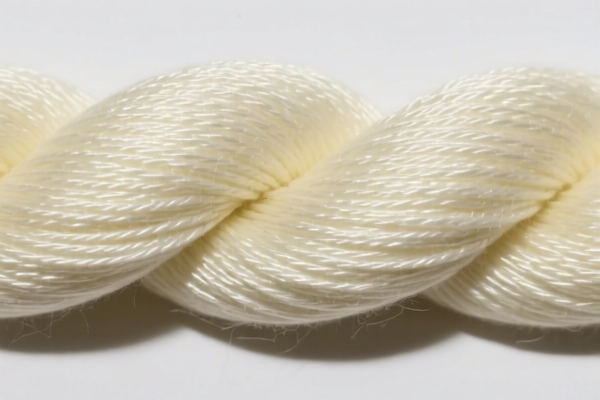
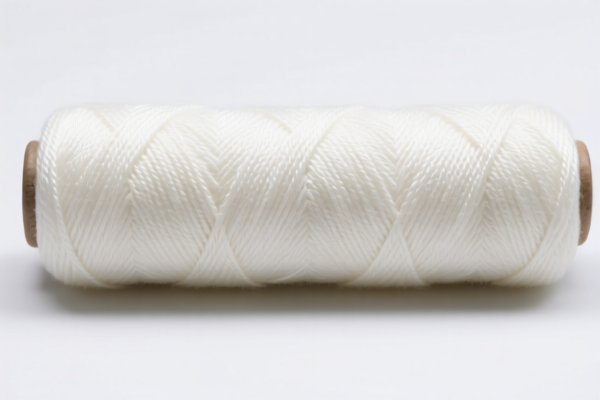
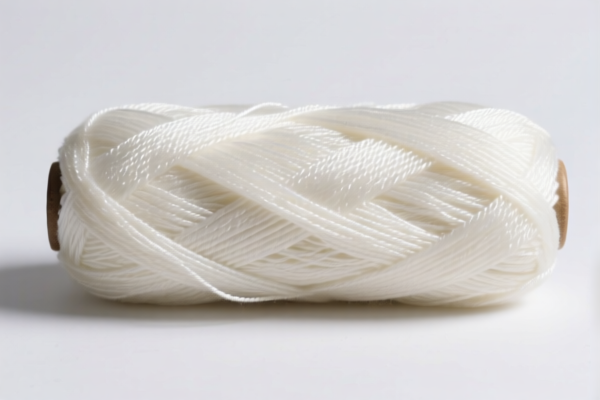
AI Analysis
🧪 High Strength Polypropylene Film (PP Film)
🌐 HS Code Reference & Customs Clearance Guide | 2026 Latest Tariff Analysis | Professional Customs Strategy
📌 I. Product Definition & Classification: Do You Really Understand "High Strength PP Film"?
High Strength Polypropylene Film is a critical packaging and industrial material known for its high tensile strength, excellent clarity, and moisture resistance. In international trade, it is primarily classified under Chapter 39 (Plastics and Articles Thereof). The classification depends heavily on the specific structure (e.g., self-adhesive, reinforced, or plain) and application.
⚠️ Key Distinction Points:
- Self-Adhesive/Flat Tape Form: Falls under 3919 (Self-adhesive plates, sheets, film, foil, tape, roll, strip...).
- General Plastic Film (Non-adhesive): Falls under 3920 or 3921 (Other plates, sheets, film, foil, and strip, of plastics).
- "High Strength" Attribute: Does not have a dedicated HS code; it influences the technical description but generally follows the base material and form classification.
📦 II. HS Code Classification Details (2026 Latest Tariff Authority Comparison)
| HS Code | Product Description | Application Scenario | Key Characteristic |
|---|---|---|---|
3919.90.50.60 |
High Strength Polypropylene Film, self-adhesive, flat shape | Self-adhesive tapes, labels, specialty packaging | ✅ Self-adhesive / Flat Shape |
3921.19.00.10 |
High Strength Polypropylene Film (General) | Industrial packaging, lamination, general use | ✅ Matches Material/Form Requirements Exactly |
3921.19.00.90 |
Other Polypropylene Films (Plates, Sheets, Film, Foil, Strip) | Broad category for PP films not specified elsewhere | ✅ Fits "Plastic Plates, Sheets, Film, Foil, Strip" |
3919.90.50.40 |
Polypropylene Film, defined as Plate/Sheet/Film | Specific sub-category for self-adhesive PP film | ✅ Fits "Plates, Sheets, Film, Foil" Definition |
3920.20.00.55 |
Non-cellular, Unreinforced Polypropylene Film | General purpose PP films, non-reinforced | ✅ Non-cellular, Unreinforced Category |
🔍 Key Reminder:
- Self-adhesive films (e.g., with adhesive backing) are strictly classified under 3919.
- Non-self-adhesive films are classified under 3920 or 3921.
- "High Strength" is a performance attribute; customs relies on the material (PP) and form (Film) for classification.
💰 III. 2026 Latest Tariff Rate Breakdown (Including Surcharges & Policy Add-ons)
✅ Applicable Country: United States (US)
✅ Country of Origin: China (CN)
✅ Effective Date: 2025/2026 (Post-trade war adjustments)
🎯 1. 3919.90.50.60 & 3919.90.50.40 —— Self-Adhesive PP Films
| Item | Content |
|---|---|
| Base Tariff Rate | 5.8% (Ad Valorem) |
| Section 301 Tariff | +25.0% (USITC Footnote for China-origin goods) |
| Section 122 Tariff | +10.0% (Specific policy surcharge for certain plastic products) |
| Total Tariff Rate | 40.8% |
| Tax Calculation | CIF Value × 40.8% |
| De Minimis Exemption | ❌ Not Applicable (High tariff goods excluded) |
| Legal Basis Path | HTSUS:3919.90.50 → USITC:301Footnote → Section122Policy |
📌 Explanation:
- Base 5.8%: Standard Most Favored Nation (MFN) rate for self-adhesive plastic films.
- +25% Section 301: Retaliatory tariff on Chinese plastics.
- +10% Section 122: Additional surcharge applicable to specific plastic film categories.
- Total 40.8%: Extremely high cost. Accurate declaration is critical to avoid underpayment penalties.
🎯 2. 3921.19.00.10 & 3921.19.00.90 —— General PP Films (Non-Adhesive)
| Item | Content |
|---|---|
| Base Tariff Rate | 6.5% (Ad Valorem) |
| Section 301 Tariff | +25.0% (USITC Footnote for China-origin goods) |
| Section 122 Tariff | +10.0% (Specific policy surcharge) |
| Total Tariff Rate | 41.5% |
| Tax Calculation | CIF Value × 41.5% |
| De Minimis Exemption | ❌ Not Applicable |
| Legal Basis Path | HTSUS:3921.19.00 → USITC:301Footnote → Section122Policy |
📌 Note:
- These codes cover general PP films without adhesive backing.
- The rate is slightly higher than self-adhesive variants due to the 6.5% base rate.
- "High Strength" does not reduce the tax burden; the classification remains in the 41.5% bracket.
🎯 3. 3920.20.00.55 —— Unreinforced, Non-Cellular PP Film
| Item | Content |
|---|---|
| Base Tariff Rate | 4.2% (Ad Valorem) |
| Section 301 Tariff | +25.0% (USITC Footnote for China-origin goods) |
| Section 122 Tariff | +10.0% (Specific policy surcharge) |
| Total Tariff Rate | 39.2% |
| Tax Calculation | CIF Value × 39.2% |
| De Minimis Exemption | ❌ Not Applicable |
| Legal Basis Path | HTSUS:3920.20.00 → USITC:301Footnote → Section122Policy |
📌 Advantage:
- This is the lowest tariff option among the listed codes (39.2%).
- Condition: The film must be non-cellular (solid, not foamed) and unreinforced (not laminated with other materials like metal or glass fibers).
- Caution: If the film is reinforced or cellular, this code is incorrect and may lead to reclassification and higher taxes.
🛠️ IV. Customs Clearance Practical Advice (Pitfall Avoidance Guide)
✅ 1. Preparation Checklist (Essential Documents)
| Document | Mandatory | Description |
|---|---|---|
| ✅ Product Specification Sheet | ✔️ | Must specify: Material (PP), Thickness, Width, Tensile Strength, Adhesive Type (if any). |
| ✅ Technical Data Sheet (TDS) | ✔️ | Proves "High Strength" properties and "Non-cellular" status if claiming 3920. |
| ✅ Product Photos | ✔️ | Clear images of the film roll, labels, and any adhesive backing. |
| ✅ Commercial Invoice | ✔️ | Accurately describe as "Polypropylene Film, High Strength" and specify HS Code. |
| ✅ Bill of Lading/Air Waybill | ✔️ | Match invoice details precisely. |
| ✅ Origin Certificate | ✔️ | Required to confirm China origin (triggers Section 301 & 122). |
✅ 2. Declaration Tips (Crucial Mnemonics)
🔥 "Adhesive = 3919, General = 3921/3920, Reinforced = Check Structure!"
| Scenario | Correct Declaration | Wrong Practice |
|---|---|---|
| Self-Adhesive PP Film | 3919.90.50.60 or .40 |
Declare as 3920 → 41.5% (Higher Tax) |
| General PP Film (No Adhesive) | 3921.19.00.10 or .90 |
Declare as 3919 → 40.8% (Higher Tax) |
| Unreinforced, Solid PP Film | 3920.20.00.55 |
Declare as 3921 → 41.5% (Higher Tax) |
| Reinforced/Laminated Film | 3921.19.00 (Likely) |
Declare as 3920 → Rejection |
📌 Key Strategy:
- If the film is not reinforced and not cellular, aim for3920.20.00.55to save 2.3% vs. the highest rate.
- If it is self-adhesive, you are locked into3919codes (40.8%).
- Never misdeclare a reinforced film as "unreinforced" – customs may perform a physical inspection and impose penalties.
✅ 3. Special Case Handling
| Situation | Handling Advice |
|---|---|
| Multilayer Film (Co-extruded) | If layers are PP only, use 3920/3921. If layers include non-PP materials, classification changes. |
| Oriented PP Film (BOPP) | Often falls under 3920.20.00.55 or 3921.19.00. Provide orientation process details. |
| Matte vs. Glossy Finish | Does not affect HS Code. Ensure description matches physical appearance. |
| Recycled PP Content | If >50% recycled, some preferential policies may apply (check current trade agreements), but Section 301 usually still applies to China origin. |
🌍 V. Global Market Clearance Comparison (2026 Latest)
| Country/Region | Recommended HS Code | Tariff (China Origin) | Certification | Note |
|---|---|---|---|---|
| 🇺🇸 USA | 3920.20.00.55 |
39.2% - 41.5% | FDA (if food contact) | High tariffs due to Section 301 & 122. |
| 🇨🇳 China | 3920.20.00.55 |
4.2% - 6.5% | No extra tariff | No Section 301. |
| 🇪🇺 EU | 3920.20.00.55 |
0% - 6.5% | REACH / RoHS | No Section 301. |
| 🇨🇦 Canada | 3920.20.00.55 |
0% - 6% | CSA | Low tariffs. |
| 🇦🇺 Australia | 3920.20.00.55 |
5% | None | Moderate tariffs. |
📌 Conclusion:
- USA has the highest barrier due to multiple surcharges.
- EU and Canada are more tariff-friendly for PP films.
- For US imports, cost optimization is critical: choose3920.20.00.55if the film structure allows (unreinforced, non-cellular).
📌 VI. Common Mistakes & Pitfall Guide (Lessons Learned)
❌ Mistake 1: Declaring self-adhesive film under 3920
👉 Consequence: Customs may reclassify to 3919 and adjust duty, but if it was underdeclared, you face penalties.
👉 Correction: Always declare self-adhesive items under 3919.
❌ Mistake 2: Ignoring the Reinforced/Unreinforced distinction
👉 Consequence: Misclassification leads to higher duty (41.5% vs. 39.2%).
👉 Correction: If the film has glass fiber or metal foil reinforcement, it cannot use 3920.20.00.55.
❌ Mistake 3: Vague Description "PP Film"
👉 Consequence: Customs delay for classification review.
👉 Correction: Use precise terms: "Unreinforced, Non-cellular Polypropylene Film, High Strength, BOPP Type".
❌ Mistake 4: Assuming "High Strength" qualifies for Exemption
👉 Consequence: No exemption exists for "high strength" plastic films under US trade law.
👉 Correction: Prepare for full Section 301 & 122 duties.
🎯 VII. Conclusion: Precise Classification Saves Money!
🎯 Remember the Mnemonic:
🔹 "Adhesive = 3919 (40.8%), Solid = 3920 (39.2%), General = 3921 (41.5%)"
🔹 "Unreinforced is cheapest, but prove it with specs!"📌 Pro Tip:
- If your film is unreinforced and non-cellular, aggressively pursue3920.20.00.55to save 2.3% on the CIF value.
- For self-adhesive products,3919.90.50.60is the most accurate (40.8%).
- Always provide Technical Data Sheets to justify the "Unreinforced" status if claiming the lower rate.
📣 Immediate Action:
📞 Consult a licensed customs broker for Advance Ruling if your film structure is complex (e.g., co-extruded with adhesive).
📄 Ensure your Invoice and Packing List match the HS Code description exactly.
✨ Professional Clearance Starts with Accurate Classification!
💼 Every percentage point saved is pure profit!
Customer Reviews
About HS Code Classification
The Harmonized System (HS) is an internationally standardized nomenclature developed by the World Customs Organization (WCO) to classify traded products. Over 200 countries use the HS system as the basis for customs tariffs, trade statistics, and import/export regulations.
Each HS code follows a hierarchical structure:
- Chapter (2 digits) — Broad category of goods (e.g., Chapter 84: Machinery and Mechanical Appliances)
- Heading (4 digits) — More specific grouping within the chapter
- Subheading (6 digits) — Internationally standardized breakdown, used by all WCO member countries
- National subdivisions (8-10 digits) — Country-specific extensions for further classification, such as US HTSUS 10-digit codes
Correct HS code classification is essential for smooth customs clearance, accurate duty payment, and compliance with trade regulations. Misclassification can lead to customs delays, overpayment of duties, or penalties.
When importing from CN to US, the applicable tariff rates may include:
- Most-Favored-Nation (MFN) rate — The standard duty rate applied to WTO members
- General rate — Applied to countries without trade agreements
- Trade remedy duties — Additional tariffs such as Section 301 (anti-dumping), Section 232 (national security), or countervailing duties
The information provided on this page is for reference purposes only. For official classification, please consult with your local customs authority or a licensed customs broker.