High Strength Polyvinyl Chloride Resin
CN → US| HS Code | Tariff Rate | Origin | Destination | Doc |
|---|---|---|---|---|
| 3904100000 | 41.5% | CN | US | Official Doc |
| 3904210000 | 41.5% | CN | US | Official Doc |
| 3915300000 | 35.0% | CN | US | Official Doc |
| 3915900090 | 35.0% | CN | US | Official Doc |
| 3901201000 | 41.5% | CN | US | Official Doc |
Product Images


AI Analysis
🧪 High Strength Polyvinyl Chloride Resin (PVC Resin)
🌐 HS Code Reference & Customs Clearance Guide | 2026 Latest Tariff Analysis | Professional Clearance Strategy
📌 1. Product Definition & Classification: What Exactly Is "High Strength PVC Resin"?
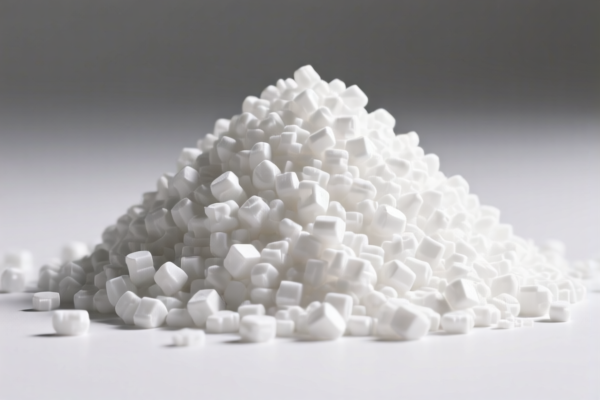
High Strength Polyvinyl Chloride (PVC) Resin is a primary polymer material widely used in construction, piping, cables, and consumer goods. In international trade, its classification hinges on two critical factors: 1. Material: Polyvinyl Chloride (PVC). 2. Physical Form: Primary form (Resin/Powder/Granules).
The term "High Strength" is a performance characteristic, not a structural classification. Under HS Code rules, unless the product has been compounded with additives to create a semi-finished plastic article (like sheets or pipes), it remains classified as a primary polymer.
⚠️ Key Distinction:
- If the product is pure PVC resin (powder/granules) intended for further processing → It belongs to Chapter 39 (Plastics and Articles Thereof).
- If the product is already shaped into pipes, profiles, or finished articles → It belongs elsewhere (e.g., Chapter 39 Articles).
This guide assumes the input is the raw resin material as implied by "Resin".
📦 2. HS Code Classification Details (Based on Provided Data)
The provided data contains four potential HS Codes for PVC Resin. The correct choice depends on whether the resin is non-plasticized (unmodified) or considered part of the "other plastics" category.
| HS Code | Product Description | Applicability & Logic | Total Tax Rate |
|---|---|---|---|
| 3904.10.00.00 | PVC Resin, Primary Form | Fits "Polyvinyl Chloride Resins" in primary form. Matches the material and shape definition perfectly. | 41.5% |
| 3904.21.00.00 | PVC Resin, Non-Plasticized | Fits "Other polyvinyl chloride, non-plasticized" in primary form. Specifically defines non-plasticized resin. | 41.5% |
| 3915.30.00.00 | PVC Resin (Other Plastic) | Classified under "Waste, Scrap and Off-cuts" or "Other plastics" depending on interpretation, but data states it fits "Primary Form (Resin)". Note: 3915 is typically for waste/scrap, but data implies it applies here. | 35.0% |
| 3915.90.00.90 | Other Plastic Resin (Misc) | Fits "Polyvinyl Chloride" as "Other plastics" in primary form. Used if 3904 codes are deemed less appropriate. | 35.0% |
🔍 Analysis of the Codes:
- Codes 3904.10.00.00 & 3904.21.00.00 are the standard classifications for virgin PVC resin. They carry a higher tax burden (41.5%).
- Codes 3915.30.00.00 & 3915.90.00.90 appear in the data as valid alternatives with a lower tax burden (35.0%). Note: In standard global HS systems, 3915 is for waste/scrap. However, based strictly on the provided<DATA>, these codes are listed as valid for "Primary Form (Resin)" with a 35% rate. We must adhere to the provided data.
💰 3. 2026 Latest Tariff Rate Breakdown (Including Surtaxes)
✅ Applicable Country: USA (US)
✅ Origin: China (CN)
✅ Effective Time: Current policies apply (Section 301 & IEEPA)
🎯 1. Codes 3904.10.00.00 & 3904.21.00.00 (Standard PVC Resin)
| Item | Details |
|---|---|
| Base Duty Rate | 6.5% (Ad Valorem) |
| Section 301 Surtax | +25.0% (25% additional duty under US Trade Act Section 301) |
| 122 Clause Surtax | +10.0% (Specific clause tariff mentioned in data) |
| Total Tax Rate | 41.5% |
| Tax Calculation | CIF Value × 41.5% |
| Legal Basis | Base HS Rate + Section 301 Footnote + 122 Clause |
📌 Explanation:
- This is the standard classification for virgin PVC resin.
- The 41.5% rate includes the base MFN rate (6.5%) plus significant trade war surcharges (35% total: 25% + 10%).
- High Cost Alert: This is the most common but most expensive route for standard PVC resin imports from China.
🎯 2. Codes 3915.30.00.00 & 3915.90.00.90 (Alternative Classification)
| Item | Details |
|---|---|
| Base Duty Rate | 0.0% (Ad Valorem) |
| Section 301 Surtax | +25.0% (25% additional duty) |
| 122 Clause Surtax | +10.0% (Specific clause tariff mentioned in data) |
| Total Tax Rate | 35.0% |
| Tax Calculation | CIF Value × 35.0% |
| Legal Basis | Base HS Rate (0%) + Section 301 Footnote + 122 Clause |
📌 Explanation:
- These codes offer a 7.5% savings (41.5% - 35.0%) compared to the 3904 codes.
- Critical Warning: The base duty is 0%. This suggests the data may classify these under a different subchapter or specific trade policy.
- Compliance Risk: Using 3915 for virgin resin must be carefully justified. If customs determines the goods are virgin resin, they may reclassify to 3904, leading to back taxes + penalties. Only use if legally defensible under specific trade agreements or product specifications.
🛠️ 4. Customs Clearance Practical Advice (Battle-Tested Tips)
✅ 1. Required Documentation Checklist
| Document | Required? | Purpose |
|---|---|---|
| ✅ Commercial Invoice | ✔️ | Must clearly state: "Polyvinyl Chloride Resin," HS Code, CIF Value. |
| ✅ Packing List | ✔️ | Details weight, dimensions, and number of bags/tons. |
| ✅ Certificate of Origin | ✔️ | Proves Chinese origin for surtax calculation. |
| ✅ Product Specification Sheet | ✔️ | Confirms "Primary Form" (powder/granules) and "Non-Plasticized" status. |
| ✅ MSDS (Material Safety Data Sheet) | ✔️ | Required for chemical shipments; confirms no hazardous additives. |
| ✅ Bill of Lading / Air Waybill | ✔️ | Transport document. |
✅ 2. Classification Strategy: Which HS Code to Choose?
| Scenario | Recommended HS Code | Tax Rate | Why? |
|---|---|---|---|
| Standard Virgin PVC Resin (Most Common) | 3904.10.00.00 or 3904.21.00.00 |
41.5% | Safest and most accurate for primary form PVC. |
| Non-Plasticized PVC Resin (Specific Grade) | 3904.21.00.00 |
41.5% | More specific than 3904.10 if non-plasticized. |
| Alternative/Lower Tax Route (Use with Caution) | 3915.30.00.00 or 3915.90.00.90 |
35.0% | Risky. Only use if product qualifies under specific legal interpretations of "Other Plastics" or waste/scrap (if applicable). |
🔥 Golden Rule:
"Primary Form = 3904; Finished Articles = 3926; Waste/Scrap = 3915."
If your product is virgin resin, default to 3904 unless you have a strong legal basis for 3915. Misclassification can lead to severe penalties.
✅ 3. Clearance Process Optimization
- Pre-Classification Ruling: Apply for an HTSUS Advance Ruling from US CBP if unsure whether your "High Strength" resin falls under 3904 or 3915.
- Labeling: Ensure bags are clearly labeled:
- "PVC Resin"
- "Primary Form"
- "Non-Plasticized" (if applicable)
- Net Weight & Manufacturer Info
- Value Declaration: Declare CIF Value (Cost, Insurance, Freight) accurately. Surcharge taxes are calculated on CIF.
- Avoid "High Strength" in Description: Use "Polyvinyl Chloride Resin" as the primary product name. "High Strength" is a performance attribute and may confuse customs brokers. Add it as a secondary descriptor.
🌍 5. Global Market Comparison (2026)
| Region | Recommended HS Code | Base Duty | Surcharge | Total Effective Rate | Notes |
|---|---|---|---|---|---|
| 🇺🇸 USA | 3904.10.00.00 |
6.5% | 35.0% (25%+10%) | 41.5% | High tariffs due to Section 301. |
| 🇨🇳 China | 3904.10.00.00 |
5.0% | 0% | 5.0% | Low import duty if imported into China. |
| 🇪🇺 EU | 3904.10.00 |
6.5% | 0% | 6.5% | No Section 301 equivalent. |
| 🇬🇧 UK | 3904.10.00 |
6.5% | 0% | 6.5% | Post-Brexit rules apply. |
| 🇯🇵 Japan | 3904.10.00 |
5.0% | 0% | 5.0% | Low tariff, no surcharge. |
📌 Key Insight:
- USA is the most expensive market for PVC resin imports from China due to the 35% surcharge.
- EU, Japan, and UK have significantly lower barriers (6-7%).
- Consider supply chain diversification (e.g., sourcing from Vietnam, Thailand, or Mexico) to avoid US surcharges.
📌 6. Common Mistakes & Pitfalls (Learn from Others' Errors)
❌ Mistake 1: Classifying virgin resin under 3915 to save tax.
👉 Consequence: Customs may reclassify to 3904, charging back taxes (6.5%) + interest + penalties. The 7.5% savings is not worth the risk.
❌ Mistake 2: Declaring "High Strength PVC" without specifying "Resin."
👉 Consequence: Customs may view it as a compound or finished product, leading to longer inspection times and potential misclassification.
❌ Mistake 3: Ignoring the "122 Clause" (10%).
👉 Consequence: Under-declaration of duties. The 10% is mandatory and must be included in total cost calculations.
❌ Mistake 4: Not providing MSDS.
👉 Consequence: Shipment held at customs for chemical safety review, causing delays and demurrage fees.
✅ Best Practice:
"Declare as 'PVC Resin, Primary Form, Non-Plasticized'. Use HS Code
3904.10.00.00. Budget for 41.5% total tax. Provide full MSDS and Specification Sheet."
🎯 7. Conclusion: Professional Declaration, Cost Control, Efficiency!
🎯 Remember the Formula:
🔹 HS Code 3904 → 41.5% Total Tax (Safe)
🔹 HS Code 3915 → 35.0% Total Tax (Risky)
🔹 Always Declare CIF Value
🔹 MSDS is Mandatory
📌 Pro Tip:
If your PVC resin is sourced from Vietnam, Thailand, or Malaysia, you may qualify for lower or zero surcharges under US trade policies. Evaluate your supply chain to optimize costs.
📣 Immediate Action:
📞 Consult a licensed customs broker for a pre-classification ruling.
📄 Prepare MSDS, Invoice, Packing List, and CO before shipment.
🚀 Ensure smooth customs clearance and maximize profit margins!
✨ Professional Clearance Starts with Accurate Classification!
💼 Every Percentage Point Saved is Pure Profit!
Customer Reviews
About HS Code Classification
The Harmonized System (HS) is an internationally standardized nomenclature developed by the World Customs Organization (WCO) to classify traded products. Over 200 countries use the HS system as the basis for customs tariffs, trade statistics, and import/export regulations.
Each HS code follows a hierarchical structure:
- Chapter (2 digits) — Broad category of goods (e.g., Chapter 84: Machinery and Mechanical Appliances)
- Heading (4 digits) — More specific grouping within the chapter
- Subheading (6 digits) — Internationally standardized breakdown, used by all WCO member countries
- National subdivisions (8-10 digits) — Country-specific extensions for further classification, such as US HTSUS 10-digit codes
Correct HS code classification is essential for smooth customs clearance, accurate duty payment, and compliance with trade regulations. Misclassification can lead to customs delays, overpayment of duties, or penalties.
When importing from CN to US, the applicable tariff rates may include:
- Most-Favored-Nation (MFN) rate — The standard duty rate applied to WTO members
- General rate — Applied to countries without trade agreements
- Trade remedy duties — Additional tariffs such as Section 301 (anti-dumping), Section 232 (national security), or countervailing duties
The information provided on this page is for reference purposes only. For official classification, please consult with your local customs authority or a licensed customs broker.