High Strength Refractory Ramming Material
CN → US| HS Code | Tariff Rate | Origin | Destination | Doc |
|---|---|---|---|---|
| 3816002050 | 38.0% | CN | US | Official Doc |
| 6902905020 | 35.0% | CN | US | Official Doc |
| 6815994110 | 35.0% | CN | US | Official Doc |
| 6815910011 | 35.0% | CN | US | Official Doc |
| 3816001000 | 35.0% | CN | US | Official Doc |
Product Images
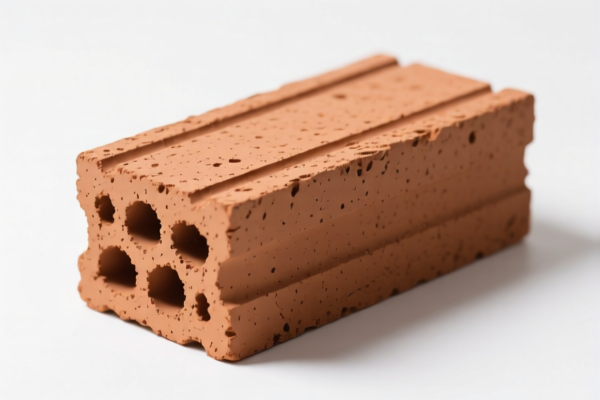
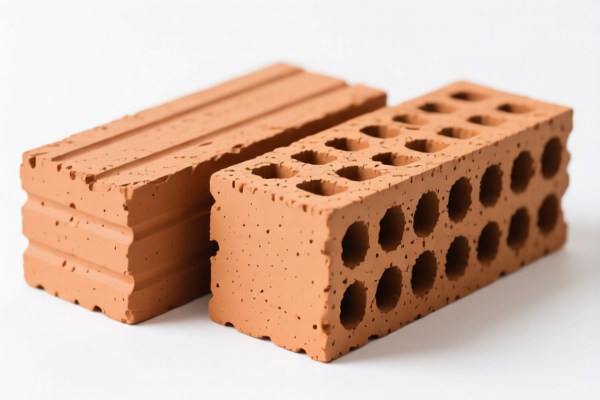
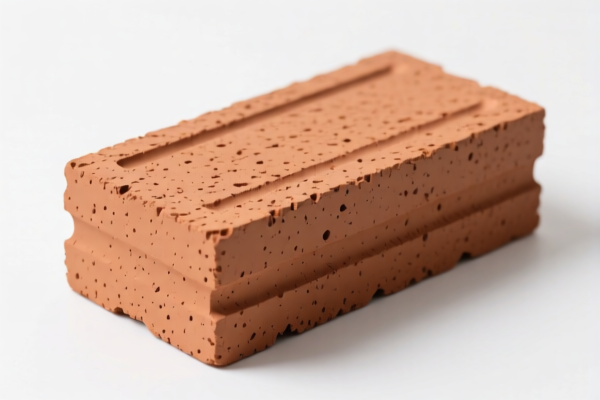
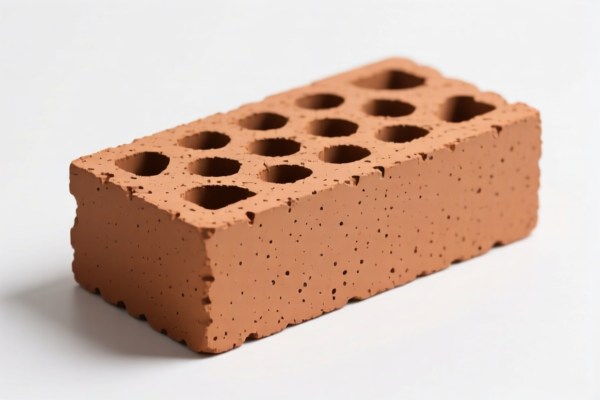
AI Analysis
🧱 High Strength Refractory Ramming Material (耐火捣打料)
🌐 HS Code Reference & Customs Clearance Guide | 2026 Latest Tariff Breakdown | Professional Clearance Strategy
📌 I. Product Definition & Classification: What is "Ramming Material"?
Refractory Ramming Material (捣打料) is a dry or semi-dry mixture of refractory aggregates, powders, and binders, used to construct linings for high-temperature industrial kilns, furnaces, and reactors. It is installed by mechanical ramming or vibrating, providing a seamless, joint-free lining that offers superior corrosion resistance and thermal shock stability compared to shaped bricks.
In international trade, its classification depends heavily on its chemical composition (oxide vs. non-oxide) and physical form (chemical-bonded vs. mechanically bound).
⚠️ Critical Distinction:
- If the material is primarily chemical compounds (like Magnesium Oxide, Alumina) bonded chemically → It often falls under Chapter 68 (Stone, Plaster, Cement) or Chapter 38 (Miscellaneous Chemical Products).
- If it is a mixture of refractory materials intended for specific industrial use → It may fall under 3816 (Inhibitors of Corrosion, Prepared Lubricants, etc., specifically prepared refractories).
📦 II. HS Code Classification Details (2026 Latest Tariff Authority)
Based on the provided data, here are the five most likely HS Codes for High Strength Refractory Ramming Material, ranked by specificity and tax efficiency.
| HS Code | Product Description & Summary | Key Characteristics | Tax Rate (Total) |
|---|---|---|---|
| 3816.00.20.50 | Refractory Ramming Material; matches refractory material and ramming material morphology; classified under "Other". | General purpose ramming material; specific morphology; "Other" category. | 38.0% |
| 6902.90.50.20 | Refractory Ramming Material; belongs to Refractory Materials category; fits Other categories and ceramic building material extensions. | Ceramic-based refractories; extends to building materials; pure refractory classification. | 35.0% |
| 6815.99.41.10 | Refractory Ramming Material; made of Magnesium Oxide (MgO), Alumina (Al₂O₃), etc., chemically bonded; classified as "Other unlisted articles". | Chemical-bonded (MgO/Al₂O₃); specific mineral composition; unlisted other articles. | 35.0% |
| 6815.91.00.11 | Refractory Ramming Material; classified as Articles of Stone or Other Mineral Substances; morphology is chemically bonded articles. | Stone/mineral-based; chemical bonding; specific sub-category for mineral articles. | 35.0% |
| 3816.00.10.00 | Refractory Ramming Material; matches refractory material and ramming material morphology; meets classification explanation requirements. | General classification under Chapter 38; compliant with classification rules. | 35.0% |
🔍 Key Insight:
- HS 3816.00.20.50 has a 3% higher base tax than the others due to its specific "Other" classification under Chapter 38, resulting in a 38% total tax rate.
- The Chapter 68 (6902, 6815) codes offer a slightly lower total tax rate of 35%, making them potentially more cost-effective if the product’s composition (oxide-based, mineral-based) strictly aligns with these definitions.
💰 III. 2026 Latest Tariff Rate Breakdown (Including Surtaxes & Policy Add-ons)
✅ Applicable Country: United States (US)
✅ Origin: China (CN)
✅ Effective Date: From November 10, 2025 (including subsequent imports)
🎯 1. 3816.00.20.50 – Refractory Ramming Material (General/Other)
| Item | Content |
|---|---|
| Base Tariff | 3.0% (ad valorem) |
| Section 301 Surtax (USITC) | +25.0% (From USITC Footnote related to Section 301) |
| IEEPA Surtax | +10.0% (Targeting Chinese/HK products, effective Nov 10, 2025) |
| Total Tax Rate | 38.0% |
| Tax Calculation | CIF Value × 38% |
| De Minimis Eligibility | ❌ No (denied for high-tariff industrial chemicals/refractories) |
| Legal Basis Path | IEEPA:9903.01.25 → IEEPA:9903.01.24 → USITC:3816.00.20.50 → SECTION301:3% |
📌 Explanation:
- The 3% base tariff is standard for Chapter 38 refractory preparations.
- The 25% Section 301 tariff is applied to a wide range of Chinese industrial goods.
- The 10% IEEPA tariff is an additional penalty on Chinese-origin goods.
- Total: 38% is a significant cost driver. Ensure accurate classification to avoid misdeclaration.
🎯 2. 6902.90.50.20 – Refractory Ramming Material (Ceramic/Building Material Extension)
| Item | Content |
|---|---|
| Base Tariff | 0.0% (ad valorem) |
| Section 301 Surtax (USITC) | +25.0% |
| IEEPA Surtax | +10.0% |
| Total Tax Rate | 35.0% |
| Tax Calculation | CIF Value × 35% |
| De Minimis Eligibility | ❌ No |
| Legal Basis Path | IEEPA:9901.25 → IEEPA:9903.01.24 → USITC:6902.90.50.20 → FOOTNOTE:9903.88.01 |
📌 Note:
- Zero Base Tariff makes this the most favorable option if the product can be strictly justified as a "refractory material" under Chapter 69 (Ceramic Products).
- Requires strong documentation proving it is a refractory brick-like substance (even if rammed).
🎯 3. 6815.99.41.10 – Chemical-Bonded Magnesium/Alumina Ramming Material
| Item | Content |
|---|---|
| Base Tariff | 0.0% (ad valorem) |
| Section 301 Surtax (USITC) | +25.0% |
| IEEPA Surtax | +10.0% |
| Total Tax Rate | 35.0% |
| Tax Calculation | CIF Value × 35% |
| De Minimis Eligibility | ❌ No |
| Legal Basis Path | IEEPA:9903.01.25 → IEEPA:9903.01.24 → USITC:6815.99.41.10 → SECTION301:0% |
📌 Note:
- Specifically for MgO/Al₂O₃ based materials.
- If your ramming material is not primarily oxide-based (e.g., it contains carbon, silicon carbide, or complex chemical binders not covered here), this code may be incorrect.
🎯 4. 6815.91.00.11 – Stone/Mineral Based Chemically Bonded Articles
| Item | Content |
|---|---|
| Base Tariff | 0.0% (ad valorem) |
| Section 301 Surtax (USITC) | +25.0% |
| IEEPA Surtax | +10.0% |
| Total Tax Rate | 35.0% |
| Tax Calculation | CIF Value × 35% |
| De Minimis Eligibility | ❌ No |
| Legal Basis Path | IEEPA:9901.25 → IEEPA:9903.01.24 → USITC:6815.91.00.11 → FOOTNOTE:9903.88.01 |
📌 Note:
- Focuses on the material source (stone/mineral) and bonding type (chemical).
- Suitable if the ramming material is derived from natural mineral aggregates with chemical binders.
🎯 5. 3816.00.10.00 – General Refractory Preparation
| Item | Content |
|---|---|
| Base Tariff | 0.0% (ad valorem) |
| Section 301 Surtax (USITC) | +25.0% |
| IEEPA Surtax | +10.0% |
| Total Tax Rate | 35.0% |
| Tax Calculation | CIF Value × 35% |
| De Minimis Eligibility | ❌ No |
| Legal Basis Path | IEEPA:9903.01.25 → IEEPA:9903.01.24 → USITC:3816.00.10.00 → SECTION301:0% |
📌 Note:
- A broader category under Chapter 38.
- If3816.00.20.50(38% tax) is too high, and the product doesn’t fit Chapter 68, this is the fallback.
- Must meet "classification explanation requirements" to be valid.
🛠️ IV. Customs Clearance Practical Advice (Real-World Pitfall Guide)
✅ 1. Documentation Checklist (Non-Negotiable)
| Document | Must Provide | Explanation |
|---|---|---|
| ✅ Product Specification Sheet | ✔️ | Must detail: Composition (% of MgO, Al₂O₃, SiO₂, etc.), Grain Size, Binder Type, Density. |
| ✅ Formula/Composition Analysis | ✔️ | Critical for distinguishing between Chapter 38 (Chemical Prep) and Chapter 68/69 (Mineral/Ceramic). |
| ✅ Product Photos (Unpacked & Packed) | ✔️ | Show the dry powder/granular form to prove it is not a pre-mixed liquid slurry. |
| ✅ Third-Party Lab Report | ✔️ | SGS/BV report confirming chemical composition and refractory properties (refractoriness degree). |
| ✅ Commercial Invoice | ✔️ | Clearly state: "High Strength Refractory Ramming Material, Chemical Bonded, for Kiln Lining." |
| ✅ Packing List | ✔️ | Detail net/gross weight, number of bags, palletization. |
| ✅ Certificate of Origin (CO) | ✔️ | Required for origin verification and potential tariff challenges. |
✅ 2. Declaration Strategy (Key Mantras)
🔥 "Composition Defines Chapter, Bonding Defines Subcategory!"
| Scenario | Correct Declaration | Wrong Practice |
|---|---|---|
| MgO/Al₂O₃ based, Chemical Bond | 6815.99.41.10 or 6815.91.00.11 |
Misdeclare as 3816.00.20.50 → Higher Tax (38%) |
| Ceramic-like, General Refractory | 6902.90.50.20 |
Misdeclare as "Chemical Mixture" → Audit Risk |
| Generic Mixed Refractory | 3816.00.10.00 |
Misdeclare as 3816.00.20.50 → Higher Tax (38%) |
| Liquid Slurry (Not Dry) | Different HS Code | Declare as "Ramming Material" → Rejection/Retum |
📌 Key Reminder:
- Chapter 38 is for "Miscellaneous Chemical Products." If your material is essentially a prepared refractory compound, it often fits here.
- Chapter 68/69 is for "Stone, Plaster, Cement" and "Ceramic Products." If the material is dominated by mineral/ceramic matter, these chapters are preferred and often have 0% base tax.
✅ 3. Special Case Handling
| Situation | Handling Advice |
|---|---|
| OEM Custom Ramming Material | Provide client’s technical specs. If specs emphasize "Ceramic Composition," push for 6902.90.50.20. |
| Carbon-Containing Ramming Material | If carbon content >50%, may fall under Chapter 38 or 3816. Carbon-based refractories often have different tariff treatments. |
| Pre-Mixed vs. Dry | Ramming material must be dry. If liquid binders are added on-site, it’s still ramming material. If pre-mixed with water, it’s not. |
| Used for Glass Furnaces vs. Steel Furnaces | Declaration name should specify application (e.g., "for Steel Ladle Lining") to show specialized industrial use, supporting Chapter 38 or 68 classification. |
🌍 V. Global Market Comparison (2026 Latest)
| Country/Region | Recommended HS Code | Tariff | Certification | Notes |
|---|---|---|---|---|
| 🇺🇸 USA | 6902.90.50.20 or 6815.99.41.10 |
35% (CN Origin) | None Specific | 38% for 3816.00.20.50. Aim for 0% base tax codes. |
| 🇨🇳 China | 6902.90.50.20 |
5% | GB Standards | No Section 301/IEEPA. |
| 🇪🇺 EU | 6902.90.90 |
0% | REACH | Low duty if non-organic. |
| 🇮🇳 India | 6902.90.00 |
10-15% | BIS | Varies by composition. |
| 🇦🇪 UAE | 6902.90.00 |
5% | None | Free Trade Agreements may apply. |
📌 Conclusion:
- USA is the most challenging market due to the 35-38% total tariff burden.
- Maximize cost savings by proving mineral/ceramic origin to use 0% base tax HS codes (6902,6815).
- Avoid3816.00.20.50if possible, due to the 3% base tax hike.
📌 VI. Common Errors & Pitfalls (Blood & Tears Lessons)
❌ Error 1: Declaring "Ramming Material" as "Industrial Chemical Mixture" without proof
👉 Consequence: Customs may reclassify to 3816.00.20.50 → 38% Tax instead of 35%.
❌ Error 2: Ignoring the "Chemical Bond" aspect
👉 Consequence: If the binder is organic (resin), it may fall under Chapter 39 or Chapter 38, not Chapter 68. Must disclose binder type.
❌ Error 3: Using vague descriptions like "Kiln Stuffing"
👉 Consequence: Lack of specificity → Customs Audit → Delay + Possible Penalty.
❌ Error 4: Assuming all refractory materials have the same HS Code
👉 Consequence: Different compositions (MgO vs. Carbon vs. Silicon) require different codes. Misclassification leads to underpayment or overpayment.
✅ Correct Approach:
"High Strength Refractory Ramming Material, Chemical Bonded, MgO-Al₂O₃ Based, Granular, for Steel Ladle Lining, Net Weight 25kg/bag"
🎯 VII. Conclusion: Precision Classification Saves Money!
🎯 Remember the Mantra:
🔹 "0% Base Tax is King: Push for Chapter 68/69!"
🔹 "3816.00.20.50 is 3% More Expensive – Know Your Composition!"
🔹 "Chemical Bond vs. Mechanical Bond Defines Your Chapter!"
📌 Pro Tip:
If your ramming material is Carbon-Based or contains Silicon Carbide, the classification may change significantly. Ensure your lab analysis report is up-to-date and matches the declared composition.
📣 Immediate Action:
📞 Consult a Customs Broker + Provide Composition Analysis + Apply for Pre-Ruling if value is high
🚀 Ensure your HS Code is Optimized for 35%, not 38%!
✨ Professional Clearance Starts with Accurate Classification!
💼 Your Bottom Line Depends on the First Digit of Your HS Code!
Customer Reviews
About HS Code Classification
The Harmonized System (HS) is an internationally standardized nomenclature developed by the World Customs Organization (WCO) to classify traded products. Over 200 countries use the HS system as the basis for customs tariffs, trade statistics, and import/export regulations.
Each HS code follows a hierarchical structure:
- Chapter (2 digits) — Broad category of goods (e.g., Chapter 84: Machinery and Mechanical Appliances)
- Heading (4 digits) — More specific grouping within the chapter
- Subheading (6 digits) — Internationally standardized breakdown, used by all WCO member countries
- National subdivisions (8-10 digits) — Country-specific extensions for further classification, such as US HTSUS 10-digit codes
Correct HS code classification is essential for smooth customs clearance, accurate duty payment, and compliance with trade regulations. Misclassification can lead to customs delays, overpayment of duties, or penalties.
When importing from CN to US, the applicable tariff rates may include:
- Most-Favored-Nation (MFN) rate — The standard duty rate applied to WTO members
- General rate — Applied to countries without trade agreements
- Trade remedy duties — Additional tariffs such as Section 301 (anti-dumping), Section 232 (national security), or countervailing duties
The information provided on this page is for reference purposes only. For official classification, please consult with your local customs authority or a licensed customs broker.